What's inside
- Best CNC Routers for Metal: Machines, Materials, and Limits
- What matters more than the advertised work area
- Representative machine classes compared
- Choose by job, budget, and available space
- Realistic cutting depth: think in passes, not one big bite
- Materials a router can—and cannot—handle
- Ownership costs and common failure points
- Best CNC Routers for Metal: Machines, Materials, and Limits
- What matters more than the advertised work area
- Representative machine classes compared
- Choose by job, budget, and available space
- Realistic cutting depth: think in passes, not one big bite
- Materials a router can—and cannot—handle
- Ownership costs and common failure points
As an Amazon Associate I earn from qualifying purchases. This post may contain affiliate links at no extra cost to you.
Best CNC Routers for Metal: Machines, Materials, and Limits
The best CNC router for metal depends on what you’re cutting: for occasional aluminum parts, choose a rigid benchtop machine with a compact work area; for larger or frequent jobs, prioritize a heavy steel frame, supported gantry, and a spindle designed for sustained cutting. Most woodworking routers can engrave or lightly cut aluminum, but they are not a substitute for a metal-cutting mill when you need deep cuts, tight tolerances, or steel machining.
What matters more than the advertised work area
Aluminum cutting puts sideways force on the tool. If the frame, gantry, or spindle mount flexes, the cutter can chatter, leave a poor finish, or break. A smaller, well-braced machine can therefore outperform a larger, lighter router cnc metal listing suggests is capable of the job.
As an Amazon Associate we earn from qualifying purchases at no extra cost to you.

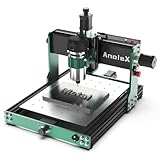


- Frame and gantry: Look for a substantial steel or aluminum structure, short unsupported spans, and well-supported linear rails. “All-metal” does not necessarily mean rigid; thin plates and flexible gantries still deflect.
- Spindle and speed control: A trim router may run at 10,000–30,000 RPM or more, which can be too fast for a large cutter in aluminum. A variable-speed spindle helps match rotation to cutter diameter and feed rate. Low-speed torque and smooth control matter more than a high maximum RPM.
- Work area: Buy for the parts you make, not the biggest advertised capacity. A larger gantry usually adds leverage and can reduce rigidity.
- Chip management: Aluminum chips must clear the cut. A brush, vacuum setup compatible with the material, or controlled air blast can help; avoid allowing chips to recut or accumulate around the cutter.
- Toolholding and motion: A solid collet, low backlash, and smooth motion are essential. Runout or looseness becomes more visible as cut depth and tool engagement increase.
A metal cnc router is still a router-style machine: it removes material with a rotating cutter and moves across a relatively large work area. A CNC mill is generally built for more rigid, controlled metal removal. The distinction matters most when the job involves deep pockets, hard metals, or close tolerances.
Representative machine classes compared
The figures below are practical comparison ranges, not guaranteed specifications for every configuration. Work areas, weights, spindle options, and published capacities vary by model and year; confirm the current manufacturer specification before buying. Cutting depth is especially dependent on cutter, alloy, workholding, and machine condition.
| Machine class or example | Typical work area | Approx. machine weight | Best fit for nonferrous metal | Realistic approach to aluminum |
|---|---|---|---|---|
| Compact desktop router, such as a Carbide 3D Shapeoko 4-class machine | About 400 × 400 mm (16 × 16 in) cutting area, depending on configuration | Roughly 25–45 kg (55–100 lb), depending on model and accessories | Small plates, brackets, signs, and occasional shallow pockets | Use small cutters and conservative stepdowns; plan on shallow passes rather than full-depth slotting |
| Stiffer desktop router, such as a Onefinity Woodworker-class machine | About 800 × 800 mm (32 × 32 in) working envelope, depending on configuration | Roughly 35–60 kg (77–132 lb) before a heavy table or enclosure | Larger nonferrous panels where the work envelope matters | Suitable for cautious aluminum work when rigidly mounted; a large span still calls for light engagement |
| Industrial router with steel frame and industrial spindle | Commonly 1,200 × 1,200 mm (48 × 48 in) or larger | Often several hundred kilograms | Repeated production of larger aluminum parts and panels | Can support more stable, sustained cutting, but capability depends on spindle, tooling, fixturing, and machine design |
| Benchtop CNC mill, such as a Tormach 440-class machine | Smaller than a router of similar footprint; model-specific | Several hundred kilograms | More demanding metal jobs, tighter tolerances, and deeper machining | A better direction than a router when metal removal, rather than sheet size, is the priority |
These categories are not interchangeable product recommendations. A manufacturer’s stated axis travel is not necessarily usable cutting area, and machine weight alone does not prove rigidity. Compare frame construction, rail support, spindle options, and the machine’s documented metal-cutting guidance.
Choose by job, budget, and available space
| Your situation | Best starting point | Why |
|---|---|---|
| Beginner, limited budget, occasional small aluminum parts | Compact desktop router with a rigid base and a small work envelope | Lower initial cost and a shorter, less flexible gantry make it easier to learn conservative cutting. |
| Experienced user, large panels, mostly wood with some aluminum | Larger router with supported rails and a well-braced frame | Work area is useful, but expect to limit cutter engagement in metal. |
| Frequent aluminum production | Industrial router designed for metal work, or a CNC mill if parts are small | Greater rigidity, appropriate spindle options, and reliable chip control matter over a large job count. |
| Steel, deep pockets, or tight tolerances | CNC mill rather than a woodworking-style router | These jobs demand rigidity and controlled metal-cutting capability that many routers lack. |
Realistic cutting depth: think in passes, not one big bite
There is no universal safe depth per pass for aluminum. A useful starting point on a desktop machine is a small, sharp, single- or two-flute carbide end mill, with a shallow stepdown—often around 0.1–0.5 mm (0.004–0.020 in)—and a narrow engagement. This is a cautious setup range, not a guarantee: the alloy, cutter diameter, spindle, feed rate, and machine rigidity all change the result. Begin with a test cut in scrap and follow the machine and tool makers’ guidance.
For example, pocketing a 6 mm-deep recess does not mean the router should cut 6 mm in one pass. At a 0.3 mm stepdown, the tool makes 20 vertical passes, plus the path needed to clear the pocket. That takes longer, but reduces cutting force and gives you a chance to spot chatter, chip packing, or loosening before damage occurs. For a narrow slot, even that stepdown may be too aggressive because the cutter is engaged on both sides.
Use cutting fluid or lubrication only if the machine setup, workholding, and electrical components are suitable for it. Some routers are not designed for wet machining. A dry cut with appropriate chip clearing may be the safer choice for a machine without coolant protection.
Materials a router can—and cannot—handle
- Aluminum: The most practical common metal for router-style CNC work. Softer alloys can still gum up a cutter if chips weld to its edges or recut in the slot.
- Brass and plastics: Often workable with suitable cutters and feeds, though brass chips and thin stock require secure fixturing.
- Copper: Possible on a sufficiently rigid setup, but its softness and tendency to form long, sticky chips can make it challenging.
- Steel and stainless steel: Usually poor candidates for a typical woodworking router. The load, heat, and rigidity demands favor a purpose-built CNC mill.
For any metal, clamp the stock firmly and keep it close to the supporting surface. Thin sheet can vibrate or lift, while a cutter that breaks through may damage the spoilboard or fixture. Do not hold metal by hand or rely on tape alone for a cut that can catch.
Ownership costs and common failure points
The machine price is only part of the cost. Budget for carbide cutters, collets, workholding, a flat spoilboard or fixture plate, and chip-control equipment. General market ranges vary widely: a hobby desktop router may cost several hundred to a few thousand dollars, while industrial routers and CNC mills typically cost substantially more once spindle, tooling, enclosure, and installation are included.
Cutters and collets are common wear items. Aluminum buildup on the cutting edge, a dull tool, loose workholding, or a dirty collet can quickly spoil a cut. Clean chips after each session, inspect the cutter for buildup or damage, and check that the collet and fasteners are clean and properly secured. Persistent chatter is a warning, not a sound to solve by simply increasing feed or depth.
If you mainly make wooden signs and occasionally machine shallow aluminum features, a compact, rigid router is usually the sensible choice. If aluminum parts are your regular work, compare machines specifically documented for metal cutting—and consider a mill when depth, accuracy, or steel capability is central to the job.
0 Comments