What's inside
- Best CNC Routers for Making Furniture: Size, Accuracy, and Setup
- Match the bed to your furniture parts
- Compare machine sizes and shop demands
- Choose by accuracy, rigidity, and how often you cut
- Pick by shop situation
- Plan the setup before the machine arrives
- What wears first—and what causes accuracy problems
- Best CNC Routers for Making Furniture: Size, Accuracy, and Setup
- Match the bed to your furniture parts
- Compare machine sizes and shop demands
- Choose by accuracy, rigidity, and how often you cut
- Pick by shop situation
- Plan the setup before the machine arrives
- What wears first—and what causes accuracy problems
As an Amazon Associate I earn from qualifying purchases. This post may contain affiliate links at no extra cost to you.
Best CNC Routers for Making Furniture: Size, Accuracy, and Setup
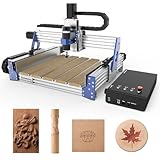
For most furniture makers, the best CNC router is the largest machine that fits your real workspace and can handle your typical panels without awkward repositioning—not automatically the machine with the biggest advertised bed. A 4 × 8-foot router suits frequent full-sheet cabinet work; a 4 × 4-foot machine is a practical middle ground for furniture parts; and a 2 × 4-foot machine can be enough for smaller shops that cut components from prepared blanks.
Before comparing models, measure the parts you actually make, the route from the loading area to the machine, and the room needed around the bed for sheets, dust collection, and maintenance. Working area, accuracy, frame rigidity, and sheet handling matter more to furniture quality than headline spindle power alone.
As an Amazon Associate we earn from qualifying purchases at no extra cost to you.


Match the bed to your furniture parts
- Cabinet sides, backs, and full sheets: A 4 × 8-foot bed can process standard 4 × 8-foot plywood sheets without dividing them first. Confirm the machine’s usable cutting area is truly large enough; clamps, spoilboard edges, and gantry limits can reduce it.
- Cabinet doors, drawer parts, and smaller panels: A 4 × 4-foot machine accommodates many furniture components and is easier to place in a small shop. Full-sheet work means breaking material down before machining or using a machine designed for pass-through work.
- Furniture parts cut from blanks: A 2 × 4-foot machine may suit chairs, shelving, drawer components, and small tables if you already have a way to prepare the blanks accurately.
- Tabletops: Measure the finished top, then account for the stock’s rough dimensions and workholding. A top longer than the bed may require indexing or a pass-through setup; either approach adds alignment steps and can affect accuracy.
As a sizing example, suppose your largest cabinet panel is 34 × 82 inches. It will not fit on a 4 × 4-foot bed, but it can fit on a 4 × 8-foot bed if the usable area, clamping arrangement, and machine travel allow it. If you usually buy 4 × 8 sheets, a smaller machine also requires a safe breakdown process and space to handle the sheet before cutting.
Compare machine sizes and shop demands
The dimensions below are nominal cutting-area classes, not guarantees of usable travel or overall machine footprint. Exact specifications differ by manufacturer and model, so check the current configuration before buying.
| Machine class | Nominal work area | Best fit | Key trade-off | Setup consideration |
|---|---|---|---|---|
| Compact | About 2 × 4 ft (24 × 48 in) | Small furniture parts, signs, and components made from blanks | Full sheets and large panels must be cut down or indexed | Usually easier to fit, but still needs room for material, dust collection, and access |
| Mid-size | About 4 × 4 ft (48 × 48 in) | Cabinet components, doors, and medium-sized furniture parts | Cannot process a standard 4 × 8 sheet in one setup | Plan how you will break down sheets and keep parts square |
| Full-sheet | About 4 × 8 ft (48 × 96 in) | Cabinet runs, large panels, and production from full sheets | Higher cost and more demanding material handling | Allow for sheet loading, machine footprint, electrical service, and dust extraction |
These sizes describe bed area only. A 4 × 8-foot machine needs more than 4 × 8 feet of floor space: the frame, control cabinet, operator access, and loading path all take room. A full sheet is also cumbersome to move and position. If loading it safely requires rearranging the entire shop, a smaller bed—or a workflow that breaks sheets down at a dedicated station—may be more productive.
Choose by accuracy, rigidity, and how often you cut
For fitted joinery, repeated cabinet parts, and clean edge profiles, prioritize a rigid frame, dependable motion components, a well-supported spindle, and a workholding system that keeps material flat. Ask manufacturers about repeatability and accuracy specifications, and how those figures are measured. A published tolerance is only useful if it applies across the working area and under realistic cutting conditions.
For occasional projects, a smaller CNC router can be a sensible entry point if it has adequate rigidity for your materials and the software and support you need. For regular production, convenience compounds: automatic tool changing, a reliable vacuum hold-down system, a dust boot, and accessible maintenance points can save setup time. They do not eliminate the need to verify toolpaths or secure stock.
Brands with established CNC router offerings include ShopSabre, Avid CNC, Laguna Tools, and Shapeoko by Carbide 3D. Their machines span different sizes and configurations; compare specific models rather than assuming all machines from one brand share the same capacity or accuracy. Prices vary substantially by size and options, from several thousand dollars for smaller or more basic setups to tens of thousands for larger, production-oriented machines. Budget separately for tooling, dust collection, workholding, software, and electrical or shop changes.
Pick by shop situation
| Your situation | Practical choice | Why |
|---|---|---|
| New to CNC, limited floor space, occasional projects | Compact machine, roughly 2 × 4 ft | Lower space commitment; learn toolpaths and fixturing on manageable parts |
| Regular furniture work, mostly panels under 4 ft wide | Mid-size machine, roughly 4 × 4 ft | Useful capacity without committing to full-sheet handling |
| Frequent cabinet production from standard sheets | Full-sheet 4 × 8 ft machine | Reduces sheet breakdown and repositioning when the shop can load it efficiently |
| Large tabletops or parts exceeding bed travel | Long-bed or pass-through configuration, if available | Can handle oversized work, but demands careful registration and support |
Plan the setup before the machine arrives
- Map the whole workflow. Measure the machine footprint, access aisles, sheet storage, breakdown area, and the route for bringing stock into the shop.
- Confirm power and extraction. Check the machine and spindle’s electrical requirements, then size dust collection for the cutting setup. Fine wood dust needs effective collection and housekeeping, not just a dust boot.
- Prepare a flat, supported bed. Install and surface the spoilboard as directed. A warped spoilboard or poorly supported sheet can make pocket depths and cut-throughs inconsistent.
- Choose workholding for the material. Vacuum hold-down is convenient for sheet goods but depends on a sealed, flat surface and adequate pump capacity. Clamps and screws can work well for smaller jobs, provided they stay clear of the toolpath.
- Test before committing valuable stock. Check squareness and tram, verify tool lengths, and run a small test cut. Keep a little extra material available for checking fit before batch production.
What wears first—and what causes accuracy problems
Router bits are routine consumables. Dull or resin-coated cutters can leave burn marks, rough edges, or inconsistent dimensions, especially in plywood and abrasive sheet goods. Clean or replace them as needed, and choose a cutter suited to the material and cut direction. Spoilboards also wear: pocketing, cut-throughs, and repeated resurfacing gradually reduce their thickness, so track the remaining depth.
Dust buildup can interfere with rails, bearings, fans, and electrical components. Follow the manufacturer’s cleaning and lubrication schedule rather than applying lubricant indiscriminately; some motion systems require specific products or no added lubricant. Loose fasteners, a shifting sheet, an out-of-square machine, or incorrect tool-length settings can all undermine accuracy even on a capable router.
For furniture makers, the right CNC router is the one that supports the parts and production rhythm you actually have. Choose bed size around your largest recurring work, then make sure the shop can load, hold, cut, and unload that material without turning every job into a workaround. That approach is more useful than choosing a furniture CNC router by bed size alone.
0 Comments