What's inside
As an Amazon Associate I earn from qualifying purchases. This post may contain affiliate links at no extra cost to you.
The best cordless PVC and PEX pipe cutters for most installers are the Milwaukee M12 PVC Pipe Cutter for compact, frequent work and the DEWALT 20V MAX Cordless PVC Shear for faster cutting and greater battery-platform compatibility.
As an Amazon Associate we earn from qualifying purchases at no extra cost to you.


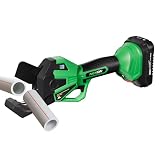

Quick picks by job
- Best compact choice: Milwaukee M12 PVC Pipe Cutter (2470-20) for service calls, cabinets, and tight mechanical rooms.
- Best for heavier daily use: DEWALT 20V MAX Cordless PVC Shear (DCE700) when cutting larger volumes of plastic pipe matters more than minimum weight.
- Best for occasional repairs: A manual ratcheting PVC/PEX cutter, unless you already own compatible M12 or 20V batteries.
- Best for large-diameter plastic pipe: A dedicated powered plastic-pipe cutter or corded cutter; neither of the compact cordless shears is intended for every size of drain or conduit.
Head-to-head comparison
Capacities vary by pipe material, wall thickness, and the manufacturer’s current instructions. The figures below are useful buying limits, not permission to cut every pipe with the same technique.
| Tool | Battery platform | Published maximum capacity | Approx. bare-tool weight | Typical cutting character | Best fit |
|---|---|---|---|---|---|
| Milwaukee M12 PVC Pipe Cutter 2470-20 | 12V M12 | Up to 2-inch PVC; commonly rated for smaller PEX and plastic tubing | About 4.3 lb | Fast powered shear; rotating blade and automatic opening | Service work, tight spaces, repeated 1/2- to 1-inch cuts |
| DEWALT 20V MAX Cordless PVC Shear DCE700 | 20V MAX | Up to 2-inch PVC and approximately 1-1/2-inch PEX, depending on specification and material | About 4.7 lb | High-force shear with variable trigger control | Production plumbing and users already invested in 20V MAX |
| Manual ratcheting PVC/PEX cutter | None | Usually 1-1/4 to 2-1/2 inches, depending on model | About 1 to 2 lb | Slower but quiet, simple, and highly controllable | Home repairs, low volume, and backup use |
| Corded plastic-pipe cutter | 120V mains power | Often 2 to 6 inches, depending on machine | Roughly 10 to 20 lb | Stable, repeatable cuts on larger pipe | Shop work and large drainage or conduit projects |
The two cordless options are not interchangeable in practice. The M12 model is easier to carry and less tiring overhead, while the DEWALT tool has a larger battery and generally feels better suited to a full day of repetitive cutting. Both use a shear-style action rather than an abrasive wheel, so they produce no dust and usually leave a clean, square end when the pipe is supported correctly.
Milwaukee M12 versus DEWALT DCE700
Milwaukee M12 PVC Pipe Cutter
The Milwaukee 2470-20 is the more convenient choice for maintenance technicians and plumbers who spend much of the day moving between rooms or vehicles. Its M12 battery is physically smaller than a 20V pack, and the tool’s rotating cutting head helps when access is limited behind fixtures or inside a cabinet.
Its strongest use case is repeated work on common supply and waste sizes: 1/2-inch, 3/4-inch, 1-inch, and similar plastic tubing, with capacity extending to larger PVC within the stated limit. A sharp blade can make a cut in only a few seconds. The trade-off is that hard, thick-wall, cold, or poorly supported pipe demands more patience. It is also less appealing if your existing batteries are from another platform.
DEWALT 20V MAX Cordless PVC Shear
The DCE700 is the better pick when cutting speed and force are more important than the smallest possible package. It is designed around common 20V MAX batteries, and its variable-speed trigger gives the operator more control at the start of a cut than a simple on/off tool.
That control matters on thin-wall PVC and flexible PEX. Squeezing the trigger gradually lets the blade seat without immediately pushing the pipe sideways. Once the blade has started, increased speed can complete the cut quickly. The larger tool head and battery make it less pleasant in cramped locations, but the added capacity is useful for larger PVC and high-volume installation work.
What to compare before buying
Capacity is not just the nominal diameter
A tool advertised for 2-inch PVC may perform differently on Schedule 40 pipe, thin-wall drainage pipe, CPVC, conduit, and reinforced tubing. Measure the pipe’s outside diameter and check the exact material list. PEX is flexible and can deform under the blade, while rigid PVC tends to resist movement but may crack if it is cold or the blade is dull.
Blade durability
The blade is normally the first consumable to show wear. Dullness appears as a slower cut, crushed edges, increased trigger pressure, or a blade that starts wandering from square. Cutting dirty pipe, pipe containing sand, or materials outside the tool’s approved range accelerates wear.
Replacement blades are preferable to forcing a worn edge. Before buying, check that replacement blades are readily available and note whether the tool uses a proprietary blade. Keep a spare in the service case if the cutter is part of your daily kit.
Trigger control and cut quality
A variable trigger is valuable for PEX because the material can flex away from the blade. Start slowly, keep the pipe aligned with the cutting head, and increase speed only after the blade has formed a groove. A fast cut is not a good cut if the end is angled or pinched.
Battery platform and runtime
Runtime depends heavily on diameter, wall thickness, temperature, and blade condition. A small M12 battery is convenient for light work, but a compact high-output pack or a second battery is sensible for repetitive cutting. A 20V tool can deliver more reserve for larger pipe, although the extra battery mass is carried all day.
A simple ownership calculation illustrates the choice. Suppose a cordless cutter costs $180 to $350 as a bare tool and a compatible battery and charger add $80 to $200. At 1,000 cuts, the tool portion is about $0.18 to $0.35 per cut, before replacement blades. At only 50 cuts, the ownership cost is $3.60 to $11 per cut. For occasional household work, a $15 to $40 manual cutter may therefore be the better financial decision.
Decision matrix
| Your situation | Recommended direction | Reason |
|---|---|---|
| Fewer than 50 cuts per year | Manual ratcheting cutter | No battery investment, easy storage, and adequate control |
| 50 to 300 cuts per year | Milwaukee M12 if you own M12 batteries | Compact and efficient for common small-diameter pipe |
| Daily plumbing or remodeling work | DEWALT DCE700 or Milwaukee M12 based on existing platform | Battery standardization matters more than small differences in speed |
| Very tight access | Milwaukee M12 | Smaller battery and rotating head are easier to position |
| Large PVC or high-volume cutting | Higher-capacity powered cutter or corded machine | Compact shears have practical limits and can overheat under continuous load |
| Uncertain pipe material | Manual cutter until material is identified | Prevents using a powered blade on prohibited or unusually hard tubing |
How to get a clean, square cut
- Identify and measure the pipe. Confirm the material, outside diameter, and wall type before selecting the cutter setting or capacity.
- Mark the cut completely around the pipe. A full reference line exposes a wandering blade sooner than a single short mark.
- Support the pipe close to the cut. Unsupported PEX bends, and unsupported PVC can twist or split.
- Open the blade fully and position it on the mark. Keep the tool square to the pipe rather than cutting at an angle.
- Start with a light trigger pull. Let the blade establish a groove, then increase speed while maintaining alignment.
- Inspect and deburr. Remove burrs or a slight lip before solvent welding, inserting a fitting, or installing a PEX connection.
- Clean the tool. Brush away plastic shavings, wipe moisture from the blade area, and store the cutter with the blade protected.
Ownership problems to expect
Cold PVC is more likely to chip, while warm or unsupported PEX is more likely to deform. Neither problem is solved by simply pulling the trigger harder. Warm the work area when practical, support the pipe, and replace a blade that requires excessive force.
Plastic shavings can collect around the blade pivot and trigger mechanism. Do not flood the tool with cleaner or oil unless the manufacturer specifies it; excess lubricant can attract debris. Inspect the blade fastener periodically, remove the battery before servicing, and use the tool’s lockout when carrying it.
For most buyers, the final choice is simple: choose the Milwaukee M12 for portability and confined work, the DEWALT DCE700 for higher-volume 20V MAX work, and a manual cutter when the number of cuts does not justify battery-tool ownership. Verify the current capacity chart and replacement-blade availability before ordering, especially if your project uses pipe larger than 1-1/2 inches or a material other than standard PVC and PEX.
0 Comments