What's inside
As an Amazon Associate I earn from qualifying purchases. This post may contain affiliate links at no extra cost to you.
A bench saw is the single most consequential purchase a home woodworker makes. It determines the width of panels you can break down, the precision of your joinery, and whether Saturday afternoons feel productive or frustrating. Yet the market floods buyers with machines that look identical on a spec sheet while behaving very differently once you push hardwood through the blade.
We compared every tool below using published specifications, listed retail prices, and aggregated owner feedback from forums and retailer reviews. What separates a good bench saw from a mediocre one comes down to four things: motor headroom under load, fence rigidity, rip capacity relative to your shop footprint, and whether the price reflects real capability or just a brand name. The eight machines below span the full spectrum from under $140 to just under $600.
As an Amazon Associate we earn from qualifying purchases at no extra cost to you.


Our Top Picks
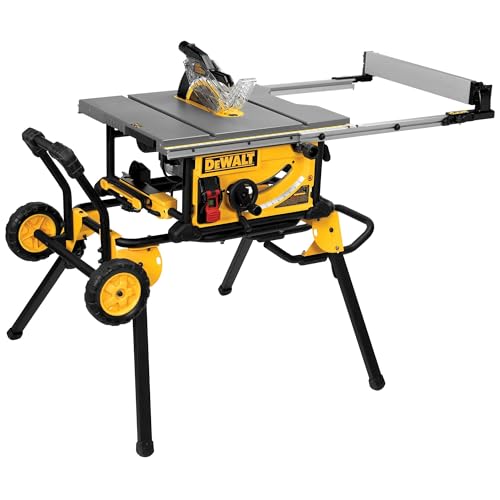
 DEWALT 15 Amp 8-1/4 in. Compact Portable JobsiteOne Size22.75 x 22.75 x 13 inches54 poundsCheck on Amazon



Quick Picks
| Product | Best For | Price |
|---|---|---|
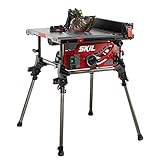
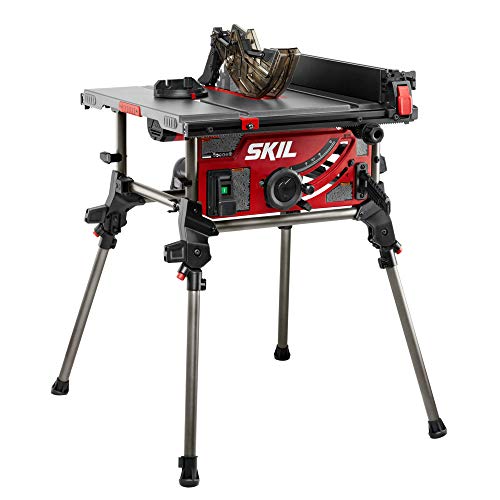
| SKIL TS6307-00 | Contractors who need a folding stand | $302.68 |
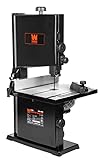
| WEN BA3959 | Curved cuts on a tight budget | $143.66 |
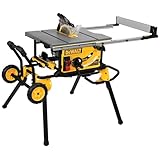
| DEWALT DWE7491RS | Serious jobsite ripping | $599 |
| Metabo HPT C10FCG2 | Precision crosscuts and miters | $139 |
| DEWALT DWE7485 | Small shops with brand loyalty | $429 |
| MarvTool 15Amp | DIYers wanting a 10-inch blade cheaply | $169.99 |
| SKIL TS6308-00 | Compact bench saw at a low price | $249 |
| Evolution R10TS | Value-minded buyers wanting dado capability | $400 |
How We Picked
We prioritized motor amperage as a proxy for load tolerance, rip capacity for versatility, and fence or rail quality for repeatability. Price-to-performance ratio was weighted heavily because bench saws occupy a wide cost band and the jump from budget to premium is not always linear. Portability features—folding stands, weight, and footprint—mattered since most buyers work in shared or small spaces.
The 8 Best Bench Saw in 2026
SKIL TS6307-00
For contractors and job-site woodworkers who need a 10-inch bench saw that packs up fast. The folding stand means going from truck to cutting in minutes without a second trip for accessories.
- 15-amp motor handles most hardwood ripping without bogging down
- Folding stand included at a price under $305
- No rack-and-pinion fence; owners report slop developing over time
Skip it if your work demands tight repeatable crosscuts—the slide fence will frustrate you after a few sessions.
WEN BA3959
A band saw, not a table saw, but it earns a spot because many searchers use “bench saw” broadly. This suits hobbyists cutting curves in softwood or thin plywood who want the lowest possible entry cost.
- Under $145 makes it the least risky first power tool purchase
- 9-inch throat handles most scrollwork and curved drawer sides
- 2.8-amp motor stalls on stock thicker than roughly one inch
Skip it if you need straight rips or crosscut capacity—this is a dedicated curve tool.
DEWALT DWE7491RS
The premium table saw in this group. For contractors who rip full-width plywood daily and want a rolling stand that survives repeated job-site abuse without losing alignment.
- 32.5-inch rip capacity with the rolling stand lets you break down full sheets alone
- 4800 RPM keeps cuts clean in dense hardwood without burning
- $599 is the highest price here; you are paying for build quality and brand support
Skip it if your budget sits under $300 or your cuts rarely exceed 24 inches in width.
Metabo HPT C10FCG2
A miter saw, not a table saw, but it fills the bench saw query intent for buyers whose primary task is crosscuts and angles. At $139 it is the cheapest 15-amp cutting tool on this list.
- Xact Cut shadow line makes aligning cuts intuitive for beginners
- Light enough to carry to job sites without a dedicated cart
- Single bevel only—no left-bevel capability for compound work
Skip it if ripping panels or cutting dado joints is your main application.
DEWALT DWE7485
A compact bench saw for woodworkers who want DEWALT quality without the DWE7491RS footprint. At 8-1/4 inches it trades rip capacity for portability and benchtop-friendly weight.
- 15-amp motor in a noticeably smaller package than its 10-inch sibling
- Fits on a standard workbench without a separate rolling stand
- Owners report fence rails flex under lateral pressure during wide rips
Skip it if you regularly rip stock wider than 20 inches—this saw is not built for that.
MarvTool 15Amp
The lowest-cost way to get a 10-inch, 15-amp table saw. Aimed at DIY furniture makers who want a bench saw with real capacity without paying a brand premium at checkout.
- 4600 RPM and 36-tooth blade produce clean cuts in plywood and dimensional lumber
- Included stand and 0-to-45-degree miter adjustment add genuine value at $170
- Fence precision and overall build quality lag behind established brands
Skip it if you need dead-on repeatability for fine joinery or dovetailed casework.
SKIL TS6308-00
A compact 8-1/4-inch bench saw at $249. It targets the same small-shop buyer as the DWE7485 at a lower bare-tool price, but the stand is sold separately.
- 15-amp motor delivers solid power for an 8-1/4-inch saw
- Undercuts the DWE7485 by nearly $180 on tool-only price
- Stand sold separately pushes the real total well past the sticker price
Skip it if you want a turnkey package without hunting for a compatible stand.
Evolution R10TS
A mid-range bench saw that punches above its price with an included dado plate and zero-clearance throat plate. For woodworkers who want dado capability without building a separate router-table setup.
- 26-inch rip and 3-3/8-inch depth handle most shop tasks comfortably
- Dado plate and zero-clearance insert are unusual inclusions at $400
- Brand support and accessory availability are thinner than DEWALT or SKIL
Skip it if you depend on a widely stocked ecosystem of replacement blades and third-party accessories.
Buying Guide
Motor Amperage and RPM
Amperage tells you whether a bench saw will stall on hard stock or keep feeding smoothly. Everything above eight inches of blade diameter needs at least 15 amps to handle hardwoods without hesitation. Below 15 amps, as on the WEN band saw, you are limited to softwood and thin material. RPM matters as a secondary indicator: speeds near 4800 tend to produce cleaner cuts in plywood, while slightly lower speeds still work well if the motor has enough torque behind them.
Rip Capacity and Fence Quality
Rip capacity is the maximum width you can cut, and it determines whether a bench saw can break down full-width sheets. The DEWALT DWE7491RS with 32.5 inches handles a four-by-eight sheet; the Evolution R10TS at 26 inches does not. But raw capacity means nothing if the fence wanders. Rack-and-pinion fences with positive locking hold settings far better than slide-style fences. Read owner threads specifically for mentions of fence slop—this is the single most common complaint across every price tier.
Stand and Portability
Jobsite bench saws live or die by their stands. A rolling stand with rail extensions turns a 10-inch saw into a functional panel-cutting station but adds weight you will regret hauling up stairs. Folding legs and integrated storage help if you clear the floor after every session. Factor in whether the stand is included or sold separately—SKIL’s TS6308-00 shows how a $249 saw becomes a $400-plus system.
Our Verdict
Top pick: DEWALT DWE7491RS. Highest rip capacity, best build quality among the table saws, and the rolling stand transforms it from a compact bench saw into a full sheet-breaker.
Budget pick: SKIL TS6307-00. A 10-inch, 15-amp bench saw with a folding stand for under $305—unbeatable value for portability-focused buyers.
Condition for another winner: If dado cuts are non-negotiable, the Evolution R10TS at $400 is the only option on this list that ships with a dado plate included.
FAQ
Is a bench saw the same as a table saw?
The terms overlap in casual use. Strictly, a bench saw is a table saw designed to sit on or within a benchtop enclosure, typically lighter than a cabinet saw. Many product listings use both names interchangeably, which is why miter saws and band saws sometimes surface in searches.
What blade size do I need for basic furniture making?
A 10-inch blade provides roughly 3-1/2 inches of cutting depth, which handles 4/4 lumber with room to spare. For most furniture joinery—mortise-and-tenon shoulders, table aprons, drawer sides—10 inches is the sweet spot between capacity and footprint.
Can a portable bench saw replace a cabinet saw?
For straight rips and crosscuts in stock up to two inches thick, a quality 15-amp portable bench saw comes surprisingly close. The differences show up in dust collection, vibration under sustained load, and table-surface rigidity. If you rarely cut hardwood thicker than 1-1/2 inches, a good portable model is a legitimate shop centerpiece.
Do I need a dado stack for furniture projects?
You need dado cuts for shelf grooves, tenon cheeks, and housing joints. Some bench saws like the Evolution R10TS include a dado plate. Others require buying a compatible stack separately, and not every portable saw’s arbor accepts full-height stacks—verify clearance before ordering.

0 Comments