What's inside
As an Amazon Associate I earn from qualifying purchases. This post may contain affiliate links at no extra cost to you.
Choosing between oil-based paint and water-based enamel for interior woodwork comes down to the finish you need, the condition of the surface, and how much drying time you can tolerate. Oil-based paint still has advantages on trim and doors, but modern water-based enamels are easier to use and perform well in most homes.
As an Amazon Associate we earn from qualifying purchases at no extra cost to you.


Our Top Picks
The Main Difference
Oil-based paint uses an oil or alkyd resin carried by mineral spirits. It dries by oxidation, so the coating hardens slowly as it reacts with air. Water-based enamel uses water as the carrier, with acrylic, acrylic-urethane, or similar resins left behind as the film dries and cures.
Do not confuse “water-based” with ordinary wall paint. Interior trim needs a dedicated enamel or trim paint. These products contain harder resins and are available in satin, semi-gloss, and gloss sheens that tolerate handling and cleaning better than flat or eggshell wall paint.
| Feature | Oil-based paint | Water-based enamel |
|---|---|---|
| Application feel | Flows smoothly and levels well | Dries quickly; can show brush marks if overworked |
| Drying time | Usually 6–8 hours before recoating | Often 2–4 hours before recoating |
| Full hardness | Often several days to a few weeks | Usually several days, depending on the resin |
| Odor and cleanup | Strong odor; mineral spirits required | Lower odor; soap and water cleanup while wet |
| Yellowing | Can yellow, especially in low light | Much less likely to yellow |
| Best use | Traditional trim, smooth leveling, heavy wear | Most interior trim, doors, cabinets, and quick projects |
When Oil-Based Paint Makes Sense
Oil-based paint is a strong choice for baseboards, door casings, stair parts, and other woodwork where a smooth, traditional finish matters. It stays wet longer than water-based enamel, giving the paint more time to flow together and hide brush marks. That makes it forgiving on long trim runs and detailed profiles.
It also forms a hard, wear-resistant film after curing. A good oil enamel can withstand repeated contact on door edges and handrails. The trade-off is patience: a surface that feels dry after one night may still be soft underneath. Avoid reinstalling hardware, closing painted doors tightly, or placing objects on shelves until the coating has hardened.
Oil paint is less attractive in a poorly ventilated room. Its solvent odor can persist for days, and cleanup requires mineral spirits. Use ventilation, protect floors from solvent spills, and keep ignition sources away from wet solvent and oily rags. A properly stored or submerged rag is important because oil-soaked rags can present a fire hazard.
Older oil-painted trim can also create a color problem. Alkyd coatings commonly turn amber or yellow in closets, behind furniture, and in rooms with little natural light. If you want white woodwork to stay bright, water-based enamel is generally the safer choice.
When Water-Based Enamel Is Better
Water-based enamel is the practical default for most interior woodwork. It has lower odor, dries faster, and lets you complete two coats in one day under normal conditions. Brushes and rollers can be cleaned with water before the paint dries, and the finish is less likely to yellow over time.
Modern acrylic-urethane trim enamels are substantially tougher than older latex paints. They are suitable for baseboards, window trim, interior doors, and painted cabinets when the surface is prepared correctly. Some products remain slightly soft for several days, so do not judge durability only by how the paint feels two hours after application.
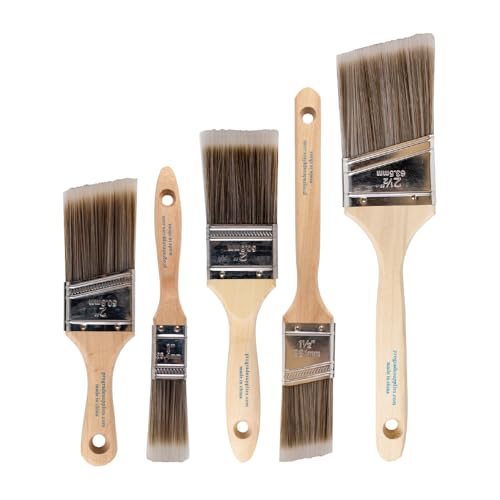
The main application weakness is fast drying. A brush can drag if you work too slowly, and going back over half-dry paint can leave ridges or dull patches. Work in manageable sections, maintain a wet edge, and avoid applying heavy coats. A quality synthetic trim brush is a better match than a natural-bristle brush, which can become limp in water-based paint.
Surface Preparation Determines the Result
Neither paint type will adhere reliably to glossy, greasy, or waxy woodwork. Wash the surface with a suitable degreaser, allow it to dry, and sand dull with 120- to 180-grit paper. Sanding is for adhesion, not for removing every old brush mark. Use a 150-grit sanding sponge on profiles and corners where a power sander would damage the molding.
Fill nail holes and dents with a compatible wood filler, let it dry, and sand it flush. Bare end grain and repaired areas often absorb the first coat unevenly, so spot-prime them. Vacuum dust and wipe with a clean, slightly damp cloth; leftover sanding dust can create gritty texture.
When changing from oil paint to water-based enamel, sanding alone is not enough if the old coating is glossy. Scuff the entire surface, remove the dust, and apply a bonding or adhesion primer. If the old finish is failing, scrape and sand loose paint first. For bare wood, use a primer suited to the wood species and stain risk.
Wood Species and Stain Problems
Oak and other open-grained woods can telegraph their texture through either finish. If you want a furniture-smooth painted surface, fill the grain before priming; two coats of primer will not automatically flatten deep pores. Pine, cedar, and some knots can bleed resin or tannins through light-colored paint. A stain-blocking primer is more dependable than repeatedly adding topcoats.
On previously stained wood, clean off wax and polish residue before sanding. Water-based enamel is not a shortcut around contamination. If the first primer coat beads, crawls, or remains soft, stop and solve the surface problem rather than painting over it.
Application and Buying Decision
Apply two thin finish coats rather than one thick coat. Lightly sand between coats with 220- to 320-grit paper only after the paint has dried hard enough to powder rather than gum up. Remove dust before recoating. A small microfiber or fine-foam roller can cover flat doors quickly, followed by light brush tipping while the paint is wet.
Choose oil-based paint when maximum leveling, traditional appearance, or heavy wear resistance outweighs odor, cleanup, and long drying times. Choose water-based enamel when you want low odor, minimal yellowing, fast recoat times, and easier cleanup. For ordinary baseboards and door trim, a quality water-based acrylic-urethane enamel is usually the cheaper option in time and hassle—and it is fully adequate when the surface is properly prepared.
0 Comments