RP Woodworks

  • Home
  • Reviews
  • Projects
  • Tools
  • Woodworking Techniques
  • About

Wood Finishing

Staining, sealing, oiling and clear-coating wood: product choice, application and fixes for common finish problems.

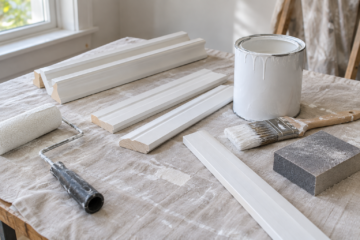
AI-generated editorial illustration of wood paint
Painting & Priming

How to Choose a Primer for Bare Hardwood Before Painting

Bare hardwood can look smooth and still be a poor surface for paint. Wood fibers absorb liquid unevenly, tannins can discolor light topcoats, and knots or old finish residue may cause adhesion problems. The right primer depends on the wood species, the floor’s condition, and the paint system you plan Read more

By , 2 weeksSeptember 25, 2026 ago
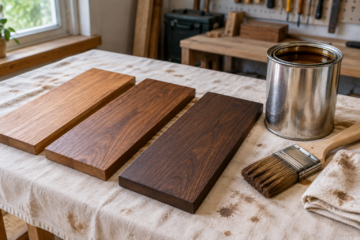
AI-generated editorial illustration of wood stain
Finish Problems & Fixes

How to Stain Wood Around Knots Without Creating Dark Rings

Knots are one of the hardest parts of staining pine, fir, spruce, and other resinous woods. The surrounding grain may absorb stain evenly while the knot stays pale, turns nearly black, or develops a dark ring around its edge. That ring is usually caused by a combination of resin, compressed Read more

By , 2 weeksSeptember 25, 2026 ago
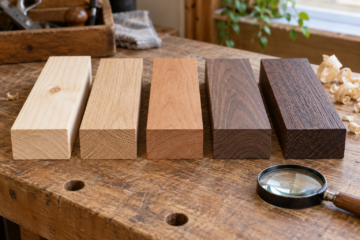
AI-generated editorial illustration of wood stain
Staining & Dyes

How to Choose a Stain Color for Warm and Cool Wood Tones

Choosing a stain color is easier when you look at the wood’s undertone before you look at the stain can. A finish that looks neutral on one species can turn orange, muddy, or gray on another. The goal is not to make every board match a color sample; it is Read more

By , 2 weeksSeptember 25, 2026 ago
AI-generated editorial illustration of wood stain
Staining & Dyes

How to Compare Transparent, Semi-Transparent, and Solid Wood Stains

Wood stain labels describe how much grain and color variation will remain visible—not how much protection the finish provides. A transparent stain shows the most wood; a solid stain hides the most. Between them, semi-transparent stain adds color while leaving much of the grain visible. The right choice depends on Read more

By , 2 weeksSeptember 25, 2026 ago
AI-generated editorial illustration of wood stain
Staining & Dyes

How to Wipe Back Wood Stain for a More Even Color

Why wipe back stain? Wiping back means applying stain, letting it sit briefly, then removing the excess with a clean cloth. It gives you more control over color than brushing on stain and leaving a thick film. The technique works well with penetrating oil-based and water-based stains, but it cannot Read more

By , 2 weeksSeptember 25, 2026 ago
AI-generated editorial illustration of wood stain
Finish Problems & Fixes

How to Apply Oil-Based Stain Without Sticky Residue

Why oil-based stain stays sticky Oil-based stain is meant to color wood, not form a thick protective film. The pigment and binder left on the surface after application should be thin enough to dry. If excess stain sits in pores or on top of the wood, it can remain tacky Read more

By , 2 weeksSeptember 25, 2026 ago
AI-generated editorial illustration of wood stain
Finish Problems & Fixes

How to Keep Water-Based Stain from Raising Grain Unevenly

Water-based stain can leave a rough, blotchy surface because water swells wood fibers. The problem is usually most visible on end grain, soft springwood, and areas that were sanded unevenly. You can reduce it by preparing the surface consistently, controlling how much water reaches the wood, and sanding raised fibers Read more

By , 2 weeksSeptember 25, 2026 ago
AI-generated editorial illustration of wood stain
Staining & Dyes

How to Layer Wood Dye and Stain for a Custom Color

Layering wood dye and stain is a practical way to get a color that is deeper, warmer, or more even than either product can produce alone. Dye changes the wood’s base color by soaking into the fibers, while stain usually leaves more color in the pores and on the surface. Read more

By , 2 weeksSeptember 25, 2026 ago
AI-generated editorial illustration of wood stain
Staining & Dyes

How to Prepare Oak for a Uniform Gray Stain

Oak can take a gray stain well, but it rarely produces a perfectly uniform color without careful preparation. The open grain absorbs stain more heavily than the harder latewood, and the strong cathedral pattern can make gray look striped or muddy. Red oak also contains pink and red tones that Read more

By , 2 weeksSeptember 25, 2026 ago
AI-generated editorial illustration of wood stain
Finish Problems & Fixes

How to Stain Birch Without Dark Spots or Streaks

Birch is easy to sand and pleasant to work with, but it can be surprisingly difficult to stain evenly. Its tight grain and pale color absorb stain inconsistently: end grain and locally more porous areas often turn dark, while broad faces can look pale or streaky. The reliable approach is Read more

By , 2 weeksSeptember 25, 2026 ago

Posts pagination

Previous 1 … 33 34 35 … 63 Next
Recent Posts
  • Laser Cutting CNC Machines: How to Choose for a Woodshop
  • Best Hobbyist CNC Routers for Home Workshops
  • CNC Metal Cutting Machines: Types, Capabilities, and Buying Tips
  • CNC Wood Projects: Ideas by Skill Level, Material, and Machine Size
  • CNC Vacuum Tables: How to Choose the Right Size and Hold-Down
Recent Comments
No comments to show.
Archives
  • October 2026
  • September 2026
Categories
  • Clear Coats & Topcoats
  • Finish Problems & Fixes
  • Finish Problems & Fixes
  • Gift Guides
  • Grain Filling & Sealing
  • Guides
  • Oils & Waxes
  • Painting & Priming
  • Painting & Priming
  • Sanding & Surface Prep
  • Shop Setup & Safety
  • Staining & Dyes
  • Staining & Dyes
  • Tool Troubleshooting
  • Tools
  • Wood Finishing
  • Wood Species & Lumber
  • Woodworking Techniques
Hestia | Developed by ThemeIsle