RP Woodworks

  • Home
  • Reviews
  • Projects
  • Tools
  • Woodworking Techniques
  • About

Wood Finishing

Staining, sealing, oiling and clear-coating wood: product choice, application and fixes for common finish problems.

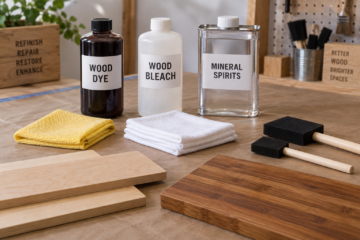
AI-generated editorial illustration of wood refinishing dyes bleach and tack cloth
Staining & Dyes

How to Neutralize Wood Bleach Before Staining

Wood bleach can leave the surface too alkaline or acidic for stain, even when the wood looks clean and dry. That residue can cause uneven color, weak stain absorption, raised grain, or a finish that dries poorly. The correct neutralizing method depends on the bleach you used, so identify the Read more

By , 2 weeksSeptember 25, 2026 ago
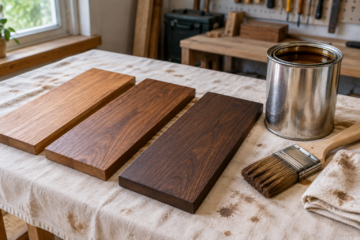
AI-generated editorial illustration of wood stain
Staining & Dyes

How to Apply a Transparent Wood Dye with a Foam Brush

Choose a dye that suits the wood Transparent wood dye colors the wood while leaving its grain visible. It is not the same as an opaque paint, and it may not hide scratches, glue marks, or uneven sanding. Check the product label before buying: dyes vary in whether they are Read more

By , 2 weeksSeptember 25, 2026 ago
AI-generated editorial illustration of wood stain
Staining & Dyes

How to Use a Pre-Stain Sealer on Softwood Boards

What a Pre-Stain Sealer Does A pre-stain sealer reduces the blotchy, uneven color that often appears when you stain softwood. It partially fills or closes the most absorbent areas of the board, so the stain penetrates more evenly instead of producing dark patches and streaks. Softwoods such as pine, fir, Read more

By , 2 weeksSeptember 25, 2026 ago
AI-generated editorial illustration of wood refinishing dyes bleach and tack cloth
Clear Coats & Topcoats

How to Apply Wood Bleach for a Lighter Natural Finish

Wood bleach can lighten a board while leaving its grain visible, but it is not a single product or a shortcut for every color problem. Two-part bleach removes much of the wood’s natural color; oxalic acid targets certain dark stains; chlorine bleach has narrower uses and can damage wood. Start Read more

By , 2 weeksSeptember 25, 2026 ago
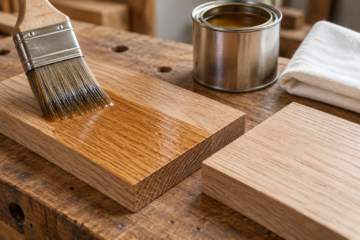
AI-generated editorial illustration: brush applying a clear wood finish to a board beside an unfinished offcut.
Finish Problems & Fixes

How to Strip a Clear Finish from Wood Without Gouging It

Removing a clear finish from wood is mostly a control problem. The finish may be thick, brittle, or gummy, but the wood underneath is usually easier to damage than the coating is to remove. A sharp scraper can leave a long trough in soft pine. Coarse sandpaper can flatten an Read more

By , 2 weeksSeptember 25, 2026 ago
AI-generated editorial illustration of wood refinishing dyes bleach and tack cloth
Finish Problems & Fixes

How to Remove Wax from Wood Before Refinishing

Why Wax Must Be Removed Before Refinishing Paste wax, furniture polish, and some spray cleaners can leave a thin, water-repellent film on wood. That film may look harmless, but it can prevent stain, paint, shellac, lacquer, and water-based finishes from bonding properly. Common failure signs include fisheyes, crawling, uneven color, Read more

By , 2 weeksSeptember 25, 2026 ago
AI-generated editorial illustration of wood stain
Staining & Dyes

How to Prep Bare Wood for an Even Gel Stain

Why gel stain needs even prep Gel stain is thicker than many liquid stains, but it still depends on the wood surface for a consistent result. Bare areas that absorb more stain can turn darker; glue, burnished patches, and leftover finish can resist it and show up as pale spots. Read more

By , 2 weeksSeptember 25, 2026 ago
AI-generated editorial illustration of wood paint
Painting & Priming

How to Prepare Resinous Pine for a Paint Finish

Resinous pine can take paint well, but only after you deal with the resin. Fresh knots, pitch pockets, and sap-contaminated areas can bleed through paint as yellow or brown stains. The finish may also stay soft, wrinkle, or lose adhesion where oily resin remains on the surface. Preparation matters more Read more

By , 2 weeksSeptember 25, 2026 ago
AI-generated editorial illustration of wood stain
Staining & Dyes

How to Raise the Grain Before Staining a Hardwood Panel

Water-based stains and finishes can make a hardwood panel feel rough after the first coat. The liquid wets the wood fibers, causing some of them to swell and stand above the surface. This is called raised grain. If you stain without preparing for it, the panel may look uneven and Read more

By , 2 weeksSeptember 25, 2026 ago
AI-generated editorial illustration of wood paint
Staining & Dyes

How to Clean Wood Before Applying Paint or Stain

Paint and stain reveal whatever is left on the wood. Dust, wax, grease, silicone, old finish, and even fingerprints can cause peeling, blotching, fisheyes, or uneven color. Cleaning is not a substitute for sanding, but it is an essential part of surface preparation. The right method depends on whether you Read more

By , 2 weeksSeptember 25, 2026 ago

Posts pagination

Previous 1 … 34 35 36 … 63 Next
Recent Posts
  • Best Benchtop Woodworking Lathes for Small Shops
  • Best Lathe Benches for Stable, Comfortable Woodturning
  • Robust Lathe Buying Guide: Models, Features, and Real-World Value
  • Best Wood Lathe Accessories for Safer, More Accurate Turning
  • Best Lathe Stands for Stability, Storage, and Comfortable Turning
Recent Comments
No comments to show.
Archives
  • October 2026
  • September 2026
Categories
  • Clear Coats & Topcoats
  • Finish Problems & Fixes
  • Finish Problems & Fixes
  • Gift Guides
  • Grain Filling & Sealing
  • Guides
  • Oils & Waxes
  • Painting & Priming
  • Painting & Priming
  • Sanding & Surface Prep
  • Shop Setup & Safety
  • Staining & Dyes
  • Staining & Dyes
  • Tool Troubleshooting
  • Tools
  • Wood Finishing
  • Wood Species & Lumber
  • Woodworking Techniques
Hestia | Developed by ThemeIsle