What's inside
As an Amazon Associate I earn from qualifying purchases. This post may contain affiliate links at no extra cost to you.
For painted exterior shutters, choose wood that stays dimensionally stable, takes paint evenly, and has few knots or defects. Western red cedar and Spanish cedar are strong choices when the shutters will be exposed to rain; paint-grade pine can work on a tighter budget if it is kept well sealed and maintained. In every case, durable shutters depend as much on dry, sound stock and careful end-grain sealing as on the species.
As an Amazon Associate we earn from qualifying purchases at no extra cost to you.


Our Top Picks


What matters in painted shutters
Paint blocks sunlight, but it does not make wood waterproof. Moisture enters through joints, checks, screw holes, and especially end grain. As the wood swells and shrinks, paint can crack or lose its grip; water trapped behind the coating then leads to peeling, rot, or both. Shutters mounted close to siding or exposed to driving rain need more attention to these details than decorative shutters under a deep eave.
Buy straight, dry boards with tight grain and minimal knots. Avoid pieces with pith, large knots, loose grain, or cracks at the ends. Kiln-dried stock labeled for exterior use is a practical starting point, but it still needs proper priming and painting. If you are building louvered shutters, stable stock matters particularly because narrow slats and their joints have many edges that can take up moisture.
Best wood options compared
| Wood | Strengths for painted shutters | Trade-offs | Best fit |
|---|---|---|---|
| Western red cedar | Lightweight, naturally decay-resistant, and easy to machine | Soft; dents easily and can split near fasteners without pilot holes | Rain-exposed shutters where low weight and rot resistance matter |
| Spanish cedar | Stable, relatively light, and decay-resistant | Often costs more and may be harder to find in clear, paint-grade boards | Higher-quality shutters when suitable stock is available |
| Paint-grade pine | Widely available, easy to work, and usually less expensive | Knots and moisture movement can cause resin bleed, checks, or paint failure | Budget projects in sheltered locations with careful preparation |
| Poplar | Machines cleanly and gives a smooth surface for paint | Not a good choice for prolonged outdoor exposure; moisture can cause decay | Interior shutters, or protected exterior details only |
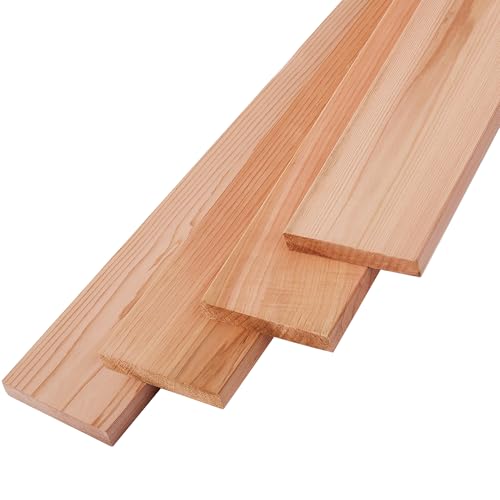
For most exposed exterior shutters, cedar is the safest practical wood choice. Look for clear or select boards rather than knotty fence-grade material. Cedar’s softness is manageable: predrill screw holes, avoid overtightening, and use fasteners suited to exterior use. Spanish cedar can be an excellent option, but availability and price may make it less convenient than western red cedar.
Pine is not automatically a mistake. A clear, dry pine board with sound joints can serve well on a covered porch or other sheltered wall, especially if you are willing to inspect and repaint it. It is a poor bargain if the boards already have loose knots or if the shutters will take regular wetting and you expect long intervals between maintenance.
Buying the wood
For small shutters, hand-selecting boards at a lumberyard is useful: sight down each board for bow and twist, and check both faces for knots, splits, and wane. If you need several boards, buy a little extra so you can reject defects and match grain. A search for clear western red cedar boards can help you compare stock, but verify thickness, grade, and shipping dimensions before ordering.
Do not use pressure-treated lumber simply because it is intended for outdoor use. It can be wet, prone to warping as it dries, and more difficult to finish cleanly. If you use it, follow the treatment manufacturer’s guidance and allow it to dry adequately before painting. For ordinary painted shutters, dry, paint-grade cedar or pine is usually easier to build and finish.
Prepare the wood before painting
Let newly purchased boards acclimate in a dry, ventilated space, stacked with spacers, until they are close to the moisture conditions where they will be installed. A moisture meter is useful; around 12% to 15% moisture content is a reasonable target for many exterior projects, but follow the paint and wood-product instructions where they differ. Painting wood that is too wet can trap moisture and undermine adhesion.
Cut and assemble the shutters before the final paint coats, but seal every surface you can reach. Sand rough boards with 80- to 120-grit paper, then finish-sand to 120 or 150 grit. Going much finer can polish the surface and reduce primer grip. Ease sharp edges with a small chamfer or a couple of sanding passes; paint tends to be thin on knife-sharp corners, leaving them exposed to water.
Prime all faces, edges, cut ends, and joints. End grain absorbs far more coating than a broad face, so apply an extra coat of primer to the ends and let it soak in rather than leaving bare patches. Use an exterior wood primer compatible with the topcoat. For knots or resin-prone pine, a stain-blocking primer is important; ordinary primer may not stop brown discoloration from bleeding through. Compare exterior stain-blocking wood primers and check the label for exterior use and topcoat compatibility.
Paint, glue, and assembly details
Apply two finish coats of quality exterior paint over the primer, following the label’s temperature, recoat-time, and coverage instructions. Paint the backs and edges as carefully as the front; an unsealed back can take up moisture and drive peeling from behind. For a smooth finish, lightly sand raised grain after the primer dries, remove dust, and avoid applying thick coats that bridge joints or obscure louver gaps.
Where a shutter design uses glued wood joints, choose an exterior-rated adhesive and make tight-fitting joints; glue is not a substitute for mechanical support or water-shedding design. Keep water from sitting on horizontal ledges, and leave appropriate clearance from siding so the shutters can dry. Use corrosion-resistant screws—stainless steel or suitable coated exterior fasteners—and predrill near board ends to reduce splitting and paint cracks around the holes.
Inspect the finish once a year, especially at end grain, joints, and fastener holes. Touch up chips before water gets underneath. In harsh weather, repainting may be needed after several years; sheltered shutters can go longer. A cheaper pine shutter is reasonable when the location is protected and you accept that inspection and repainting are part of the deal. For an exposed wall and a longer service life, clear cedar, sealed on every face and edge, is the better buy.
0 Comments