

Key takeaways
- Compare the best sharpening stones for chisels and plane irons, from the budget King KW65 combo to Shapton, Naniwa and DMT picks, with grits and specs.
What's inside
- Table of Contents
- 1. Shapton Pro Kuromaku 1000 (K0702)
- 2. King KW65 1000/6000 Combination Whetstone
- 3. Naniwa Super Ceramic 1000 with Base (SS-1000)
- 4. DMT DuoSharp Plus Extra Fine/Fine (WM8EF-WB)
- 5. Suehiro Dual-Sided 1000/3000 Sharpening Stone
- How to Choose a Sharpening Stone for Bench Tools
- FAQ
- Conclusion
As an Amazon Associate I earn from qualifying purchases. This post may contain affiliate links at no extra cost to you.
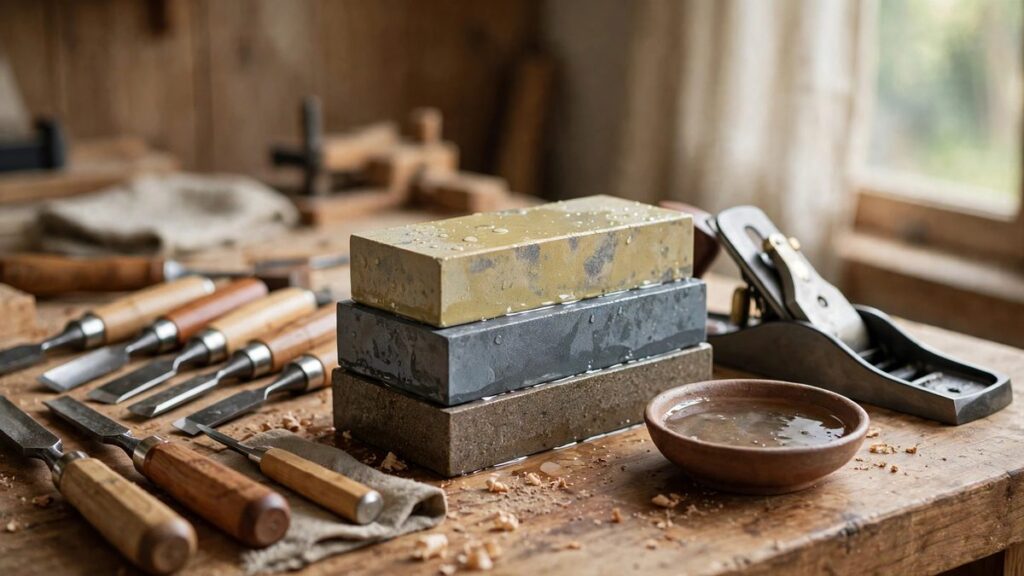
The best sharpening stone for chisels and plane irons for most woodworkers is the Shapton Pro Kuromaku 1000, because it cuts fast, stays flat longer than softer stones, needs no soaking, and its 70 mm wide face handles wide plane irons without rocking. Woodworkers building a first kit on a budget should start with the King KW65 1000/6000 combination stone, which pairs a working grit with a polishing grit in one block. Anyone who sharpens hard modern tool steels will cut fastest on the Naniwa Super Ceramic 1000, while the DMT DuoSharp Plus suits woodworkers who never want to flatten a stone again.
As an Amazon Associate, we earn from qualifying purchases.
Bench tools ask more of a stone than kitchen knives do. A chisel or plane iron is sharpened on a wide, dead-flat bevel, and the back of the blade must be flattened and polished as well, because the cutting edge is formed where the bevel meets the back. That means surface width, flatness, and a sensible grit progression matter more here than raw speed alone. The five stones below range from a first budget setup to premium splash-and-go ceramics and a diamond plate, and each is wide enough for common bench chisels and plane irons.
Table of Contents
- 1. Shapton Pro Kuromaku 1000 (K0702)
- 2. King KW65 1000/6000 Combination Whetstone
- 3. Naniwa Super Ceramic 1000 with Base (SS-1000)
- 4. DMT DuoSharp Plus Extra Fine/Fine (WM8EF-WB)
- 5. Suehiro Dual-Sided 1000/3000 Sharpening Stone
- How to Choose a Sharpening Stone for Bench Tools
- FAQ
- Conclusion
- Product and ASIN Reference
1. Shapton Pro Kuromaku 1000 (K0702)
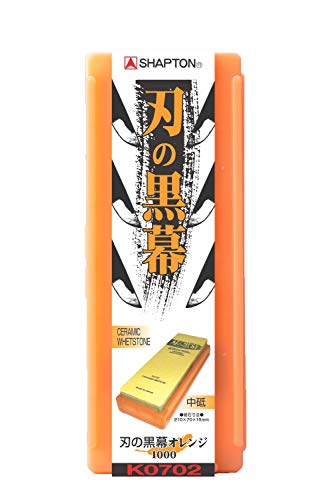
The Shapton Pro Kuromaku 1000 is the stone most bench-tool sharpeners settle on once they tire of soaking and flattening softer water stones. It is a splash-and-go ceramic: wet the surface and start sharpening, with no tub of water on the bench. The bond is hard, so the surface dishes far more slowly than a King or Suehiro stone, which keeps bevels flat and reduces flattening work. At 210 mm long and 70 mm wide, it gives a long stroke for plane irons and enough width for a 60 mm iron worked straight, without rocking.
The 1000 grit sits in the middle of a bench progression. It raises a burr quickly on a dull edge, repairs minor wear, and leaves a scratch pattern that a finer stone or a strop cleans up in short order. The stone ships in a plastic case that doubles as a stone holder, raising the work surface and keeping fingers clear. For a one-stone setup paired with a strop, this is the strongest pick in the roundup, and it anchors the premium tier here.
Specs
- Grit: 1000 (medium)
- Material: Ceramic
- Size: 210 x 70 x 15 mm (about 8.25 x 2.75 x 0.6 in)
- Water use: Splash-and-go, no soaking required
- Included: Plastic storage case that doubles as a stone holder
- Color: Orange
- Tier: Premium
2. King KW65 1000/6000 Combination Whetstone
The King KW65 is the classic first water stone, and it remains the easiest way to cover two grits with one purchase. One face is 1000 grit for establishing a bevel and removing wear; the other is 6000 grit for refining and polishing the edge before stropping. That pairing takes a chisel or plane iron from dull to working sharp with nothing else on the bench, which is why this stone anchors the budget tier.
The stone measures 8 x 2.5 x 1 in, wide enough for bench chisels and most plane irons, and it arrives with a plastic base that keeps it steady and lifts it off the bench. It is a soaking stone: the maker directs users to soak it and keep it wet during use. The surface is softer than the Shapton or Naniwa ceramics, so it cuts with a forgiving feel and dishes faster. Plan on flattening it regularly, especially if you sharpen wide irons often. For a first kit, that maintenance trade-off is reasonable given the two-grit coverage.
Specs
- Grit: 1000 and 6000 combination
- Material: Ceramic
- Size: 8 x 2.5 x 1 in
- Weight: 1 lb
- Water use: Soaking stone, keep wet while in use
- Included: Plastic base
- Origin: Made in Japan
- Tier: Budget
3. Naniwa Super Ceramic 1000 with Base (SS-1000)
The Naniwa Super Ceramic 1000, model SS-1000, is built for speed on difficult steels. The published product description states that the stone was formulated for rapid sharpening of stainless steel, high-alloy steel, and blue steel edges that resist other synthetic water stones, and that its surface has a slight elasticity that keeps a tool from skidding. For woodworkers running A2, PM-V11, or other wear-resistant plane irons and chisels that feel slow on softer stones, that fast, controlled cutting action is the reason to choose this one.
The stone measures 8.27 x 2.76 x 0.98 in, the widest face in this roundup, which suits wide jointer and jack plane irons and gives room for a slight sideways skew stroke on chisels. It comes mounted on a plastic base, ready to use without a separate holder, and at just under 2 lb it stays planted during heavy grinding strokes. Lubricate with water while sharpening, per the maker’s instructions. This is a single 1000 grit stone, so pair it with a finer stone or a loaded strop for the final polish. It sits in the premium tier.
Specs
- Grit: 1000 (medium)
- Material: Ceramic
- Model: SS-1000
- Size: 8.27 x 2.76 x 0.98 in
- Weight: 1.98 lb
- Included: Plastic base, mounted
- Color: Green
- Tier: Premium
4. DMT DuoSharp Plus Extra Fine/Fine (WM8EF-WB)
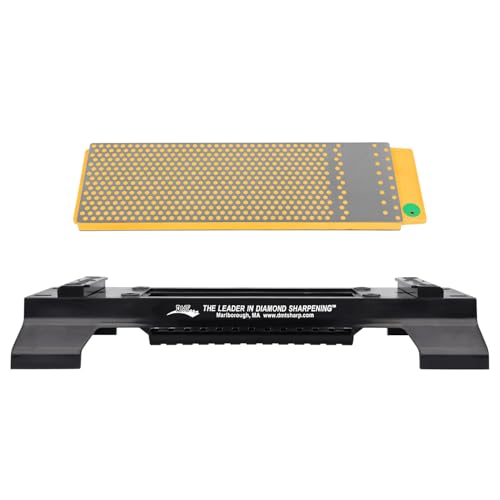
The DMT DuoSharp Plus takes a different approach: instead of a bonded abrasive block, it is a steel plate coated with monocrystalline diamond, so it cannot dish, cup, or groove. That flatness is its main appeal for bench tools. The same plate that hones an edge also flattens the backs of chisels and plane irons, a job that wears a groove into a water stone. Model WM8EF-WB pairs a Fine side, rated 600 mesh and 25 micron, with an Extra Fine side rated 1200 mesh and 9 micron, and includes a bench stone base.
Both faces combine interrupted diamond areas, which clear swarf and cut quickly, with a continuous diamond zone for small or pointed tools. DMT specifies sharpening dry or with water, with no oils or compounds, and the plate is made in the USA. The feel differs from a water stone: diamond cuts aggressively even at fine ratings, so a light touch matters. There is no coarse face here, so a nicked edge still needs a coarse stone or grinder first. As a flattening-free, long-wearing option in the premium tier, it earns its place.
Specs
- Grit: Fine (600 mesh, 25 micron) and Extra Fine (1200 mesh, 9 micron)
- Material: Monocrystalline diamond on a precision flat plate
- Model: WM8EF-WB
- Surface: 8 in plate with interrupted and continuous diamond zones
- Weight: 516 g
- Included: Bench stone base
- Water use: Sharpen dry or with water, no oils needed
- Origin: Made in USA
- Tier: Premium
5. Suehiro Dual-Sided 1000/3000 Sharpening Stone
The Suehiro dual-sided stone is the compact budget option in this roundup. One face is 1000 grit for sharpening and restoring an edge; the other is 3000 grit for finishing, a pairing that covers routine maintenance when edges are touched up before they get badly dull. The stone measures 7.2 x 2.48 x 1.06 in and weighs 0.58 lb, so it stores in a drawer and travels easily. A non-slip rubber base is included.
The maker describes it as a water stone from one of Japan’s established sharpening stone manufacturers, and the product description notes that water stones give the user direct control over the process, which suits freehand honing and guide work alike. The trade-offs for the size and budget tier are surface area and longevity: the narrower face demands care with wide plane irons, and a softer soaking stone needs regular flattening. For narrow chisels, carving tools, and a first or secondary stone, it is a sensible, inexpensive choice.
Specs
- Grit: 1000 and 3000 dual-sided
- Model: 440-952
- Size: 7.2 x 2.48 x 1.06 in
- Weight: 0.58 lb
- Included: Non-slip rubber base
- Water use: Water stone, soak before use
- Tier: Budget
How to Choose a Sharpening Stone for Bench Tools
Start with the grit progression
A workable bench progression has three steps. A coarse stage around 220 to 400 grit is only for damage: nicks, chips, and regrinding a bevel. The middle stage, roughly 1000 grit, does the everyday work of raising a burr and restoring a worn edge. The finishing stage, 3000 to 8000 grit or a strop with compound, polishes the edge. Combination stones like the King 1000/6000 and the Suehiro 1000/3000 cover the second and third steps in one block, which suits first kits. Single-grit stones like the Shapton and Naniwa 1000s slot into a progression you build over time.
Match the stone width to your widest iron
A stone should be at least as wide as the widest blade you sharpen, or the blade edge hangs off the side and rocks. Most bench chisels are 32 mm or narrower, but jack and jointer plane irons run 57 to 60 mm, so a stone around 70 mm wide, like the Shapton and Naniwa here, handles them straight-on. Narrower stones still work with a diagonal stroke, but they demand more attention to keep the bevel even.
Soaking versus splash-and-go
Soaking stones, including the King KW65 and the Suehiro, need several minutes in water before use and regular flattening because their softer bonds release abrasive quickly. Splash-and-go ceramics, like the Shapton Pro and the Naniwa Super Ceramic, need only a wet surface, feel harder, and stay flat longer, at a higher tier. Diamond plates skip both concerns: they work dry or with water and never dish.
Plan for flattening from the start
Every bonded water stone eventually dishes, and a dished stone rounds bevels. Whatever stone you choose, budget for a flattening method, whether that is a dedicated flattening stone, a coarse diamond plate, or wet abrasive paper on a flat reference surface. The DMT plate above doubles as a flattening tool for the other stones in a kit, which is a common reason woodworkers add one diamond plate to a water stone setup.
Consider your tool steels
Plain high-carbon and O1 steels sharpen readily on almost any stone. A2 and powder-metal steels contain hard carbides that cut slowly on softer stones, so a fast ceramic like the Naniwa, a hard stone like the Shapton, or a diamond plate shortens the work noticeably. If your bench tools are mostly vintage carbon steel, the budget stones here serve well; if they are modern alloys, weight the choice toward the harder abrasives.
FAQ
What grit stone do I need for chisels and plane irons?
A 1000 grit stone covers routine sharpening: it restores a worn edge and raises a burr. Follow it with a finer stage, 3000 to 8000 grit or a strop, for a polished edge. Reserve coarse grits near 220 to 400 for repairing nicks and chips, since they remove metal quickly and leave deep scratches.
Do I have to soak every water stone before using it?
No. Soaking stones such as the King KW65 and the Suehiro need a soak and should stay wet during use. Splash-and-go stones such as the Shapton Pro Kuromaku and the Naniwa Super Ceramic only need water on the surface. Always follow the maker instructions for the stone you own, because over-soaking a splash-and-go stone can soften its surface.
How wide should a sharpening stone be for plane irons?
Aim for a stone at least as wide as your widest iron. Jack and jointer plane irons are commonly 57 to 60 mm wide, so a stone around 70 mm wide lets the iron travel straight without rocking. Narrower stones work with a diagonal stroke, but they make it easier to round the corners of the edge by accident.
How often does a water stone need flattening?
Flatten whenever the surface no longer checks flat against a straightedge, which for frequent sharpening can mean every few sessions on a soft stone. Hard splash-and-go ceramics hold flatness much longer, and diamond plates never dish. A flat stone is not optional for bench tools, because a dished surface rounds bevels.
Conclusion
For most woodworkers, the Shapton Pro Kuromaku 1000 is the best sharpening stone for chisels and plane irons: wide, hard, fast, and ready with a splash of water. The King KW65 remains the budget pick for a first kit, and the Suehiro 1000/3000 suits anyone who wants a compact second stone. The Naniwa Super Ceramic 1000 earns its premium place on hard modern steels, and the DMT DuoSharp Plus is the pick for flattening backs and skipping stone maintenance. Choose by the steels you own and the progression you plan to build.
Related guides
More from Amazon
Programs that pair well with the guide above. Offers and eligibility are set by Amazon and may change.
A free business account with business pricing and bulk-buying tools for work, shop or home office.
Create a business accountFree shipping on eligible items, Prime Video and more. Eligible new members can start with a free trial.
Start a Prime free trialAudiobooks and podcasts to listen to on the go. Eligible new members can start with a free trial.
Try Audible freeAd-free music streaming. Eligible new subscribers can start with a free trial.
Try Music Unlimited freeAs an Amazon Associate we earn from qualifying purchases.

Write Your Review
No reviews yet. Be the first to share your experience!