

Key takeaways
- Compare the best Japanese bench chisels for joinery, from the KAKURI 3-piece starter set to Aogami blue steel and hand-forged oire nomi picks.
What's inside
- Table of Contents
- Why Japanese Bench Chisels Cut Differently
- KAKURI Japanese Wood Chisel Set 3-Piece
- KAKURI Japanese Wood Chisel Set Damascus 6-Piece
- KAKURI Japanese Wood Chisel 42mm
- Shintaro Authentic Japanese Chisel Set 3 Pieces
- Miki Uchihamono Oire Nomi 9mm by Iwasaki
- How to Choose Japanese Bench Chisels
- FAQ
- Conclusion
As an Amazon Associate I earn from qualifying purchases. This post may contain affiliate links at no extra cost to you.
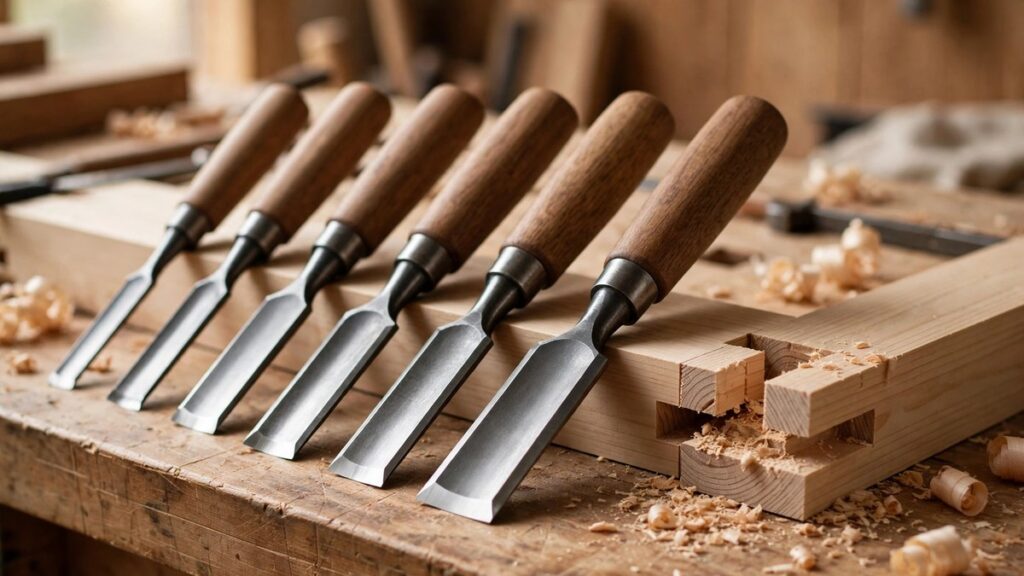
- Top Pick: KAKURI Japanese Wood Chisel Set 3-Piece
- Runner-up: KAKURI Japanese Wood Chisel Set Damascus 6-Piece
- Also consider: KAKURI Japanese Wood Chisel 42mm
Table of Contents
- Why Japanese Bench Chisels Cut Differently
- KAKURI Japanese Wood Chisel Set 3-Piece
- KAKURI Japanese Wood Chisel Set Damascus 6-Piece
- KAKURI Japanese Wood Chisel 42mm
- Shintaro Authentic Japanese Chisel Set 3 Pieces
- Miki Uchihamono Oire Nomi 9mm by Iwasaki
- How to Choose Japanese Bench Chisels
- FAQ
- Conclusion
- Product and ASIN Reference
Why Japanese Bench Chisels Cut Differently
The short answer: if you want a bench chisel that takes a finer edge than a typical Western chisel and pares end grain cleanly, a Japanese oire nomi is the pick, and the KAKURI 3-piece set is the most sensible place to start. Japanese bench chisels pair a thin layer of very hard carbon steel with a soft iron body, a construction called lamination. The hard layer does the cutting and can be honed to a keen, polished edge, while the softer iron behind it absorbs mallet blows and keeps the blade from behaving like a brittle shard. The back of the blade is hollow ground, so flattening it on a waterstone takes seconds instead of minutes, because only the rim of the back touches the stone. Handles are shorter than Western patterns and end in a steel hoop, the katsura, which is made to be struck with a hammer or wooden mallet. The five picks below cover the realistic buying range: an affordable starter set, a full six-piece set in premium blue paper steel, a wide single chisel for paring and flushing, a budget three-piece set, and a hand-forged artisan single from Miki City.
As an Amazon Associate, we earn from qualifying purchases.
KAKURI Japanese Wood Chisel Set 3-Piece

This is the set most woodworkers should buy first. KAKURI, a Sanjo City maker founded in 1946, builds the set around three widths that cover the bulk of joinery work: 9 mm for small mortises and dovetail sockets, 15 mm for general chopping and paring, and 24 mm for tenon cheeks and wider mortises. Each blade is SK85 Japanese carbon steel laminated over soft iron, so the edge hardens well beyond what a one-piece budget chisel manages, yet the blade still sharpens quickly on waterstones. The hollow-ground back means the first flattening session is short, and the maker includes an English instruction sheet that explains the traditional step of setting the handle hoop before first use. White oak handles keep the set in the budget-to-mid-range tier while standing up to mallet work, and the blades arrive with protective caps. For a beginner building a first Japanese tool kit, this set teaches every core skill, from hoop setting to back flattening, without the commitment of a large boxed set.
Specs:
- Blade widths: 9 mm, 15 mm, 24 mm
- Blade material: SK85 carbon steel laminated with soft iron
- Handle: Japanese white oak with steel hoop
- Overall length: 215 mm
- Weights: 96 g, 128 g, and 164 g across the three sizes
- Part number: C-215-1
- Made in Japan
KAKURI Japanese Wood Chisel Set Damascus 6-Piece

The Damascus 6-piece set is the premium step up, built for woodworkers who already know they prefer the Japanese pattern and want a complete width range in one purchase. The blades use Aogami blue paper steel No. 2 for the cutting layer, a high-carbon steel prized in Japanese toolmaking for edge retention, laminated in a multi-layer pattern that gives the blade its wavy Damascus figure. Six widths, 6, 12, 19, 25, 32, and 38 mm, cover everything from narrow dovetail work to wide paring across board edges. Handles are Japanese red oak, denser and more stain resistant than the white oak on the starter set, and each handle carries the steel hoop needed for hammer work. The set ships in a paulownia wood box, the traditional lightweight storage case used for fine Japanese tools, which keeps edges separated and protected. At 3.4 pounds for the boxed set, it is a considered, buy-it-once purchase rather than a trial, and it suits furniture makers who chop mortises weekly and want one consistent set across the bench.
Specs:
- Blade widths: 6 mm, 12 mm, 19 mm, 25 mm, 32 mm, 38 mm
- Blade material: Aogami blue paper steel No. 2, multi-layer laminated
- Handle: Japanese red oak with steel hoop
- Storage: Paulownia wood box included
- Item weight: 3.4 pounds for the set
- Part number: 710838
- Made in Japan
KAKURI Japanese Wood Chisel 42mm

A single wide chisel earns its place next to a set, and the KAKURI 42 mm is the practical way to add one. At 1.65 inches wide, it pares wide tenon cheeks flat in fewer passes, trims the bottoms of wide housings and dadoes, and flushes dowels and plugs without the rocking that a narrow blade invites. The blade follows the same construction as the 3-piece set, SK85 carbon steel laminated over soft iron with a hollow-ground back, so its sharpening routine matches the rest of a KAKURI kit. The white oak handle is hoop-fitted for mallet taps, though most woodworkers will push this width by hand for controlled paring cuts. It weighs 218 g, light enough for one-handed guidance along a straightedge. Buyers who started with the 3-piece set and found themselves reaching for more width, for example when cleaning up breadboard ends or wide sliding dovetails, will find this the natural companion piece, and it also works as a first single chisel for someone who mainly needs a wide paring tool.
Specs:
- Blade width: 42 mm (1.65 inches)
- Blade material: SK85 carbon steel laminated with soft iron
- Handle: Japanese white oak with steel hoop
- Overall length: 215 mm
- Weight: 218 g
- Part number: C-220-1
- Made in Japan
Shintaro Authentic Japanese Chisel Set 3 Pieces

The Shintaro set is the budget route into Japanese bench chisels. It offers three pieces in the same starter format as the established Sanjo sets, giving beginners a low-commitment way to learn the habits these tools ask for: flattening a hollow-ground back, setting the hoop, and honing on waterstones rather than a grinder. Because the investment is small, it is a sensible choice for a woodworker who is curious about the shorter Japanese handle and the lighter, two-handed paring style but is not ready to spend mid-range money to find out. It also works as a secondary set for a shared workshop, a school bench, or a toolbox that travels to site work where a premium set would be at risk. Shintaro sells the set through Amazon with the specification sheet kept brief, so buyers should expect a straightforward, no-frills tool roll rather than the presentation packaging of the premium sets. For occasional joinery, hobby furniture builds, and first dovetails, it covers the learning curve at the lowest tier in this roundup.
Specs:
- Pieces: 3
- Type: Japanese bench chisels in the oire nomi pattern
- Intended work: Mortise and tenon joinery, paring, and detail cuts
- Tier: Budget
- Sold through Amazon under the Shintaro brand
Miki Uchihamono Oire Nomi 9mm by Iwasaki
The final pick is a single hand-forged chisel from Miki City in Hyogo, the other historic heartland of Japanese edge-tool making, where the craft carries a traditional designation as Banshu Miki Uchihamono. This 9 mm oire nomi is forged by master smith Eisuke Iwasaki of Iwasaki Chisel Works and sold under his Hidarino Hiro brand. The blade laminates a white paper steel edge over a soft iron body, the classic construction for a fine paring and joinery chisel, and the back uses the single-hollow profile traditional to the region. The red oak handle is fitted with a steel hoop and the edge is finished ready for work, with a certificate from the Miki hardware cooperative included. A 9 mm width is the size many woodworkers reach for most often, for hinge gains, small mortises, and dovetail cleanup. This is a premium, one-at-a-time purchase for someone who wants to experience a traditionally forged blade alongside a working set, and it ships internationally through the Amazon Japan Global Store rather than a domestic listing.
Specs:
- Blade width: 9 mm
- Blade material: White paper steel edge laminated to soft iron
- Handle: Japanese red oak with steel hoop
- Maker: Eisuke Iwasaki, Iwasaki Chisel Works, Miki City
- Finish: Hand-forged, supplied ready for work with certificate
- Availability: Amazon Japan Global Store listing
How to Choose Japanese Bench Chisels
Start with width coverage rather than piece count. A 9, 15, and 24 mm trio handles most mortise, tenon, and dovetail work; wider sets add convenience for paring and for matching chisel width to mortise width exactly. Next, look at the steel. Laminated blades with a named Japanese carbon steel, such as SK85 or Aogami blue paper steel, hold a finer edge than generic one-piece blades and are the defining feature of the pattern, so treat unnamed steel as a sign of a budget tool. Check the back: a hollow ground back is standard on genuine oire nomi and makes flattening fast, and a blade that arrives needing heavy lapping defeats the purpose. Handles should be oak with a steel striking hoop; before first use, the hoop usually needs setting, which means tapping it down and slightly mushrooming the handle end over it, a normal one-time step described in the maker instructions. Plan for sharpening as part of the purchase: these edges are maintained on waterstones, typically a medium stone for the bevel and a fine stone for polishing, and the hard steel does not suit dry grinding wheels. Finally, match the tier to your pace. Beginners learn well on a budget or mid-range set, while the premium Aogami set and hand-forged singles reward woodworkers who already sharpen confidently and chop joinery every week.
FAQ
Do Japanese bench chisels need different sharpening than Western chisels?
Yes, in routine rather than in principle. The hollow-ground back flattens quickly on a waterstone because only the rim contacts the stone, and the hard laminated edge is maintained with waterstones instead of oil stones or dry grinders, which can overheat the thin edge layer.
What does setting the hoop on a new oire nomi mean?
The steel hoop at the top of the handle ships slightly loose. Setting it means driving it down the handle taper and gently mushrooming the wood over its top edge, so the hoop stays fixed and spreads mallet blows. It is a one-time, five-minute step described in the maker instructions.
Can Japanese chisels be struck with a steel hammer?
They are designed for it. The hoop-fitted oak handle is built around hammer use, and Japanese woodworking traditionally pairs these chisels with a metal-faced hammer. A wooden mallet also works and is gentler while you learn control.
Which widths should a beginner buy first?
A 9 mm, 15 mm, and 24 mm combination covers small mortises, general joinery, and tenon work for most furniture projects. Add a wide chisel around 36 to 42 mm later for paring and flushing, and narrower widths only when your joinery starts to demand them.
Conclusion
For most readers, the KAKURI 3-piece set is the right first step into Japanese bench chisels: honest laminated steel, the three widths that matter, and a mid-range tier that forgives beginner sharpening mistakes. The Damascus 6-piece set in Aogami blue paper steel is the upgrade for a full width range in a presentation box, while the KAKURI 42 mm fills the wide paring role beside any starter set. The Shintaro 3-piece set keeps the entry cost at the budget tier, and the hand-forged Miki 9 mm from Iwasaki shows where the craft tradition leads. Whichever route you take, budget for waterstones alongside the chisels, set the hoops before the first project, and the edges will reward the small amount of upkeep these tools ask for.
Related guides
More from Amazon
Programs that pair well with the guide above. Offers and eligibility are set by Amazon and may change.
A free business account with business pricing and bulk-buying tools for work, shop or home office.
Create a business accountFree shipping on eligible items, Prime Video and more. Eligible new members can start with a free trial.
Start a Prime free trialAudiobooks and podcasts to listen to on the go. Eligible new members can start with a free trial.
Try Audible freeAd-free music streaming. Eligible new subscribers can start with a free trial.
Try Music Unlimited freeAs an Amazon Associate we earn from qualifying purchases.




Write Your Review
No reviews yet. Be the first to share your experience!