

Key takeaways
- Compare the best flush cut saws for woodworking, from Japanese pull saws to a Western double-edge pick, with blade specs, TPI and handle details.
What's inside
As an Amazon Associate I earn from qualifying purchases. This post may contain affiliate links at no extra cost to you.
- Top Pick: DEWALT DWHT20541 Flush Cut Pull Saw
- Runner-up: SUIZAN Flush Cut Saw 7 Inch
- Also consider: Temple Tool Co. Japanese Flush Cut Saw 6 Inch
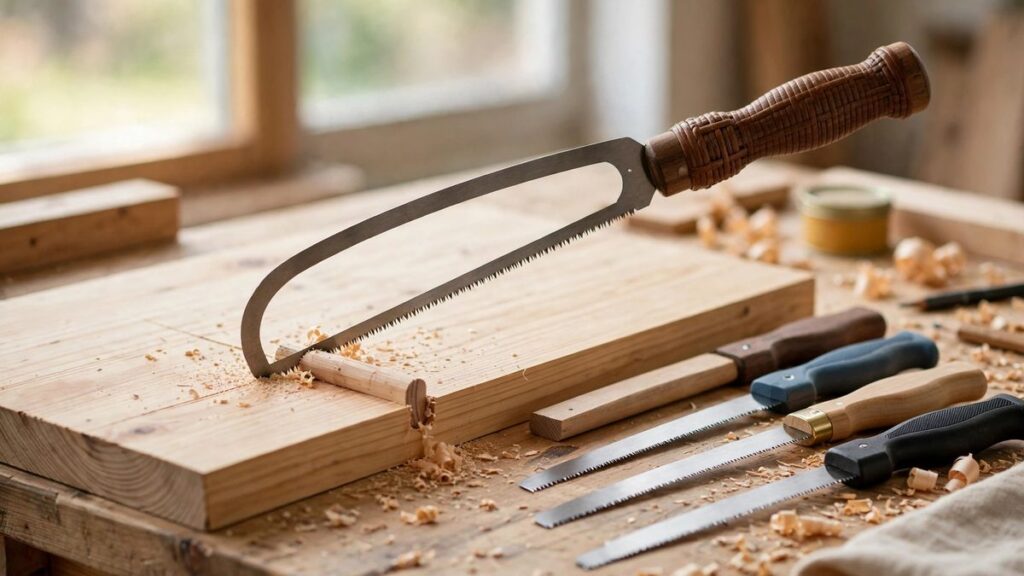
The best flush cut saw for most woodworkers is a Japanese pull saw with a thin, flexible blade and teeth that have no set, because that combination trims dowels, plugs, and proud tenons level with the surrounding surface without scratching the finished wood around them. A regular hand saw cannot do this job cleanly: its teeth are bent outward in an alternating pattern called set, and those angled teeth score the surface the moment the blade lies flat against it. A flush cut saw removes the set entirely, so the blade can flex, ride directly on the workpiece, and slice the protruding material off at surface level. The five saws below run from a long single-edge Japanese saw for wide plugs and tenon ends to compact double-edge models, plus one Western option from a mainstream tool brand.
As an Amazon Associate, we earn from qualifying purchases.
Table of Contents
- Why a Flush Cut Saw Cuts Flush
- SUIZAN Flush Cut Saw 7 Inch
- Temple Tool Co. Japanese Flush Cut Saw 6 Inch
- JORGENSEN 5 Inch Japanese Flush Cut Saw
- SUIZAN Flush Cut Saw 5 Inch
- DEWALT DWHT20541 Flush Cut Pull Saw
- How to Choose a Flush Cut Saw
- FAQ
- Conclusion
- Product and ASIN Reference
Why a Flush Cut Saw Cuts Flush

Three design details separate a flush cut saw from every other saw in the shop. First, the teeth have no set, so the cutting edge stays in the same plane as the blade and leaves no scratch pattern on the surface beneath. Second, the blade is thin and flexible, which lets it bend gently and stay in contact with the reference surface along the whole cut. Third, most flush cut saws cut on the pull stroke, so the blade stays in tension instead of buckling the way a thin push-cut blade would.
SUIZAN Flush Cut Saw 7 Inch

The SUIZAN Flush Cut Saw 7 inch, model SFL-003, is the strongest all-around pick in this group because it pairs the longest blade here with the thinnest profile. Its 7.1 inch blade gives a longer stroke than the five and six inch saws below, which matters on wide plugs and tenons: fewer strokes means fewer chances for the blade to wander and a cleaner surface at the end. The blade is only 0.0078 inches thick, so it flexes readily and hugs the workpiece, and the teeth carry no set, so the finished surface next to the cut stays unmarked. SUIZAN makes this saw in Japan from Japanese steel, and the blade is interchangeable, so a worn or damaged blade can be swapped while the wood handle stays in service. At 4.8 ounces with an overall length of 16.4 inches, it stays light enough for controlled one-handed work at the bench. Woodworkers who trim through tenons on furniture frames, flush-cut large dowel joints, or pare plugs on wide panels get the most from the extra blade length. It sits in the mid-range tier of this group, and it is the saw to choose if only one flush cut saw will live in the toolbox.
Specs:
- Blade length: 7.1 inches (180 mm)
- Blade thickness: 0.0078 inches
- Tooth set: none, single cutting edge
- Blade material: Japanese steel
- Blade replacement: interchangeable blade
- Handle: wood
- Weight: 4.8 ounces
- Overall length: 16.4 inches
- Origin: made in Japan
Temple Tool Co. Japanese Flush Cut Saw 6 Inch

The Temple Tool Co. Japanese Flush Cut Saw 6 inch, model F-6, is the premium pick, built around a 150 mm blade of SK85 Japanese tool steel. Its defining feature is the pair of labeled edges: one edge runs 17 teeth per inch for hardwood and the other runs 20 teeth per inch for softwood, so the same saw handles a maple plug and a pine dowel without a blade change. The blade measures 0.4 mm thick and cuts a 0.45 mm kerf, and with no tooth set it lies flat against the adjoining surface for trimming. The beechwood handle has a stained mahogany finish and is secured with brass hardware, and the blade is replaceable, which extends the working life of the tool. Temple includes a storage case, a practical detail for a blade this thin, since flush cut teeth bend easily in a crowded toolbox. At 310 mm overall and 3.17 ounces, it is light enough that the pull stroke does the work without downward pressure. Furniture makers and box builders who trim plugs and tenons in mixed hardwoods and softwoods, and who want the edges labeled rather than memorized, are the natural audience for this one.
Specs:
- Blade length: 150 mm (6 inches)
- Blade material: SK85 Japanese tool steel
- Blade thickness: 0.4 mm
- Kerf: 0.45 mm
- Teeth: 17 TPI hardwood edge, 20 TPI softwood edge
- Tooth set: none
- Handle: beechwood with brass hardware
- Blade replacement: replaceable blade
- Overall length: 310 mm
- Weight: 3.17 ounces
- Included: storage case
JORGENSEN 5 Inch Japanese Flush Cut Saw

The JORGENSEN 5 inch Japanese flush cut saw is the budget-friendly double-edge option, and its blade specification is the most aggressive in this roundup. The SK5 steel blade carries 18 teeth per inch on one edge for quicker cutting and 25 teeth per inch on the other edge for a finer finish, which makes it a sensible single saw for trimming softwood plugs fast and then flipping to the fine edge for hardwood detail work. The beechwood handle keeps the traditional Japanese profile, and the whole saw weighs just 3.52 ounces. The blade can be loosened with a single screw and replaced, so the saw is not a disposable tool when the teeth eventually dull. The five inch blade suits the most common flush cutting jobs in a home shop, such as trimming dowels, cutting plugs after glue-up on small boxes and frames, and paring protruding wedges. It suits buyers adding flush cutting to an existing Japanese saw collection, or trying the pull-saw format before spending more, at the budget tier.
Specs:
- Blade length: 5 inches
- Blade material: SK5 steel
- Teeth: 18 TPI and 25 TPI double edges
- Handle: beechwood
- Blade replacement: replaceable, single-screw release
- Weight: 3.52 ounces
- UPC: 044295706322
SUIZAN Flush Cut Saw 5 Inch
The SUIZAN Flush Cut Saw 5 inch, model SFL-001, is the compact pick for detail work where a longer blade gets in the way. The 120 mm blade is double-edged, with 17 teeth per inch on one side and 25 teeth per inch on the other, so it covers both moderate trimming and fine finishing in a very small tool. The blade is 0.012 inches thick with no tooth set, which lets it flex flat against a surface and trim small plugs, dowels, and inlay pieces without marking the surrounding wood. A beech handle keeps the grip traditional and secure, and at 50 grams the saw is the lightest in this group by a wide margin, which helps on cuts inside cabinets and other awkward positions. Like its larger sibling above, it is made in Japan. This is the saw for model makers, luthiers, and anyone trimming small-diameter plugs in tight quarters, such as inside drawer boxes or between frame members, where the seven inch model simply cannot fit. It sits in the budget tier, and many woodworkers will reasonably own it alongside a longer saw rather than instead of one.
Specs:
- Blade length: 120 mm (5 inches)
- Blade thickness: 0.012 inches
- Teeth: 17 TPI and 25 TPI double edges
- Tooth set: none
- Handle: beech
- Weight: 50 grams
- Model: SFL-001
- Origin: made in Japan
DEWALT DWHT20541 Flush Cut Pull Saw
The DEWALT DWHT20541 is the Western option in this group, a flush cut pull saw from a mainstream tool brand rather than a Japanese saw specialist. Its blade is double-sided and flexible, with a five inch cutting length, and the saw measures about 14.1 inches overall and weighs 4.6 ounces. The double-sided layout means a fresh edge is available by flipping the saw over, and the flexible blade bends to follow the surface being trimmed, the same working principle as the Japanese models. DEWALT distribution makes it easy to find alongside other jobsite tools, and its handle shape suits users who prefer that grip style over a straight Japanese handle. It is a practical pick for trim carpenters and remodelers who flush-cut dowels, shims, and trim pieces on site and want one saw that lives in the truck toolbox rather than the joinery bench. Within this group it sits in the budget tier, and it trades the labeled dual edges and replaceable blades of the Temple and JORGENSEN saws for brand reach and a simple, rugged layout.
Specs:
- Blade length: 5 inches
- Blade style: double-sided, flexible
- Overall length: about 14.1 inches
- Weight: 4.6 ounces
- Model: DWHT20541
How to Choose a Flush Cut Saw
Blade length. Match the blade to the widest material being trimmed. A seven inch blade covers wide plugs and through tenons in fewer strokes, while a five inch blade gives better control on small plugs and fits inside cabinets and drawer boxes. Most benches are well served by one of each.
Single edge or double edge. Single-edge saws dedicate the whole blade to one tooth pattern and often run thinner. Double-edge saws pair two tooth counts, typically a faster edge and a finer edge, or one edge for hardwood and one for softwood. If projects mix species, a labeled double edge removes the guesswork.
Teeth per inch. Higher tooth counts cut slower and leave a smoother surface; lower counts remove material faster with a rougher finish. The range in this roundup runs from 17 to 25 teeth per inch, which is the normal band for flush trimming. Choose the fine end for visible furniture surfaces and the coarser end for hidden joinery and softwood.
Blade thickness and flex. Thinner blades flex more easily and follow the surface closely, but they bend permanently if forced. Let the pull stroke do the work, keep the blade flat, and avoid twisting mid-cut.
Replaceable blades. Flush cut teeth are hard to resharpen because they are impulse-hardened on most Japanese saws, so a replaceable blade is the practical route back to a sharp saw. Three of the five picks here accept replacement blades, so factor that into long-term cost.
Handle and origin. Japanese models use straight wood handles and a light grip that favors control. Western models use shaped handles that favor a firmer hold. Neither is better in the abstract; pick the style that matches the rest of the hand saw collection already in use.
FAQ
What is a flush cut saw used for?
A flush cut saw trims protruding wood level with the surface around it. The everyday jobs are cutting off dowel ends, trimming wood plugs over screws, paring through tenons after glue-up, and removing wedges and shims. Because the teeth have no set, the blade rides on the finished surface and cuts the protrusion without leaving scratch marks behind.
Why do flush cut saw teeth have no set?
On a regular saw, the teeth are bent alternately left and right so the kerf is wider than the blade and the blade does not bind. Those bent teeth would scratch any surface the blade lies against. Flush cut saws keep the teeth in line with the blade, so the blade can rest flat on finished wood and only the protruding material gets cut.
Can a flush cut saw replace a dovetail or backsaw?
No. A flush cut saw has a short, thin, flexible blade with no stiffening back, so it cannot track a straight line through joinery cuts the way a backsaw does. It is a trimming tool, not a joinery saw. Keep it for surface-level work after the joint is assembled, and use a dedicated dovetail saw for cutting the joints themselves.
How should a flush cut saw be stored?
The teeth are fine and the blade is thin, so keep the blade in its case or a guard, hang the saw or lay it flat instead of dropping it into a toolbox with metal tools, and wipe it dry after use. A bent tooth row will scratch surfaces, which defeats the purpose of the saw.
Conclusion
For most woodworking benches, the SUIZAN 7 inch is the right first flush cut saw: the longest blade, the thinnest profile, and a replaceable blade in a mid-range package. The Temple Tool Co. F-6 earns the premium spot with labeled hardwood and softwood edges, SK85 steel, and an included case. On a budget, the JORGENSEN 5 inch brings a serviceable double-edge blade with single-screw replacement, the SUIZAN 5 inch covers tight detail work at the lowest weight here, and the DEWALT DWHT20541 serves buyers who prefer a Western brand and handle. Any of the five will trim plugs and dowels cleaner than a general-purpose saw, because each one is built around the same simple idea: no tooth set, a flexible blade, and a pull stroke.

Related guides
More from Amazon
Programs that pair well with the guide above. Offers and eligibility are set by Amazon and may change.
A free business account with business pricing and bulk-buying tools for work, shop or home office.
Create a business accountFree shipping on eligible items, Prime Video and more. Eligible new members can start with a free trial.
Start a Prime free trialAudiobooks and podcasts to listen to on the go. Eligible new members can start with a free trial.
Try Audible freeAd-free music streaming. Eligible new subscribers can start with a free trial.
Try Music Unlimited freeAs an Amazon Associate we earn from qualifying purchases.





Write Your Review
No reviews yet. Be the first to share your experience!