

Key takeaways
- Black Friday 2026 guide to CBN wheels and lathe sharpening gear: pick the right grit, wheel size, and jig, and avoid bore and setup mistakes.
What's inside
As an Amazon Associate I earn from qualifying purchases. This post may contain affiliate links at no extra cost to you.
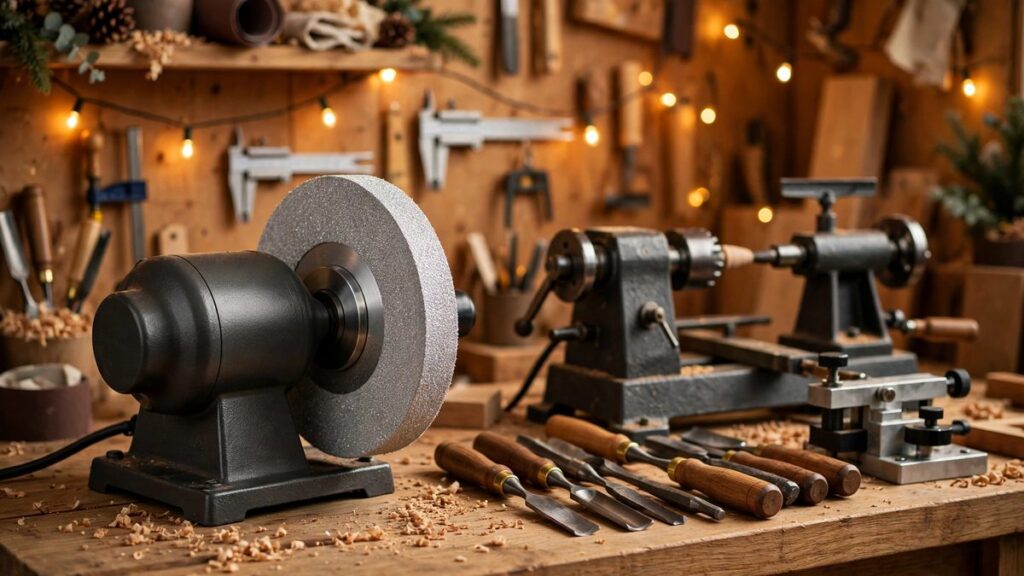
Black Friday brings a familiar temptation for woodturners: a sharpening setup that has sat on a wish list all year suddenly looks within reach, and the urge is to buy the biggest wheel, the finest grit, and every jig in the same order. A CBN wheel is a long-term purchase, and a wheel that does not fit the grinder arbor, or a grit too fine for reshaping a damaged bevel, will still be wrong after the event ends.
The better way to shop this season is to decide what the sharpening station is missing before looking at any listing. A turner who already owns a sound slow-speed grinder and a repeatable jig needs a wheel, not a new system. A turner who sharpens freehand and keeps losing the bevel angle needs a jig more than a second wheel. This guide follows that order.
As an Amazon Associate, we earn from qualifying purchases.
Quick Answer
Buy the wheel that fits the grinder already on the bench, in the grit that matches the most frequent job: coarse grit for reshaping and repairing edges, and 180 grit for everyday sharpening of high-speed steel lathe tools. Add a jig only when repeatable bevel angles are the real problem. Offers change during the event, so check the current offer and availability on the Amazon product page before ordering.
Buy Now or Wait: The Short Version
| Situation | Move |
|---|---|
| Worn stone wheel, arbor size known | Buy a matching CBN wheel now |
| Bowl gouges keep returning with a different bevel | Buy a jig now, and wait on a second wheel |
| Only reshaping damaged or heavily worn edges | Buy a coarse-grit wheel now |
| One good 180-grit wheel and no jig | Buy the jig now, and wait on a finer wheel |
| Grinder old, underpowered, or arbor size unknown | Wait, measure the grinder first |
| Plan is a complete two-wheel station | Buy the core wheel and jig now, add the second wheel later |
How to Choose
Grit
Grit decides what the wheel is for. An 80-grit wheel removes steel quickly, which suits repairing a chipped edge or reshaping a tool. A 180-grit wheel is the everyday choice for high-speed steel lathe tools: it sharpens without removing more steel than needed. Finer grits refine an edge rather than shape one.
Wheel size
An 8-inch wheel suits the common 8-inch slow-speed bench grinder, while a 6-inch wheel suits a 6-inch grinder. Diameter, width, and bore must all match. A wheel wider than the guard allows may need the guard removed. A heavier wheel also loads a small motor more. Measure the existing wheel and the arbor before ordering.
Arbor fit
The arbor, also called the bore, is the hole in the center of the wheel, and it must match the grinder shaft. The most common sizes here are 5/8 inch for 8-inch grinders and 1/2 inch for 6-inch grinders. A bore that is too small will not mount at all, and one that is too large will not run true without the correct bushing. Check the shaft diameter with calipers, and confirm that the listing names the bore size.
Jig compatibility
A jig holds the tool at a repeatable angle against the wheel. A base jig and a fingernail-grind attachment for bowl gouges are separate pieces that work together, so buying one without the other leaves the job half done. Before ordering, confirm that it mounts to the grinder in use and accepts the tool sizes in the rack.
The Five Picks
BUCKTOOL 80 Grit 8 Inch CBN Grinding Wheel
This is the shaping wheel in this set: an 8-inch CBN wheel in 80 grit, 1 inch wide, with a 5/8-inch arbor, built for fast steel removal on high-speed steel woodturning tools and chisels. It is the pick for repairing chipped edges or reshaping a tool profile without a long session on a finer wheel. The abrasive holds its shape, so the wheel diameter does not shrink the way a stone wheel does. The coarse grit is also the limit: an 80-grit edge is a working edge, so most tools will still need a pass on a finer wheel after shaping.
Specs
- Grit: 80
- Wheel diameter: 8 inches
- Wheel width: 1 inch
- Arbor: 5/8 inch
- Abrasive: Cubic boron nitride (CBN)
- Best for: Shaping, repairing chipped edges, and re-establishing bevels on high-speed steel tools
UF-SHARP CBN 4 in 1 Grinding Wheel, 8 Inch, 180 Grit
This 8-inch wheel takes the versatile slot in the set. It is a 180-grit CBN wheel, 1.25 inches wide, with a 5/8-inch bore, and its four-in-one profile offers a flat face, a side face, and radiused edges for different tool shapes. For a shop with one grinder and one wheel, that flexibility matters, because gouges, scrapers, and parting tools do not all present best to the same surface. The 180 grit refreshes a dull edge in a short pass yet leaves an edge that needs only light honing. The aluminum body keeps the wheel light, which helps a modest slow-speed grinder reach speed without strain.
Specs
- Grit: 180
- Wheel diameter: 8 inches
- Wheel width: 1.25 inches
- Bore: 5/8 inch
- Abrasive: Cubic boron nitride (CBN)
- Body: Aluminum
- Best for: Everyday sharpening of high-speed steel lathe tools, with multiple grinding surfaces
Woodcut Tools Tru-Grind 6 Inch CBN Grinding Wheel, 180 Grit
This is the compact pick: a 6-inch Tru-Grind CBN wheel in 180 grit, 1 inch wide, with a 1/2-inch bore, made on a steel core for sharpening high-speed steel woodturning tools. It suits a 6-inch bench grinder, a smaller shop, or a second station where an 8-inch wheel would be too large. The steel core runs smoothly, and the 180 grit gives the same everyday sharpening role as the larger wheels here, just on a smaller wheel. Turners moving from an 8-inch setup should not assume jig settings transfer; the smaller diameter changes the geometry, so the tool rest and jig need setting again after the swap.
Specs
- Grit: 180
- Wheel diameter: 6 inches
- Wheel width: 1 inch
- Bore: 1/2 inch
- Abrasive: Cubic boron nitride (CBN)
- Body: Steel core
- Best for: Everyday sharpening on a 6-inch grinder, and smaller sharpening stations
Oneway Wolverine Grinding Jig

The Wolverine Grinding Jig is the base of the best-known jig system for lathe tools, and it is the piece to buy when repeatability is the problem. It mounts to the grinder and provides the sliding base and adjustable tool rest that hold a tool at a set angle, so the same bevel comes back each session. Without a base jig, each freehand pass risks a slightly different angle, and the tool gets shorter faster as the bevel is corrected again. This jig is a base, not a complete gouge-sharpening setup on its own: fingernail grinds need the Vari-Grind attachment below. Buyers should confirm that the mounting hardware fits their grinder and that the bench leaves room for the sliding base to travel.
Specs
- Type: Grinding jig base for lathe tools
- Use: Holds turning tools at a repeatable angle against the grinding wheel
- Mounting: Attaches to the bench grinder
- Works with: Wolverine Vari-Grind attachments for fingernail grinds
- Best for: Turners who want consistent bevel angles on gouges, scrapers, and skews
Oneway Wolverine Vari-Grind 2
The Vari-Grind 2 is the attachment that turns the Wolverine base into a fingernail-grind jig for bowl gouges and spindle gouges. It holds the tool in a pivoting arm so the flute can be rolled through the grind, producing the swept-back wings of a fingernail profile. The second version adds adjustment for the grind shape, so a turner can set the profile and return to it later. This attachment only makes sense with the Wolverine base, so it should not be the first jig purchase for a shop that owns neither piece. A wheel that is too coarse for the finishing pass, or a base mounted out of square, will show up in the grind.
Specs
- Type: Fingernail-grind attachment for the Wolverine Grinding Jig
- Use: Shapes swept-back fingernail grinds on bowl gouges and spindle gouges
- Adjustment: Adjustable settings for the grind profile
- Requires: Oneway Wolverine Grinding Jig base
- Best for: Turners who already own the Wolverine base and sharpen bowl gouges often
Mistakes That Waste a Wheel
The most expensive mistake is the simplest: ordering a wheel with the wrong bore. Measure the shaft with calipers and read the bore in the listing. A second mistake is buying a grit that is too fine for shaping: the session will be long and the edge will run hot. A third is forgetting the jig, since a new CBN wheel does not fix a bevel-angle problem on its own. A fourth is grinding carbide or soft carbon steel on a CBN wheel meant for high-speed steel, which can load or damage the abrasive surface. A fifth is skipping the setup check after mounting: a wheel that is not seated squarely, or a guard that no longer fits the wider wheel, needs attention first.
Who Should Skip
Turners who sharpen only a few times a year, and whose stone wheel still cuts well, can skip this event. Turners with a grinder that is underpowered, damaged, or missing its guards should also wait; a new wheel on a failing grinder is the wrong order of spending. Anyone who works mostly with carbide-tipped tools should skip CBN wheels altogether, since CBN is made for high-speed steel, not carbide.
Frequently Asked Questions
What grit CBN wheel should a beginner buy first?
A 180-grit wheel is the best first choice for most turners. It sharpens high-speed steel lathe tools quickly enough for daily use without removing excess steel. Add an 80-grit wheel later if reshaping damaged edges becomes a regular job.
Will an 8-inch CBN wheel fit any 8-inch grinder?
Not always. Diameter is only one of three measurements that must match. The bore must fit the grinder shaft, commonly 5/8 inch on 8-inch grinders, and the wheel width must fit within the guard. Check all three numbers and measure the grinder before ordering.
Do CBN wheels work on carbide lathe tools?
No. CBN wheels are made for high-speed steel and other ferrous, hardened steels. Carbide-tipped tools need a diamond abrasive instead. Grinding carbide on a CBN wheel can damage the wheel surface.
Is a jig necessary with a CBN wheel?
A jig is not required, but it is the easiest way to get the same bevel angle every time. Freehand sharpening works for turners with a steady hand, while a jig suits anyone who wants repeatable results, especially on bowl gouges with a fingernail grind.
Final Verdict
The smart Black Friday move is a small one: one wheel that fits the grinder, in the grit that matches the most frequent job, plus a jig when repeatable angles are the real gap. The 180-grit wheels cover everyday sharpening, the 80-grit wheel covers shaping and repair, and the Wolverine base with the Vari-Grind 2 covers fingernail grinds. Buy the core first, check the current offer on each Amazon product page, and add the second wheel only after the first setup is working.
Related guides
More from Amazon
Programs that pair well with the guide above. Offers and eligibility are set by Amazon and may change.
Send a Prime gift membership to someone who would use free shipping and Prime Video.
Gift Amazon PrimeGive audiobooks to someone who loves to listen. Plans and prices are set by Amazon.
Gift AudibleA free business account with business pricing and bulk-buying tools for work, shop or home office.
Create a business accountFree shipping on eligible items, Prime Video and more. Eligible new members can start with a free trial.
Start a Prime free trialAs an Amazon Associate we earn from qualifying purchases.


Write Your Review
No reviews yet. Be the first to share your experience!