

Our Top Picks

What's inside
As an Amazon Associate I earn from qualifying purchases. This post may contain affiliate links at no extra cost to you.
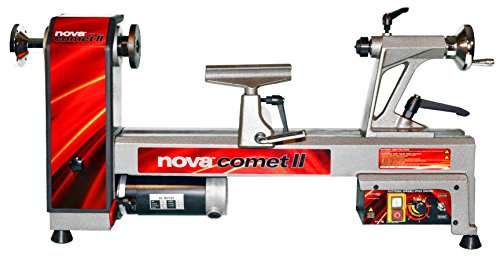
A midi lathe sits in the middle of the size range, and that middle is where most home-shop turning actually happens: bowls up to a foot wide, chair spindles, tool handles, and pens, all on a machine that fits a workbench. Adding a digital speed display to that middle size changes how the lathe gets used day to day, because the readout turns speed from a guess into a number you can repeat. You can note the RPM that gave a clean cut on maple, return to it next weekend, and slow down with confidence when a blank is out of balance.
This guide is written for home-shop woodworkers choosing a midi lathe with a visible RPM readout, and for buyers who want to know which midi models actually show a live speed number. Each lathe below was picked from the names and specifications shown on its Amazon page, with the display, speed range, swing, bed length, and motor checked against the listing.
Quick Picks
As an Amazon Associate we earn from qualifying purchases
| Product | Best for | Key spec from title |
|---|---|---|
| NOVA Comet II 12 x 16.5 | Compact benches and small shops | Digital readout, 250 to 4000 RPM |
| JET JWL-1221VS 12 x 21 | Longer spindles and mixed work | Digital RPM readout, 60 to 3600 RPM |
| RIKON 70-220VSR 12.5 x 20 | Heavier bowls and steady speed | LED speed display, 250 to 3850 RPM |
How to Choose
Confirm the display shows live RPM
Some midi lathes print speed numbers on a dial or a chart, which is not the same as a live digital readout. A true readout shows the spindle speed as it runs, so you can see the number drop when a cut loads the motor and adjust before the surface tears. Check the listing for words such as digital readout, digital display, or RPM readout, and treat a dial with painted numbers as a weaker substitute. Ask the seller or check the manual when the listing is vague, because a dial with painted numbers is easy to mistake for a display.
Match swing and bed length to midi work
Midi lathes usually give 12 to 12.5 inches of swing and 16 to 21 inches between centers, which covers most bowls and spindles a home shop produces. Measure your longest planned spindle first: chair parts and tool handles fit easily, while dining table legs need a bed extension or a full size machine. A midi that cannot hold your longest piece will frustrate you no matter how good its display looks. A bed extension is a useful compromise when only one or two projects a year need extra length, and it costs far less than a full size lathe.
Check low-speed torque, not just the display
A readout is only useful when the motor holds the displayed speed under load, so look at horsepower and the low end of the range together. A 3/4 to 1 HP motor with a minimum near 60 to 250 RPM handles most midi work, while a weaker motor bogs down on a wide bowl blank. Pulse-width modulation and electronic variable speed both help here, but neither replaces enough motor power for heavy roughing. A motor that sags under load makes the readout meaningless, so power and display quality belong in the same decision.
Weight and bench mounting keep the readout steady
A midi lathe between 80 and 120 pounds still needs a solid bench and firm mounting, because vibration blurs the cut and the reading alike. Bolt the machine down or clamp it to a heavy top, leave room for the tailstock handwheel, and keep the display where shavings do not pile on it. A lathe that walks across the bench will not hold a speed setting, digital display or not. Keep the display clear of shavings and dust, because a screen you cannot read is no better than a dial you cannot trust.
The 3 Best Options
NOVA Comet II Variable Speed Mini Lathe 12 x 16.5
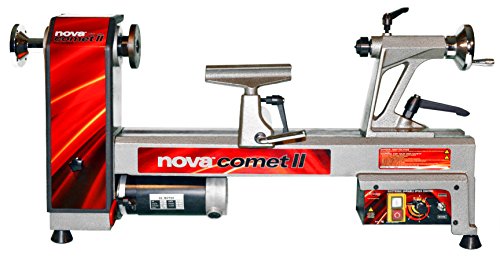
The NOVA Comet II suits a home-shop turner with a compact bench who still wants a real digital readout and a very wide speed range. Its 3/4 HP motor and 250 to 4000 RPM range cover pens, small bowls, and spindles, and its 82-pound weight makes it the easiest of the three to move and store. The digital readout sits where it stays visible during a cut, and the reversible motor helps with sanding and finishing. It is the most space-friendly midi here, and the readout keeps its small size from feeling like a compromise.
Specs
- 12-inch swing over bed; 16.5 inches between centers
- 3/4 HP motor; electronic variable speed from 250 to 4000 RPM
- Digital readout for precise speed control
- Forward and reverse rotation; three-step pulley system
- Cast iron construction; about 82 pounds
- Optional bed extension available for longer work
Best for: Small benches, pens, small bowls, and turners who move the lathe between jobs.
Watch out for: Its 3/4 HP motor and 16.5-inch bed limit heavy bowl blanks and long spindles, so keep projects modest.
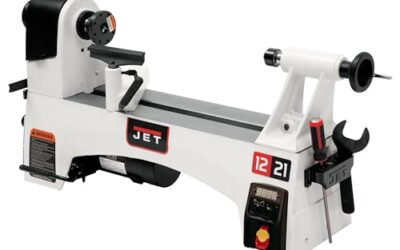
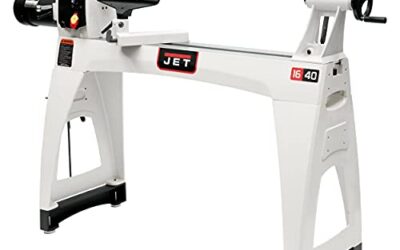
JET JWL-1221VS 12 x 21 Variable Speed Wood Lathe
The JET JWL-1221VS suits a home-shop turner who wants the longest bed in the midi class plus a digital readout and a very low minimum speed. Its 1 HP motor runs from 60 to 3600 RPM across three ranges, so roughing, shaping, and finishing each get a suitable speed, and its 21 inches between centers handle chair spindles and longer handles without an extension. The readout is mounted on the headstock for easy reading, and the cast iron build keeps the machine planted on the bench.
Specs
- 12-inch swing over bed; 21 inches between centers
- 1 HP motor; 115V single phase
- Electronic variable speed from 60 to 3600 RPM in three ranges
- Digital RPM readout on the headstock
- Forward and reverse rotation; cast iron construction
- 121 pounds; 5-year warranty
- Includes tool rest, faceplate, spur center, and live center
Best for: Mixed midi work where bed length and a low minimum speed matter most.
Watch out for: At 121 pounds it needs a strong bench and a second pair of hands to lift into place.
RIKON 70-220VSR 12.5 x 20 Midi VSR Lathe
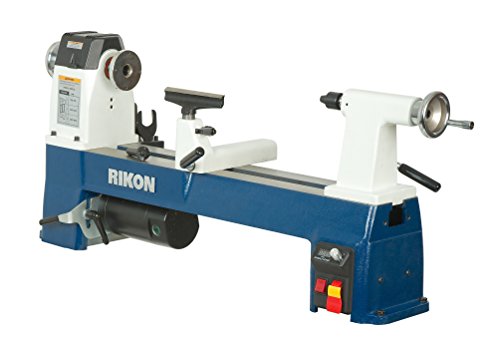
The RIKON 70-220VSR suits a home-shop turner who works bowls and heavier blanks and wants the display to confirm a safe, low roughing speed. Its 1 HP motor and 250 to 3850 RPM range, shown on an LED display, give steady control across bowls up to 12 inches, and its 24-position indexing head supports fluting and drilling layouts. The 115-pound cast iron body damps vibration, and the reverse function makes sanding easier. It is the heaviest midi here, and that mass shows in the finish it leaves.
Specs
- 12.5-inch swing over bed; 20 inches between centers
- 1 HP motor; 120V single phase
- Electronic variable speed from 250 to 3850 RPM
- LED digital speed display; 24-position indexing head
- Forward and reverse rotation; cast iron construction
- 115 pounds; 5-year warranty
- Includes faceplate, spur center, live center, tool rest, and knockout bar
Best for: Bowl work and heavier blanks where mass and a confirmed low speed matter.
Watch out for: Speed spans three belt ranges, so confirm the belt position when the display reads higher than expected.
Which One Fits Your Situation
A small bench and mostly small projects
Choose the NOVA Comet II, because its compact footprint, light weight, and 4000 RPM top end suit pens, small bowls, and spindles. Move up to the JET when longer spindles or heavier bowls enter the picture. Its light weight also makes it the easiest lathe to store on a shelf between sessions, which matters in a shared garage.
Long spindles and mixed midi work
Choose the JET JWL-1221VS, because its 21-inch bed and 60 RPM low end cover the widest range of midi projects, and its readout stays readable from a normal stance. The 60 RPM low end is the feature that earns its keep, because it lets you round a wet blank without the bench shaking.
Bowls are the main event
Choose the RIKON 70-220VSR, because its mass, LED display, and indexing head suit steady bowl turning. The JET is the fallback when bed length matters more than weight. Its mass is the other half of the story, because a heavy lathe damps vibration and leaves a cleaner surface on every bowl you turn.
A first midi lathe for a growing home shop
Choose the JET JWL-1221VS, because its balance of bed length, motor power, and speed range leaves room to grow. The NOVA is the better pick when bench space is the binding constraint. The JET leaves room to grow, because its bed, motor, and speed range cover projects well beyond a first year of turning.
Common Mistakes
- Buying a midi lathe for dining table legs, which need a full size bed or an extension.
- Treating a painted dial as a digital readout and discovering the difference mid-project.
- Skipping bench mounting, then blaming the lathe when vibration ruins a finish.
- Running a heavy blank at a high speed because the readout was never checked before the cut.
- Forgetting that a chuck is a separate purchase on most midi lathes.
Frequently Asked Questions
What size is a midi wood lathe?
A midi lathe usually has about 12 to 12.5 inches of swing and 16 to 21 inches between centers, weighing roughly 80 to 120 pounds. It sits between mini lathes for pens and full size floor lathes for large bowls and long spindles. Mini lathes are smaller still, usually under 10 inches of swing, and they suit pens and small work rather than bowls and spindles.
Do all midi lathes have digital speed displays?
No. Many midi lathes use dial marks or belt charts instead of a live RPM number. Check the listing for a digital readout or digital display, and confirm the screen shows the actual spindle speed rather than a selected range. A dial can work well once you learn its marks, but it cannot show the speed dropping under load the way a live display can.
Can a midi lathe turn table legs?
Short table legs and chair legs fit most midi lathes, but dining table legs often exceed 21 inches and need a bed extension or a full size lathe. Measure your longest spindle before buying, and add room for the centers. Chair spindles and tool handles fit easily, while dining table legs usually need a bed extension or a full size machine.
How much does a good midi lathe weigh?
Most capable midi lathes weigh between 80 and 125 pounds. That mass helps damp vibration, but it also means the machine needs a sturdy bench and a firm mount, plus help to lift it into place. Lighter machines need a heavier bench or a bolt-down mount, because mass is what keeps vibration from reaching the tool.
Related guides
More from Amazon
Programs that pair well with the guide above. Offers and eligibility are set by Amazon and may change.
A free business account with business pricing and bulk-buying tools for work, shop or home office.
Create a business accountFree shipping on eligible items, Prime Video and more. Eligible new members can start with a free trial.
Start a Prime free trialAudiobooks and podcasts to listen to on the go. Eligible new members can start with a free trial.
Try Audible freeAd-free music streaming. Eligible new subscribers can start with a free trial.
Try Music Unlimited freeAs an Amazon Associate we earn from qualifying purchases.
Write Your Review
No reviews yet. Be the first to share your experience!