As an Amazon Associate I earn from qualifying purchases. This post may contain affiliate links at no extra cost to you.
Most garage vacuums get exposed at the same three moments: the first real pile of sawdust, the first inch of water under the water heater, and the first cleanup after cutting drywall. Choosing the best wet dry vacuum for garage work has almost nothing to do with the horsepower number printed on the tank and everything to do with airflow, hose diameter, and whether the filter survives dust finer than sand.
Mechanism first, then picks. Once you know what suction physically is, spec sheets stop reading like marketing and start telling you which machine will still be earning its floor space in five years.
Here is the short version, sorted by the mess you actually make:
| Garage Job | What to Prioritize | Practical Size |
|---|---|---|
| Sawdust and general shop cleanup | Airflow, 2-1/2 in. hose, fine dust bag | 12 to 16 gallon corded |
| Standing water and water heater leaks | Sealed suction, float shutoff, drain port | 8 to 16 gallon with drain |
| Car interiors and detailing | Narrow hose, crevice tools, portability | 4 to 6 gallon or cordless |
| Drywall and concrete dust | HEPA-grade filter plus bag and pre-separator | 12 gallon and up |
| Bench spills and quick grabs | Light weight, battery you already own | 2 to 3 gallon cordless[/afk_table> |
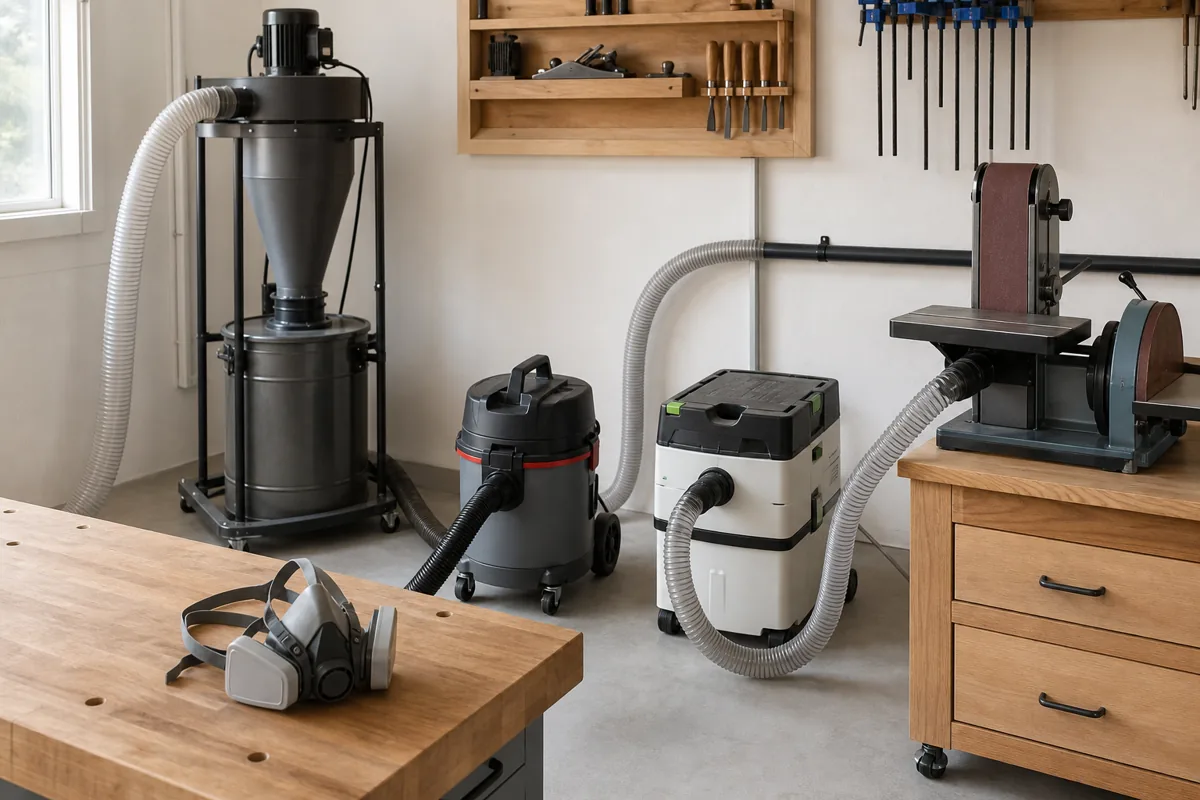
How Suction Really Works, and Why Peak HP Is Fiction
A shop vacuum never pulls anything. The motor spins an impeller that throws air out of the housing, dropping the pressure inside the tank. The atmosphere outside, sitting at about 14.7 psi, then pushes air up your hose to fill that gap, and your sawdust rides along for free. Every other feature is downstream of that one trick.
Two numbers describe how well a machine does it. Sealed suction, given in inches of water lift, is how hard it pulls with the hose blocked. Airflow, given in CFM, is how much air it moves with the hose open. Water lift is sucking a milkshake through a straw. CFM is moving water through a garden hose. Peeling a wet rag off concrete needs lift. Clearing a spread of chips across a slab needs airflow. Good garage vacuums have enough of both, and the box usually brags about neither.
The misconception worth killing: a badge reading 6.5 peak HP does not mean the motor makes 6.5 horsepower. Peak figures are captured for an instant in a lab, near stall, and cannot be sustained. A 120V, 15A garage circuit tops out around 1,800 watts, which is under 2.5 real horsepower before fan and motor losses. Two vacuums with identical peak HP claims can differ by 30 CFM. If a listing hides water lift and CFM, that silence is the review.
Hose diameter is the real bottleneck, because open area scales with the square of the diameter. Moving from a 1-1/4 inch hose to a 2-1/2 inch hose roughly quadruples the opening, which is why the fat hose swallows shavings that plug the skinny one. The tradeoff runs both ways: a narrow hose moves less total air but at higher velocity, which is exactly what car carpet and seat tracks need. A vacuum that ships with both beats one with a slightly bigger motor.
Best Wet Dry Vacuum for Garage Duty: Specs That Change Your Day
Tank size first. Twelve to 16 gallons suits most two-car garages. Under 6 gallons you empty it constantly during a real project. Over 16 it steers badly and becomes genuinely unsafe to lift when wet, since water runs about 8.3 pounds per gallon. Fourteen gallons of water is well past 100 pounds, so buy a drain port and never plan to tip the drum.
Hose and cord length decide whether you use the thing at all. Seven feet of hose means re-parking the vacuum every few minutes. Look for 10 feet or more of hose, 20 feet or more of cord, and locking swivel casters, because a vacuum that keeps tipping onto its side is a vacuum you quietly stop using.
Then filtration and wet mode. You want a fine dust bag option, a HEPA-grade cartridge offered for that model, and a float shutoff that moves freely, since that float is the only thing keeping water out of the motor. Paper and cloth bags must come out before wet pickup or they collapse into pulp around the filter cage.
Full-size corded wet dry vacuum, 12 to 16 gallon
If you only own one shop vacuum, buy from this class. Sort by hose diameter and cord length rather than gallons, and confirm the model accepts fine dust bags and a HEPA-grade cartridge. A well-specified 14 gallon unit will out-clean a bargain 20 gallon drum saddled with a 1-1/4 inch hose.
The Filter Myth Behind Every Dying Shop Vacuum
The misconception I hear most in the shop: suction dropped because the tank filled up. Almost never. Suction dies because fine dust caked onto the filter pleats, which happens long before the drum is half full. A loaded filter behaves like a partly closed valve. Sealed suction at the nozzle can even read higher while CFM falls to nearly nothing, which is why the hose feels strong against your palm and still will not lift a wood chip.
Keep dust off the filter and the problem disappears. A collection bag catches debris so the pleats only see air that slipped past. A cyclone pre-separator, plumbed in between hose and tank, spins heavier material into a bucket before it ever reaches the vacuum. For a woodshop, running both is the difference between cleaning a filter every Saturday and cleaning it twice a year.
One point that is not optional: wood dust and the crystalline silica in concrete and joint compound are respirable, and a coarse cartridge passes plenty of both back into the air you are standing in. Use a HEPA-grade filter with a bag for that work, and treat a shop vacuum as inadequate for cutting or grinding masonry, where a rated extractor is the correct tool.
Cyclone dust separator for shop vacuums
The cheapest real performance gain you can add to a vacuum you already own. Match inlet and outlet to your hose size, mount it on a lidded bucket or small cart, and accept a small suction loss in exchange for a filter that stops clogging.
Corded or Cordless for the Garage?
Arithmetic settles this one, not brand loyalty. A corded unit draws roughly 1,000 to 1,800 watts continuously. A 5.0Ah 18V battery stores about 90 watt-hours in total. That gap is why cordless wet dry vacuums are built around 2 to 6 gallon tanks and modest airflow: there is not enough energy on board to spin a big fan for an hour. Cordless models in the DeWalt XR, Milwaukee M18 FUEL, Makita LXT and Ryobi ONE+ lines are convenience tools for car interiors, bench dust, and spills you want gone in ninety seconds. They are not your flood vacuum.
- ✔ No cord, no outlet hunting, no tripping hazard
- ✔ Ideal for car interiors, trim work, and fast cleanups
- ✔ Runs on batteries you already own
- ✔ Light enough to carry up a ladder or into a vehicle
- ✘ Short runtime under load, often 10 to 20 minutes
- ✘ Small tanks mean frequent emptying
- ✘ Lower airflow than a corded unit at similar cost
- ✘ Wrong tool for standing water or bulky debris
Cordless wet dry vacuum on your battery platform
Buy whichever one fits the batteries already in your drawer, and treat it as a second vacuum rather than your only one. Onboard hose storage and a rinsable filter matter more than tank size here.
Frequently Asked Questions
Can any wet dry vacuum pick up water? Any unit sold as wet/dry can, but only after you remove the paper or cloth bag and set up the filter the way the manual specifies. Check that the float shutoff swings freely, then empty the tank through the drain port instead of lifting it.
Why does my shop vacuum blow dust back into the garage? Either the filter is loaded and dust is bypassing the pleats through a gap at the gasket, or the filter is too coarse for the material. Standard cartridges are made for chips and grit, not sanding or drywall dust. Add a fine dust bag and step up to a HEPA-grade cartridge.
Is a bigger tank better? Only for how often you empty it. Volume has no effect on suction or airflow, and a big drum is harder to steer and much heavier when wet. Spend the money on hose diameter and filtration instead of gallons.
Buy for the mess you actually make. Sawdust and the occasional wet floor call for a 12 to 16 gallon corded unit with a 2-1/2 inch hose, a fine dust bag, and a pre-separator ahead of the filter. Crumbs in the truck and dust on the bench call for a cordless unit on your existing batteries, which will get used ten times more often than a big drum parked in the corner. Most working garages eventually justify one of each.
Check prices on Amazon →

0 Comments