As an Amazon Associate I earn from qualifying purchases. This post may contain affiliate links at no extra cost to you.
A pack that reads three bars and then quits ten seconds into a cut feels like a defect. Usually it is not. When a power tool battery dies quickly, there is normally still usable energy in the cells. The tool shut down because voltage collapsed under load, not because the tank ran dry. Those are two different failures with two different fixes, and confusing them is why people throw out healthy packs and then abuse the replacements the same way.
The shop analogy: amp-hours are the size of the water tank, and voltage under load is the pressure at the nozzle. A big tank fed through a skinny pipe still dribbles when you open the valve wide. Your saw does not care how much energy remains if pressure drops below the cutoff its electronics enforce. It stops, the gauge still shows charge, and you blame the battery.
| What you see | Mechanism | What actually helps |
|---|---|---|
| Cuts out hard under load, works again after a pause | Voltage sag tripping the low-voltage cutoff | Higher-output pack, lighter feed pressure |
| Runtime faded over a year or two | Calendar aging, mostly heat driven | Change storage habits, demote the pack to light tools |
| Weak outdoors, normal indoors | Cold raising internal resistance | Warm the pack, never charge it frozen |
| One pack in the set is always the weak one | A single failing cell group | Retire it or keep it off demanding tools |
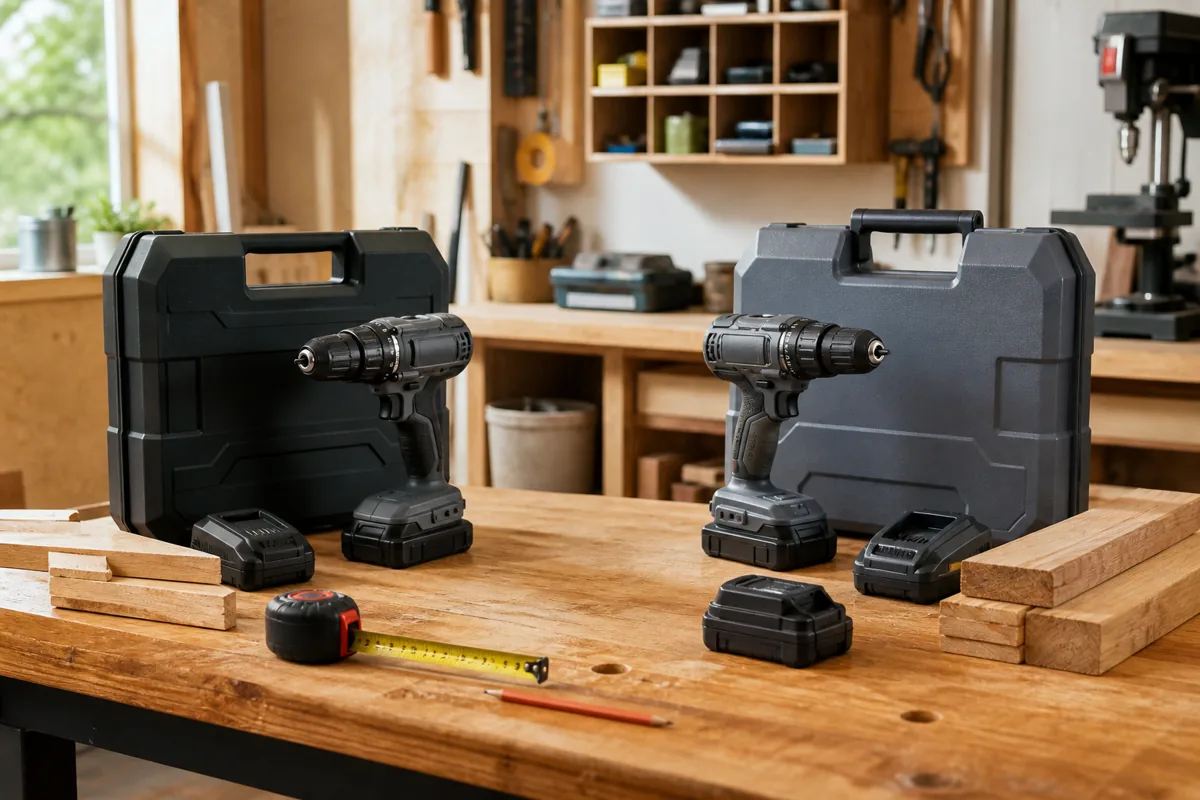
Why a Power Tool Battery Dies Quickly With Charge Left
Every lithium cell has internal resistance. Push current through it and some voltage is burned inside the cell as heat before it ever reaches the motor. Pull 60 or 80 amps through a compact pack and that loss is big enough to drag pack voltage below what the tool treats as empty. Protection trips, the trigger goes dead, and seconds later the pack recovers and reads half full again.
The misconception: amp-hours are the only number that matters. Amp-hours describe stored energy and say nothing about how hard a pack can push. A slim 2.0Ah pack usually runs one string of five cells, so every cell carries the full current the tool demands. A larger pack either splits that across two parallel strings or uses bigger 21700 cells, which cuts sag dramatically. That is what names like Milwaukee High Output, DeWalt PowerStack and FlexVolt, and Makita XGT are really selling: lower internal resistance. On a drill you will barely notice. On a grinder, circular saw, or blower it is the whole experience.
High-output battery packs for saws and grinders
If your tool cuts out mid-cut while the gauge still shows charge, this is the fix, not a new tool. Stay inside the battery platform you already own and buy the highest-output pack that line offers rather than the cheapest pack with the biggest amp-hour number on the label.
Heat Wears Packs Out Faster Than Charging Does
The misconception: a battery has a fixed number of cycles, so charging less makes it last longer. Cycles matter, but for most users calendar aging does more damage, and it is driven by temperature and by time spent sitting at full charge. A passivating layer keeps growing inside the cell, consuming lithium and raising internal resistance. Heat speeds that up.
So the worst common habit is leaving packs in a vehicle, where a closed cab in July gets hotter than any tool will make them. The second worst is dropping a pack straight from a hard cut onto the charger. Better chargers wait for it to cool, and not all do. Let a hot pack sit until it is merely warm.
Dull Steel Is a Battery Problem
A dull blade or a glazed hole saw forces the motor to draw more current for longer, which sags voltage, heats the pack, and shortens runtime all at once. It is like driving with the parking brake half on and blaming the fuel tank. Fresh carbide is the cheapest runtime upgrade there is.
Sharp carbide blades and bits
Before you buy another battery, replace the cutting edge. A sharp blade lowers the current your tool pulls, which means less sag, less heat, and more cuts per charge. Match tooth count to the material instead of running one blade for everything.
Cold Makes a Pack Look Dead Without Making It Dead
Below roughly 40 degrees, ion movement inside the cell slows and internal resistance climbs. Same tank, skinnier pipe. The pack sags sooner, the tool quits sooner, and runtime can drop by a large fraction. Bring it inside and it behaves again, because nothing was actually consumed.
The misconception: cold permanently drains batteries. Cold discharge is temporary. Cold charging is the part that does real harm, because charging below freezing plates metallic lithium inside the cell, which is permanent and occasionally a safety problem. When a brand-name charger refuses a frozen pack, that is the feature working. Keep spares in a jacket or the cab, and charge indoors.
One Weak Cell Shuts Down the Whole Pack
A pack is a convoy that moves at the speed of its slowest truck. The battery management system watches cell groups, and when any one group hits the low-voltage limit it cuts everything off, even with plenty left elsewhere. A pack with one tired cell group does not lose a fifth of its runtime; it loses most of it, and it fails suddenly rather than gradually. That is the signature of it was fine last month.
On bargain replacements: unbranded packs from unknown sellers are where inflated amp-hour claims live, and the protection circuitry is the part you cannot inspect. Buy where returns are real, and treat a huge capacity number at a tiny price as the warning it is.
Set Up Your Packs So This Stops Happening
- ✔ Parallel cell strings or 21700 cells cut voltage sag under heavy load
- ✔ Runs cooler at the same current, which slows capacity fade
- ✔ Far fewer mid-cut shutdowns on saws, grinders, and outdoor tools
- ✘ Heavier and bulkier for overhead or one-handed work
- ✘ Costs more per pack, sometimes more than the bare tool
- ✘ Overkill on drills, drivers, and lights
Run a split lineup. Compact packs live on drills, drivers, and lights where balance beats power. High-output packs live on anything with a big motor. Then fix storage: cool, dry, roughly half charge for anything you will not touch for a month, and out of the truck.
Rapid multi-port chargers
A charger that cools packs and waits until they are in a safe temperature range protects every battery you own, which often makes it a better buy than one more spare pack. Multi-port versions also break the habit of stacking a hot pack on a warm charger.
Frequently Asked Questions
Should I run a pack all the way down before recharging? No. That is a Ni-Cd habit that never applied to lithium, which has no memory effect. Deep discharge is a stress, not a reset, so top off whenever it is convenient.
Is it bad to leave batteries on the charger? Modern chargers stop and hold, so it is not the hazard people imagine, but a pack parked at full charge in a warm garage ages faster. Pull long-term spares off and store them partially charged.
My charger blinks and refuses a pack. Is it dead? Often it is only too hot, too cold, or sitting below the voltage the charger will accept. Let it reach room temperature and retry on a known-good charger. If the housing is swollen or cracked, stop and take it to a battery recycling drop-off.
Runtime trouble is usually a mismatch between how hard you are pulling and what the pack can deliver, sitting on top of storage habits that quietly cost capacity. Fix the blade, fix the storage, then buy the pack that suits the tool.
Check prices on Amazon →

0 Comments