What's inside
As an Amazon Associate I earn from qualifying purchases. This post may contain affiliate links at no extra cost to you.
Machines that run without adequate lubrication don’t just wear—they seize, contaminate product, or fail at the worst possible moment in a production cycle. The buyer searching for the best lubricant for machines in 2026 is usually solving one of two concrete problems: either equipment on the shop floor or in a commercial kitchen is showing signs of friction damage, or a compliance requirement (NSF H1, food-safety audit) demands a documented lubricant that won’t compromise the product stream. The stakes vary by application, but the consequences of choosing wrong are universally expensive.
What separates a good lubricant from a bad one is not price or brand prestige—it is whether the fluid or grease matches the operating environment of the machine it serves. A light mineral oil works perfectly on a household sewing mechanism but would evaporate off a hot compressor in minutes. A thick PTFE grease protects bearings but gums up precision linkages. The products on this list span food-grade sanitaries, workshop synthetic greases, silicone sprays, and light oils, and the right choice depends on viscosity compatibility, thermal resistance, and the certification tier your application requires.
As an Amazon Associate we earn from qualifying purchases at no extra cost to you.




Our Top Picks
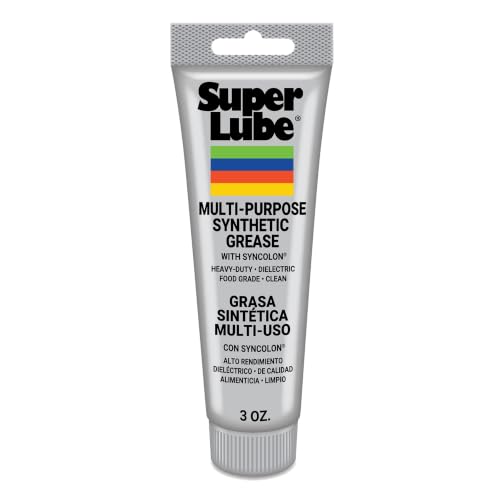 Super Lube Multi-Purpose Synthetic Grease w/ Syncolon3 oz Tube - Pack of 16.44 x 2.09 x 1.35 inches0.2 poundsCheck on Amazon
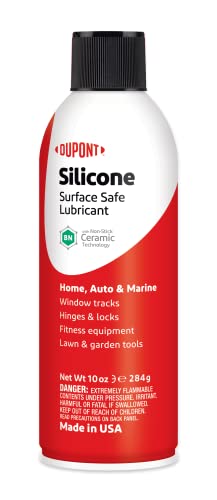 Dupont Silicone Lubricant Surface Safe 10 fl oz10 oz8.5 x 5.5 x 8.5 inches0.85 poundsCheck on Amazon

Quick Picks
| Product | Best for | Price |
|---|---|---|
| Taylor Blue Food Grade 4-Pack | Commercial soft serve operators | $35.49 |
| Singer All Purpose Sewing Machine Oil | Light-duty household mechanisms | $5.50 |
| Haynes Lubri-Film Plus | Food-safe O-ring protection on a budget | $22.01 |
| Taylor Blue Food Grade (single tube) | Single-machine operators testing the formula | $15.44 |
| Super Lube Multi-Purpose Synthetic Grease | Workshop and mixed industrial use | $10.99 |
| Dupont Silicone Lubricant | Surface-safe lubrication on rubber and plastic | $10.11 |
| Petrol-Gel Food Grade Equipment Lubricant | Light chains and guides on processing lines | $11.99 |
| SEKODAY Silicone Treadmill Belt Lubricant | Treadmill deck and belt maintenance | $8.79 |
How We Picked
We narrowed this list using four criteria: viscosity compatibility with the target machine’s tolerances, thermal and environmental resistance (can it hold up under the heat or moisture the equipment generates), certification status where food contact or regulatory compliance is required, and cost per application relative to the machine’s reservice interval. Published spec sheets and owner-reported experience from equipment forums and retail reviews informed the scoring. No product was excluded for brand alone; several lesser-known names earned their place on price-to-performance ratios.
The 8 Best Lubricant For Machines in 2026
Taylor Blue Food Grade Lubricant (4-Pack)
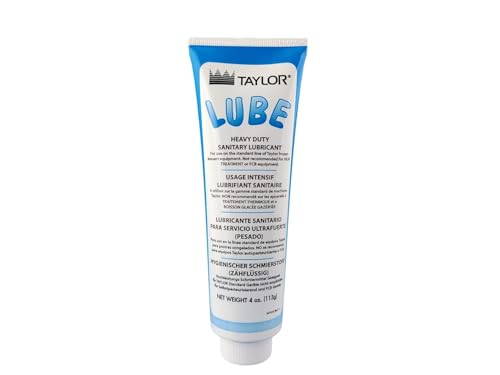
Best for operators running soft serve or frozen yogurt equipment who need a sanitary grease that won’t contaminate product. The NSF H1 certification means incidental food contact won’t trigger health-inspection flags, and the heavy-duty formula holds up on O-rings that see constant thermal cycling. Four tubes in a box lowers the per-use cost for high-volume shops. Owner feedback from ice cream franchise operators highlights its longevity between service intervals. The downside: 4-ounce tubes are small relative to the overall pack price, and the thick grease consistency makes application on tight tolerances fussy. Skip this if your machines don’t require food-grade certification—paying a premium for an NSF stamp you’ll never leverage makes little sense.
Singer All Purpose Sewing Machine Oil
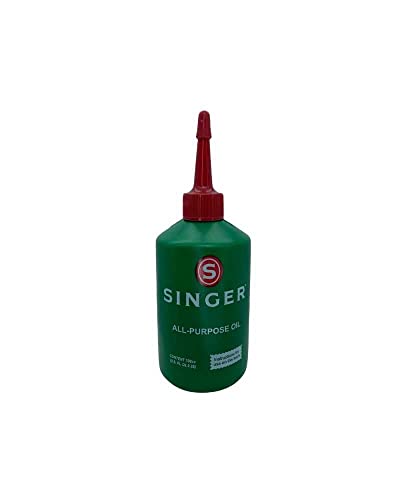
Light mineral oil in a 3.38-ounce bottle designed for sewing mechanisms but widely repurposed for small household machines, hinges, and precision joints. Its thin viscosity wicks into tight gaps without leaving a sticky residue that attracts lint and dust—something owners of multi-needle machines appreciate after long sessions. The needle-tip applicator gives real control in close quarters. At $5.50 it is the least expensive option on this list. The trade-off: it offers almost no thermal protection and breaks down quickly under friction-heavy loads. Skip this if you need anything beyond light-duty lubrication on low-speed mechanisms or anywhere heat is generated.
Haynes Lubri-Film Plus Food Grade Grease
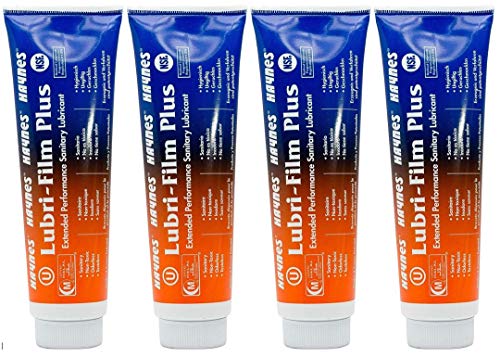
Targeted at commercial kitchen operators and small food processors who need a food-safe grease with proven O-ring compatibility. The four-tube pack at $22.01 undercuts the Taylor Blue equivalent on a per-ounce basis, and the formulation resists washout under steam and spray exposure. Owner notes highlight its non-staining behavior on stainless surfaces and rubber seals. The gap: the packaging does not prominently display a specific NSF certification tier number, which some auditors require by explicit label reference. Skip this if your facility’s compliance framework demands visible H1 labeling on the container itself rather than a spec-sheet or product-page citation.
Taylor Blue Food Grade Lubricant (single tube)
The same NSF H1 food-grade grease in a single 4-ounce tube at $15.44, a sensible entry point for operators with one machine or those sampling the formula before committing to a multi-pack. It delivers identical viscosity, thermal stability, and O-ring protection as the four-tube version, so there is no performance compromise. The cost per ounce is the clear drawback—roughly double what the bulk pack offers—and frequent reapplication on high-cycle equipment widens that gap over a season. Skip this if you run multiple soft serve or frozen yogurt units; the packaging economics strongly favor the 4-pack for ongoing maintenance needs.
Super Lube Multi-Purpose Synthetic Grease
A translucent synthetic grease with Syncolon (PTFE) for workshop, industrial, and general-purpose use that carries food-grade certification. The wide temperature range and water resistance make it a versatile single-tube option for shop owners lubricating anything from drill-press bearings to conveyor rollers. At $10.99 for 3 ounces, the per-ounce cost sits above the silicone spray but below dedicated food-grade greases with bulk packaging. The con: the grease is thick and can be difficult to work into narrow gaps without partial disassembly. Skip this if you need a drip-style light oil for mechanisms where a viscous paste would gum up precision joints or slow-moving linkages.
Dupont Silicone Lubricant Surface Safe
A 10-ounce silicone spray marketed for surface-safe applications on rubber, plastic, and finished wood. The formula won’t attack seals or leave a sticky film, making it a common choice for treadmill rails, garage door tracks, and shop door hardware. Coverage per can is generous relative to the $10.11 price. The limitation: silicone residue creates adhesion problems on any surface you later plan to stain, seal, or glue—a well-known issue for woodworkers who use this near project pieces or shop furniture. Skip this if your application involves any finish work downstream of the lubricated surface or if you service machines where silicone contamination is unacceptable.
Petrol-Gel Food Grade Equipment Lubricant
A premium mineral oil in a two-pack at $11.99, positioned for commercial food-equipment lubrication with NSF listing. The low viscosity suits chain drives, guide rails, and light bearings on processing lines where thick grease would attract particulate contamination. Owner notes praise its clean application and lack of odor during use. The trade-off: mineral oil breaks down faster than synthetic or PTFE-enhanced formulas under sustained heat, so reapplication intervals are shorter and service labor costs accumulate. Skip this if your equipment runs hot or you need extended grease-life between service windows on high-duty-cycle machines.
SEKODAY Silicone Treadmill Belt Lubricant
A 4.2-ounce silicone-based lubricant packaged with precision screw caps and hard application tubes, aimed squarely at treadmill belt and deck maintenance. The high-temperature-resistance claim addresses friction heat generated between belt and deck during sustained use, and the included applicator tips give control without mess. At $8.79 it undercuts most name-brand alternatives on a per-use basis. The concern: the brand has limited independent review depth compared to established industrial lubricant lines, so long-term degradation and shelf-life data are thin. Skip this if you need a multipurpose solution for diverse equipment types; it is optimized specifically for flat belt applications.
Buying Guide
Match Viscosity to Mechanism Tolerance
Light oils (Singer, Petrol-Gel) flow into tight tolerances and wick along shafts, making them ideal for sewing heads, small bearings, and guide rails. Greases (Taylor Blue, Super Lube, Haynes) stay in place under centrifugal force and thermal cycling, protecting O-rings, exposed gears, and slow-moving joints. Using a grease where oil is needed starves the surface; using oil where grease is required causes rapid washout. Check your equipment manual for the manufacturer’s specified NLGI grade or viscosity range before purchasing.
Temperature and Environmental Resistance
Friction generates heat, and heat degrades lubricant. Soft serve compressors, treadmill belts under load, and industrial conveyors all produce sustained warmth that breaks down mineral oils quickly. Synthetic greases with PTFE additives (Super Lube) and formulated food-grade greases (Taylor Blue, Haynes) resist thermal thinning far better. For outdoor or high-humidity environments, water resistance matters as much as temperature rating—look for products that explicitly state washout or corrosion resistance in their spec sheet.
Certifications and Material Compatibility
NSF H1 is the baseline for incidental food contact; if your machine processes anything edible, this is non-negotiable. Beyond food safety, check compatibility with your machine’s seal and gasket materials. Silicone sprays degrade certain EPDM rubbers, and petroleum-based oils swell natural rubber and some nitrile compounds. When in doubt, confirm the lubricant’s carrier chemistry against your equipment’s material specification sheet.
Our Verdict
The Taylor Blue Food Grade 4-Pack is the top pick for commercial operators who need reliable, certified lubrication on food-processing equipment and want the best per-application cost. For a budget pick, Singer’s All Purpose Oil at $5.50 is unbeatable for household light-duty mechanisms where food-grade or high-temperature performance is irrelevant. If your primary need is workshop versatility across mixed materials—bearings, rails, hinges in one tube—Super Lube Multi-Purpose Synthetic Grease wins on breadth of application at a sub-$11 price.
FAQ
Can I use food-grade lubricant on non-food machines?
Yes. Food-grade lubricants meet or exceed most performance specifications of industrial products, and nothing prevents using them on shop equipment. The only reason not to is cost—food-grade certification adds a premium that is unnecessary if no edible product contacts the machine.
What is the practical difference between oil and grease for machine maintenance?
Oil flows and renews its own film, making it better for enclosed bearings with circulation. Grease stays put, providing a durable cushion on exposed or slow-moving parts where oil would run off or evaporate. Most machine manuals specify which type is appropriate for each lubrication point.
How often should lubricant be reapplied?
Reapplication intervals depend on duty cycle, temperature, and contamination exposure. A home treadmill used three times weekly may need belt lubrication every few months, while a commercial soft serve machine running eight hours daily may require O-ring greasing weekly. Follow the equipment manufacturer’s schedule, or inspect for dryness, squeal, or visible wear as the real indicator.
Will silicone lubricant damage rubber seals or plastic parts?
Most silicone lubricants are safe on standard nitrile and silicone rubber seals and on common engineering plastics. However, silicone can degrade certain EPDM compounds and will interfere with adhesion of paints, glues, and finishes. Always test on a non-critical area first if the machine has painted surfaces downstream.




0 Comments