Our Top Picks
What's inside
As an Amazon Associate I earn from qualifying purchases. This post may contain affiliate links at no extra cost to you.
Nine Varathane spar urethane listings are covered here for exterior doors, and the best fit for an exterior door comes down to three choices: water-based or oil-based, quart or spray can, and sheen. For a flat door face and several coats, a quart is the sensible starting point. Spray cans suit carved panels and touch-ups. One listing, the Triple Thick, does not mention doors in its title, so it is flagged as a runner-up. If you want a quick default, choose a quart of the Outdoor Spar in satin and decide between water-based and oil-based by how long you can wait between coats. All details come from listing titles and published information.
Fast answers before the details
As an Amazon Associate we earn from qualifying purchases at no extra cost to you.


- Brushing a flat door, water-based: Outdoor Spar Satin, Water-Based, Quart.
- Brushing a flat door, oil-based: Outdoor Spar Satin or Semi-Gloss, Oil-Based, Quart.
- Carved panels and trim: One of the 11.25 oz spray cans.
- Gloss on smooth new wood: The Oil-Based Gloss quart.
- Interior-and-exterior option to read carefully: Triple Thick Gloss.
Comparison table
| Model | Key point from title | Best for |
|---|---|---|
| Outdoor Spar Satin, Water-Based, Quart | Water-based, satin, quart | Brushed doors, low odor |
| Outdoor Spar Satin, Oil-Based, Quart | Oil-based, satin, quart | Brushed doors, warmer tone |
| Outdoor Spar Semi-Gloss, Oil-Based, Quart | Oil-based, semi-gloss | Middle-ground sheen |
| Ultimate Spar Satin Spray, Oil-Based | 11.25 oz spray, satin | Panels, touch-ups |
| Outdoor Spar Gloss Spray, Water-Based | 11.25 oz spray, gloss | Small gloss jobs |
| Ultimate Spar Gloss Spray, Oil-Based | 11.25 oz spray, gloss | Small gloss jobs |
| Triple Thick Gloss Spar Urethane | Interior and exterior, quart | Thicker coats (check doors) |
| Outdoor Spar Gloss, Oil-Based, 275 VOC | Oil-based, gloss, quart | Gloss on solid wood |
| Ultimate Spar Semi-Gloss Spray, Oil-Based | 11.25 oz spray, semi-gloss | Spot work |
Each listing, one by one
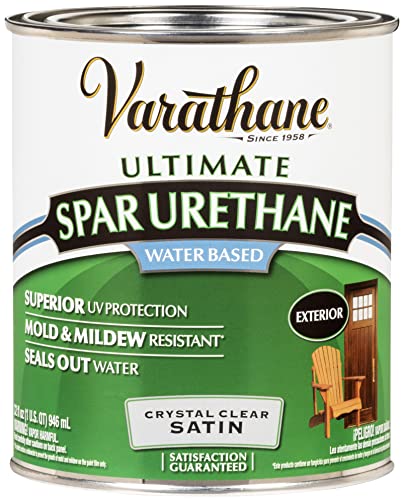
Varathane Outdoor Spar Satin Urethane, Water-Based, Quart
This is the water-based satin quart, and the title names exterior doors, furniture, trim and railings along with UV and weather resistance. Water-based finishes generally dry faster, smell milder and clean up with water, which helps if you are working in a garage with the door off its hinges. They also tend to stay clearer than oil-based ones, so a pale wood keeps its color. Satin hides small flaws on older doors. Check the label for the minimum temperature range and for how long to wait before recoating, because both change the schedule you can plan around.
- Pros: Quick between coats; mild odor and water cleanup.
- Cons: Less warmth than oil-based; check compatibility over an old oil finish.
Who it’s for: DIYers who want a fast, low-odor coat on a bare or fully stripped door.
Varathane Outdoor Spar Satin Urethane, Oil-Based, Quart
The oil-based satin quart carries the same exterior-door wording. Oil-based spar products typically add a slight amber cast, which many people like on mahogany, oak and fir doors. Expect longer waits between coats and a stronger smell, so plan for ventilation. The satin sheen is easier to live with on a door you handle daily, since it does not highlight fingerprints as much as gloss. If the door has a previous coat, confirm on the label whether oil-based spar can go over it or whether sanding to bare wood is needed.
- Pros: Warm tone; quart suits a full door with edges.
- Cons: Slower cure; odor requires good ventilation.
Who it’s for: People refinishing a stained wood door who want a classic look.
Varathane Outdoor Spar Semi-Gloss Urethane, Oil-Based, Quart
Same family, with a semi-gloss sheen. It sits between satin and gloss, adding more light reflection and a slightly more polished look without a mirror finish. The title repeats the exterior door and UV and weather resistance wording. If you are unsure about sheen, this is a sensible middle choice, though you can only judge it fairly by comparing finish samples in your own light. Because it is sold in the same quart size and shares the oil-based base, it is the easiest swap if you started with satin and found it too flat.
- Pros: Balanced sheen; same oil-based warmth as the satin.
- Cons: Shows brush strokes more than satin.
Who it’s for: Doors with smooth, well-prepared surfaces and a modest shine goal.
Varathane Ultimate Spar Satin Urethane Spray, Oil-Based, 11.25 Oz
An aerosol in oil-based satin, with “Ultimate Spar” in the name. A single can covers limited area, so this is better for a carved panel, louvers or a door’s trim than for a full slab. Spraying avoids brush marks but needs a ventilated, dust-free spot and light, overlapping passes. Heavy single coats risk runs. Shake the can for as long as the label says, hold it at the distance given there and keep the can moving, then stop to let each pass flash off before the next.
- Pros: Reaches grooves and moldings; no brush marks.
- Cons: Small coverage per can; overspray management.
Who it’s for: Panel doors with detailed profiles or quick touch-ups.
Varathane Outdoor Spar Gloss Urethane Spray, Water-Based, 11.25 Oz
A water-based gloss spray, which is the only spray in this group that is not oil-based. It could suit someone wanting low odor on a small gloss project, but the can size means a full door would take several. Gloss is unforgiving on rough surfaces, so sand carefully first. The can also suits a quick refresh of a small panel on a door that already has a compatible water-based finish, though the label is the only place to confirm that.
- Pros: Water-based convenience; handy for small parts.
- Cons: Limited coverage; gloss highlights flaws.
Who it’s for: Small hardware-style wood parts, sidelight trim or door accessories.
Varathane Ultimate Spar Gloss Urethane Spray, Oil-Based, 11.25 Oz
The oil-based gloss aerosol. It pairs a high-shine look with the convenience of a can, and the title lists exterior doors, furniture, trim and railings. The same limits apply: small area per can, and a need for even technique. Buy extra cans if you plan more than one coat on a wide surface, and keep a spare in case a nozzle clogs partway through the job.
- Pros: Glossy finish without brushing; good for details.
- Cons: Cost climbs fast on large areas.
Who it’s for: Small gloss projects and patch repairs on an existing gloss door.
Varathane Triple Thick Gloss Spar Urethane, Quart (runner-up)
The title says interior and exterior wood projects, 3X thicker one-coat coverage, UV and water protection. Unlike the others, it does not name doors specifically, so confirm door suitability on the listing and label. Thicker coats can mean fewer passes but also a higher risk of runs, sags and uneven drying if applied heavy. It is a gloss-only option in this group. The higher film thickness per coat also means a longer cure before a door can close tightly against weatherstripping, so give it extra time.
- Pros: Fewer coats claimed; usable inside and out.
- Cons: Doors not named in the title; thick coats need careful technique.
Who it’s for: Wood projects where you want a heavy single coat and have checked the label.
Varathane Outdoor Spar Gloss Urethane, Oil-Based, 275 VOC, Quart
Oil-based gloss in a quart, with “275 VOC” in the title, which refers to the volatile organic compound content limit. Rules differ by state and county, so check what is allowed where you live. The title highlights exterior wood protection and moisture resistance, but unlike several siblings it does not name doors, so verify the label for door use. Oil-based products also need cleanup with the solvent named on the label, which should be handled outdoors or with ventilation.
- Pros: Quart size; gloss sheds dirt and water easily.
- Cons: VOC rules vary by location; strong odor.
Who it’s for: Solid-wood exteriors where gloss is wanted and local rules allow it.
Varathane Ultimate Spar Semi-Gloss Urethane Spray, Oil-Based, 11.25 Oz
The semi-gloss oil-based aerosol is the same format as the other cans, but the listing appears priced far above the matching spray cans. Compare the live price against the satin and gloss versions before buying, because the products appear nearly identical on paper. It is useful only if you specifically need semi-gloss in spray form. If not, the semi-gloss quart does the same job for far more surface area.
- Pros: Semi-gloss in a spray can; same exterior wording.
- Cons: Listing price looks out of line with similar cans; small coverage.
Who it’s for: Spot repairs on a semi-gloss door, if the price is sensible when you check.
How we picked these
We read the brief’s real Varathane listings and sorted them by base, size and sheen. Statements here follow listing titles, published specifications, manufacturer documentation and buyer reviews, and anything not shown in a title is marked as something to confirm. Nobody on the team used or measured these units. The order reflects usefulness for a door, not a lab ranking.
What matters for a door finish
Exposure beats product choice
Sun and rain exposure matters as much as the can. A door facing south with no overhang can see a clear finish break down much sooner than one under a covered porch. Plan on checking the surface each season and recoating before the film fails, because patching bare wood is harder than refreshing a sound coat.
Seal every edge
Doors absorb moisture through the top and bottom edges, which are easy to miss while the door hangs. Take the door down if you can, finish the top, bottom and any cut-outs for hardware, and let everything cure before rehanging. For wood choices and prep ideas, see our piece on wood for a stained door with a durable topcoat.
Water-based or oil-based, and the old finish underneath
Know what is already on the door. If it has an unknown old coat, sand it down to bare wood or follow the label’s instructions for recoating, because a new coat over a failing film fails with it. Water-based over oil-based is common practice only when the surface is properly prepared and fully dry.
Weather, temperature and cure time
Every label lists a safe temperature range and humidity limits, and ignoring them is the quickest way to a cloudy or sticky finish. Avoid applying in direct sun, when the surface is hot, or when rain or dew is expected before the film sets. Cure time is longer than dry-to-touch time, so avoid slamming the door or letting it stick to weatherstripping for the first days.
Worked example: coat schedule for a 36-by-80-inch door
Day 1: remove hardware, sand to the grit the label recommends, and wipe dust. Day 1 evening: coat one on faces and all four edges. Day 2: light scuff, wipe, coat two. Day 3: scuff again, coat three, and give the top and bottom edges a fourth thin coat. Count your cans before you start: on a full door the faces alone can use a large share of a quart over three coats, depending on the label’s coverage figure. Allow the full cure time on the label before closing the door tightly against weatherstripping so it does not stick.
Mistakes buyers make
Choosing spray for a whole door is the usual surprise, since several cans add up. Others include skipping the edges, applying thick coats to save time, and finishing in cold, damp or sunny conditions the label warns against. Some buyers also ignore oily-rag safety with oil-based products, so follow the disposal directions. Finally, many assume gloss is always tougher, when the main trade-off is appearance. Another quiet error is skipping the stir: settled solids in a satin can produce uneven sheen, so stir gently rather than shaking, which makes bubbles.
Verdict
For most exterior doors, pick a quart of the Outdoor Spar: water-based satin for speed and low odor, or oil-based satin or semi-gloss for warmth. Keep a spray can only for panels and touch-ups. Treat the Triple Thick and the 275 VOC quart as options to verify on their labels first, and compare the semi-gloss spray price before you commit. Whichever you buy, plan the coats, the weather window and the cure time before opening the can.
Related guides
- How To Strip Old Varnish From Furniture Without Sanding
- Random Orbital Sanders For Furniture Refinishing
- How Long To Wait Between Coats Of Polycrylic
Frequently asked questions
Is spar urethane a good choice for a front door?
It is a common choice for exterior wood because spar formulas are made to flex with wood movement and resist weather, and the listings here mention UV and weather resistance. Real durability depends on the exposure. A door under a deep porch lasts far longer than one facing south sun, so plan on inspecting and recoating, and follow the label for surface prep and coat count.
Is water-based or oil-based spar urethane the better pick?
Water-based dries faster, smells less and cleans up with water, while oil-based generally adds a warmer amber tone and takes longer between coats. Both types appear in these listings. If your door already has an oil-based finish, ask whether the label allows a water-based coat over it, and sample on an inconspicuous area first.
Is a spray can better than a quart for a door?
Spray suits small areas, carved panels and hard-to-brush corners, and it avoids brush marks. A quart is more economical for flat door faces and several coats. The 11.25 oz cans in these listings cover limited area, so a full door with multiple coats may need several cans. Compare the cost against a quart before choosing spray for the whole job.
Which sheen suits an exterior door?
Gloss usually looks richest and sheds dirt easily, but shows every flaw underneath. Satin hides small imperfections and gives a softer look. Semi-gloss falls between the two. This is mostly taste, since the listings offer all three. Many people choose satin for older doors with worn surfaces and gloss for new, smooth wood.
How many coats does an exterior door need?
Follow the number printed on the can, since it varies by product and by how thick each coat goes on. Exterior doors usually get more coats than indoor furniture, and the edges, top and bottom matter as much as the faces. Sand lightly between coats as directed, and keep the door out of direct sun and moisture while it cures.



0 Comments