What's inside
- Top 3 Picks
- Quick Comparison
- How We Chose
- 1. Jackery Explorer 300 – Best for Phones, Router and Small Electronics
- 2. Jackery Explorer 1000 v2 – Best for Mid-Size Essentials
- 3. Anker SOLIX S2000 – Best All-Round Home Backup
- 4. BLUETTI Elite 30 V2 – Best for Compact Bedside and Desk Backup
- 5. ALLWEI 300W Power Station – Best for Small Essentials with Solar Charging
- 6. Jackery HomePower 3600 Plus – Best for Large Loads and Expandable Backup
- 7. Daran 89.6Wh Power Station – Best for Pocket-Size Phone and Router Backup
- 8. DaranEner 192Wh Power Station – Best for Small Appliances and Electronics
- 9. BLUETTI Elite 100 V2 – Best for Fridge-Class Loads in a Portable Body
- How to Size and Choose a Power Station for Home Backup
- Frequently Asked Questions
- Our Recommendation by Situation
- Top 3 Picks
- Quick Comparison
- How We Chose
- 1. Jackery Explorer 300 – Best for Phones, Router and Small Electronics
- 2. Jackery Explorer 1000 v2 – Best for Mid-Size Essentials
- 3. Anker SOLIX S2000 – Best All-Round Home Backup
- 4. BLUETTI Elite 30 V2 – Best for Compact Bedside and Desk Backup
- 5. ALLWEI 300W Power Station – Best for Small Essentials with Solar Charging
- 6. Jackery HomePower 3600 Plus – Best for Large Loads and Expandable Backup
- 7. Daran 89.6Wh Power Station – Best for Pocket-Size Phone and Router Backup
- 8. DaranEner 192Wh Power Station – Best for Small Appliances and Electronics
- 9. BLUETTI Elite 100 V2 – Best for Fridge-Class Loads in a Portable Body
- How to Size and Choose a Power Station for Home Backup
- Frequently Asked Questions
- Our Recommendation by Situation
As an Amazon Associate I earn from qualifying purchases. This post may contain affiliate links at no extra cost to you.
For most households that want real home backup, the best portable power station in this group is the Anker SOLIX S2000. Its listing names 2,010Wh of storage and 1,500W of AC output, which is enough to keep a refrigerator, a Wi-Fi router, a few lights and phone chargers running through an overnight outage, and it uses the long-lived LiFePO4 chemistry that suits a unit you plan to keep for years. If you need a lighter, easier-to-carry unit for the essentials only, the BLUETTI Elite 100 V2 at 1,024Wh and 1,800W is the sensible step down. If you want to power larger loads or keep adding capacity, the Jackery HomePower 3600 Plus at 3,584Wh and 3,600W is the heavyweight here. The sections below rank all nine stations in order, compare them in one table, and show you how to size a unit by adding up the watts and watt-hours of what you actually need to keep running.
Top 3 Picks
Best overall: Anker SOLIX S2000 (2,010Wh, 1,500W). It is the strongest balance of capacity and output in the middle of the range. Per Anker’s published specifications it uses LiFePO4 cells, offers several AC outlets and switches over quickly enough to behave like a UPS for small electronics. Capacity at this level covers a typical refrigerator for a long stretch.
Best compact essentials pick: BLUETTI Elite 100 V2 (1,024Wh, 1,800W). It is a quarter of the way to a whole-house battery, but light enough to carry up stairs by one person. Its 1,800W output also handles some higher-wattage tools and appliances that smaller stations cannot start.
Best for big loads and expansion: Jackery HomePower 3600 Plus (3,584Wh, 3,600W). This is the one to consider if your list includes a sump pump, a well pump or a furnace blower, though any hardwired connection requires a licensed electrician and a proper transfer switch.
Quick Comparison
| Product | Best for | Key specs (from the listing) |
|---|---|---|
| Jackery Explorer 300 | Phones, router and CPAP-class loads for short outages | 292Wh, 300W-class AC output |
| Jackery Explorer 1000 v2 | Mid-size essentials, including a fridge for several hours | 1,070Wh, 1,500W |
| Anker SOLIX S2000 | All-round home backup | 2,010Wh, 1,500W |
| BLUETTI Elite 30 V2 | Compact, light desk and bedside backup | 288Wh, 600W, LFP |
| ALLWEI 300W Power Station | Small essentials with solar charging | 256Wh, 300W, LiFePO4, pure sine wave, PD 60W, MPPT |
| Jackery HomePower 3600 Plus | Large loads and expandable backup | 3,584Wh, 3,600W AC output |
| Daran 89.6Wh Power Station | Pocket-size phone and router backup | 89.6Wh, 100W (200W peak), LiFePO4 |
| DaranEner 192Wh Power Station | Small appliances and electronics | 192Wh, LiFePO4, 2 AC outlets at 300W (600W peak), USB-C PD 60W |
| BLUETTI Elite 100 V2 | Fridge-class loads in a portable body | 1,024Wh, 1,800W |
How We Chose
We built this ranking from the listing information, the manufacturers’ published specification sheets and well-established facts about batteries and household electricity. We did not run discharge trials and we make no claims about measured runtimes. The criteria were usable capacity in watt-hours (the number that decides how long you can run something), continuous AC output in watts (the number that decides what you can run at all), battery chemistry, the presence of a UPS-style switchover, the available ports and solar input, and weight. Because home backup involves safety, we also considered how clearly each listing states protections such as a battery management system and pure sine wave output. Where a detail is not stated, we say so and tell you to confirm it on the product page.
1. Jackery Explorer 300 – Best for Phones, Router and Small Electronics
As an Amazon Associate we earn from qualifying purchases at no extra cost to you.

The Explorer 300 is the smallest of the mainstream stations here apart from the two Daran units. Its listing names 292Wh of capacity, and published specifications describe a 300W-class AC inverter with pure sine wave output, a USB-C port with Power Delivery and a light, handle-equipped body. It is built for small electronics, not appliances.
It suits apartment dwellers, anyone whose outage plan is “keep the phones, the router and a lamp going,” and travelers who also want a camping battery. It is also a reasonable bedroom unit for a small low-wattage device, but see the safety note below on medical equipment.
| Spec | Detail |
|---|---|
| Capacity | About 292Wh (listing) |
| AC output | 300W-class, pure sine wave (per published specs) |
| Chemistry | Lithium-ion per published specifications; confirm on the product page |
| Weight | Roughly 7 pounds per published specifications |
The worked example is easy. A Wi-Fi router and modem together often draw about 20 to 30W. At 25W, a station with roughly 250Wh usable would run them for about 10 hours. Add two phone charges of 15Wh each and a 10W LED lamp for four hours, and the budget shrinks to about eight hours for the router. That is a decent evening, not a whole day.
The 300W limit is the real boundary. A refrigerator compressor, a coffee maker, a microwave or a hair dryer will exceed it or trip the overload protection. Do not try to run them.
Safety note: if you rely on powered medical equipment, such as a CPAP machine, ask the device manufacturer and your clinician what backup they recommend. A small power station is not a certified medical backup system, and a heated humidifier can multiply the draw several times.
Pay attention to how the unit is recharged, because that shapes how useful it is in a multi-day outage. A station this size can be refilled from a wall outlet in a few hours, from a car’s 12V socket while you drive, or from a compatible solar panel. In a long outage where the grid is down, the car and the panel are the realistic options, so confirm the input connector and voltage window in the manual before you buy a panel.
Store it somewhere you can reach quickly, partly charged, and put a note on it with the date you last topped it up. Small stations drift down slowly while idle, and a unit that sat for a year may need a long recharge before it is useful.
Pros
- Light and easy to carry, with a pure sine wave AC outlet for sensitive electronics.
- USB-C PD output charges a phone or a small laptop without an adapter.
- Solar charging is possible with a compatible panel.
- A well-known brand with accessible support documentation.
Cons
- Not suited to refrigerators, microwaves or space heaters.
- Lithium-ion chemistry has a shorter stated cycle life than LiFePO4 models.
- Limited capacity means a few hours of use for a router and laptop.
How it compares: against the BLUETTI Elite 30 V2 at 288Wh and 600W, the Jackery has the same size class but a lower output ceiling and an older chemistry. For small loads the two are close, while the Elite 30 V2 offers more power and a longer-life battery. Against the Explorer 1000 v2, it is simply the smaller sibling.
2. Jackery Explorer 1000 v2 – Best for Mid-Size Essentials

The Explorer 1000 v2 is where a power station starts to feel like backup power for a household. Its listing names 1,070Wh and 1,500W, and Jackery’s published specifications describe LiFePO4 cells, three 120V AC outlets, USB-C ports including a 100W Power Delivery output and a surge capability around twice the continuous output.
It suits households with a modest list of needs: a refrigerator for several hours, a router, lights, a television or a laptop. It also suits campers and tailgaters who want one battery that does both jobs. At roughly 24 pounds per published specifications, it is a one-person carry.
- Capacity: 1,070Wh, which is about 900Wh usable after inverter losses.
- AC output: 1,500W continuous, with a higher short-term surge figure.
- Solar: published input up to about 400W; confirm voltage limits before buying a panel.
- Chemistry: LiFePO4 per Jackery’s materials; confirm on the product page.
Here is a refrigerator example. A modern full-size fridge uses roughly 350 to 500kWh a year, or about 1.0 to 1.4kWh a day, with a running draw around 100 to 200W and a compressor start surge several times higher. With 900Wh usable, you can plan for somewhere between 12 and 18 hours of fridge operation, and less if the kitchen is warm or the door is opened often. Add the router at 25W and a few lights, and you have a night of coverage but not a second day without recharging.
A 1,500W ceiling covers most kitchen small appliances for short bursts, such as a toaster or a coffee maker, but those drain the battery quickly. A 1,000W microwave for ten minutes uses roughly 170Wh, or about a fifth of the battery.
Think about the order in which you plug things in. Start the refrigerator first, while the battery is full and the inverter has the most headroom for the compressor’s start-up surge, and add the smaller loads afterward. If you add the microwave or a kettle later and the inverter shuts off, unplug the largest load, switch the unit back on and try again with a smaller total. A power strip with a switch makes this easier, because you can cut every load at once and restore them one at a time.
It is also worth planning a recharge route. At this size a wall charger refills it in a couple of hours according to the published specification, and a modest solar array can recover a good share of a day’s use. That combination is what turns a one-night backup into a multi-day one.
Pros
- Good mix of capacity and weight for a one-person carry.
- LiFePO4 chemistry per the manufacturer, with a long stated cycle life.
- 1,500W output starts a typical refrigerator and many small tools.
- Fast recharging from a wall outlet according to the published specification.
Cons
- A single day of fridge use consumes most of its capacity.
- Not expandable in the way the HomePower line is.
- Output is below that of the Elite 100 V2 at 1,800W.
How it compares: versus the BLUETTI Elite 100 V2, the two are nearly the same size and capacity, but the Elite offers a higher continuous output while the Jackery has a longer-established brand. Versus the Anker SOLIX S2000, the S2000 offers roughly twice the storage in a bigger, heavier body. Choose the 1000 v2 if you value portability and the S2000 if you value runtime.
3. Anker SOLIX S2000 – Best All-Round Home Backup

The Anker SOLIX S2000 is the model we would put at the center of a home backup plan for essentials. Its listing names 2,010Wh and 1,500W. Anker’s published specifications describe LiFePO4 cells, a pure sine wave inverter with a 3,000W peak, five AC outlets, a 100W USB-C port, a UPS switchover of 10 milliseconds or less, and solar input up to 400W. The body weighs roughly 36 pounds, which is a two-handed lift and not a single-handed carry.
It suits homeowners who want to ride through an overnight or day-long outage without thinking about it. Two thousand watt-hours is enough to run a refrigerator, a router, lights and device charging for the bulk of a day. Anker states it can keep a refrigerator going for well over a day under its own stated conditions, a figure that depends heavily on the fridge and the room temperature.
| Spec | Detail (per published specifications) |
|---|---|
| Capacity | 2,010Wh LiFePO4 |
| AC output | 1,500W continuous, 3,000W peak, pure sine wave |
| Outlets | Five AC outlets plus USB-C and USB-A |
| Solar input | Up to about 400W |
| UPS switchover | 10 milliseconds or less |
The 1,500W continuous output matters more than people expect. It lets you run a refrigerator and a 1,000W appliance at the same time, such as a microwave, as long as the total stays below the ceiling. Add the loads before you plug them in. If the total exceeds 1,500W, the inverter will shut off to protect itself.
Runtime estimate: at 85 percent efficiency, 2,010Wh yields about 1,700Wh of usable energy. A fridge at an average 60W (including duty cycle) uses 1,440Wh over 24 hours. That leaves roughly 260Wh for a router, lights and phones. That adds up to about a day for essentials, and a solar panel can extend it.
The weight deserves a practical plan. At roughly 36 pounds, the S2000 is manageable for most adults over a short distance, but not for a long trip up stairs or across uneven ground. Decide where it will live during an outage before the outage happens: near the refrigerator and the router, on a stable surface, away from water and with room around the vents. A small wheeled cart or a sturdy low shelf makes the arrangement much easier to live with.
Because the outlets are spread across the front, use short, heavy-duty cords and keep them out of foot traffic. A tripped cord is a bigger danger than a flat battery.
Pros
- Large capacity with a long-life LiFePO4 chemistry.
- Five AC outlets and quick UPS-style switchover.
- Solar charging supports multi-day use.
- Strong balance of capacity, weight and brand support.
Cons
- At around 36 pounds, it is heavy for stairs.
- 1,500W continuous will not start large well pumps or air conditioners.
- Not designed for hardwired whole-home backup without a compatible inlet and electrician.
How it compares: against the Jackery 1000 v2, it has about double the storage. Against the HomePower 3600 Plus, it gives up capacity and output in exchange for a much lighter, simpler unit. If you want one machine and a straightforward plan for a fridge and electronics, this is the one.
4. BLUETTI Elite 30 V2 – Best for Compact Bedside and Desk Backup

The BLUETTI Elite 30 V2 is the compact LFP option. Its listing names 288Wh, 600W and an LFP battery, and BLUETTI’s published specifications add pure sine wave AC output, a surge (“lifting”) figure of about 1,500W, a high-wattage USB-C Power Delivery port, a UPS-style switchover and a weight under ten pounds. It is a small station with a bigger output than its capacity suggests.
It suits people who want a neat backup for a home office or bedroom: a laptop, a router and modem, lights and a fan, with enough output to run a small appliance now and then. The high USB-C wattage means a modern laptop can charge straight from the unit without using the inverter, which is more efficient than going through an AC adapter.
- Capacity: 288Wh LFP, per the listing.
- AC output: 600W continuous with a higher short surge, per published specifications.
- Charging: fast AC recharge plus solar input up to about 200W, per the manufacturer.
- Weight: roughly 9.5 pounds, per the manufacturer.
A home-office example shows where it fits. A laptop averaging 45W, a router at 20W and a lamp at 10W total 75W. With about 245Wh usable, that load runs for around three hours. Charging the laptop over USB-C avoids inverter losses and stretches that a little. This is a unit for riding through a short outage and saving your work, not for working all day.
The 600W ceiling opens up a few more possibilities than the Explorer 300: a small fan, a slow cooker on low or a small electric blanket in the range of 100W. It will not run a hair dryer, a toaster or a microwave. Check the label on any appliance before you plug it in.
A feature worth understanding on small stations is standby draw. Even with nothing plugged in, the inverter and display consume some power if left on, and over a day that can eat a meaningful slice of a 288Wh battery. Switch off the AC output when you are using only USB devices, and your runtime stretches noticeably. Most modern stations have an automatic shutoff for the inverter when the load is very low, but it is better to turn off what you are not using.
Pros
- LFP chemistry in a very light body.
- 600W output is double that of the 300W-class units.
- High-wattage USB-C port charges laptops directly.
- UPS-style switchover protects computers during a power flicker.
Cons
- 288Wh is only a few hours of laptop-plus-router use.
- Cannot run refrigerators for any meaningful stretch.
- Solar input is limited to a small panel.
How it compares: versus the Jackery Explorer 300, the Elite 30 V2 offers more output and LFP chemistry at nearly the same capacity. Versus the ALLWEI 256Wh model, it is the better-documented choice. Versus the larger Elite 100 V2, it is the grab-and-go version of the same family.
5. ALLWEI 300W Power Station – Best for Small Essentials with Solar Charging
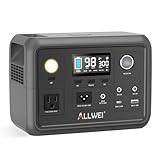
The ALLWEI listing is dense with spec claims: 300W, 256Wh, a solar generator, a LiFePO4 battery, a pure sine wave AC outlet, 60W USB-C Power Delivery fast charging, an MPPT solar controller and battery management system protection. That is a good feature list for a small station, and it covers the items that matter for protecting electronics.
It suits shoppers who want a small LiFePO4 station with solar charging in mind: a porch light, a router, phones and a laptop. It is also reasonable for camping, where the MPPT controller helps squeeze usable power out of a small panel.
| Spec | Listing detail |
|---|---|
| Capacity | 256Wh LiFePO4 |
| AC output | 300W, pure sine wave |
| USB-C | PD 60W |
| Solar | MPPT controller; confirm input voltage and wattage limits |
| Protection | Battery management system (BMS) |
What does MPPT mean for you? A maximum power point tracking controller adjusts the electrical load on a solar panel to extract as much power as the sun allows, and it is more efficient than the simpler controllers that some small stations use. On a panel that is partly shaded, or on a cloudy day, the difference can be noticeable. Whether it is worth focusing on depends on how much you plan to rely on solar.
A realistic expectation for solar: a 100W panel in good sun will not deliver 100W for the whole day. Plan for a fraction, say four to five effective hours of full output, which gives roughly 400 to 500Wh on a clear day. For a 256Wh station, that is plenty to refill it, but it takes patience.
The listing’s capacity and output are close to the Explorer 300 and the Elite 30 V2, so brand, support and documentation become the deciding factors. Check the product page for warranty terms and the exact solar input range.
For an unfamiliar brand, it pays to check three things before you rely on the unit in an emergency. Look for a clear statement of the warranty period and how claims are handled. Look for any safety certification marks mentioned on the product page. And look for a user manual that you can download and read, since it will list the solar input limits and the temperature ranges. A seller that provides all three has made it easier for you to use the product safely.
Run it once, when there is no emergency, with a real load. Plug in a lamp or a fan, watch the display and see how it behaves. Learning how the unit behaves before you need it is the best protection against an unpleasant surprise.
Pros
- LiFePO4 chemistry with a pure sine wave outlet.
- MPPT solar controller and BMS protection named in the title.
- 60W USB-C PD charges phones and many laptops.
- A solid feature set for a small station.
Cons
- Lesser-known brand than Jackery or BLUETTI.
- Same 300W ceiling as the Explorer 300, so no refrigerators or heaters.
- Solar input specifications need checking before you buy a panel.
How it compares: versus the Elite 30 V2, it offers a similar capacity with half the output ceiling and less brand documentation. Versus the DaranEner 192Wh, it has more capacity and PD. Pick it if you like the feature list and are comfortable verifying details yourself.
6. Jackery HomePower 3600 Plus – Best for Large Loads and Expandable Backup

The HomePower 3600 Plus is the biggest unit on this list. The listing names 3,584Wh and 3,600W of AC output, and Jackery’s published specifications describe LFP cells, four 120V 20A outlets plus a 30A RV-style outlet, very fast AC recharging, solar input up to about 1,000W and the option to add battery packs to expand capacity several times over. A single unit outputs 120V, and a split-phase 240V arrangement requires a second unit and a dedicated hub, so confirm that detail if you want 240V.
It suits households that want to run several things together: a refrigerator, a chest freezer, lights, a router, a television and an occasional microwave. It also suits people planning a more serious backup system with a transfer switch installed by a licensed electrician. At about 77 pounds it is a unit you roll or lift with help, not one you carry up stairs.
- Capacity: 3,584Wh, expandable with add-on packs per the manufacturer.
- AC output: 3,600W continuous, with a much higher surge figure.
- Solar: large input range per published specifications; confirm panel voltage limits.
- Weight: roughly 77 pounds.
Sizing example: add a refrigerator (average 60W, or about 1.4kWh a day), a chest freezer (about 0.7kWh a day), a router (0.3kWh), lights (0.3kWh) and a television for three hours (0.3kWh). That is about 3.0kWh a day. The 3,584Wh unit at 85 percent efficiency delivers about 3.0kWh, so it carries you almost a full day, and solar or an expansion pack extends it. A 1,000W microwave adds about 170Wh for ten minutes of use.
The key point about big loads is surge. A well pump or a sump pump may need two or three times its running watts for a moment at startup. A 3,600W continuous output with a higher surge figure handles many of them, but check the motor’s locked-rotor or starting watts on its nameplate. Hardwired loads, such as a furnace or a well pump, must be connected through a transfer switch or interlock kit installed by a licensed electrician, never by plugging a cord into a wall outlet.
Because this is the only unit in the list that can scale up, plan the whole system rather than one purchase. Decide what you want to keep running in the worst plausible outage, such as three days in winter or a week after a storm, and calculate the watt-hours. Then decide how you will recharge: expansion packs extend runtime but not recharge speed, and solar panels extend both if the weather cooperates. An electrician can tell you whether a transfer switch and an inlet are practical for your panel, and what permits your area requires.
Moving a unit this heavy is also a safety question. Lift with your legs or use a cart, never carry it alone on stairs, and keep it on a stable surface away from children and pets.
Pros
- Highest capacity and output in the group.
- Expandable, so you can start with one unit and add capacity later.
- LFP chemistry per the manufacturer, built for repeated cycling.
- Multiple outlets, including a high-amperage one for RV-style connections.
Cons
- Heavy and bulky, at roughly 77 pounds.
- Single-unit 120V output limits some whole-home uses.
- Requires professional installation for any hardwired connection.
How it compares: versus the Anker SOLIX S2000, it offers about 1.8 times the storage and more than double the output, at roughly double the weight. Versus the Elite 100 V2, it is a different class entirely. Choose it only if your list of loads truly requires the extra capacity.
7. Daran 89.6Wh Power Station – Best for Pocket-Size Phone and Router Backup

This is the smallest unit in the group, and it is important to be realistic about what it is. The listing names 89.6Wh, a LiFePO4 battery, 100W output with a 200W peak, solar power bank functionality, AC outlets and PD ports. At 89.6Wh, it holds less energy than many laptop batteries, and it belongs in the “bigger than a power bank, smaller than a generator” niche.
It suits people who want a tiny, easy-to-store insurance policy: charging phones during a blackout, running a router and a lamp for a few hours or powering a small fan. It is also easy to carry on a camping trip. It is not a home backup system on its own, and the 100W limit rules out nearly every appliance.
| Spec | Listing detail |
|---|---|
| Capacity | 89.6Wh LiFePO4 |
| AC output | 100W continuous (200W peak) |
| Ports | AC outlet(s) and PD USB-C, per the title |
| Positioning | Solar power bank, small portable generator |
Runtime is simple arithmetic. With about 75Wh usable, a 10W router runs for roughly seven hours, a 5W LED lamp for around 15 hours and a phone charges perhaps four to five times at 15Wh each. A 40W laptop would last under two hours.
The 100W cap means anything with a heating element or a motor of any size is out. That includes space heaters, kettles, toasters, hair dryers, refrigerators and most power tools. Label on the appliance, wattage on the plate, and always check before plugging in.
A word on batteries of this size: they are often marketed with big words like “generator.” Treat the real figures as the truth. A station like this is a bigger version of the power banks people carry in a purse, with an AC outlet added.
Treat a unit this size as part of a kit, not a plan. A realistic small kit pairs it with a hand-crank or battery flashlight, a spare power bank and a printed list of emergency phone numbers. The battery is the least of what keeps a household comfortable through a short outage, and it pays to think about light, communication and water at the same time.
One other point is longevity. LiFePO4 cells in a small unit tolerate being left partly charged better than some other chemistries, but they are not immune to self-discharge. Set a calendar reminder every three months to check the level and top it up.
Pros
- Very small and light, easy to keep in a drawer or a car.
- LiFePO4 chemistry with a long stated cycle life.
- Covers the basics of a short outage: phones, router, light.
- Includes an AC outlet for a small adapter or device.
Cons
- 89.6Wh is very little energy.
- 100W output rules out nearly all appliances.
- Not a substitute for a real home backup unit.
How it compares: versus the DaranEner 192Wh from the same brand family, it is half the capacity and a third of the AC output. Versus the Explorer 300, it is a fraction of the energy. Pick it if portability and a tiny footprint matter more than runtime.
8. DaranEner 192Wh Power Station – Best for Small Appliances and Electronics

The DaranEner steps up from the 89.6Wh unit. The listing names 192Wh, a LiFePO4 battery, two AC outlets at 300W with a 600W peak and a 60W USB-C Power Delivery port. That is a modest but useful profile: enough output for small electronics and a few low-wattage appliances, with enough capacity for a few hours of use.
It suits households wanting a second, smaller unit for a bedroom or home office, and campers who need a few hours of laptop and phone power. It also suits someone building a modest outage kit who plans to keep it in a closet and check it every few months.
- Capacity: 192Wh LiFePO4.
- AC output: 300W continuous, 600W peak, on two outlets.
- USB-C: PD 60W for phones and many laptops.
- Use case: small electronics, fans, lamps, CPAP-class loads with caution.
Consider a power-outage evening. A 10W router, two 15Wh phone charges, a 45W laptop for two hours (90Wh) and a 10W lamp for three hours (30Wh) total about 160Wh of delivered energy. With around 160Wh usable from a 192Wh unit, that works, but with almost nothing spare. This is the level where the budget is tight and you should choose what to keep running.
Two AC outlets at a combined 300W let you run, for instance, a laptop charger and a 60W fan at once. A refrigerator, however, is not a good match: even a small refrigerator’s compressor surge can exceed 300W for a moment, and its daily energy use is far beyond 192Wh.
Regarding medical equipment, a CPAP machine without a heated humidifier often draws roughly 30 to 60W, which gives a few hours of runtime at best from this capacity. Talk to your clinician or device maker about a proper backup plan, since this is not designed or certified for medical use.
Think about the solar side honestly. A 192Wh station paired with a 50 to 100W panel is a sensible match, since the panel can refill it in a day of good sun. A larger panel may exceed the input limit, so check the stated maximum before you buy, and use the panel’s own cable and the correct connector. Mismatched voltage is the most common way to damage a small station, and the manufacturer’s input range is the only number that matters.
Keep the unit within its stated temperature range as well. A closet that gets very hot in summer or very cold in winter is a poor home for a battery, and an interior shelf is usually a better location.
Pros
- LiFePO4 chemistry in a small, carryable package.
- Two AC outlets and a 60W USB-C port.
- Enough for a few hours of electronics use.
- Solar-compatible, per the listing’s solar generator wording.
Cons
- 192Wh is a short runtime for anything beyond electronics.
- 300W ceiling excludes nearly all kitchen appliances.
- Lesser-known brand, so check the warranty and support details.
How it compares: versus the ALLWEI 256Wh, it has less capacity but the same output class. Versus the BLUETTI Elite 30 V2, it has less capacity and half the output. It is a sensible small kit piece, not a main backup.
9. BLUETTI Elite 100 V2 – Best for Fridge-Class Loads in a Portable Body
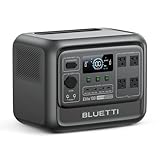
The Elite 100 V2 is the model that lands between the portable crowd and the home-backup crowd. The listing names 1,024Wh, 1,800W and describes it as a station for camping, and BLUETTI’s published specifications describe an LFP battery, four 120V AC outlets, a UPS-style switchover of 10 milliseconds or less, solar input up to about 1,000W, a very fast AC recharge mode and a weight around 25 pounds.
It suits people who want enough storage to keep a refrigerator, a router and some lights running through a night and who need it to be light enough to carry alone. The 1,800W continuous output is the headline: it can run a refrigerator and a modest second appliance together, and it handles higher-wattage tools than the 1,500W units.
| Spec | Detail (per listing and published specifications) |
|---|---|
| Capacity | 1,024Wh LFP |
| AC output | 1,800W continuous, with a higher surge mode |
| Outlets | Four 120V AC outlets |
| Solar | Up to about 1,000W input, per the manufacturer |
| Weight | About 25 pounds |
A good way to use it is as the centerpiece of an “essentials circuit.” Plug a power strip into the station, and run the router, a lamp, phone chargers and the refrigerator from the strip. Keep the total under 1,800W and, more usefully, under the energy budget. At 85 percent efficiency, you have roughly 870Wh to spend. A refrigerator at 60W average uses about 1,440Wh a day, so this unit covers it for about 14 hours. Add a 30W router, and the runtime drops slightly.
Solar makes a big difference at this size. A pair of 200W panels in good sun can add several hundred watt-hours an hour, and the unit’s solar input range is wide. Verify panel voltage and connector type before you buy a panel.
The same safety rules apply as for any station. Use only the supplied cables, keep the vents clear and do not use it in the rain or in a flooded basement.
Recharge speed is one of this model’s selling points, and it matters in practice. A station that can refill in an hour or two from a wall outlet gives you a way to recover when power returns for a short window, or when you have access to a generator or a friend’s outlet. Use the supplied cable and a properly grounded outlet, and do not daisy-chain extension cords to reach one. If your outage plan involves charging from a car, check the manual for the DC input range first.
Also consider fan noise and placement. Stations of this size have fans that run under load, and it is better to place the unit where you can hear a fault than inside a cabinet that traps heat.
Pros
- 1,800W output handles a refrigerator plus a second appliance.
- Four AC outlets and quick UPS-style switchover.
- LFP chemistry and a manageable weight.
- Generous solar input range for fast recharging.
Cons
- 1,024Wh is about half a day of refrigerator use.
- Not expandable, per published specifications.
- Cannot start large pumps or air conditioners.
How it compares: versus the Jackery 1000 v2, it offers higher continuous output at about the same capacity. Versus the Anker SOLIX S2000, it has half the storage and is lighter. It is the best pick if you want fridge-class power with minimal weight.
How to Size and Choose a Power Station for Home Backup
Choosing a station is a matter of arithmetic. List what you need to run, add up the watts to get the output you need and add up the watt-hours to get the capacity you need. Then check the safety and installation questions that come with each answer.
Step 1: Build a load list
Write down each device, its running watts and how many hours you want to run it. Running watts are on the appliance label or in its manual. Where you only have amps, multiply by 120 to get watts. Then compute watt-hours as watts times hours. The table shows typical values; check your own devices.
| Device | Typical running watts | Hours in a 24-hour outage | Approx. Wh |
|---|---|---|---|
| Wi-Fi router and modem | 20 to 30W | 24 (or 12) | 300 to 700Wh |
| Refrigerator (duty-cycled average) | 50 to 80W average, 100 to 200W while running | 24 | 1,200 to 1,900Wh |
| LED lights, several rooms | 30 to 60W | 5 | 150 to 300Wh |
| Laptop | 40 to 65W | 4 | 160 to 260Wh |
| Phones, two | 10 to 20W while charging | 3 | 30 to 60Wh |
| Television | 50 to 150W | 3 | 150 to 450Wh |
| Microwave (short use) | 1,000 to 1,200W | 0.25 | 250 to 300Wh |
Step 2: Turn the list into two numbers
Take a sample household that wants a router, a fridge, lights, a laptop and two phones for 24 hours. That is roughly 300 plus 1,400 plus 200 plus 200 plus 40, which is about 2,140Wh. Divide by an inverter efficiency of 0.85 to account for conversion losses, and the station needs to hold about 2,500Wh to last a full day. The Anker S2000 at 2,010Wh gets you most of the way, the HomePower 3600 Plus at 3,584Wh clears it comfortably, and the 1,000Wh class gets you about half a day.
The second number is peak watts. Add up everything that might run at the same time, say the fridge at 200W while running, the router at 25W, lights at 50W and a laptop at 60W, for a total near 335W. The 1,500W units cover that easily, and the 600W unit covers it, but a 300W unit does not. Always include the start-up surge of motors, which can be three to six times the running watts for a moment.
Step 3: Decision matrix
| Your situation | Pick |
|---|---|
| Phones, router and a light for a few hours | Daran 89.6Wh, DaranEner 192Wh or Explorer 300 |
| Home office or bedside backup with a laptop | BLUETTI Elite 30 V2 |
| Small kit with solar and a tight watt budget | ALLWEI 256Wh |
| Fridge, router and lights overnight | Elite 100 V2 or Explorer 1000 v2 |
| A full day of essentials | Anker SOLIX S2000 |
| Pumps, freezers and multiple large loads | Jackery HomePower 3600 Plus |
Step 4: Battery chemistry
LiFePO4 (also called LFP) cells are heavier than the nickel-manganese-cobalt cells used in older stations, but they are generally stated to last for thousands of charge cycles and are considered more thermally stable. For a unit that will sit in a closet for years and be called on once or twice, either chemistry can work, but LFP is the usual recommendation when the choice is available. Check cycle-life claims on the product page, and note that manufacturers state them under specific conditions.
Step 5: Safety and installation
- Never backfeed. Do not plug a station into a wall outlet with a male-to-male cord to power household circuits. It can energize utility lines and endanger line workers and your family. If you want to power hardwired circuits, have a licensed electrician install a transfer switch or interlock with an appropriate inlet.
- Use proper cords. Choose extension cords sized for the load and keep them short. Do not run cords under rugs.
- Keep it dry and ventilated. Do not use or store the station in wet areas, and do not block the vents. Keep it away from flammable materials and out of direct sun.
- Mind the temperature. Most stations have limits for charging and discharging. Charging a lithium battery below freezing is usually restricted, so keep it in a temperate room.
- Maintain it. Charge to roughly half to full every few months, inspect cables and stop using any unit that swells, smells or overheats.
- Do not fly with it. Units of this size exceed airline battery limits.
Step 6: Plan the recharge
Capacity is only half the story, because a flat station is a paperweight. Work out how you would refill it. A wall outlet works when power returns, a car adapter works if your station accepts 12V input and the car is running outdoors, and solar works in daylight. Solar math is simple: panel watts times effective sun hours times about 0.75 for real-world losses. A 200W panel with five effective sun hours delivers about 750Wh on a good day, which is enough to recover a 1,000Wh station in about a day and a half. Cloud, shade and panel angle can cut that in half.
Step 7: Check the paperwork
Before buying, read the product page for outlet types, the solar input voltage window, the temperature limits for charging and the warranty terms. If you plan any hardwired connection, ask a licensed electrician about a transfer switch or interlock, local permits and whether the station supports the inlet you need. If you rent, check what your lease allows. These are quick questions, and they prevent the most expensive mistakes.
Frequently Asked Questions
Can a portable power station run a whole house?
Generally no. Most whole houses use many kilowatt-hours per day, and central air conditioning or electric heat draws far more than these units can supply. A large station like the HomePower 3600 Plus can back up selected circuits through a properly installed transfer switch, but not everything at once.
How long will a power station run a refrigerator?
Divide the usable watt-hours by the fridge’s average draw. A fridge averaging 60W uses about 1,440Wh a day, so a 1,000Wh unit runs it roughly 12 to 14 hours after losses, and a 2,000Wh unit runs it close to a full day. Real results vary with the fridge, the room and how often the door is opened.
Is LiFePO4 better than other lithium chemistries?
For stationary and occasional use it is usually preferred, since manufacturers state longer cycle life and good thermal stability. It is heavier for the same capacity. Compare the cycle-life claims and warranty on each product page.
What is a UPS function?
It means the station switches to battery within milliseconds when wall power fails, so connected electronics keep running. Several models here state a switchover of 10 milliseconds or less. Confirm that your device is compatible, and treat the feature as helpful for computers but not as a guarantee.
Can I run a CPAP on a power station?
Many CPAP machines draw a modest 30 to 60W without a heated humidifier, so a small station can run one for several hours. However, this is a medical device, so ask the device maker and your clinician about suitable backup power before relying on it.
Can I charge a power station with solar panels?
Yes, if the panel’s voltage and wattage fall within the station’s solar input range and the connector matches. Real output is a fraction of the panel label, and clouds and shade reduce it further. Check the manual for the allowed range.
Should I keep it fully charged all the time?
Keeping it charged is sensible for backup use, but follow the manufacturer’s storage advice. Many suggest recharging every few months and storing the unit at a partial charge in a cool, dry place if it will sit unused for a long time.
Is a power station safer than a gas generator indoors?
A battery station produces no exhaust, so it avoids the carbon monoxide danger that makes running a gas generator indoors deadly. It still needs ventilation, dry conditions and sensible handling, and it cannot supply the large loads a generator can.
Our Recommendation by Situation
For the best overall home backup, choose the Anker SOLIX S2000. For a light, strong fridge-class unit, choose the BLUETTI Elite 100 V2 or the Jackery Explorer 1000 v2. For heavy loads and expansion, choose the Jackery HomePower 3600 Plus with professional installation. For small electronics, the Elite 30 V2 is the strongest of the small units, and the Daran models are for minimal needs. Always confirm the exact specifications, outlet types and solar limits on the product page, and have an electrician handle any hardwired connection.

0 Comments