What's inside
As an Amazon Associate I earn from qualifying purchases. This post may contain affiliate links at no extra cost to you.
A USB flash drive solves a stubbornly simple problem: you need to get files from one machine to another, you need a bootable installer, or you need to hand off a presentation to a client whose Wi-Fi is dead. For woodworkers who swap CNC toolpaths between a shop PC and a laptop on the porch, or who pull logs off a machine with no network access, a thumb drive is often the fastest fix. The market, though, is a minefield of mismatched claims. A drive advertising USB 3.0 may throttle on sustained writes because its controller or NAND cannot keep up, while a pricier USB 3.2 Gen 1 model with Type-C and Type-A ends up doing the same job faster in real use.
What separates a drive you will trust with your shop files from one you lose in a drawer: an interface generation matched to real throughput, physical protection of the connector (a bare stick snaps; a swivel or cap design does not), capacity-per-dollar that scales sensibly, and clear documentation on supported file systems and operating systems. This 2026 roundup compares published specs, street prices, and owner-reported experiences across eight drives that span the useful range for most buyers.
As an Amazon Associate we earn from qualifying purchases at no extra cost to you.





Our Top Picks



Quick Picks
| Product | Best for | Price |
|---|---|---|
| Lexar D40E 128GB | Dual-connectivity workflows | $29.99 |
| SANDISK Ultra Flair 128GB | High-capacity value on a budget | $25.95 |
| SIMMAX 32GB Swivel | Cheap bulk handouts | $9.99 |
| PNY Turbo Attache 3 128GB 2-Pack | Redundant backups | $27.99 |
| 2-Pack 64GB Swivel | Everyday carry at low cost | $18.99 |
| IMEASON 16GB Swivel | Keychain boot drives | $8.99 |
| SANDISK Ultra Flair 64GB | Reliable mid-range single drive | $18.60 |
| Lexar D40E 64GB | Type-C laptops on a tighter budget | $22.99 |
How We Picked
We narrowed eight candidates from a wider field using four criteria: interface throughput relative to asking price (USB 3.0 and above where the budget allows), capacity-per-dollar value at the listed street price, physical durability of the connector and housing (metal shells and swivel mechanisms score highest), and the frequency and severity of owner-reported failures across retail reviews. A drive that ticks three of those four boxes makes the cut; one that clears only price and nothing else does not.
The 8 Best What Is A Usb Flash Drive in 2026
Lexar D40E 128GB Dual USB 3.2 Gen 1 Type-C Jump Drive
This is the pick for anyone juggling both a Type-A desktop and a Type-C laptop, since the dual connector eliminates the dongle tax that quietly adds cost and friction. Owners consistently highlight the solid metal housing as a durability upgrade over plastic-bodied rivals, and the USB 3.2 Gen 1 interface is among the fastest in this group on paper.
- Pro: Native Type-C and Type-A in one compact body, no adapters needed.
- Pro: Metal enclosure resists bending and protects the connector when carried loose.
- Con: Highest sticker price here, and the dual-connector form makes it slightly bulkier in slim laptop ports.
Skip it if you only ever plug into one port type and want to shave a few dollars off the entry cost.
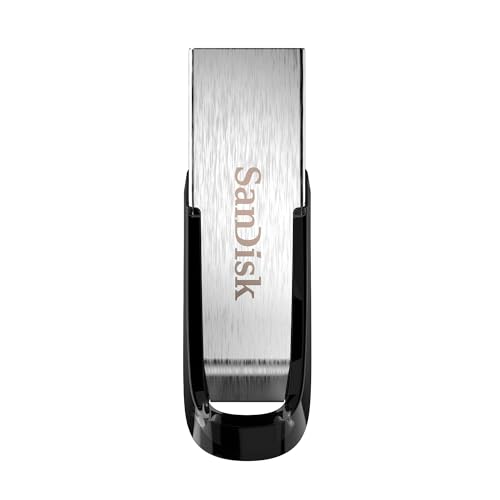
SANDISK 128GB Ultra Flair USB 3.0 Flash Drive
For buyers who need large capacity without paying a premium, this drive delivers the best gigabyte-per-dollar ratio among USB 3.0 options in the lineup. The slim metal casing slides into crowded laptop ports without blocking neighbors, and SanDisk’s track record on controller reliability is well supported by long review histories.
- Pro: Lowest price per gigabyte among the USB 3.0 drives listed.
- Pro: Ultra-slim profile clears adjacent ports on thin notebooks.
- Con: The exposed bare connector has no cap or swivel, so it is vulnerable to dust and physical damage in a tool bag.
Skip it if the drive will live loose in a shop apron or backpack pocket where the connector will get abraded.
SIMMAX 32GB Memory Stick USB 2.0 Swivel Thumb Drive
At under ten dollars, this is a bulk-purchase play: hand one to a client, leave one on each CNC console, or keep a spare in every toolbox drawer. The swivel mechanism protects the connector without a cap you will lose, and 32 GB is enough for firmware images, shop drawings, or installer ISOs.
- Pro: Swivel housing keeps the connector safe with no separate cap to misplace.
- Pro: Price is low enough to buy a handful for shop-wide distribution.
- Con: USB 2.0 interface means transfer times stretch noticeably with anything over a few hundred megabytes.
Skip it for large file transfers or booting modern Windows installers where sustained write speed matters.
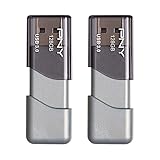
PNY 128GB Turbo Attache 3 USB 3.0 Flash Drive 2-Pack
Buying two 128 GB drives for roughly the price of one premium single pack makes this an easy choice for redundancy. Keep one in the shop, one in the truck, or use the second as a rolling backup. PNY’s metal-capped design shields the connector when not in use, and the USB 3.0 interface keeps transfers brisk on modern hardware.
- Pro: Two drives for a combined price that undercuts most single-drive rivals at this capacity.
- Pro: Metal cap threads over the connector, offering reliable protection during storage.
- Con: The cap is a separate piece that can be lost; once gone, the bare stick is exposed.
Skip it if you would rather carry a single drive than manage a matching pair.
2-Pack 64GB USB 2.0 Swivel Thumb Drives
Another bulk-and-budget entry, this pair targets users who want a dedicated drive per machine without committing more than twenty dollars. The swivel design protects the USB-A connector, and 64 GB per drive handles most shop-file workloads. At this price point, you are buying convenience and redundancy, not speed.
- Pro: Swivel housing eliminates the lost-cap problem common to capped drives.
- Pro: Two drives at a price most buyers pay for one branded single unit.
- Con: USB 2.0 ceiling limits sustained throughput, making large file copies a waiting game.
Skip it if your workflow involves moving multi-gigabyte CNC programs or video files between machines.
IMEASON Swivel 16GB USB 2.0 Flash Drive with Keychain
The cheapest drive in this roundup, and its built-in keychain ring means it lives on your shop key set where you will find it. FAT32 format ships ready for bootable installers, firmware updates, and small file hand-offs. At 16 GB you will not store a full ISO library, but for a rescue drive or a keychain backup of your most-used toolpath, it is remarkably practical.
- Pro: Integrated keychain ring keeps the drive attached to keys so it is never misplaced.
- Pro: Ships in FAT32, the most universally readable file system for embedded and BIOS-level use.
- Con: Only 16 GB of space, and USB 2.0 speed makes it impractical for anything beyond tiny files.
Skip it if you need more than a few gigabytes or expect to transfer large archives.
SANDISK 64GB Ultra Flair USB 3.0 Flash Drive
The middle child of the Ultra Flair line offers the same metal-body construction and USB 3.0 interface as the 128 GB model at a noticeably lower cost. For buyers who need a dependable single drive for daily shop use without the price of maximum capacity, it hits a practical sweet spot. Owner feedback emphasizes consistent read speeds and a compact form that disappears into a laptop port.
- Pro: Metal housing and slim profile match the 128 GB version at a smaller outlay.
- Pro: Strong long-term reliability track record in published reviews.
- Con: Bare connector has no protection mechanism, the same vulnerability as its larger sibling.
Skip it if you need the highest gigabyte-per-dollar ratio available; the 128 GB version actually beats it on that metric.
Lexar D40E 64GB Dual USB 3.2 Gen 1 Type-C Jump Drive
Same dual-connector engineering as the 128 GB Lexar above, scaled down for buyers whose storage needs are modest. The Type-C and Type-A ends cover both sides of the modern desk, and the metal body carries the same durability advantage. This is the sensible choice when you want dual-port flexibility without paying for capacity you will not fill.
- Pro: Native Type-C and Type-A in one drive, eliminating adapter clutter.
- Pro: Robust metal shell resists crush damage better than plastic-bodied competitors.
- Con: Cost per gigabyte is higher than single-interface rivals at this capacity tier.
Skip it if your machines all use one connector type and you are optimizing for raw capacity value.
Buying Guide
Interface Generation and Real-World Throughput
USB 2.0 tops out at a theoretical ceiling that modern controllers rarely approach in sustained writes, meaning a 500 MB file can take noticeably longer than you expect. USB 3.0 and USB 3.2 Gen 1 raise that ceiling substantially, and the difference is felt most when copying large CNC programs, installer images, or photo sets. If your budget allows even a few extra dollars, moving from USB 2.0 to USB 3.0 is the single highest-impact upgrade in this category.
Connector Protection and Physical Durability
Three protection strategies appear across these drives: swivel mechanisms that rotate a plastic housing over the connector, screw-on or snap-on metal caps, and exposed bare sticks with no protection at all. In a shop environment where drives live in pockets, drawers, and tool bags alongside metal chips and sawdust, a bare connector is a liability. Swivel designs eliminate the lost-cap failure mode and offer the best balance of protection and convenience for most woodworkers.
Capacity Selection Without Overpaying
Price per gigabyte is the metric that separates genuine value from marketing. In this roundup, the highest-capacity USB 3.0 drives deliver the best cost-per-gigabyte figures, while USB 2.0 drives at lower capacities charge a premium for their swivel or keychain features. Decide how much data you routinely move, then choose the smallest interface generation that handles your file sizes at an acceptable transfer time; buying more capacity than you need raises cost without improving workflow.
Our Verdict
The top pick is the Lexar D40E 128GB for its combination of dual-connector flexibility, metal construction, and USB 3.2 Gen 1 throughput at a reasonable premium. The budget pick is the 2-Pack 64GB Swivel Drives, which deliver two protected connectors and adequate capacity for under nineteen dollars total. If you specifically need the lowest cost per gigabyte in this group and carry the drive in a dedicated sleeve, the SANDISK 128GB Ultra Flair wins outright.
FAQ
What is a USB flash drive in simple terms?
A USB flash drive is a small, portable storage device that connects through a USB port and uses flash memory to hold files without needing power. You plug it in, read or write data, unplug it, and carry it to another computer.
Can a USB flash drive store more than a DVD?
A standard single-layer DVD holds about 4.7 GB, so any flash drive in this roundup with 8 GB or more capacity exceeds it. The 128 GB models here could store roughly twenty-six DVDs worth of data on a stick that fits in your pocket.
Why do some flash drives feel much slower than others?
Sustained write speed depends on the interface generation (USB 2.0 versus 3.0 or 3.2), the quality of the NAND flash and controller inside, and whether the host port supports the drive’s rated speed. Two drives with identical capacity can differ by several multiples in how fast they fill up.
Do I need a USB-C flash drive in 2026?
If your laptop or desktop only has Type-C ports, a Type-A-only drive will require an adapter that costs money and adds a failure point. A dual Type-C and Type-A drive covers both sides of the transition without extra parts, which is why models like the Lexar D40E are increasingly practical defaults.




0 Comments