Our Top Picks
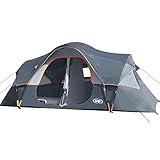
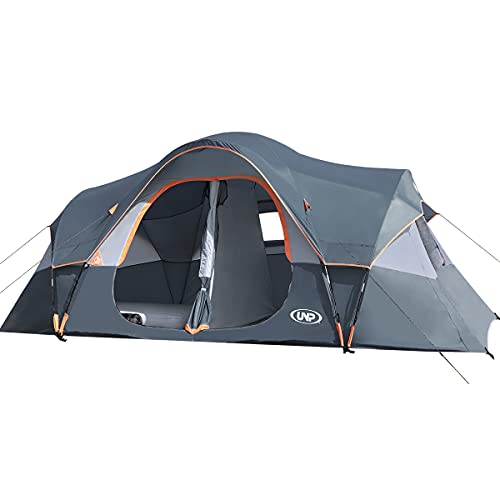 UNP 10 Person Tents for Camping Family Outdoor10 Person Tent216 x 108 x 78 inches21 poundsCheck on Amazon
What's inside
As an Amazon Associate I earn from qualifying purchases. This post may contain affiliate links at no extra cost to you.
A tent with “10 person” on the label is a marketing number, not a head count. Manufacturers usually measure it by how many sleeping bags can lie edge to edge with no gear, so a group of ten adults will be miserable while a family of six with duffels, a cooler and two dogs will feel comfortable. The real decision is how much floor, how many rooms and how much setup effort your group can live with for a long weekend at a campground.
This guide is for families, scout leaders and friend groups who want one big shelter instead of three small ones, and who plan to drive right up to the site. Seven large tents are compared below using only what their listings state: footprint, room layout, rainfly, windows and setup style. Heading into the 2026 camping season, that is enough to narrow the field before you measure your tent pad.
Quick Picks
As an Amazon Associate we earn from qualifying purchases at no extra cost to you.



| Product | Best for | Key spec from the title |
|---|---|---|
| UNP 10 Person Tent | Roomy two-room layout on a large pad | 18 ft x 9 ft x 78 in, 2 rooms, 5 mesh windows |
| Wakeman Outdoors 10 Person | Groups bringing air beds | Room divider, fits 4 queen mattresses |
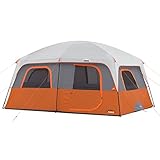
| CORE 10 Person Tent | Organized gear storage | Multi-room cabin, included gear loft organizer |
| CORE 10 Person Cabin Tent | Wet-weather trips | Full rainfly, included storage pockets |
| CAMPROS CP 12 Person | Privacy for several couples or kids | 3 rooms, 2 divider curtains, 6 mesh windows |
| CORE Instant Cabin Tent | Fast arrival-night setup | 2-minute setup, sleeps 9, 14 ft x 9 ft |
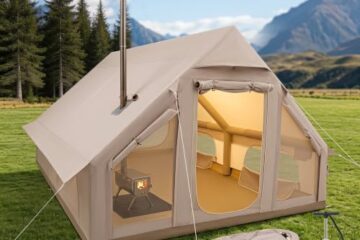
| Inflatable Tent 8-12 Person | Cold-season glamping | 4 season, stove jack, PU3000mm Oxford, pump included |
How to Choose
Floor area per sleeper
Divide the listed footprint by the number of people. The UNP model at 18 ft by 9 ft covers 162 square feet, which is about 16 square feet per person at ten sleepers. The 14 ft by 9 ft instant cabin covers 126 square feet and is rated for nine, so roughly 14 square feet each. For comfort with gear inside, plan on 20 or more square feet per person, which means treating a “10 person” tent as a six or seven person tent for real use.
Rooms, dividers and privacy
Dividers matter more than the capacity number once kids and adults share a tent. Two rooms give you a parents-and-kids split, three rooms let you separate a sleeping area from a gear or changing space. Look for dividers that zip or clip fully to the floor and ceiling; a loose curtain stops light but not sound. Budget tents often use a single removable curtain, while higher-priced cabin designs add a second one.
Weather protection
Check that the rainfly is a full-coverage design rather than a small roof cap, and that the listing mentions double-layer construction or a waterproof floor. Large mesh windows help condensation, but they need closable panels or a rainfly that extends over them. For shoulder-season camping, a stove jack and a heavier fabric rating, such as the PU3000mm figure on the inflatable model, signal a tent designed for colder, wetter nights. Cheap large tents cut corners with thin fabric and light poles, which flex in wind.
Setup effort and packed size
A ten-person frame tent can take two adults 30 minutes or more. Instant and pop-up designs cut that to a few minutes but add weight and a bulkier bag. Inflatable designs replace poles with air beams and a pump, which helps people who struggle with long poles. Ignore the “easy setup” claim unless the listing gives a time, and confirm that the carry bag is large enough to close again after a rainy teardown.
The 7 Best Options
UNP 10 Person Tent
The UNP is built around a big footprint: 18 ft by 9 ft with 78 inches of height, split into two rooms under a rainfly. It suits a family that wants clear parent and kid zones and has a large, flat pad to pitch on. Because the listing gives exact dimensions, it is also the easiest model here to check against a campground tent-pad limit before you commit to it.
- Strength: two-room layout separates sleeping areas without buying extra shelters.
- Strength: five large mesh windows give ventilation for summer nights.
- Trade-off: the long, wide footprint needs a generous site, and standing height is listed at 78 inches so tall adults will duck near the walls, and the sloped sides cut usable floor at the edges.
Skip it if you camp at tight walk-in sites, carry gear a long way from the car, or want a pop-up that goes up without poles.
Wakeman Outdoors 10 Person
This navy tent comes with a rainfly and a room divider, and the listing says it fits four queen-size mattresses. That makes it a practical match for groups who prefer air beds over sleeping pads and want actual bed space rather than a vague head count. Pair it with a ground tarp and a small mat at the door and the floor stays cleaner for the whole trip.
- Strength: the four-queen claim gives an easy way to picture the floor.
- Strength: the divider offers a basic privacy split.
- Trade-off: four queens leave little floor between beds, so luggage ends up on the mattresses or outside under the fly.
Skip it if your group sleeps on cots or pads and wants open living space inside the tent for a table, chairs or rainy-day games.
CORE 10 Person Tent
The CORE multi-room cabin tent includes a gear loft organizer and a carry bag, aimed at car campers who like keeping small items off the floor. The loft is a hanging shelf that holds lanterns, phones and glasses within reach at night. The carry bag is included, which matters because large tents are awkward to repack without one.
- Strength: the included gear loft organizer saves buying an add-on.
- Strength: the cabin shape and multiple rooms give usable wall space and separation.
- Trade-off: the title lists no footprint dimensions, so compare floor size with other models before booking a site, and the capacity figure is the only size clue in the headline.
Skip it if you want a stove jack or a pop-up style that sets up in minutes, since it uses a conventional frame.
CORE 10 Person Cabin Tent
This version emphasizes a full rainfly and included storage pockets. It is a sensible choice for groups who camp in regions where afternoon storms are common and who want coverage that reaches down the walls. Storage pockets sewn into the cabin walls give small items a fixed home, which cuts the nightly hunt for a flashlight.
- Strength: full rainfly coverage is stated up front.
- Strength: built-in storage pockets keep headlamps and keys organized.
- Trade-off: it is a portable multi-room tent with a conventional frame, so setup takes more time than the instant models and works best with two adults sharing the poles.
Skip it if arrival after dark is routine and you need a faster pitch, or if you want a tent that stands alone before staking.
CAMPROS CP 12 Person
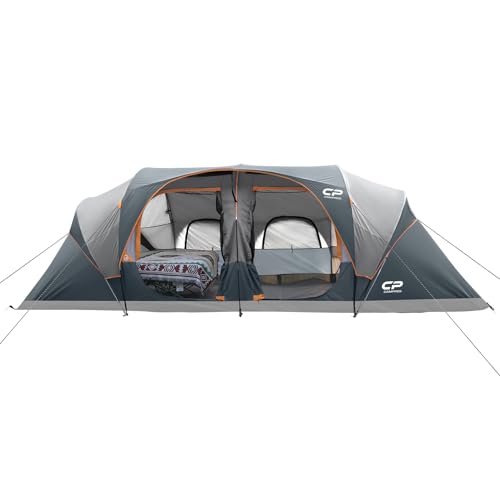
Rated for twelve people, this three-room tent has a waterproof, windproof double-layer design with two divider curtains and six large mesh windows. Used for ten, it leaves slack space that makes it the roomiest option here per person. The double-layer build is aimed at wind and rain, so it also fits buyers who camp early or late in the season.
- Strength: three rooms with two curtains allow the best separation of the group.
- Strength: six mesh windows give the most airflow listed.
- Trade-off: a twelve-person tent is heavy and large when packed, and fills a bigger site than most car campers expect.
Skip it if you only carry a compact sedan or camp in small sites where a twelve-person footprint will not fit.
CORE Instant Cabin Tent
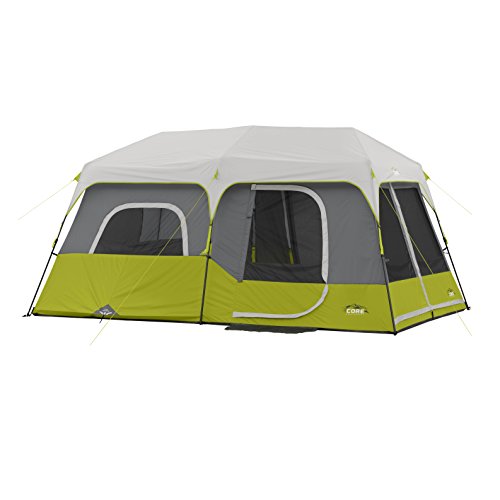
The instant cabin is listed with a 2-minute setup, a 14 ft by 9 ft footprint and three rooms, sleeping nine. For a family that arrives late or hates wrestling poles, it removes the main objection to large tents. It is also a sensible first big tent for people who have only pitched small dome shelters before.
- Strength: pre-attached poles make setup quick, per the listing.
- Strength: three rooms in a 126 square foot floor plan keep zones distinct, which helps families avoid a single open box.
- Trade-off: nine sleepers in 126 square feet is tight, so it works best as a family of six, not nine adults.
Skip it if you need a true ten-person bed count or plan on air mattresses for everyone.
Inflatable Tent 8-12 Person
This inflatable family tent is listed as four season with a stove jack, a PVC skylight and PU3000mm Oxford fabric, and it includes a pump with a 7-minute setup. It is the only option here pitched at cold-season glamping. A PVC skylight adds daylight inside, which makes the large interior feel less like a cave on gray mornings.
- Strength: air-beam construction with a pump replaces long poles.
- Strength: the stove jack and waterproof rating point toward cooler weather use.
- Trade-off: inflatable tents need a working pump and careful repair if a beam punctures, so pack the repair kit and spare valve parts.
Skip it if you want the lightest pack-down or a lower-priced starter tent for occasional summer weekends.
Which One Fits Your Situation
Family of six with lots of gear
The CORE 10 Person Tent gives you a gear loft organizer and multiple rooms. Treat the capacity as a comfort figure well above your head count and you will have space for bags, coolers and a play corner.
Late arrivals and short weekends
The CORE Instant Cabin Tent is the right match. Its 2-minute setup claim means the tent is up before the kids get tired, and the 14 ft by 9 ft floor suits six people comfortably.
Large mixed group needing privacy
Go with the CAMPROS CP 12 Person. Its three rooms and two divider curtains split couples, kids and gear, and ten people have room to spare.
Cold or wet shoulder season
The Inflatable Tent 8-12 Person is the one built with a stove jack and a stated waterproof rating, so it suits October trips better than the summer-focused mesh designs.
Common Mistakes
- Buying by the capacity number instead of dividing the listed footprint by your group size.
- Ignoring the height: a tall family needs more than a low-sloped wall allows.
- Skipping a ground tarp, which protects the floor of a large tent from abrasion.
- Forgetting to pitch it once at home, where missing stakes and confusing poles are easier to fix.
- Assuming mesh windows equal ventilation in rain, when many designs need the fly rolled back.
Related guides
- How To Strip Old Varnish From Furniture Without Sanding
- Random Orbital Sanders For Furniture Refinishing
- How Long To Wait Between Coats Of Polycrylic
Frequently Asked Questions
How many people really fit in a 10-person tent?
Six or seven adults with gear is a realistic comfort level. The listed number assumes sleeping bags touching with no luggage.
Is an instant tent a good choice for large groups?
It can be, since pre-attached poles save time. Expect a heavier, bulkier packed bundle and check that the listed floor size matches your needs.
Do I need a stove jack?
Only for cold-weather use with a tent-safe wood stove. For summer car camping, ventilation and a full rainfly matter more.
How should I size the camp site?
Add at least a few feet on every side of the listed footprint for guy lines and stakes. A 18 ft by 9 ft tent needs a pad noticeably larger than that.

0 Comments