RP Woodworks

  • Home
  • Reviews
  • Projects
  • Tools
  • Woodworking Techniques
  • About

Wood Finishing

Staining, sealing, oiling and clear-coating wood: product choice, application and fixes for common finish problems.

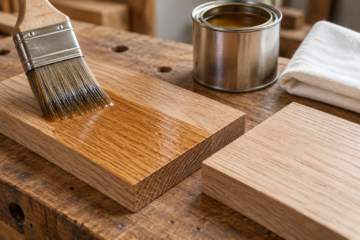
AI-generated editorial illustration: brush applying a clear wood finish to a board beside an unfinished offcut.
Finish Problems & Fixes

How to Apply Danish Oil Without Sticky Residue

Danish oil leaves a sticky surface when too much remains on the wood as it cures. The fix is not another thick coat: apply thinly, give the oil time to soak in, then wipe the surface completely dry. The exact drying time depends on the product, room conditions, and wood, Read more

By , 2 weeksSeptember 24, 2026 ago
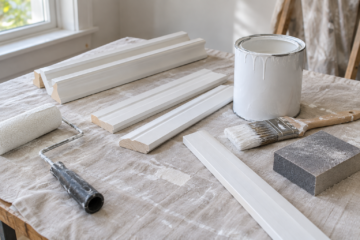
AI-generated editorial illustration of wood paint
Painting & Priming

How to Prepare Wood for a Milk Paint Finish

Milk paint can produce a flat, softly aged finish, but it behaves differently from many modern paints. On bare wood, it can soak in and bond without a separate primer. On an old varnished or painted surface, it may bead, scratch off, or chip unpredictably unless you prepare for that. Read more

By , 2 weeksSeptember 24, 2026 ago
AI-generated editorial illustration: brush applying a clear wood finish to a board beside an unfinished offcut.
Finish Problems & Fixes

How to Apply Water-Based Polyurethane Without Cloudy Overlap Marks

Cloudy overlap marks usually come from laying a fresh pass over finish that has started to tack up, or from uneven film thickness. Water-based polyurethane dries quickly, so the fix is not to brush more carefully for longer; it is to plan each coat so you can keep a wet Read more

By , 2 weeksSeptember 24, 2026 ago
AI-generated editorial illustration of wood paint
Painting & Priming

How to Seal Knots Before Painting a Wood Door

Knots can bleed amber or brown resin through paint, even after the door looks fully covered. The reliable fix is to seal the knots before applying ordinary primer and paint. For most doors, that means cleaning and sanding the surface, spot-priming each knot with a stain-blocking sealer, then priming and Read more

By , 2 weeksSeptember 24, 2026 ago
AI-generated editorial illustration of wood paint
Painting & Priming

How to Choose a Primer for Knotted Pine Before Painting

Knots are the main reason pine can look good after painting and then develop brown or amber spots weeks or months later. Pine resin and other extractives can migrate through paint, especially when knots are fresh, warm, or only covered with ordinary wall primer. The right primer depends on the Read more

By , 2 weeksSeptember 24, 2026 ago
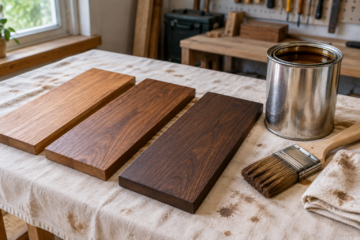
AI-generated editorial illustration of wood stain
Staining & Dyes

How to Use a Pre-Stain Conditioner on Alder

Alder is easy to cut and sand, but its pale, fairly even grain can develop dark, blotchy patches when stained—especially with dark colors or uneven sanding. A pre-stain conditioner can reduce that contrast, though it may also make the stain lighter. The best results come from matching the conditioner to Read more

By , 2 weeksSeptember 24, 2026 ago
AI-generated editorial illustration of wood stain
Staining & Dyes

How to Prepare a Wood Surface for Gel Stain

Gel stain is thicker than ordinary penetrating stain, but it still needs a clean, sound surface to look even and hold up. Preparation depends on whether the wood is bare, previously finished, or covered with paint. The main rule: remove contaminants and loose finish, then test the stain on an Read more

By , 2 weeksSeptember 24, 2026 ago
AI-generated editorial illustration: five wooden board samples showing different grain textures and colors.
Staining & Dyes

How to Apply a Wood Grain Filler Before Staining

What wood grain filler does Grain filler levels the open pores in woods such as oak, ash, mahogany, and walnut. Once filled and sanded, the surface looks smoother under a clear finish or stain. It is not the same as wood putty: putty fills nail holes and damage, while grain Read more

By , 2 weeksSeptember 24, 2026 ago
AI-generated editorial illustration: wood glue bottle beside an edge-glued board assembly and spreader.
Finish Problems & Fixes

How to Remove Glue Smears from Oak Before Staining

Glue smears on oak can vanish in ordinary light and show up plainly after stain goes on. The reason is simple: dried glue seals the pores, so stain cannot soak in evenly. The fix is to remove the glue before staining, then check the surface under angled light. Sanding harder Read more

By , 2 weeksSeptember 24, 2026 ago
AI-generated editorial illustration: wood glue bottle beside an edge-glued board assembly and spreader.
Finish Problems & Fixes

How to Prevent Glue Lines from Showing Through a Clear Finish

Glue lines show through a clear finish because glue seals the wood fibers. Stain and finish then soak in differently on either side of the joint, leaving a pale or glossy stripe. The reliable fix is to keep glue off the visible surface, remove residue before finishing, and test the Read more

By , 2 weeksSeptember 24, 2026 ago

Posts pagination

Previous 1 … 55 56 57 … 63 Next
Recent Posts
  • Best Woodworking Clamps: Which Types to Buy and How Many You Need
  • Best Pocket Hole Jigs in 2026: Kreg, Massca and Milescraft Compared
  • Best Dovetail Jigs: Fixed, Multi-Template and Variable-Spacing Options Explained
  • Best Compact Wood Routers: Corded vs Cordless Picks for Edge Work and Trimming
  • How to Repair a Wood Split Caused by a Screw (Even in Thin Teak)
Recent Comments
No comments to show.
Archives
  • October 2026
  • September 2026
Categories
  • Clear Coats & Topcoats
  • Finish Problems & Fixes
  • Gift Guides
  • Grain Filling & Sealing
  • Guides
  • Oils & Waxes
  • Painting & Priming
  • Sanding & Surface Prep
  • Shop Setup & Safety
  • Staining & Dyes
  • Tool Troubleshooting
  • Tools
  • Wood Finishing
  • Wood Species & Lumber
  • Woodworking Techniques
Hestia | Developed by ThemeIsle