RP Woodworks

  • Home
  • Reviews
  • Projects
  • Tools
  • Woodworking Techniques
  • About

Wood Finishing

Staining, sealing, oiling and clear-coating wood: product choice, application and fixes for common finish problems.

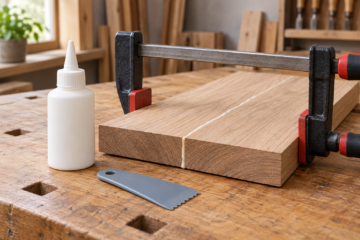
AI-generated editorial illustration: wood glue bottle beside an edge-glued board assembly and spreader.
Finish Problems & Fixes

How to Avoid Glue Squeeze-Out Stains on Wood Projects

Glue squeeze-out is easy to ignore while a project is clamped, but it can become a visible stain after sanding and finishing. The problem is not usually the glue itself changing color. It is glue residue sealing the wood pores, so stain, dye, or oil cannot penetrate evenly. The result Read more

By , 2 weeksSeptember 24, 2026 ago
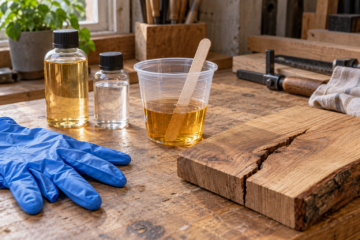
AI-generated editorial illustration of wood epoxy
Grain Filling & Sealing

How to Use Epoxy Adhesive to Fill Knots in Wood

Filling a knot with epoxy can stop a void from collecting dirt, stabilize loose wood, and create a smooth surface for finishing. It is a practical repair for a tabletop, shelf, or trim piece, but it takes more care than pouring resin into a hole. The knot must be sound, Read more

By , 2 weeksSeptember 24, 2026 ago
AI-generated editorial illustration: wood glue bottle beside an edge-glued board assembly and spreader.
Finish Problems & Fixes

How to Remove Dried Wood Glue Before Applying Stain

Dried wood glue can leave a pale, hard patch that barely shows on bare wood but turns into a light or glossy blotch under stain. The reliable fix is usually to remove the glue mechanically, then check the surface with water or mineral spirits before staining. The right method depends Read more

By , 2 weeksSeptember 24, 2026 ago
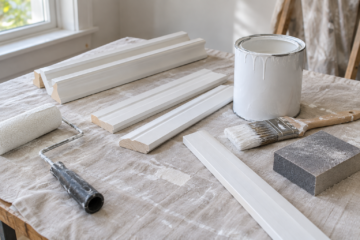
AI-generated editorial illustration of wood paint
Painting & Priming

How to Paint Wood Cabinets for a Durable Satin Finish

Choose paint that can take cabinet wear Cabinet doors get handled, bumped and cleaned, so ordinary wall paint is a poor choice. Use a paint labeled for cabinets, trim or doors, with a satin sheen. Satin is easier to wipe than flat paint and shows fewer surface flaws than semi-gloss, Read more

By , 2 weeksSeptember 24, 2026 ago
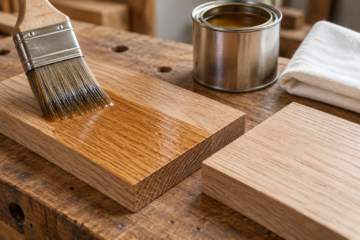
AI-generated editorial illustration: brush applying a clear wood finish to a board beside an unfinished offcut.
Finish Problems & Fixes

How to Apply a Clear Finish Without Brush Marks

Why brush marks happen Brush marks usually come from finish that is too thick, a brush that drags, or a coat that starts drying before you can level it. Dust, sanding scratches, and raised grain can also show through a clear coat, even when the application looks smooth while wet. Read more

By , 2 weeksSeptember 24, 2026 ago
AI-generated editorial illustration of wood stain
Staining & Dyes

How to Prepare Weathered Wood for a New Exterior Stain

Check the old finish and the wood Weathered boards are not automatically ready for stain. First work out whether the existing finish is penetrating stain, solid-color stain, paint, or bare wood. A penetrating stain usually leaves the grain visible; a solid-color coating forms a more opaque film. Scrape a small Read more

By , 2 weeksSeptember 24, 2026 ago
AI-generated editorial illustration of wooden cutting board
Clear Coats & Topcoats

How to Get a Consistent Finish on End-Grain Cutting Boards

End grain absorbs finish faster than face grain, and it does not absorb evenly. That is why a board can look patchy after its first coat even when it was sanded carefully. The fix is a repeatable routine: prepare the surface, raise and remove loose fibers, apply a food-contact-safe finish Read more

By , 2 weeksSeptember 24, 2026 ago
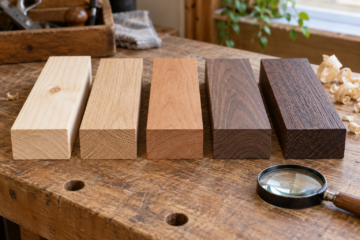
AI-generated editorial illustration: five wooden board samples showing different grain textures and colors.
Grain Filling & Sealing

How to Prepare Oak for a Pore-Filled, Glass-Smooth Finish

Why oak needs filling Oak’s open pores are part of its look, but they make a clear, glass-smooth finish harder to achieve. A finish can bridge the pores briefly, then shrink as it dries and leave tiny depressions visible under reflected light. Filling the grain creates a flatter surface before Read more

By , 2 weeksSeptember 24, 2026 ago
AI-generated editorial illustration of wood paint
Finish Problems & Fixes

How to Remove Old Paint from Detailed Wood Molding

Removing old paint from detailed wood molding is slower than stripping a flat board. The grooves hold softened paint, but they also make it easy to gouge the wood, round over crisp edges, or leave residue that spoils the next finish. Work in small sections, use a stripper suited to Read more

By , 2 weeksSeptember 24, 2026 ago
AI-generated editorial illustration of wood refinishing dyes bleach and tack cloth
Finish Problems & Fixes

How to Apply Dye to Wood Without Overlapping Color

Overlap marks happen when one area of wood absorbs more dye than the next. The usual cause is simple: the first pass dries or begins to set before the next pass reaches it. Dye can color wood evenly, but it does not hide uneven sanding, glue, or end grain. Prepare Read more

By , 2 weeksSeptember 24, 2026 ago

Posts pagination

Previous 1 … 56 57 58 … 63 Next
Recent Posts
  • Best Woodworking Clamps: Which Types to Buy and How Many You Need
  • Best Pocket Hole Jigs in 2026: Kreg, Massca and Milescraft Compared
  • Best Dovetail Jigs: Fixed, Multi-Template and Variable-Spacing Options Explained
  • Best Compact Wood Routers: Corded vs Cordless Picks for Edge Work and Trimming
  • How to Repair a Wood Split Caused by a Screw (Even in Thin Teak)
Recent Comments
No comments to show.
Archives
  • October 2026
  • September 2026
Categories
  • Clear Coats & Topcoats
  • Finish Problems & Fixes
  • Gift Guides
  • Grain Filling & Sealing
  • Guides
  • Oils & Waxes
  • Painting & Priming
  • Sanding & Surface Prep
  • Shop Setup & Safety
  • Staining & Dyes
  • Tool Troubleshooting
  • Tools
  • Wood Finishing
  • Wood Species & Lumber
  • Woodworking Techniques
Hestia | Developed by ThemeIsle