RP Woodworks

  • Home
  • Reviews
  • Projects
  • Tools
  • Woodworking Techniques
  • About

Wood Finishing

Staining, sealing, oiling and clear-coating wood: product choice, application and fixes for common finish problems.

AI-generated editorial illustration of wood stain
Staining & Dyes

How to Choose Between Oil-Based and Water-Based Wood Stain

The choice between oil-based and water-based stain affects more than cleanup. It changes how the stain looks, how long you have to work before it sets, how much odor you’ll deal with, and what finish can go over it. Neither type is automatically better. The right choice depends on the Read more

By , 2 weeksSeptember 24, 2026 ago
AI-generated editorial illustration of wood stain
Staining & Dyes

How to Seal End Grain Before Applying Wood Stain

End grain absorbs stain faster than the faces of a board, so it often turns much darker and can look blotchy. Sealing it before staining slows absorption and brings the color closer to the surrounding wood. The key is to apply a thin, even barrier: too little may not control Read more

By , 2 weeksSeptember 24, 2026 ago
AI-generated editorial illustration of wood stain
Finish Problems & Fixes

How to Avoid Lap Marks When Staining Large Wood Panels

Lap marks are darker or lighter bands where one section of stain dried before the next section overlapped it. They’re most common on broad, flat panels because the wet edge is hard to keep moving across a large surface. The fix is mostly in the preparation and application: make the Read more

By , 2 weeksSeptember 24, 2026 ago
AI-generated editorial illustration of wood paint
Painting & Priming

How to Paint Over Previously Varnished Wood Trim

Varnished trim can be painted successfully, but paint will not stick reliably to a glossy, slick surface unless you prepare it first. The dependable approach is to clean off dirt and polish, dull the varnish, repair defects, and use a primer suited to the existing finish. Skipping one of those Read more

By , 2 weeksSeptember 24, 2026 ago
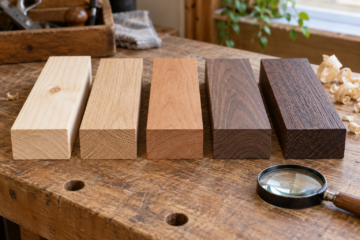
AI-generated editorial illustration: five wooden board samples showing different grain textures and colors.
Staining & Dyes

How to Prepare Wood for a Whitewash Finish

Whitewash is a thin, translucent finish: it lightens wood while leaving some grain visible. The result depends as much on the wood and its preparation as on the whitewash itself. Dirt, old finish, uneven sanding, and open grain can all show through more than expected. Prepare a test area first, Read more

By , 2 weeksSeptember 24, 2026 ago
AI-generated editorial illustration: five wooden board samples showing different grain textures and colors.
Finish Problems & Fixes

How to Remove Raised Grain Before Applying a Water-Based Topcoat

What raised grain is—and what it isn’t Water in a water-based finish can swell wood fibers, leaving a rough, fuzzy feel after the first coat dries. That texture is raised grain. It is most noticeable on open-pored or soft woods, freshly sanded surfaces, and end grain. The fix is usually Read more

By , 2 weeksSeptember 24, 2026 ago
AI-generated editorial illustration of wood stain
Staining & Dyes

How to Apply Wood Conditioner Before Staining Softwood

Softwoods such as pine, fir, and spruce can take stain unevenly. Dense latewood absorbs less than the softer bands around it, while knots and end grain behave differently from the surrounding face. A pre-stain wood conditioner can reduce blotching, but it also limits stain absorption and may make the final Read more

By , 2 weeksSeptember 24, 2026 ago
AI-generated editorial illustration of wood stain
Staining & Dyes

How to Make a Dark Stain Look Even on Open-Grain Wood

Dark stain makes open-grain woods such as oak and ash look dramatic, but it also makes uneven absorption and missed sanding scratches easy to see. The pores can turn nearly black while the surrounding wood stays lighter. You can reduce that contrast, but you usually cannot make open grain look Read more

By , 2 weeksSeptember 24, 2026 ago
AI-generated editorial illustration: brush applying a clear wood finish to a board beside an unfinished offcut.
Clear Coats & Topcoats

How to Prepare Red Oak for a Smooth Water-Based Finish

Red oak is open-pored, fairly hard, and prone to showing sanding scratches under clear finish. Water-based polyurethane can leave it looking clean and natural, but it raises the grain and can make pores look more pronounced. A smooth result comes from flat, even sanding and a deliberate choice about whether Read more

By , 2 weeksSeptember 24, 2026 ago
AI-generated editorial illustration of wood stain
Finish Problems & Fixes

How to Prevent Blotchy Stain on Pine Cabinet Doors

Pine is inexpensive, easy to work, and notoriously uneven under stain. Its earlywood—the softer, lighter bands—soaks up color faster than the harder latewood, while knots and resinous patches can resist it. The result is often dark stripes, pale patches, or blotches around knots. You can reduce that risk by preparing Read more

By , 2 weeksSeptember 24, 2026 ago

Posts pagination

Previous 1 … 57 58 59 … 63 Next
Recent Posts
  • Best Woodworking Clamps: Which Types to Buy and How Many You Need
  • Best Pocket Hole Jigs in 2026: Kreg, Massca and Milescraft Compared
  • Best Dovetail Jigs: Fixed, Multi-Template and Variable-Spacing Options Explained
  • Best Compact Wood Routers: Corded vs Cordless Picks for Edge Work and Trimming
  • How to Repair a Wood Split Caused by a Screw (Even in Thin Teak)
Recent Comments
No comments to show.
Archives
  • October 2026
  • September 2026
Categories
  • Clear Coats & Topcoats
  • Finish Problems & Fixes
  • Gift Guides
  • Grain Filling & Sealing
  • Guides
  • Oils & Waxes
  • Painting & Priming
  • Sanding & Surface Prep
  • Shop Setup & Safety
  • Staining & Dyes
  • Tool Troubleshooting
  • Tools
  • Wood Finishing
  • Wood Species & Lumber
  • Woodworking Techniques
Hestia | Developed by ThemeIsle