RP Woodworks

  • Home
  • Reviews
  • Projects
  • Tools
  • Woodworking Techniques
  • About

Wood Finishing

Staining, sealing, oiling and clear-coating wood: product choice, application and fixes for common finish problems.

AI-generated editorial illustration of wood stain
Staining & Dyes

How to Apply a Gel Stain Over an Existing Clear Finish

Gel stain can refresh a finished table, cabinet, or door without stripping it to bare wood—but it does not soak through a sound clear coat like ordinary penetrating stain. It colors the surface film, so adhesion and a thin, even application matter more than the wood species. The method works Read more

By , 2 weeksSeptember 25, 2026 ago
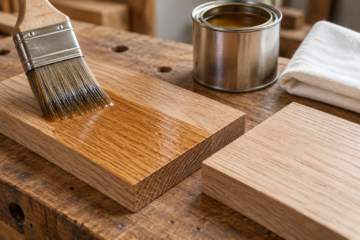
AI-generated editorial illustration: brush applying a clear wood finish to a board beside an unfinished offcut.
Staining & Dyes

How to Use Shellac as a Barrier Coat Before Staining

Shellac can separate a stain from wood or an existing finish, but it is not a universal stain-prep step. It is most useful for blocking resin or dye bleed, isolating an unknown surface, or sealing blotch-prone wood before applying a compatible stain. The catch: many stains need to soak into Read more

By , 2 weeksSeptember 25, 2026 ago
AI-generated editorial illustration: brush applying a clear wood finish to a board beside an unfinished offcut.
Oils & Waxes

How to Apply Tung Oil to Bare Wood for a Natural Look

Tung oil is a good choice when you want bare wood to look like wood, not like it has been sealed under a thick plastic film. It deepens the grain and leaves a low-sheen finish, but it takes patience: several thin coats and a long cure beat one heavy application. Read more

By , 2 weeksSeptember 25, 2026 ago
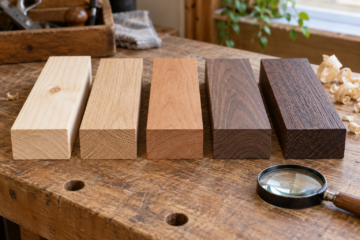
AI-generated editorial illustration: five wooden board samples showing different grain textures and colors.
Finish Problems & Fixes

How to Prevent Raised Grain Under a Water-Based Topcoat

How to Prevent Raised Grain Under a Water-Based Topcoat Water-based polyurethane, acrylic, and lacquer are clean, quick-drying finishes, but they can make bare wood feel rough after the first coat. The finish wets the wood fibers, and some fibers swell upright instead of lying flat. This is called raised grain. Read more

By , 2 weeksSeptember 25, 2026 ago
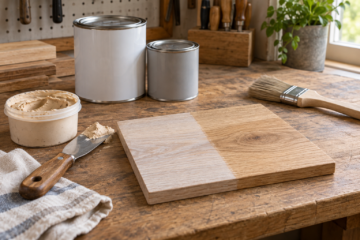
AI-generated editorial illustration of wood fillers and finishing prep
Finish Problems & Fixes

How to Apply a Whitewash Finish Without Hiding the Grain

What a whitewash finish does Whitewash is a thin, pale finish that lets the wood’s grain show through. It can soften the color of oak, pine, and other woods without covering them like opaque paint. The trick is to apply a small amount, work it into the surface, then remove Read more

By , 2 weeksSeptember 25, 2026 ago
AI-generated editorial illustration: brush applying a clear wood finish to a board beside an unfinished offcut.
Clear Coats & Topcoats

How to Finish Wood with a Satin Sheen Instead of Gloss

A satin sheen is a low-luster finish with a soft reflection, not a different kind of protection. You can get it by choosing a satin-labeled finish or by applying a gloss finish and dulling its surface after it cures. The first method is simpler; the second gives you more control Read more

By , 2 weeksSeptember 25, 2026 ago
AI-generated editorial illustration of wood stain
Staining & Dyes

How to Create a Two-Tone Stain Finish on a Wood Panel

Plan the color break A two-tone stain finish uses two stain colors on one panel, usually separated by a straight line, a routed groove, or a change in grain direction. The cleanest results come from deciding the boundary before sanding or staining. Sketch the panel, mark the boundary, and test Read more

By , 2 weeksSeptember 25, 2026 ago
AI-generated editorial illustration of wood stain
Staining & Dyes

How to Apply Wood Dye Evenly Across a Large Panel

Large panels are harder to dye evenly than small parts because the wet edge has farther to travel, and a pause can leave a dark lap mark. The most reliable approach is to prepare the whole surface uniformly, work in manageable sections without stopping mid-panel, and judge color only after Read more

By , 2 weeksSeptember 25, 2026 ago
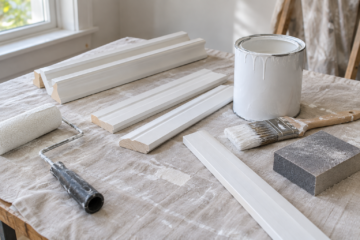
AI-generated editorial illustration of wood paint
Finish Problems & Fixes

How to Paint Wood Trim Without Visible Roller Texture

Rollers are fast on doors, baseboards, and window casing, but the wrong roller can leave a pebbled surface that remains visible after the paint dries. The fix is not simply “use a smaller roller.” Smooth trim depends on the roller cover, paint viscosity, surface preparation, film thickness, and how long Read more

By , 2 weeksSeptember 25, 2026 ago
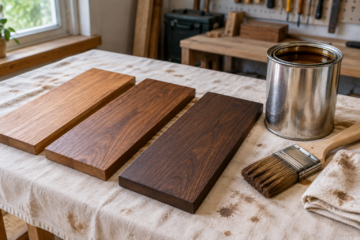
AI-generated editorial illustration of wood stain
Finish Problems & Fixes

How to Stain a Wood Door Without Lap Marks

Lap marks are usually caused by stain drying before you blend the next section into it. The fix is to work in manageable areas, keep a wet edge, and wipe off excess stain before it turns tacky. Door design and stain type matter, too: a flat slab is easier to Read more

By , 2 weeksSeptember 25, 2026 ago

Posts pagination

Previous 1 … 24 25 26 … 63 Next
Recent Posts
  • Best Benchtop Woodworking Lathes for Small Shops
  • Best Lathe Benches for Stable, Comfortable Woodturning
  • Robust Lathe Buying Guide: Models, Features, and Real-World Value
  • Best Wood Lathe Accessories for Safer, More Accurate Turning
  • Best Lathe Stands for Stability, Storage, and Comfortable Turning
Recent Comments
No comments to show.
Archives
  • October 2026
  • September 2026
Categories
  • Clear Coats & Topcoats
  • Finish Problems & Fixes
  • Finish Problems & Fixes
  • Gift Guides
  • Grain Filling & Sealing
  • Guides
  • Oils & Waxes
  • Painting & Priming
  • Painting & Priming
  • Sanding & Surface Prep
  • Shop Setup & Safety
  • Staining & Dyes
  • Staining & Dyes
  • Tool Troubleshooting
  • Tools
  • Wood Finishing
  • Wood Species & Lumber
  • Woodworking Techniques
Hestia | Developed by ThemeIsle