RP Woodworks

  • Home
  • Reviews
  • Projects
  • Tools
  • Woodworking Techniques
  • About

Wood Finishing

Staining, sealing, oiling and clear-coating wood: product choice, application and fixes for common finish problems.

AI-generated editorial illustration of wood paint
Finish Problems & Fixes

How to Remove Old Paint from Wood Trim Before Refinishing

Removing old paint from wood trim takes more care than stripping a flat board. Profiles, corners and joints trap residue, and aggressive sanding can erase crisp edges. The right method depends on the trim’s shape, paint condition and what finish you plan to apply next. Before starting, check for lead: Read more

By , 2 weeksSeptember 25, 2026 ago
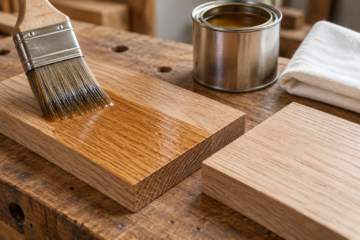
AI-generated editorial illustration: brush applying a clear wood finish to a board beside an unfinished offcut.
Clear Coats & Topcoats

How to Apply a Low-VOC Finish to Indoor Wood Furniture

A low-VOC finish can reduce the amount of volatile organic compounds released as a coating dries, but “low-VOC” does not mean odorless, harmless, or safe to use without ventilation. For indoor furniture, the practical choice is usually a water-based clear finish or a hardwax oil with a clearly stated VOC Read more

By , 2 weeksSeptember 25, 2026 ago
AI-generated editorial illustration of wood stain
Staining & Dyes

How to Apply Exterior Wood Stain in Cool, Damp Weather

Exterior wood stain can be applied in cool weather, but damp conditions narrow your margin for error. The finish may dry slowly, absorb unevenly, or remain soft long enough to collect dust and debris. The safest approach is to work with the weather, not against it: choose a penetrating stain, Read more

By , 2 weeksSeptember 25, 2026 ago
AI-generated editorial illustration of wood paint
Painting & Priming

How to Paint Wood with a Two-Part Enamel System

A two-part enamel system combines a base coat with a chemical hardener. Once mixed, the coating cures into a tougher film than ordinary one-part enamel. It can be useful on cabinets, doors, trim, and furniture that get frequent handling, but it is less forgiving: the mix has a limited working Read more

By , 2 weeksSeptember 25, 2026 ago
AI-generated editorial illustration of wooden cabinet
Painting & Priming

How to Spray Paint Wood Cabinets for a Smooth Finish

Spray painting wood cabinets can produce a smooth, even finish, but the result depends more on preparation and paint choice than on the sprayer itself. The steps below cover both bare wood and previously finished cabinets, including how to avoid drips, rough patches, and paint that peels around handles. Choose Read more

By , 2 weeksSeptember 25, 2026 ago
AI-generated editorial illustration of wood stain
Staining & Dyes

How to Blend a Stain Repair into an Existing Wood Finish

A stain repair is easiest to see when its color, sheen, or edge differs from the surrounding finish. The goal is not to cover the whole area with a darker stain. It is to identify which layer is damaged, match the existing color in small steps, and restore the protective Read more

By , 2 weeksSeptember 25, 2026 ago
AI-generated editorial illustration: brush applying a clear wood finish to a board beside an unfinished offcut.
Clear Coats & Topcoats

How to Apply a Clear Finish to a Wood Veneer Surface

Before you start Clear finish protects veneer and changes its appearance, but the thin wood layer limits how aggressively you can sand. Many cabinet and furniture veneers are less than 1 mm thick; a few passes with a power sander can cut through to the substrate. The safest approach is Read more

By , 2 weeksSeptember 25, 2026 ago
AI-generated editorial illustration: brush applying a clear wood finish to a board beside an unfinished offcut.
Finish Problems & Fixes

How to Apply a Wood Topcoat Without Bubbles or Foam

Bubbles in a wood topcoat usually come from air introduced during application, a fast-drying film that traps air, or foam left behind by shaking or overworking the finish. The fix is mostly in the setup: use the right applicator, move at a steady pace, and leave fresh finish alone while Read more

By , 2 weeksSeptember 25, 2026 ago
AI-generated editorial illustration of wood paint
Painting & Priming

How to Seal the End Grain of a Wood Project Before Painting

End grain absorbs paint differently from the face and edge grain of a board. Its exposed fibers act like a bundle of tiny straws, pulling primer into the wood and often leaving a dull, rough, or uneven patch. The problem is most noticeable on plywood edges, cut ends of solid Read more

By , 2 weeksSeptember 25, 2026 ago
AI-generated editorial illustration of wood paint
Finish Problems & Fixes

How to Keep Paint from Peeling on Previously Finished Wood

Paint usually peels from finished wood because it never got a firm grip on the old coating—or because moisture is pushing it loose from underneath. The fix depends on what is failing. A quick scuff and repaint can work on a sound, compatible finish; loose paint, wax, grease, or a Read more

By , 2 weeksSeptember 25, 2026 ago

Posts pagination

Previous 1 … 23 24 25 … 63 Next
Recent Posts
  • Best Benchtop Woodworking Lathes for Small Shops
  • Best Lathe Benches for Stable, Comfortable Woodturning
  • Robust Lathe Buying Guide: Models, Features, and Real-World Value
  • Best Wood Lathe Accessories for Safer, More Accurate Turning
  • Best Lathe Stands for Stability, Storage, and Comfortable Turning
Recent Comments
No comments to show.
Archives
  • October 2026
  • September 2026
Categories
  • Clear Coats & Topcoats
  • Finish Problems & Fixes
  • Finish Problems & Fixes
  • Gift Guides
  • Grain Filling & Sealing
  • Guides
  • Oils & Waxes
  • Painting & Priming
  • Painting & Priming
  • Sanding & Surface Prep
  • Shop Setup & Safety
  • Staining & Dyes
  • Staining & Dyes
  • Tool Troubleshooting
  • Tools
  • Wood Finishing
  • Wood Species & Lumber
  • Woodworking Techniques
Hestia | Developed by ThemeIsle