RP Woodworks

  • Home
  • Reviews
  • Projects
  • Tools
  • Woodworking Techniques
  • About

Wood Finishing

Staining, sealing, oiling and clear-coating wood: product choice, application and fixes for common finish problems.

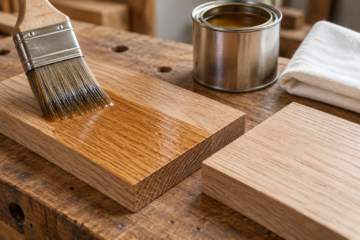
AI-generated editorial illustration: brush applying a clear wood finish to a board beside an unfinished offcut.
Finish Problems & Fixes

How to Apply a Clear Finish to Wood Without Trapping Dust

Dust trapped in a clear finish usually comes from one of three places: the wood, the room, or the applicator. You can reduce all three, but a dust-free shop is not necessary. The practical goal is to remove loose particles before each coat, avoid stirring up more dust while the Read more

By , 2 weeksSeptember 25, 2026 ago
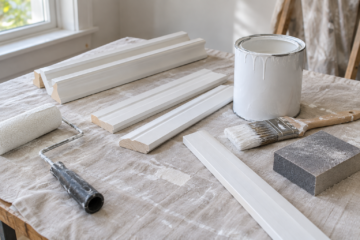
AI-generated editorial illustration of wood paint
Painting & Priming

How to Paint MDF Edges for a Smooth, Sealed Finish

MDF edges absorb paint much faster than the faces. The exposed fibers swell and drink in the first coat, leaving a rough, dull edge even when the broad surfaces look smooth. The fix is to seal the edge before applying your finish coats. With the right preparation and a little Read more

By , 2 weeksSeptember 25, 2026 ago
AI-generated editorial illustration of wood paint
Painting & Priming

How to Apply Primer to Bare Wood Before Enamel Paint

Bare wood needs a compatible primer before enamel paint. Primer helps the finish stick, evens out absorption, and reduces stains or wood extractives bleeding through. The right choice depends on the wood, the enamel, and whether the work is indoors or outside. A careful sanding and a thin, even primer Read more

By , 2 weeksSeptember 25, 2026 ago
AI-generated editorial illustration: brush applying a clear wood finish to a board beside an unfinished offcut.
Clear Coats & Topcoats

How to Evaluate Wood Defects Before Applying a Transparent Finish

Why Defects Matter More Under a Clear Finish A transparent finish protects wood without hiding much of it. That makes defects more important than they would be under paint. A shallow scratch, glue smear, or uneven patch can become darker, glossier, or more noticeable after finish is applied. Some problems Read more

By , 2 weeksSeptember 25, 2026 ago
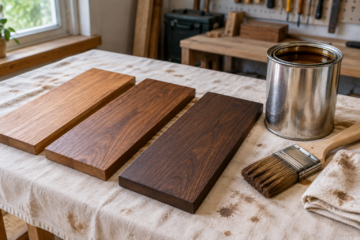
AI-generated editorial illustration of wood stain
Finish Problems & Fixes

How to Stain Wood Molding Without Leaving Brush Streaks

Brush streaks usually come from using a brush on a stain that dries too quickly, applying too much product, or failing to wipe away the excess. On molding, narrow profiles and corners make all three problems more noticeable. The most reliable approach is to test the stain, apply a thin Read more

By , 2 weeksSeptember 25, 2026 ago
AI-generated editorial illustration of wood paint
Painting & Priming

How to Compare Paint Sheens for Interior Woodwork

Paint sheen is the amount of light a dried coating reflects. On interior woodwork, sheen affects more than appearance: it changes how visible sanding defects are, how easily fingerprints clean off, and how well the finish stands up to handling. The best choice depends on whether you are painting baseboards, Read more

By , 2 weeksSeptember 25, 2026 ago
AI-generated editorial illustration: brush applying a clear wood finish to a board beside an unfinished offcut.
Oils & Waxes

How to Apply Oil-Based Polyurethane to a Wood Tabletop

Oil-based polyurethane is a durable, straightforward finish for a wood tabletop, but it rewards patience. The main risks are dust, runs, and recoating before the previous coat is ready. Work in a clean, ventilated space, follow the product label for temperature and recoat times, and allow the finish to cure Read more

By , 2 weeksSeptember 25, 2026 ago
AI-generated editorial illustration: brush applying a clear wood finish to a board beside an unfinished offcut.
Finish Problems & Fixes

How to Apply a Water-Based Clear Coat Without Lap Marks

Lap marks happen when one pass of finish starts to dry before it blends into the next. Water-based clear coats set quickly, so they leave less time to correct a slow or interrupted application than oil-based finishes do. The fix is a clean, well-prepared surface, a manageable work area, and Read more

By , 2 weeksSeptember 25, 2026 ago
AI-generated editorial illustration of wood paint
Painting & Priming

How to Choose a Primer for Tannin-Rich Wood

Why tannins matter Tannins are water-soluble compounds found in many woods, including oak, cedar, redwood, and mahogany. They can migrate to the surface when exposed to moisture and show through paint as yellow, brown, or reddish stains. The problem often appears after the paint has dried, so a wall or Read more

By , 2 weeksSeptember 25, 2026 ago
AI-generated editorial illustration: five wooden board samples showing different grain textures and colors.
Staining & Dyes

How to Pick a Wood Species for a Deep, Even Stain

Start with the finished look A deep stain is not the same as an even stain. Dark pigment can make pale sapwood, knots, and changing grain stand out more, not less. The easiest route to a consistent result is to choose wood with a fairly uniform color and pore structure, Read more

By , 2 weeksSeptember 25, 2026 ago

Posts pagination

Previous 1 … 25 26 27 … 63 Next
Recent Posts
  • Best Benchtop Woodworking Lathes for Small Shops
  • Best Lathe Benches for Stable, Comfortable Woodturning
  • Robust Lathe Buying Guide: Models, Features, and Real-World Value
  • Best Wood Lathe Accessories for Safer, More Accurate Turning
  • Best Lathe Stands for Stability, Storage, and Comfortable Turning
Recent Comments
No comments to show.
Archives
  • October 2026
  • September 2026
Categories
  • Clear Coats & Topcoats
  • Finish Problems & Fixes
  • Finish Problems & Fixes
  • Gift Guides
  • Grain Filling & Sealing
  • Guides
  • Oils & Waxes
  • Painting & Priming
  • Painting & Priming
  • Sanding & Surface Prep
  • Shop Setup & Safety
  • Staining & Dyes
  • Staining & Dyes
  • Tool Troubleshooting
  • Tools
  • Wood Finishing
  • Wood Species & Lumber
  • Woodworking Techniques
Hestia | Developed by ThemeIsle