As an Amazon Associate I earn from qualifying purchases. This post may contain affiliate links at no extra cost to you.
You lean into a 1-inch hole in a stud, the drill spins fine for half a second, then goes dead quiet. Let off the trigger, squeeze again, and it runs. Squeeze harder and it dies again. When a cordless drill stops under load like that, almost everyone reaches the same conclusion: the motor is burning out. That is the wrong diagnosis about nine times out of ten.
Here is the mechanism. Modern lithium-ion tools are not simple motor-and-switch machines. There is a small circuit board watching current draw, cell voltage, and temperature, and it has permission to cut power instantly to protect the pack. A drill that stops cleanly under heavy load and restarts a second later is not broken. It is doing exactly what it was designed to do. Your job is to figure out which limit you are hitting, and that is a very different repair list than “buy a new drill.”
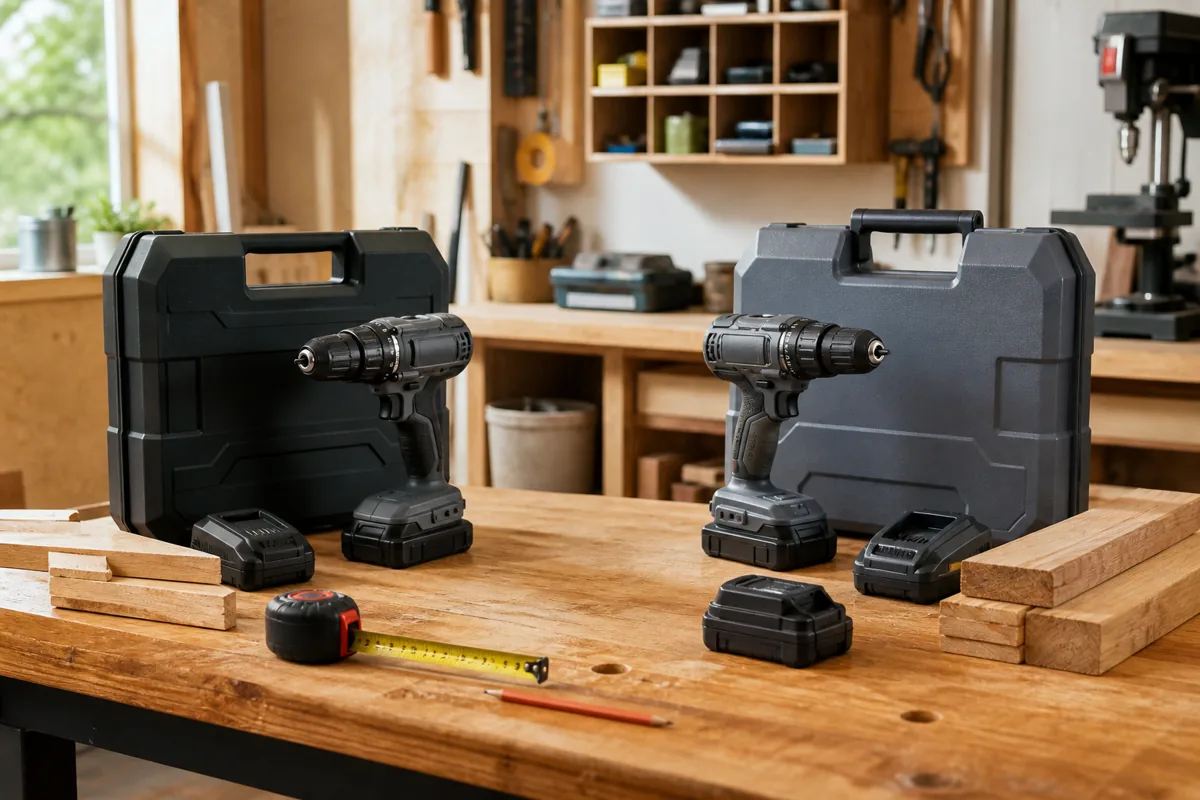
Why a Cordless Drill Stops Under Load: Five Real Causes
Think of the battery pack as a water tank feeding a hose. The motor is the hose. If you open the nozzle wide, flow depends on how much pressure the tank can hold, not just how big the hose is. A worn or cold pack is a tank with low pressure. The moment you demand real current, voltage sags, the protection board sees it dip below its cutoff, and it slams the valve shut. The motor never got the chance to be the weak link.
These are the causes worth checking, roughly in order of how often they turn out to be the answer.
| Symptom | Most likely cause | What confirms it |
|---|---|---|
| Cuts out hard under load, restarts in a second | Battery voltage sag or pack protection | A known-good, fully charged pack fixes it |
| Runs a few seconds then stops, pack is hot | Thermal cutoff in pack or tool | Cools down and works again |
| Stops and clutch is clicking | Clutch set too low | Turning the collar higher solves it |
| Motor whines but bit barely turns | Slipping chuck or wrong speed range | Bit shows spiral scoring, or low gear fixes it |
| Dead intermittently at any load | Trigger switch or contact corrosion | Wiggling the pack changes behavior |
1. Voltage sag in a tired battery
Cells lose their ability to deliver current long before they lose the ability to hold a charge. A three-year-old pack can still read full on the fuel gauge and still collapse the instant you ask for 40 amps. This is the single most common reason a drill quits mid-hole. The tell is that light drilling is completely normal and only heavy cuts trigger it.
2. Thermal protection
Both the pack and the tool have temperature sensors. Drill six large holes back to back on a hot day and something will get warm enough to trip. The distinguishing feature is that the shutdown gets easier to trigger as you keep working, and a rest period genuinely restores full power.
3. The clutch doing its job
This is the misconception I hear most from newer woodworkers: that the numbered collar is a power setting. It is not. It is a torque limit. Set it to 5 and try to drive a 3-inch structural screw and the clutch will let go every time, with a ratcheting sound people often mistake for gear damage. Nothing is failing. You told the tool to stop at 5.
4. Wrong gear for the job
Two-speed gearboxes exist because motors make usable torque in a narrow band. High gear is for small bits and speed. Low gear multiplies torque and reduces the current the motor needs to make the same force at the bit. Running a hole saw in high gear is the fastest way to force a current spike and a shutdown. Drop to low and the same cut often goes through without complaint.
5. Switch, terminals, and contact issues
Least common, but real. Sawdust and corrosion on the pack rails, a worn variable-speed switch, or a cracked terminal can produce cutouts that feel identical to a weak battery. The tell is inconsistency: it drops out at light load too, or moving the pack with your hand changes what happens.
How to Diagnose It in Ten Minutes
Test in order, and change one variable at a time. This sequence separates the causes without any special equipment.
Step one, swap the battery. Put a different fully charged pack on the same drill and repeat the exact cut. If the problem disappears, the original pack is the answer and you can stop reading the rest of this list.
Step two, swap the tool. If you have a second drill, run the suspect pack in it. Problem follows the pack, it is the pack. Problem stays with the tool, it is the tool.
Step three, max the clutch and check gears. Turn the collar to the drill symbol or its highest number, shift to low gear, and try again. If it now powers through, you were fighting your own settings.
Step four, feel for heat. Touch the pack and the motor housing after a shutdown. Warm-to-hot means thermal. Cool means electrical or mechanical.
Step five, look at the bit. A dull spade bit, a hole saw packed with chips, or an auger with no clearance forces enormous current. Sharp cutters are a power upgrade, and people underestimate this constantly. Clearing chips every inch of depth changes the load dramatically.
High-Output 5.0Ah Class Batteries
If your drill dies only under heavy load, a higher-capacity pack from your existing platform is usually the whole fix. Bigger packs have more cells sharing the current, so voltage sag is smaller and the protection circuit never trips. Buy first-party from the brand you already own. Third-party packs are where cheap cells and weak protection boards live, and they are the number one cause of this complaint in the first place.
When It Actually Is the Drill
Brushed motors do wear out, and worn carbon brushes produce weak, inconsistent power along with visible sparking and a hot smell. If your drill is a brushed model that is several years old and a fresh battery does not help, that is a legitimate end-of-life signal.
Brushless tools fail differently. They tend to work perfectly or throw a hard fault, because the controller is managing the motor electronically. A brushless drill that runs fine at light load and cuts out only at high current is still pointing at the pack or a thermal limit, not at dead windings.
The other honest answer: you may be using the wrong class of tool. A compact drill/driver is built for fasteners and bits up to roughly an inch. Large hole saws, self-feed bits, and mixing paddles belong to a hammer drill in low gear or a dedicated right-angle drill, where gearing and a side handle carry the load instead of the motor’s current ceiling.
- ✔ A known-good battery swap identifies the cause in under a minute
- ✔ Clutch and gear mistakes cost nothing to fix
- ✔ Sharp bits and chip clearing reduce load more than any spec upgrade
- ✔ Protection cutouts mean the safety system is working, not failing
- ✘ Cell degradation is invisible on the fuel gauge
- ✘ Older brushed drills may not be worth repairing
- ✘ Third-party batteries can cause cutouts that look like tool failure
- ✘ Heavy-bore work may genuinely need a different tool class
Hammer Drills With Two-Speed Gearboxes
If large holes are routine for you, step up rather than fight a compact drill. Look for a brushless motor, a genuine two-speed gearbox, an auxiliary side handle, and an all-metal chuck. Established lines like DeWalt XR, Milwaukee FUEL, and Makita LXT all cover this territory well, so the deciding factor should be which battery platform you already own.
Frequently Asked Questions
Is my drill damaged if it keeps shutting off under load? Usually not. A clean, instant cutout followed by a normal restart is protection circuitry acting deliberately. Damage sounds and smells different: grinding, sparking, burnt odor, or a total loss of power that a fresh battery cannot restore.
Will a bigger battery give my drill more power? It can raise the ceiling before power gets cut. A higher-capacity pack spreads current across more cells, so voltage sags less and the cutoff triggers later. It does not increase the motor’s rated output, but in practice you get more usable work per cut.
Why does it only happen when the drill is cold? Lithium cells deliver noticeably less current in cold temperatures. A pack that starts the morning in a cold truck will sag hard under load until it warms up. Store packs indoors overnight and let a cold one run a light task before you push it.
Work the diagnosis in order and you will land on the cause quickly. Swap the battery, max the clutch, drop to low gear, clear your chips, and only then start suspecting the motor. If the answer turns out to be a tired pack or a drill that was never meant for the holes you are boring, replace the specific weak link rather than the whole kit.
Check prices on Amazon →

0 Comments