What's inside
- Quick picks by woodworking situation
- Respirator versus dust mask: the distinction matters
- Head-to-head: the most useful budget options
- Filter ratings and replacement cost
- Worked ownership cost: disposable versus reusable
- Fit, sizing, and comfort are decisive
- Setup and maintenance that prevent common mistakes
- Bottom line
- Related Guides
- Quick picks by woodworking situation
- Respirator versus dust mask: the distinction matters
- Head-to-head: the most useful budget options
- Filter ratings and replacement cost
- Worked ownership cost: disposable versus reusable
- Fit, sizing, and comfort are decisive
- Setup and maintenance that prevent common mistakes
- Bottom line
- Related Guides
As an Amazon Associate I earn from qualifying purchases. This post may contain affiliate links at no extra cost to you.
The best budget respirator and dust mask for woodworking is usually a reusable half-mask with P100 particulate filters—such as the 3M 6500QL or 3M 7502—while a genuine N95 disposable mask is a lower-cost choice for short, low-dust jobs and a poor substitute for an imperfectly sealed respirator.
As an Amazon Associate we earn from qualifying purchases at no extra cost to you.

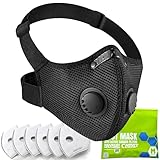

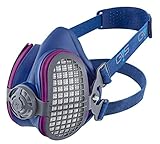
Quick picks by woodworking situation
| Situation | Best fit | Why | Typical market cost |
|---|---|---|---|
| Occasional hand sanding or brief cleanup | NIOSH-approved N95 disposable respirator | Lowest initial cost and no filter storage | $2–$5 per mask |
| Regular sanding, routing, or table-saw work | 3M 6500QL half-mask with P100 filters | Replaceable filters, quick-release face seal, moderate cost | $35–$70 for the facepiece and starter filters |
| Long sessions or frequent shop use | 3M 7502 half-mask with P100 filters | Soft silicone seal and better long-wear comfort | $45–$85 for the facepiece and starter filters |
| One-time project with little storage space | Quality N95 disposable respirator | No cartridges or reusable mask to maintain | $2–$5 per mask |
| Dust plus solvent, finish, or adhesive vapors | Half-mask with cartridges selected for the specific vapor | Particulate-only filters are not vapor cartridges | $50–$100 initially |
These are general product categories, not a substitute for the hazard information on a finish, adhesive, coating, or chemical product. For unusual materials or respiratory concerns, consult the product safety data sheet and an appropriate occupational or medical professional.
Respirator versus dust mask: the distinction matters
“Dust mask” commonly refers to a disposable filtering facepiece. A proper N95 filtering facepiece is a type of respirator when it is approved and used correctly, but many loosely fitted paper or fabric masks sold as dust masks are not rated respirators. They may reduce nuisance dust reaching the mouth and nose, but they do not provide the same tested filtration and seal.
A reusable half-mask respirator has a facepiece that seals around the nose and mouth. Its filters or cartridges attach to the mask and can be replaced separately. For woodworking, look for a particulate filter rated P100 when fine dust is the primary concern. P100 filters are rated to filter at least 99.97% of airborne particles in the applicable test, but that number does not guarantee protection if the mask leaks around the face.
An N95 disposable respirator is often adequate for a short sanding task when it fits the wearer closely and is undamaged. It is less economical for daily use, and its fit can be affected by facial hair, glasses, movement, and sweat. A reusable respirator is normally the better budget decision once disposable masks become a regular shop expense.
Head-to-head: the most useful budget options
3M 6500QL: best value for regular woodworking
The 3M 6500QL is a reusable half-mask with a quick-latch mechanism that allows the facepiece to be lowered without removing the head harness. That is useful when moving between dusty and clean areas, although the mask should still be worn whenever airborne dust is present. It accepts 3M particulate filters including the 2091 and 2097 P100 series, as well as compatible cartridges for other hazards.
Its thermoplastic elastomer face seal generally costs less than silicone alternatives. The trade-off is that the seal can feel less supple during long sessions, especially in a warm shop. The 6500QL is a strong pick for an occasional or moderately frequent woodworker who wants replaceable filters without paying for a premium comfort design.
3M 7502: better comfort, higher initial cost
The 3M 7502 is the medium-size model in 3M’s 7500 series. Its silicone face seal is soft and flexible, which can make a difference during extended sanding, cleanup, or repeated sessions. It uses the same broad 3M filter and cartridge ecosystem as the 6500QL.
The 7502 is not automatically safer than the 6500QL. Both depend on correct sizing, a complete seal, and suitable filters. Its advantage is primarily comfort and durability of the face seal. If a more comfortable mask is worn consistently, the extra initial cost can be worthwhile.
3M 6000 series: simple and widely supported
The 3M 6000 series is a basic reusable half-mask available in several sizes. It is often among the least expensive established-brand options and accepts common 3M filters. The facepiece is lightweight and practical, but the elastomer seal may feel less comfortable than the silicone seal on the 7500 series.
Choose the 6000 series when price, availability of replacement parts, and a straightforward design matter more than maximum comfort. Check the size chart rather than assuming that a medium will fit every adult.
Honeywell North 7700: a comfort-focused alternative
The Honeywell North 7700 is a silicone half-mask designed for a flexible seal and regular industrial use. It can be a good alternative when its replacement filters are easier to obtain locally than 3M parts. The important comparison is not just the facepiece price: confirm the ongoing cost and availability of the correct particulate filters before buying.
Filter ratings and replacement cost
For ordinary wood dust, particulate filtration is the central requirement. N95 filters are rated for at least 95% filtration of test particles; P100 filters are rated for at least 99.97%. Higher filtration does not correct a poor face seal, and a P100 filter does not make a half-mask suitable for solvent vapors unless the appropriate vapor cartridge is also installed.
| Option | Filter type | Reusable? | Typical replacement range | Best use |
|---|---|---|---|---|
| Disposable N95 | N95 particulate filter | No | $2–$5 each | Short, occasional dusty tasks |
| 3M 2091 or 2097 | P100 particulate filter | Yes, until loaded or damaged | $8–$18 per pair | Routine woodworking dust |
| Reusable P100-style filter | P100 particulate filter | Yes, brand-dependent | $8–$20 per pair | Lower-cost replacement strategy |
| Combination cartridge | Particulate plus specified vapor protection | Replaceable | $15–$35 per pair | Dust and identified chemical vapors |
Filter life is not determined by a fixed calendar number. Replace filters when breathing resistance increases, the filter is visibly dirty, damaged, wet, contaminated, or past the manufacturer’s change guidance. Do not wash disposable particulate filters or try to restore them with compressed air.
Worked ownership cost: disposable versus reusable
Suppose you sand twice a week for six months and use one disposable N95 for each session. At 52 sessions and $3 per mask, the disposable approach costs about $156. A $55 reusable 3M 6500QL setup plus three pairs of $12 P100 filters costs about $91 over the same period. The reusable option may therefore cost less after roughly 18 uses:
Break-even estimate: $55 facepiece ÷ ($3 disposable mask − $12 filter pair ÷ 10 estimated sessions per pair) = approximately 22 sessions.
This is only a budgeting example. Filter life varies with dust concentration, ventilation, fit, and how the respirator is stored. A heavily loaded filter should be replaced sooner than the estimate.
Fit, sizing, and comfort are decisive
Measure or compare your face with the manufacturer’s sizing guidance. The nose bridge, cheeks, and chin should sit inside the sealing surface without folds or gaps. Facial hair in the sealing area can prevent a reliable seal, and glasses or hearing protection can interfere with straps or visibility.
Perform the manufacturer’s positive- or negative-pressure user seal check every time the respirator is put on. If air leaks around the edge, reposition the mask and straps. If it still leaks, try another size or model. Do not judge fit by whether the mask feels tight alone: excessive strap tension can become uncomfortable without fixing a gap.
For sanding, comfort usually depends on three details: a soft seal, low breathing resistance, and stable straps. For shop cleanup, a quick-latch facepiece can be convenient, but it should not encourage repeatedly lowering the mask while dust remains airborne. A respirator is also easier to tolerate when dust collection and ventilation reduce the amount of suspended dust.
Setup and maintenance that prevent common mistakes
- Inspect before use. Check the facepiece, straps, valves, filter retainers, and sealing surfaces for cracks, stretching, warping, or missing parts.
- Install matching filters. Use filters and cartridges approved for the specific respirator. Do not improvise adapters or mix parts solely because they appear to fit.
- Complete a seal check. Cover the filter inlets as directed by the manufacturer and check for leakage during inhalation or exhalation.
- Clean after dusty work. Remove filters as instructed, then wipe the facepiece with mild soap and warm water or the manufacturer’s recommended cleaner. Never soak or wash filter media.
- Dry and store sealed. Keep the respirator away from sunlight, heat, solvents, and shop dust. A clean airtight bag or container helps prevent premature contamination.
The parts that commonly wear first are the head straps, exhalation valve, filter retainers, and face seal. Replacement parts can extend the life of a good respirator, but only if the manufacturer still supports that model. Keep disposable masks in a clean, dry place and discard them when wet, dirty, crushed, or difficult to breathe through.
Bottom line
For most woodworkers seeking the best budget respirator and dust mask, a reusable 3M 6500QL with P100 particulate filters offers the strongest value. Choose the 3M 7502 when long-session comfort justifies the higher price, or a 3M 6000 series model when the lowest established-brand entry cost is the priority. Use a properly fitted N95 for occasional light-duty work, but do not mistake a loose nuisance-dust mask for a protective respirator. Fit, filter compatibility, maintenance, and consistent use matter more than buying the most expensive facepiece.
0 Comments