Our Top Picks
 G & F Products Two-Strap Disposable Dust Masks1 Count (Pack of 50)4 x 12 x 5 Inches0 poundsCheck on Amazon
 3M OV/P100 Odor/Particulate Multipurpose Respirator 65021Medium4.5 x 7.7 x 7.7 Inches0.7 poundsCheck on Amazon
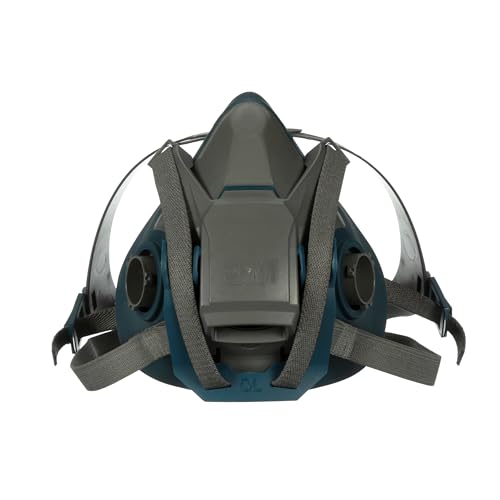 3M Rugged Comfort Quick Latch Half Facepiece Reusable1 Count (Pack of 1)6 x 6 x 6 Inches0.37 poundsCheck on Amazon


What's inside
As an Amazon Associate I earn from qualifying purchases. This post may contain affiliate links at no extra cost to you.
Here’s the uncomfortable truth about woodworking: the fine dust you can’t see is the stuff that damages your lungs over years. A shop vac at the tool helps, but a good mask is your last line of defense. And the best mask is the one you’ll actually keep on.
That last line sounds like a throwaway, but it is the entire review compressed into one sentence. Every mask on the market trades sealing performance against how pleasant it is to breathe through, and the winner in a real shop is almost never the one with the highest rating printed on the box. It is the one still on your face at the end of a three-hour sanding session, because a respirator hanging around your neck filters exactly nothing.
As an Amazon Associate we earn from qualifying purchases at no extra cost to you.



The dust that hurts you is the dust you never see
Sweeping up gives a false sense of safety. Chips and coarse grit have mass, so they drop out of the air within seconds and land where you can see them, which is why a clean floor feels like a clean shop. The particles that matter never settle on your schedule. They drift for hours after the machine is off, they follow you to the corner where you drink your coffee, and they are small enough to travel deep into your lungs instead of getting caught in your nose and throat.
Some jobs are fine-particle factories. Random orbit sanding is the obvious one, along with drum sanding and anything that involves routing or cutting MDF. Health agencies treat wood dust as a genuine respiratory hazard rather than a nuisance, and certain species — western red cedar and a lot of tropical hardwoods — are known for sensitizing people who had no reaction at all for years. That is the shape of the risk: cumulative, invisible, and easy to ignore right up until it isn’t.
Comfort is what keeps it on your face
A respirator that fogs your glasses, pinches, or makes breathing hard comes off within minutes — and then it’s useless. We prioritize models that seal well, breathe easily, and stay comfortable through a full session.
Comfort breaks down into four things worth checking before you commit. Breathing resistance is mostly filter surface area: a pair of large pleated cartridges moves air with far less effort than one small flat pad, which is why reusable masks feel easier than disposables even at a higher filter rating. Heat and humidity are controlled by the exhalation valve, and a valve that vents down and away is the difference between usable glasses and a fogged mess. Pressure distribution comes from the face seal — soft silicone spreads the load, thin stiff rubber concentrates it on the bridge of your nose. Strap geometry decides whether the mask stays put: a two-strap head harness holds position when you look down at the bench, ear loops never do.
Reusable Half-Mask Respirator
A proper reusable respirator with replaceable filters that seals well and breathes easy. Comfortable enough that you keep it on — which is the entire point. Far better protection than a paper mask.
- ✔ Real fine-dust protection
- ✔ Comfortable for long sessions
- ✔ Replaceable filters
- ✔ Seals better than paper masks
- ✘ Filters need replacing
- ✘ Fit matters — try before long use
What to weigh, and in what order
Seal first, filter rating second
A top-rated cartridge on a mask that leaks at the cheeks protects you less than a modest filter that seals, because air always takes the easiest path and a gap is easier than filter media. Most half-masks come in small, medium and large for a reason, and face shape matters more than head size. Run a seal check every time you put it on: cover the filter inlets with your palms, inhale gently, and the mask should draw in slightly and hold. If air rushes past your nose or the mask doesn’t move at all, adjust the straps or change size.
Understand what the filter classes cover
N95 means the filter captures at least 95 percent of non-oil airborne particles. P100 captures at least 99.97 percent and is rated for oil-based aerosols as well. Either class is in a different league from an unrated nuisance mask, and P100 is the usual default on reusable half-masks. What neither does is stop solvent vapor. If you spray or brush lacquer, oil-based finish or two-part products, you need a body that accepts organic-vapor cartridges with a particulate pre-filter stacked on them.
Filters are the running cost
Reusable masks are a razor-and-blades purchase, so check that the cartridges belong to a common, widely stocked series before you buy the body. Particulate filters are finished when breathing resistance noticeably climbs or the media is visibly loaded, and there is no useful calendar rule. Vapor cartridges are different: their clock starts when the packet is opened whether you use them or not, which is why they belong in a sealed bag between sessions.
Test the whole head, not just the mask
Your respirator has to coexist with safety glasses and hearing protection. A bulky cartridge that collides with your chest when you lean over a workpiece, or a harness that shoves earmuff cups out of position, gets fiddled with constantly and eventually gets left off. Try the full stack together.
What your money buys at each level
The bottom tier is the thin unrated dust mask with a single strap and visible gaps at the cheeks. It keeps chips off your face while you sweep and does very little about fine dust. Treat it as a courtesy to your nose, not protection.
A step up gets you rated disposables with a moulded nose wire and two straps that go behind the head. Fitted properly these genuinely filter, and the valved versions are much friendlier to glasses. The catch is recurring cost and comfort that fades as the media loads.
The sweet spot is a reusable half-mask running P100 cartridges. Large filter area means easier breathing, every wear part is replaceable, the silicone seal survives being cleaned, and the same body usually accepts vapor cartridges for finishing day. Anyone in the shop weekly should be here.
The top end is powered air: a helmet or hood that pushes filtered air past your face so no tight seal is required. It is bulky, expensive and battery-dependent, but for beards, chronic glasses fogging or genuinely all-day sanding it solves the problem instead of managing it.
Mistakes that quietly cancel your protection
- Facial hair on the sealing surface. Stubble and beards break the seal on any tight-fitting mask, and no amount of strap tension fixes it.
- Choosing ear loops. They hold a mask near your face, not against it.
- Late on, early off. Fines stay airborne long after the tool stops. Keep it on until the air settles or you leave the room.
- Storing it dirty and exposed. A mask left face-up on the bench collects the dust you were avoiding. Wipe the seal, bag it, keep it near the sander.
- Running filters until they fight back. By then you have been overbreathing a clogged filter for weeks.
- Treating the mask as the whole system. Capture at the tool first; the mask handles what escapes.
Who each option suits, and who should skip it
If you sand for twenty minutes a few times a year, a box of rated disposables is a defensible choice and better than the mask you never bother to fetch. If you are in the shop most weekends, the reusable half-mask pays for itself in comfort alone and is the recommendation here. If you spray finish, particulate-only options are not enough and you should be shopping for a body with vapor cartridge support from the start. And if you have a beard, wear glasses that fog no matter what, or find any tight mask makes breathing feel like work, skip tight-fitting half-masks entirely and price out a powered unit instead of buying three masks you won’t wear.
FAQ
Do I still need a mask if my tools are connected to dust collection?
Yes. Collection captures at the source and always misses some, and what it misses is the fine fraction that hangs in the air. The two controls are stacked on purpose, not alternatives.
How often should I replace the filters?
Particulate filters go by feel and appearance rather than dates: replace them when breathing effort rises or the media is loaded. Vapor cartridges go by time in service once opened, plus any smell or taste breakthrough, which is your cue to change them immediately.
Can I get a reliable seal with a beard?
Not with a tight-fitting mask. Your realistic choices are shaving the sealing area or moving to a loose-fitting powered respirator designed to work without a face seal.
Is a cheap paper mask better than nothing?
Marginally, for coarse dust. It is not a substitute for a rated, sealing respirator when you are sanding, and it should not be the thing you rely on for years of shop time.
Don’t skip this
Of every safety habit, wearing a proper dust mask is the one your future self will thank you for most. Combine it with a good shop vac for dust at the source and you’ve covered the real hazard.
Buy the mask you can tolerate for an entire session, store it clean within arm’s reach of the sander, and the habit stops requiring willpower. That is the whole trick.
0 Comments