Our Top Picks
 G & F Products Two-Strap Disposable Dust Masks1 Count (Pack of 50)4 x 12 x 5 Inches0 poundsCheck on Amazon
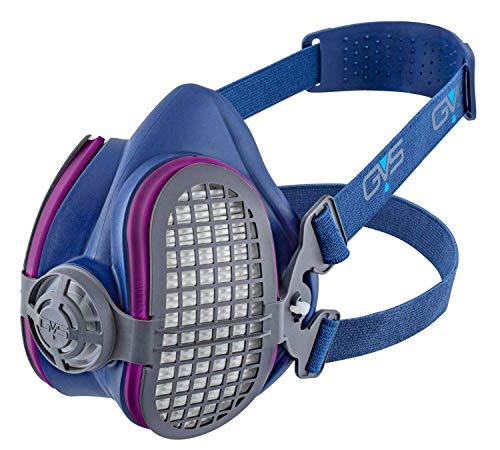 GVS SPR457 Elipse P100 Dust Half Mask Respirator1 Count (Pack of 1)5 x 4 x 4 inches0.4 poundsCheck on Amazon

What's inside
As an Amazon Associate I earn from qualifying purchases. This post may contain affiliate links at no extra cost to you.
Here is the uncomfortable part about woodworking dust protection: the sawdust you can see piled on the bench is not the dust that hurts you. That stuff is heavy, it falls out of the air in seconds, and your lungs are pretty good at trapping it in the nose and throat. The dangerous fraction is the part you cannot see at all, roughly under 10 microns and especially under 2.5 microns. Those particles behave less like grit and more like smoke. They stay suspended for hours after you shut the machine off, they drift into the next room, and they travel deep into the alveoli where the body has no easy way to sweep them back out.
That single fact reshapes every decision. If you sweep up, wipe the bench, and feel like the shop is clean, you have handled the visible 95 percent by weight and almost none of the risk by particle count. Worse, sweeping and blowing off with compressed air re-suspend the fine dust you had temporarily gotten out of the air. Understanding the mechanism first is what separates a shop that is genuinely protected from one that just looks tidy.
As an Amazon Associate we earn from qualifying purchases at no extra cost to you.


The three jobs, and why one tool cannot do all of them
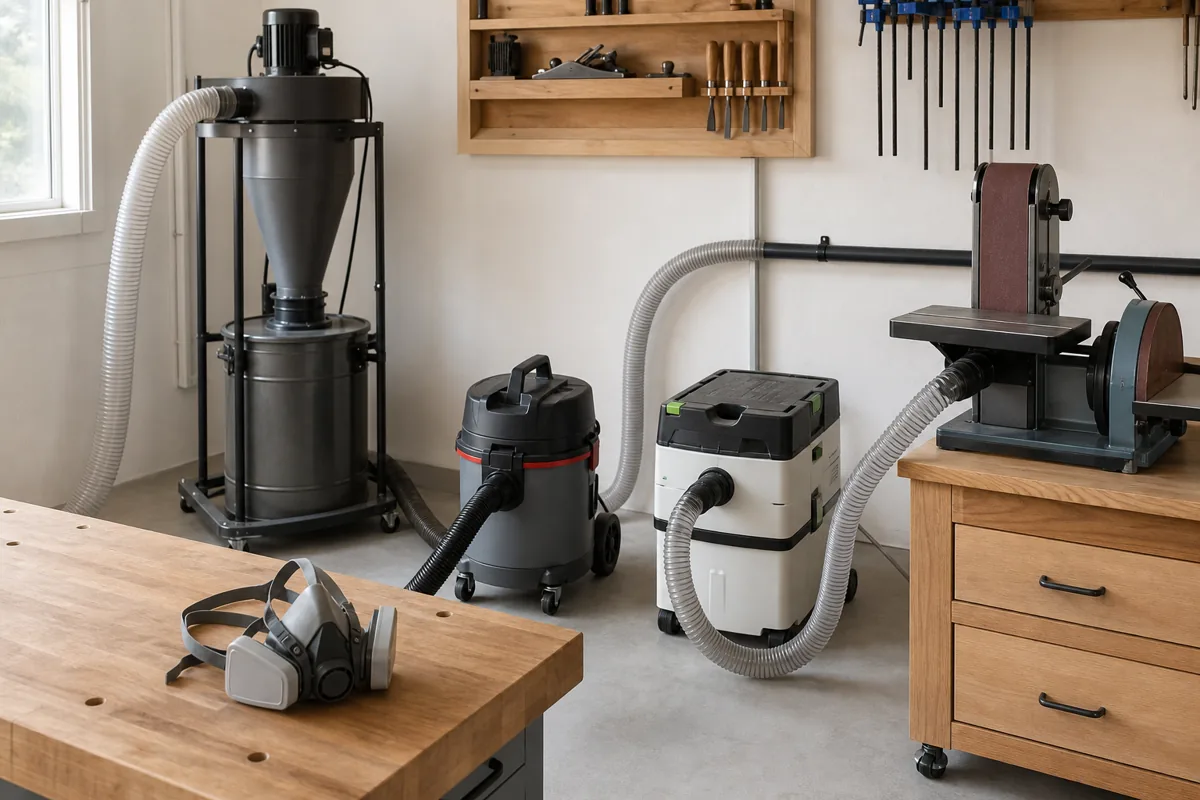
Think of dust like water in a leaking boat. You can plug the hole, you can bail, or you can wear a life jacket. Those are three different jobs and you need all three, in that order of priority. Capture at the source plugs the hole. Ambient air filtration bails out what escaped. A respirator is the life jacket, the thing that protects you when the first two fail or when you are doing work that cannot be captured, like hand sanding or sweeping.
People routinely buy these in the wrong order. The most common mistake is spending heavily on a ceiling-mounted air cleaner while running a router table with no hood at all. The air cleaner is downstream of your face. Dust generated at the tool passes through your breathing zone on its way to the filter, so you inhale it before the machine ever sees it. Source capture wins because it removes the particle before it has a chance to reach you.
| Layer | What it actually does | Best for | Typical cost tier |
|---|---|---|---|
| Source capture (collector or extractor) | Removes chips and fines before they enter the room | Table saw, planer, sander, router | Mid to high |
| Ambient air cleaner | Slowly lowers the fine dust already airborne | Post-work cleanup, whole shop | Low to mid |
| Respirator | Protects your lungs regardless of shop conditions | Hand sanding, sweeping, any uncaptured task | Low |
| Shop vacuum with fine filter | Point capture on small tools and cleanup | Sanders, track saws, jigsaws | Low |
| Cyclone separator or pre-separator | Keeps chips out of the filter so airflow stays high | Any collector or vac | Low to mid |
Misconception one: CFM is the only number that matters
Dust collection marketing loves airflow numbers. But airflow and suction are two different things, and machines are optimized for one or the other. A dust collector moves high volume at low pressure, which is what you want for a 4 inch or 6 inch port on a jointer or table saw where you need to pick up a large stream of chips. A shop vacuum or dust extractor moves low volume at high pressure, which is what you want for a 1 to 1.5 inch hose on a sander where the opening is tiny and restrictive.
Swap them and both fail. Hook a big collector to a random orbit sander through an adapter and it barely pulls, because the collector’s impeller cannot generate the static pressure to overcome that narrow path. Hook a shop vac to a planer and it clogs almost immediately, because it cannot move the sheer volume of shavings.
The other half of this misconception is that the rated number applies to your setup. It does not. Ratings come from an open inlet with no hose. Every foot of flex hose, every 90 degree elbow, every undersized port on the tool itself costs you. Long runs of ribbed flex hose are the biggest offender in most home shops. If you are running 20 feet of corrugated hose across the floor to reach the saw, you may be losing a third or more of your airflow to friction before it ever reaches the blade guard.
Dust Extractor with HEPA Filtration
If you only fix one thing, make it the vacuum you connect to sanders and track saws. A true HEPA-rated extractor with automatic tool start captures fines at the source instead of blowing them through a cloth bag and back into the room. Look for auto-start outlets, antistatic hose, and a filter cleaning function, since sanding dust blinds filters fast.
Misconception two: a stock filter bag is good enough
The classic single-stage collector with a felt bag on top is where a lot of woodworkers get quietly burned. Those bags are often rated around 30 microns, which means they catch chips beautifully and pass the entire respirable fraction straight through the fabric. The machine becomes an efficient fine dust distributor. It grabs particles from the saw, accelerates them through the impeller where they get pulverized into even smaller pieces, and then puffs them out at head height across the whole shop.
The fix is not complicated. Replace the top bag with a pleated cartridge filter rated at or near 1 micron with high efficiency, or move to a cyclone that separates chips before they hit the filter. Pleated cartridges also give you far more surface area, so airflow stays healthier as the filter loads up.
- ✔ Pleated cartridge filters give large surface area in a small footprint
- ✔ Cyclone pre-separation keeps filters clean so suction stays consistent
- ✔ Sealed collection drums prevent the leaks that plastic bags create
- ✔ Fine filters make an ambient air cleaner far more effective
- ✘ Fine filters slightly reduce peak airflow compared to open porous bags
- ✘ Cyclones need vertical clearance many basement shops do not have
- ✘ Filter media needs periodic cleaning or it chokes airflow
- ✘ Retrofitting a good filter can cost a meaningful fraction of the machine’s price
Respirators: fit beats filter rating every time
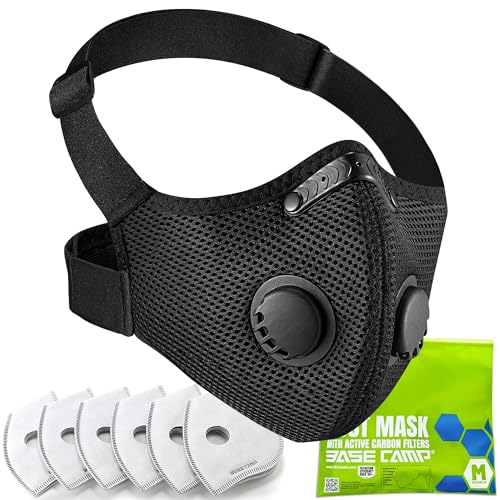
A dust mask does nothing if air takes the easy path around the seal instead of the hard path through the media. This is the single most important idea in personal protection and it is the one most often ignored. A cheap nuisance mask with a single strap and no nose seal is largely decorative in a wood shop. What you want is either an N95 with two straps and a moldable nose wire, or better, an elastomeric half mask with replaceable P100 cartridges.
The P100 pink filters are effective against particulates but they do not handle vapors, so finishing with solvent-based products calls for combination cartridges with organic vapor protection. And beards are a real problem. Facial hair crossing the sealing surface breaks the seal, and no amount of strap tension fixes it. If you have a beard you cannot shave, a powered air purifying respirator with a loose-fitting hood is the honest answer, since it works on positive pressure rather than a face seal.
Reusable Half Mask Respirator with P100 Filters
The cheapest meaningful improvement in any shop. Silicone or rubber half masks seal better than disposables, filters last months of hobby use, and the same mask body accepts organic vapor cartridges for finishing days. Do the negative pressure check every time you put it on: cover the inlets, inhale, and confirm the mask pulls in and holds.
Building a practical woodworking dust protection plan on a budget
Order of purchase matters more than total spend. Start with the respirator, because it protects you tonight regardless of what else is broken. Next, get point capture on your sanders, since sanding produces the highest proportion of respirable fines of anything in the shop. A good vacuum with a fine filter and a hose that fits your tools does more for your lungs per dollar than almost anything else.
After that, address your biggest chip producers with a proper collector and shorten the ductwork. Straight, smooth rigid duct with gradual sweeps instead of sharp elbows, and flex hose only for the last couple of feet, will often improve performance more than upgrading the machine. Then add an ambient air cleaner and let it run for a half hour after you leave the shop, which is when the fines are still hanging in the air. Finally, change habits: vacuum instead of sweeping, never use compressed air to blow off surfaces or clothing, and open a door for cross-ventilation on nice days.
One more point about species. Some woods are genuinely more hazardous than others. Hardwood dust in general carries more concern than softwood, and certain exotics like cocobolo, wenge and padauk are known sensitizers that can trigger reactions after repeated exposure. MDF deserves its own mention because the dust is extremely fine and the binders add irritation on top of the particle problem. If you cut a lot of sheet goods, treat it as a respirator-mandatory operation.
Frequently asked questions
Is a shop vacuum enough for dust protection in a small shop? For sanders, track saws, jigsaws and cleanup, a shop vacuum with a genuine fine or HEPA-rated filter and a good cartridge is a solid backbone. It will not keep up with a planer, jointer or wide dado cut, where the volume of material overwhelms it in seconds. Add a bag or cyclone pre-separator so chips do not blind the filter, and understand that a standard paper bag with no fine filter still leaks respirable dust.
Do air cleaners hanging from the ceiling really help? Yes, but as a second shift rather than a first responder. They cannot capture dust before it reaches your face, so their real value is reducing the fine dust load that lingers for hours after work stops. Size the unit to turn over your shop volume several times per hour and keep it running well past the end of the session. Treat it as insurance behind source capture, not a substitute for it.
How often should respirator filters be replaced? Replace particulate filters when breathing resistance noticeably increases, when they get wet, or when they are visibly loaded. Vapor cartridges work differently. They have a limited service life once opened even if unused, and you should replace them if you can smell the finish through the mask. Store the mask in a sealed bag between sessions so cartridges are not absorbing shop air continuously, and check the seals and exhalation valve for cracks each time you put it on.
The takeaway is simple even if the physics is not. Protect your face first, capture at the tool second, filter the room third, and stop trusting your eyes to tell you whether the air is clean. If you want to start where the return is highest, get a mask that actually seals and a vacuum that actually filters.
Check prices on Amazon →
0 Comments