What's inside
As an Amazon Associate I earn from qualifying purchases. This post may contain affiliate links at no extra cost to you.
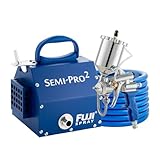
The best budget HVLP spray finishing system for most furniture makers is a dedicated turbine system such as the Wagner FLEXiO 3500 or Fuji Semi-PRO 2; choose a compressor-powered HVLP gun instead when you already own a suitable compressor and need the lowest long-term equipment cost.
A turbine is simpler to size, quieter than many shop compressors, and ready to spray without waiting for a tank to refill. A compressor-powered gun can deliver excellent results, but its performance depends heavily on the compressor’s actual air delivery, hose, regulator, and moisture control. The right choice therefore depends less on the lowest purchase price than on the finishes, project sizes, and frequency of use you expect.
As an Amazon Associate we earn from qualifying purchases at no extra cost to you.

Quick comparison: affordable HVLP systems
| System | Power and air source | Spray pattern or nozzle range | Best finish size | Typical market range |
|---|---|---|---|---|
| Wagner FLEXiO 3500 | 550 W turbine, 1.5 L cup | Adjustable pattern; iSpray and Detail nozzles | Furniture, cabinets, doors, occasional walls | $180–$250 |
| Fuji Semi-PRO 2 | 1,400 W two-stage turbine, 1.0 L cup | 1.3 mm air-cap set supplied; optional sizes available | Furniture, trim, cabinets, medium projects | $400–$500 |
| Earlex Spray Station 5500 | 650 W three-stage turbine, 1.0 L cup | 1.0, 1.5, and 2.0 mm fluid tips commonly available | Fine furniture through larger woodworking projects | $400–$550 |
| Compressor HVLP gun, 1.4 mm setup | Separate compressor; commonly 7–12 SCFM at 40 PSI required | Usually 1.3–1.8 mm; larger tips available | Furniture and trim if compressor capacity is adequate | $60–$180 for gun |
| Compressor HVLP gun, 2.0–2.5 mm setup | Separate compressor; commonly 9–14 SCFM at 40 PSI required | Large fluid nozzle for primers and thicker coatings | Built-ins, doors, latex primer, broad surfaces | $70–$200 for gun |
Specifications vary by package and revision, so confirm the included tips, cup size, and required air consumption before buying. “HVLP” describes the spray method, not a guarantee that every gun works well with every compressor.
Our picks by situation
| Your situation | Best fit | Why |
|---|---|---|
| First sprayer, occasional furniture | Wagner FLEXiO 3500 | Integrated turbine, broad material tolerance, and a detail nozzle for smaller work |
| Frequent cabinet and furniture finishing | Fuji Semi-PRO 2 | More consistent turbine airflow and better control than entry-level handheld units |
| Fine finish with several coating types | Earlex Spray Station 5500 | Three-stage airflow and interchangeable fluid-tip sizes |
| Already own a 20–30 gallon compressor | Quality compressor HVLP gun | Lower added cost and easy replacement of gun parts |
| Small shop with limited storage | Handheld turbine system | No compressor tank, air lines, or separate moisture filter to store |
| Large runs of doors or wall panels | Three-stage turbine or properly sized compressor | Better sustained airflow and less frequent refilling |
Turbine versus compressor: the meaningful differences
Spray quality
A two- or three-stage turbine usually provides predictable airflow without the pressure fluctuations caused by a small compressor cycling on and off. That makes it easier to maintain a wet, even fan on cabinet doors and tabletops. The trade-off is warm air: long spraying sessions can warm water-based coatings and slightly change their viscosity.
A compressor gun can produce an exceptionally fine finish when the air supply is stable and dry. However, a small compressor that supplies only 4–6 SCFM may run continuously while the gun receives insufficient air. The result is pulsing, poor atomization, excessive orange peel, and more overspray. Check the compressor’s SCFM at the gun’s working pressure, not its higher “displacement” or peak rating.
Material compatibility
Handheld turbine systems are convenient for stains, dyes, clear coats, lacquers, and many premixed water-based finishes. Some can also spray thicker paint, but the material may need straining and modest thinning. A 1.5–2.5 mm nozzle is useful for primer and heavier coatings; a 1.0–1.3 mm nozzle favors clear coats and thin finishes.
Compressor guns offer more nozzle choices and are often easier to configure for both thin lacquer and thicker primer. They are less forgiving of unthinned latex or heavily pigmented coatings. Always follow the coating manufacturer’s thinning limits: excessive thinning can reduce build, alter sheen, and increase runs.
Transfer efficiency and overspray
HVLP systems generally operate at lower cap pressure than conventional spray guns, which can reduce bounce-back and overspray. Transfer efficiency still depends on technique. Holding the gun too far away, moving too slowly, or using excessive fluid flow wastes more finish than the choice between two competent HVLP systems.
For woodworking, an 8–10 inch fan is a useful starting point on doors and cabinet panels. Reduce the fan to roughly 4–6 inches for chair parts, drawer fronts, and narrow trim. A smaller fan wastes less material and makes edge control easier.
What finish size can each system handle?
For a small cabinet door, drawer front, or tabletop, any of the turbine systems above can be practical. A handheld unit is convenient for one or two panels, but its small cup may require several refills. Dedicated turbine systems with 1.0–1.5 L cups are better for batches of cabinet doors.
For a useful estimate, suppose a coating’s practical coverage is 400 square feet per gallon after allowing for overspray and setup. A 24-by-30-inch door has two sides totaling 10 square feet. One gallon theoretically covers 40 such doors, but real work includes edges, test passes, filters, and losses in the gun and cup. Planning on approximately 25–32 doors per gallon is more realistic for a careful beginner.
Walls and large built-ins are possible with broad-pattern systems, but they expose the weaknesses of small turbines: limited cup capacity, heat buildup, and slower application. For occasional wall work, a dedicated airless sprayer may be a better tool; HVLP is usually preferable when control and a fine woodworking finish matter more than speed.
Setup steps that prevent most defects
- Filter and mix the finish. Strain water-based paint, lacquer, and clear coat through a paint filter into a clean cup. Small skins or grit can partially block a tip and create an uneven fan.
- Choose the nozzle by viscosity. Start around 1.3–1.4 mm for clear coats and thin stains, 1.5–1.8 mm for many primers, and 2.0 mm or larger for heavier coatings when the gun supports it.
- Test on scrap. Set the air or turbine control first, then adjust fluid flow. A correct pattern should be full and even, without dry edges, heavy center buildup, or large droplets.
- Hold the gun square. Keep the nozzle approximately 6–8 inches from the surface and move parallel to it. Begin moving before pulling the trigger and release the trigger before stopping.
- Overlap each pass by about 50 percent. This prevents striping. On vertical parts, use lighter coats rather than trying to build the entire film thickness in one pass.
- Clean immediately. Empty the cup, wipe the pickup tube and seal, flush the fluid path with the coating manufacturer’s recommended cleaner, and brush the nozzle and air cap.
For a compressor setup, place a regulator and moisture separator near the gun, use a hose large enough for the gun’s air demand, and drain the compressor tank after use. Moisture in a clear coat can cause cloudiness, fisheyes, or a rough surface.
Ownership costs and parts that wear first
The purchase price is only part of the budget. Expect replacement fluid tips, needles, cup seals, air filters, and turbine filters over the life of a sprayer. A damaged needle or partially blocked air cap can make a good gun appear defective. Do not leave finish drying in the nozzle, and avoid poking spray openings with hard wire that can enlarge them.
Turbine systems usually have fewer shop-air accessories but may need proprietary or model-specific filters and nozzle sets. Compressor guns use inexpensive, widely available wear parts, yet the compressor itself may cost more than the gun. If you spray twice a month, a turbine’s convenience can outweigh its higher initial cost. If you spray several hours each week and already own a capable compressor, the compressor gun generally offers better value.
Bottom line
Choose the Wagner FLEXiO 3500 for the lowest-friction entry into furniture and occasional larger work. Step up to the Fuji Semi-PRO 2 or Earlex Spray Station 5500 when consistent airflow, finer control, and repeated cabinet finishing matter more than the lowest price. Choose a compressor-powered HVLP gun only after confirming that your compressor meets the gun’s SCFM requirement with reserve capacity. In every case, correct nozzle sizing, filtered finish, controlled viscosity, and immediate cleanup have more influence on the final surface than a small difference in the product’s advertised pressure.
0 Comments