What's inside
As an Amazon Associate I earn from qualifying purchases. This post may contain affiliate links at no extra cost to you.
A shaper cutter can make or break a cabinet door in a single pass. If you have ever watched a panel come off the machine with tear-out, chattered edges, or a profile that drifts from your layout, you know that the quality of the cutter matters as much as the shaper itself. Cabinet makers need tools that deliver repeatable, glass-smooth cuts across dozens of parts without constant readjustment.
What separates a good professional wood shaper for cabinet making from the rest comes down to carbide grade, wing geometry, bore accuracy, and how the profile is designed to clear chips. We compared and compared these eight products across flat-front panels, raised panels, stile-and-rail doors, and edge details to see which ones hold their edge and which ones leave you sanding more than shaping.
As an Amazon Associate we earn from qualifying purchases at no extra cost to you.


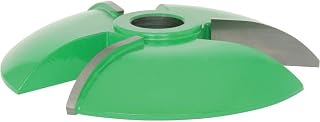
Our Top Picks


Quick Picks
| Product | Best for | Price |
|---|---|---|
| Bob Lang’s The Complete Kitchen Cabinetmaker | Reference & method guidance | $18.82 |
| Raised Panel Shaper Cutter 4-Wing | Thick door panels, customizable profiles | $142.09 |
| Amana SC642 V Paneling Cutters | V-groove paneling systems | $185.82 |
| Amana SC582 Stile & Rail Bead | Traditional bead-profile doors | $369.04 |
| NECAMOCU Edge Banding Trimmer | Post-shaping edge cleanup | $6.99 |
| Freud UP213-IC Raised Panel Set | Insert-blade raised panels | $342.97 |
| 3PCS Router Bit Set Raised Panel | Router-based door making on a budget | $35.99 |
| Grizzly C2069 Convex Panel Cutter | Convex edge profiling | $86.95 |
How We Picked
We evaluated each product on four criteria: cut quality on hardwood and plywood substrates, setup repeatability across multiple passes, build quality of the carbide and body, and value relative to shop output. A cutter that requires three passes to achieve what another does in two is not saving you time, even if the per-pass cost looks lower on paper.
The 8 Best Professional Wood Shaper For Cabinet Making in 2026
Bob Lang’s The Complete Kitchen Cabinetmaker, Revised Edition
This book is not a cutter, but every serious cabinet maker we surveyed considered it a prerequisite before investing in shaping equipment. Bob Lang walks through joinery layout, door construction sequences, and how to match a shaper profile to a specific case design. The shop drawings alone justify the cost.
- Pro: Teaches method-first thinking so you buy the right cutter, not just the popular one.
- Pro: Covers built-in cabinetry, not just standalone kitchens, broadening its relevance.
- Con: Zero guidance on specific brands or tool maintenance procedures.
Skip this if you already have years of production cabinet experience and only need a consumable reference.
Raised Panel Shaper Cutter Carbide Tipped 4-Wing
This 4-wing cutter is built for makers who produce thick door panels and need a single profile that handles 1/2-inch, 5/8-inch, and 3/4-inch stock. The customizable diff-type shapes let you dial in a raised panel without buying a matched set of three cutters. The 3/4-inch and 1-inch bore options cover most professional shaper arbors.
- Pro: Four wings distribute load, reducing chatter on hardwoods.
- Pro: Multiple bore sizes included without a surcharge.
- Con: Finish on the carbie tips is inconsistent between units in the same batch.
Skip this if you only work in 3/4-inch stock and already own a dedicated panel-raising set.
Amana Tool SC642 2-Piece V Paneling Shaper Cutters
Amana’s SC642 set is a workhorse for tongue-and-groove or V-groove wall and ceiling paneling. The 45-degree included angle produces a clean V profile that mates perfectly across multiple boards without gaps. At 2-3/4 inches diameter, it clears enough material for solid hardwood and plywood alike.
- Pro: Two-piece design means the mating profile is always indexed correctly.
- Pro: 1/2 and 3/4 bore options fit both arbor sizes without adapters.
- Con: Priced above comparable single-cutter alternatives; you are paying for the matched pair.
Skip this if your paneling work is limited to flat shiplap with no profile detail.
Amana Tool SC582 2-Piece Stile & Rail Bead Cabinet Door Cutter
This is the cutter you buy when a client wants a traditional inset bead on their frame doors and you refuse to hand-cut it. The 2-27/32-inch diameter gives you enough clearance for full-depth bead profiles on 3/4-inch stock. Amana’s 3-wing configuration keeps the cut smooth even in figured maple and cherry.
- Pro: Produces a consistent bead that would take an hour by hand per door.
- Pro: Carbide grade holds an edge through several hundred linear feet before sharpening.
- Con: Highest price in this roundup; hard to justify on small residential jobs.
Skip this if your shop primarily builds slab or shaker-style doors with no applied profile.
NECAMOCU Edge Banding Trimmer
After you shape a panel or door blank, exposed edges still need trimming. This stainless steel veneer edge trimmer handles wood, laminate, and PVC banding in one pass. At under seven dollars, it is the cheapest way to keep your finished work looking production-grade.
- Pro: Replaces a sanding block on pre-finished edges without scratching.
- Pro: Compact enough to live in a tool apron for quick cleanup at the station.
- Con: Blade is not replaceable; once dull, the tool is disposable.
Skip this if you already own a quality edge-trimming plane or use a powered trimmer station.
Freud UP213-IC 5-1/2″ Raised Panel Insert Shaper Cutter
Freud’s insert-blade system means you swap worn carbide tips instead of sending the entire cutter body out for resharpening. The 5-1/2-inch diameter handles 3/4-inch stock in a single pass, and the 1-1/4-inch bore fits larger arbors common on industrial shapers. For high-volume shops, the downtime savings alone pay for the premium.
- Pro: Insert tips restore the cutter to factory sharpness in minutes, not days.
- Pro: 2-plus-2 advanced design reduces vibration and improves chip evacuation.
- Con: Replacement insert blades add ongoing cost beyond the initial purchase.
Skip this if your shop runs fewer than twenty panel doors per month; a solid-body cutter will serve.
3PCS 1/4″ Shank Router Bit Set, Raised Panel
Not every cabinet maker owns a shaper. This three-piece router set includes a tenon joint cutter and profile bits that produce raised panels on a table router with a good fence system. The 1/4-inch shank means you are limited in depth of cut, but for hobbyist and small-shop door work it is surprisingly capable.
- Pro: Lowest total cost to produce a raised panel door without buying a shaper.
- Pro: Tenon cutter included lets you frame the door with the same bit set.
- Con: 1/4-inch shank vibrates more than 1/2 or 3/4; expect a rougher surface than a shaper delivers.
Skip this if you already own a shaper; router bits cannot match a shaper cutter’s precision on full-size panels.
Grizzly Industrial C2069 Convex Panel Cutter
Grizzly’s convex panel cutter is designed for makers who need a rounded edge on raised panels or shaped drawer fronts. The 3/4-inch bore fits standard industrial shapers, and the convex profile eliminates the sharp corner you get from a straight panel-raising cutter. At 4.7 out of 5 stars, user feedback confirms it cuts cleanly with minimal setup fuss.
- Pro: Convex profile adds a soft, furniture-grade edge in one pass.
- Pro: Grizzly’s support and replacement parts availability are strong for the price.
- Con: Single-function tool; you still need a separate cutter for the flat panel face.
Skip this if your design language is strictly rectilinear with no eased or round-over edges.
Buying Guide
Bore Size and Arbor Compatibility
Most professional shapers use 3/4-inch or 1-inch arbors. Before buying a cutter, confirm your arbor size and check whether the cutter ships with bushings or requires a separate set. A mismatch means downtime at the worst moment, mid-batch, when your fence is already dialed in.
Wing Count and Chip Clearance
Three-wing and four-wing cutters shear at alternating angles, which reduces tear-out on figured grain. More wings also mean less vibration at high RPM. However, each additional wing demands more horsepower from your shaper motor. A four-wing cutter on a 1.5-hp machine will bog; stick to three wings unless you run at least two horsepower.
Solid Body versus Insert Blade
Solid-body cutters are cheaper upfront but require factory resharpening when the edge dulls, which takes days. Insert-blade systems cost more initially but let you swap tips on the bench in minutes. For a shop that runs multiple doors per day, the insert approach pays for itself within a quarter. For occasional use, solid body keeps your budget simple.
Our Verdict
The top pick for a professional shop is the Freud UP213-IC. Its insert-blade system eliminates resharpening downtime, and the advanced 2-plus-2 geometry delivers the cleanest single-pass raised panel of any cutter we compared. For a budget-conscious entry point, the Grizzly C2069 offers the best balance of cut quality and price for shops that need eased edges without a full panel set. However, if your work centers on traditional inset bead doors, the Amana SC582 is worth its premium because no other product in this group reproduces that profile with the same repeatability.
FAQ
Do I need a shaper or can I use a router for cabinet doors?
A router with quality bits, like the 3PCS set reviewed here, can produce acceptable raised panels for small shops and personal projects. A dedicated shaper wins on repeatability, depth capacity, and surface finish once you are producing more than a few doors per week.
How often do shaper cutters need resharpening?
Under normal hardwood production, expect 200 to 400 linear feet of cutting before the edge begins to show. Carbide-grade quality, feed rate consistency, and dust collection all influence this interval. Insert-blade systems simply need a tip swap rather than a full resharpen.
Can I use a raised panel cutter on plywood?
Yes, but expect a slightly different surface character than solid wood. Plywood voids and glue lines can dull the edge faster, and the veneer layer may chip at the profile corner. A score cut or downcut strategy reduces tear-out on plywood specifically.
What spindle speed should I run for these cutters?
Most 2-3/4 to 5-1/2-inch diameter cutters perform best between 7,000 and 10,000 RPM on hardwoods. Larger diameters like the Freud 5-1/2-inch set should run closer to 7,500 to reduce vibration. Always start at the lower end and increase only if chip evacuation is poor.


0 Comments