RP Woodworks

  • Home
  • Reviews
  • Projects
  • Tools
  • Woodworking Techniques
  • About

Wood Finishing

Staining, sealing, oiling and clear-coating wood: product choice, application and fixes for common finish problems.

AI-generated editorial illustration of wood stain
Staining & Dyes

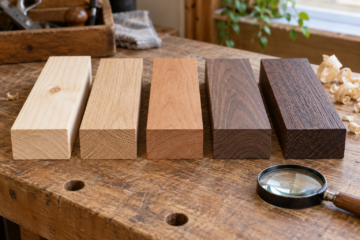
How to Make a Sample Board for Wood Stain and Finish

Why Make a Sample Board Wood stain rarely looks the same on a store sample, computer screen, or can label as it does on your project. Wood species, grain direction, sanding scratches, glue residue, and the finish over the stain all change the result. A sample board gives you a Read more

By , 2 weeksSeptember 25, 2026 ago
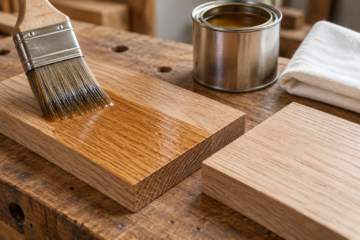
AI-generated editorial illustration: brush applying a clear wood finish to a board beside an unfinished offcut.
Clear Coats & Topcoats

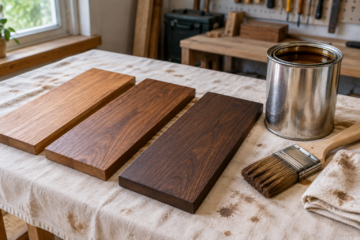
How to Test Finish Compatibility on an Existing Wood Coating

Adding a new finish over an existing wood coating can save hours of stripping and sanding, but only if the two finishes bond and remain stable together. A surface may look clean and sound while still rejecting the new product, softening under it, or releasing the old coating from the Read more

By , 2 weeksSeptember 25, 2026 ago
AI-generated editorial illustration of wood paint
Painting & Priming

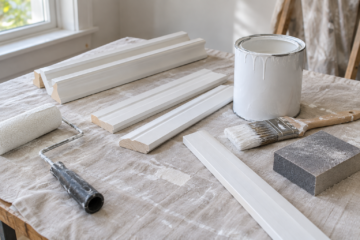
How to Prepare Previously Painted Wood for New Paint

Good new paint starts with the old paint. If the existing coating is dirty, glossy, loose, or contaminated with grease, the new finish may peel, blister, or show every dent underneath it. Preparing previously painted wood is not difficult, but it is more than giving the surface a quick scuff. Read more

By , 2 weeksSeptember 25, 2026 ago
AI-generated editorial illustration: wood glue bottle beside an edge-glued board assembly and spreader.
Oils & Waxes

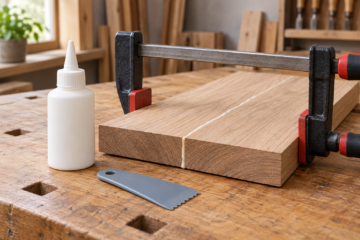
How to Prepare Oily Hardwood for Glue and Finish

Why Oily Hardwood Is Difficult to Glue and Finish Oily hardwoods such as teak, ipe, rosewood, cocobolo, and some varieties of ebony contain extractives that can interfere with adhesion. The problem is not simply that the surface feels greasy. Oils can migrate out of the wood after sanding, prevent glue Read more

By , 2 weeksSeptember 25, 2026 ago
AI-generated editorial illustration: brush applying a clear wood finish to a board beside an unfinished offcut.
Clear Coats & Topcoats

How to Prepare Previously Varnished Wood for Refinishing

Previously varnished wood needs more than a quick scuff with sandpaper. The new finish must bond to a surface that may contain wax, polish, grease, silicone, old stain, and brittle varnish. Good preparation removes contamination, flattens damage, and leaves enough texture for the new coating to grip without unnecessarily removing Read more

By , 2 weeksSeptember 25, 2026 ago
AI-generated editorial illustration of wood paint
Painting & Priming

How to Prepare Routed Edges for Paint

Routed edges are easy to make look good and surprisingly easy to make look worse than a square edge. The cutter leaves a clean profile, but it also creates end grain, inside corners, sharp transitions, and sometimes small ridges from router chatter. Paint will highlight every one of those defects. Read more

By , 2 weeksSeptember 25, 2026 ago
AI-generated editorial illustration of plywood mdf veneer samples
Clear Coats & Topcoats

How to Repair Veneer Chips Before Refinishing

Veneer is a thin layer of real wood, often less than 1/16 inch thick, glued over plywood, MDF, or a less attractive solid-wood core. That thin surface creates a specific repair problem: a chip is not just a dent. It may expose the substrate, leave a sharp edge that catches Read more

By , 2 weeksSeptember 25, 2026 ago
AI-generated editorial illustration of wood paint
Finish Problems & Fixes

How to Prevent Raised Edges When Painting Wood Panels

Raised edges usually appear where a panel’s face meets its edge, where two boards meet, or where a veneer layer has started to lift. Paint makes the problem more obvious by forming a hard film across a soft or uneven area. As the wood moves, the joint telegraphs through, and Read more

By , 2 weeksSeptember 25, 2026 ago
AI-generated editorial illustration of wood fillers and finishing prep
Grain Filling & Sealing

How to Apply Grain Filler to Open-Pore Hardwood

What Grain Filler Does Grain filler levels the pores in open-pore hardwood so the finished surface feels and looks smoother. It is not the same as wood putty or ordinary sanding sealer. Putty repairs holes, cracks, and dents; grain filler fills the shallow channels that run through species such as Read more

By , 2 weeksSeptember 25, 2026 ago
AI-generated editorial illustration of wood fillers and finishing prep
Grain Filling & Sealing

How to Choose Between Wood Filler and Grain Filler

Wood filler and grain filler solve different surface problems. Wood filler repairs holes, cracks, dents, and open joints. Grain filler levels the tiny pores in porous wood so a finish looks flatter and smoother. Choosing the wrong one can leave you with a blotchy stain job, a finish that sinks Read more

By , 2 weeksSeptember 25, 2026 ago

Posts pagination

Previous 1 … 10 11 12 … 63 Next
Recent Posts
  • Best Woodworking Clamps: Which Types to Buy and How Many You Need
  • Best Pocket Hole Jigs in 2026: Kreg, Massca and Milescraft Compared
  • Best Dovetail Jigs: Fixed, Multi-Template and Variable-Spacing Options Explained
  • Best Compact Wood Routers: Corded vs Cordless Picks for Edge Work and Trimming
  • How to Repair a Wood Split Caused by a Screw (Even in Thin Teak)
Recent Comments
No comments to show.
Archives
  • October 2026
  • September 2026
Categories
  • Clear Coats & Topcoats
  • Finish Problems & Fixes
  • Gift Guides
  • Grain Filling & Sealing
  • Guides
  • Oils & Waxes
  • Painting & Priming
  • Sanding & Surface Prep
  • Shop Setup & Safety
  • Staining & Dyes
  • Tool Troubleshooting
  • Tools
  • Wood Finishing
  • Wood Species & Lumber
  • Woodworking Techniques
Hestia | Developed by ThemeIsle