RP Woodworks

  • Home
  • Reviews
  • Projects
  • Tools
  • Woodworking Techniques
  • About

Finish Problems & Fixes

Diagnosing and fixing blotchy stain, cloudy or sticky finishes, bleed-through, lap marks and peeling.

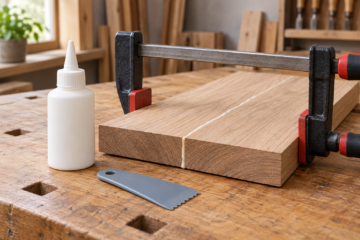
AI-generated editorial illustration: wood glue bottle beside an edge-glued board assembly and spreader.
Finish Problems & Fixes

How to Remove Adhesive Residue from Wood Before Staining

Adhesive residue can leave a pale, shiny, or gummy patch that refuses to take stain like the surrounding wood. The safest fix depends on what the adhesive is and whether it sits on the surface or has soaked into the grain. Before using solvent or sanding, identify the residue, test Read more
By , 2 weeksSeptember 25, 2026 ago
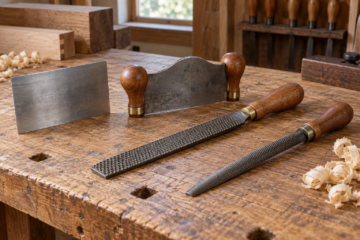
AI-generated editorial illustration of scrapers rasps files
Finish Problems & Fixes

How to Strip Paint from Detailed Woodwork Without Damaging It

Stripping paint from detailed woodwork is less about removing every last chip quickly and more about controlling heat, moisture, chemicals, and abrasion. Profiles, carvings, beaded edges, and thin trim can be permanently softened or rounded by an aggressive approach. The safest method is usually a combination: scrape loose paint, soften Read more

By , 2 weeksSeptember 25, 2026 ago
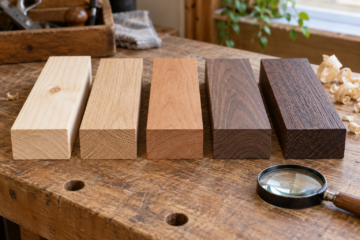
AI-generated editorial illustration: five wooden board samples showing different grain textures and colors.
Finish Problems & Fixes

How to Remove Water Stains from Wood Before Recoating

Water rings and dark marks need different treatments. A white or cloudy ring usually sits in the finish; a black stain often means water has reached the wood and reacted with tannins, or carried dirt into the grain. Identify which one you have before sanding or applying a new coat. Read more

By , 2 weeksSeptember 25, 2026 ago
AI-generated editorial illustration of wood paint
Finish Problems & Fixes

How to Remove Old Paint from Wood Trim Before Refinishing

Removing old paint from wood trim takes more care than stripping a flat board. Profiles, corners and joints trap residue, and aggressive sanding can erase crisp edges. The right method depends on the trim’s shape, paint condition and what finish you plan to apply next. Before starting, check for lead: Read more

By , 2 weeksSeptember 25, 2026 ago
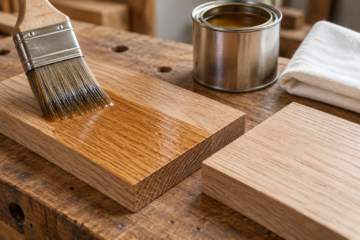
AI-generated editorial illustration: brush applying a clear wood finish to a board beside an unfinished offcut.
Finish Problems & Fixes

How to Apply a Wood Topcoat Without Bubbles or Foam

Bubbles in a wood topcoat usually come from air introduced during application, a fast-drying film that traps air, or foam left behind by shaking or overworking the finish. The fix is mostly in the setup: use the right applicator, move at a steady pace, and leave fresh finish alone while Read more

By , 2 weeksSeptember 25, 2026 ago
AI-generated editorial illustration of wood paint
Finish Problems & Fixes

How to Keep Paint from Peeling on Previously Finished Wood

Paint usually peels from finished wood because it never got a firm grip on the old coating—or because moisture is pushing it loose from underneath. The fix depends on what is failing. A quick scuff and repaint can work on a sound, compatible finish; loose paint, wax, grease, or a Read more

By , 2 weeksSeptember 25, 2026 ago
AI-generated editorial illustration: five wooden board samples showing different grain textures and colors.
Finish Problems & Fixes

How to Prevent Raised Grain Under a Water-Based Topcoat

How to Prevent Raised Grain Under a Water-Based Topcoat Water-based polyurethane, acrylic, and lacquer are clean, quick-drying finishes, but they can make bare wood feel rough after the first coat. The finish wets the wood fibers, and some fibers swell upright instead of lying flat. This is called raised grain. Read more

By , 2 weeksSeptember 25, 2026 ago
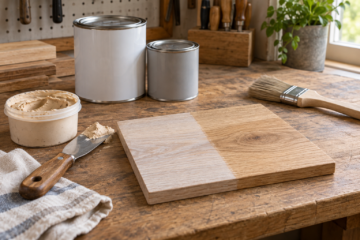
AI-generated editorial illustration of wood fillers and finishing prep
Finish Problems & Fixes

How to Apply a Whitewash Finish Without Hiding the Grain

What a whitewash finish does Whitewash is a thin, pale finish that lets the wood’s grain show through. It can soften the color of oak, pine, and other woods without covering them like opaque paint. The trick is to apply a small amount, work it into the surface, then remove Read more

By , 2 weeksSeptember 25, 2026 ago
AI-generated editorial illustration of wood paint
Finish Problems & Fixes

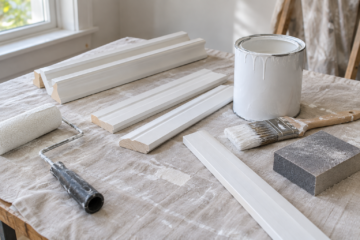
How to Paint Wood Trim Without Visible Roller Texture

Rollers are fast on doors, baseboards, and window casing, but the wrong roller can leave a pebbled surface that remains visible after the paint dries. The fix is not simply “use a smaller roller.” Smooth trim depends on the roller cover, paint viscosity, surface preparation, film thickness, and how long Read more

By , 2 weeksSeptember 25, 2026 ago
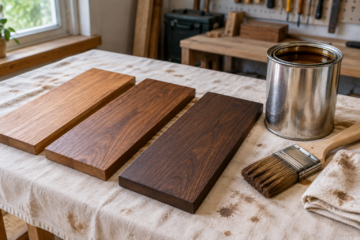
AI-generated editorial illustration of wood stain
Finish Problems & Fixes

How to Stain a Wood Door Without Lap Marks

Lap marks are usually caused by stain drying before you blend the next section into it. The fix is to work in manageable areas, keep a wet edge, and wipe off excess stain before it turns tacky. Door design and stain type matter, too: a flat slab is easier to Read more

By , 2 weeksSeptember 25, 2026 ago

Posts pagination

Previous 1 … 4 5 6 … 9 Next
Recent Posts
  • Best Woodworking Clamps: Which Types to Buy and How Many You Need
  • Best Pocket Hole Jigs in 2026: Kreg, Massca and Milescraft Compared
  • Best Dovetail Jigs: Fixed, Multi-Template and Variable-Spacing Options Explained
  • Best Compact Wood Routers: Corded vs Cordless Picks for Edge Work and Trimming
  • How to Repair a Wood Split Caused by a Screw (Even in Thin Teak)
Recent Comments
No comments to show.
Archives
  • October 2026
  • September 2026
Categories
  • Clear Coats & Topcoats
  • Finish Problems & Fixes
  • Gift Guides
  • Grain Filling & Sealing
  • Guides
  • Oils & Waxes
  • Painting & Priming
  • Sanding & Surface Prep
  • Shop Setup & Safety
  • Staining & Dyes
  • Tool Troubleshooting
  • Tools
  • Wood Finishing
  • Wood Species & Lumber
  • Woodworking Techniques
Hestia | Developed by ThemeIsle