What's inside
As an Amazon Associate I earn from qualifying purchases. This post may contain affiliate links at no extra cost to you.
Painting wood furniture with a brush is inexpensive, controllable, and suitable for chairs, dressers, tables, and cabinet doors. The catch is that paint levels slowly on vertical surfaces, and every stiff bristle or overworked stroke can remain visible. A smooth result depends less on painting quickly than on choosing the right paint, preparing the wood, and applying thin, even coats.
As an Amazon Associate we earn from qualifying purchases at no extra cost to you.

Our Top Picks
Choose the Right Paint
For most indoor furniture, use a water-based acrylic, enamel, or urethane-reinforced furniture paint. These products dry faster and produce less odor than oil paint. They also clean up with water while wet. An oil-based enamel can flow and level well, but it dries slowly, smells strongly, and is more likely to collect dust during curing.
| Paint type | Best use | Advantages | Trade-offs |
|---|---|---|---|
| Water-based acrylic enamel | Dressers, tables, shelves, general furniture | Low odor, fast drying, easy cleanup | Can show brush marks if overworked |
| Urethane-reinforced water-based paint | Tabletops, doors, frequently handled pieces | Better hardness and wear resistance | Usually costs more |
| Oil-based enamel | Very smooth finishes and durable trim-like work | Long open time and good leveling | Slow drying, strong odor, solvent cleanup |
A basic acrylic enamel is fine for a decorative side table or lightly used bookshelf. Spend more on a harder furniture or cabinet coating when the surface will be wiped frequently, exposed to moisture, or used as a work surface. A product labeled “chalk paint” can be easy to brush, but it often needs wax or a clear protective coat and may not be the best choice for a heavily used tabletop.
For a durable finish, compare water-based furniture paint and read the label for recoat and full-cure times. “Dry to the touch” does not mean fully hard. Many paints need 7 to 30 days to reach their final toughness.
Prepare the Wood Properly
Remove knobs, hinges, drawers, and other hardware. Wash the furniture with a degreasing cleaner, especially around handles and kitchen areas. Grease left under the paint causes fisheyes, soft spots, and peeling. Rinse away cleaner residue and let the piece dry fully.
Scuff-sand glossy finishes with 180- or 220-grit paper. You do not need to remove every bit of old finish; you need to remove the shine and create a uniform scratch pattern. Bare, rough wood may require 120- or 150-grit first, followed by 180 or 220 grit. Sand with the grain where practical, then vacuum and wipe with a slightly damp lint-free cloth.
Repair dents and holes with a paintable wood filler. Let it dry, sand it flush, and prime the repair. On open-grained woods such as oak and ash, the grain may remain visible through paint. That is not a brush-mark problem. Use a grain filler if you want a nearly flat surface, or accept the texture and save the extra work.
Use a water-based bonding primer over varnish, laminate-like slick coatings, stained wood, or unknown finishes. Primer also helps prevent tannin bleed from oak, mahogany, and some pine. Apply one thin coat, let it dry according to the label, and sand lightly with 220 grit if it feels rough.
Select and Prepare the Brush
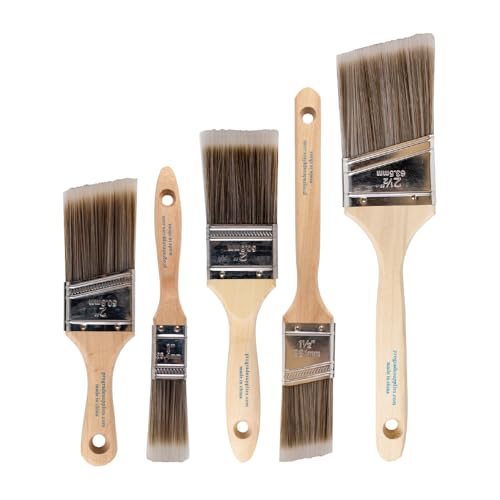
A 2- to 2 1/2-inch angled sash brush works well for most furniture. A 1-inch brush is useful around rails, corners, and hardware openings. Choose a quality synthetic-bristle brush for water-based paint. Its softer, flexible tips leave fewer ridges than a cheap stiff brush, and the bristles will not swell as natural hair can.
Before painting, gently flex the bristles and remove loose hairs. Do not load the brush more than about one-third to one-half of its bristle length. Too much paint creates sags and heavy edges; too little forces you to scrub the surface, which also leaves marks. Keep a wet edge by painting adjoining areas before the previous section becomes tacky.
Paint Without Brush Marks
Work in a dust-free room between roughly 60 and 80 degrees Fahrenheit. Avoid direct sunlight, strong fans, and very low humidity. Hot, dry conditions shorten the open time and make the paint drag. Cold conditions slow drying and can leave the coating soft for much longer.
Stir the paint gently rather than shaking it, which can add bubbles. Pour a small amount into a separate container. On flat surfaces, apply the paint with the grain using long, light strokes. Then make one final “lay-off” stroke from wet to wet with the tip of the brush. Do not keep brushing once the paint starts to set.
Paint rails, edges, and vertical parts before broad panels when possible. For a tabletop, brush the edges first, then paint the top in manageable sections. Keep each coat thin. Two or three thin coats look smoother and cure more reliably than one thick coat.
Let the first coat dry for the full label time, not merely until it feels dry. Lightly sand raised fibers or dust nibs with 320- or 400-grit paper, then remove the dust. Do not aggressively sand between coats or you may expose the primer and create uneven color. Apply the next coat using the same light pressure.
Fix Common Problems
Visible ridges usually come from stiff bristles, thick paint, or brushing after the surface has begun to tack. Let the coat harden, sand it level with 220 or 320 grit, remove the dust, and apply a thinner coat. Do not try to erase a drying brush mark by repeatedly brushing over it.
Runs occur when paint collects at edges, inside corners, or beneath a tabletop. Check the piece 10 to 20 minutes after painting and brush out fresh runs lightly. Once a run has dried, sanding is safer than cutting it with a scraper, which can gouge soft wood.
For smoother work, a small amount of manufacturer-approved extender can increase open time, but follow the paint label. Over-thinning with water weakens hiding and can cause sagging. If you prefer a softer, less demanding coating, synthetic furniture paint brushes are a better investment than buying an oversized brush and trying to force it through tight areas.
Curing and Protection
Reinstall hardware only after the final coat is firm enough not to mark under pressure. Use felt pads under objects and avoid washing or heavy use until the paint has cured. A clear water-based topcoat can add protection to a desk or tabletop, but it may slightly change the sheen and can introduce bubbles or lap marks. If the paint is already rated for furniture use, skipping the topcoat is often the cheaper and cleaner option.


0 Comments