Our Top Picks


What's inside
As an Amazon Associate I earn from qualifying purchases. This post may contain affiliate links at no extra cost to you.
The ten listings here, all for staining pine, aim at one problem: pine drinks stain unevenly, and a pre-stain conditioner is the usual fix. For most single projects, a quart of a conditioner that matches your stain base is the sensible buy, and a half pint suits a small shelf or box. Some listings are multi-packs, bundles or kits with stain, and one is a UK-oriented bottle, so the details below flag what to check. If you are unsure, choose a quart that matches your stain base and do a scrap trial first. Facts come from listing titles and published information.
Pick by project size and stain base
As an Amazon Associate we earn from qualifying purchases at no extra cost to you.


- Small shelf or box: Minwax 13407 Clear, 1/2 Pint.
- Water-based stain on pine: Minwax Water-Based, 1 Quart.
- Whole-room project, oil-based: Minwax 61500 Oil-Based, 4-Pack of 1 Quart.
- One large project, one can: Varathane Quart or Minwax Gallon (check base).
- Stain plus conditioner in one box: Furniture Clinic kit or the Minwax bundle.
All ten at a glance
| Model | Key point from title | Best for |
|---|---|---|
| Minwax 13407 Clear, 1/2 Pint | Clear, half pint | Small projects |
| Varathane Pre-Stain Wood Conditioner, Quart | Softwoods, anti-blotching claims | Mid-size pine jobs |
| Minwax Pre-Stain, Clear, 1 Gallon | Gallon size | Large or repeat work |
| Minwax 618514444 Water-Based, Quart | Water-based | Water-based stains |
| General Finishes Oil Based, 1/2 Pint | Oil-based, half pint | Oil-based, small piece |
| Minwax 61500 Oil-Based, 4-Pack Quarts | Four quarts | Bulk oil-based use |
| Minwax 134074444, 3 Pack Half Pints | Three half pints | Several small projects |
| Rustins Quick Dry, 250ml | Quick dry, 8.5 fl oz | UK-style supply, check fit |
| Minwax 13407 plus Special Walnut Stain | Two half-pint cans | One-off walnut project |
| Furniture Clinic Antique Pine Stain + Conditioner | Water-based kit | Small indoor or outdoor pieces |
The ten listings
Minwax 13407 Clear Pre-Stain Wood Conditioner, 1/2 Pint
A half-pint can of clear pre-stain conditioner. The title does not state the base, so confirm on the listing whether it is oil- or water-based before pairing it with your stain. A half pint suits a bookshelf, a small chest or a pair of boards, and it keeps waste low if you only finish one thing a year. Use a brush or rag as the label directs and wipe off the excess instead of letting it pool. Check the listing for the base and the stain pairing before ordering.
- Pros: Small size; clear and simple.
- Cons: Runs out on large surfaces; base not in the title.
Who it’s for: One small pine project.
Varathane Pre-Stain Wood Conditioner, Quart
The title states it promotes even color absorption and prevents blotching and streaking on softwoods and porous woods, which describes pine well. A quart handles several shelves or a pine table with a bit left over. As with others, confirm the base from the listing and keep your stain from the same line when possible. Because softwoods are named in the title, it fits pine, fir and similar species that often blotch. It is a middle-sized buy that suits a few pieces of furniture.
- Pros: Softwood use named in the title; versatile quart size.
- Cons: Base and drying window must be read from the label.
Who it’s for: Mid-size pine furniture jobs.
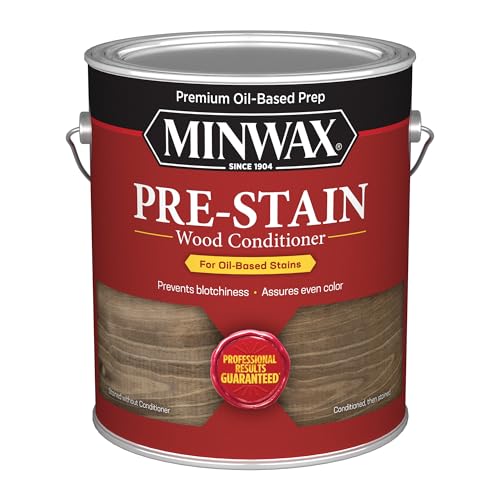
Minwax Pre-Stain Wood Conditioner, Clear, 1 Gallon
A gallon of clear conditioner is far more than most homes use, and conditioner can lose usefulness once opened and stored for long. It suits a shop finishing lots of pine, a trim job through a whole house or a class. Check the base on the listing, and decant into smaller containers if you expect to keep it between projects, and fill them to the top so less air sits above the liquid.
- Pros: Lots of product for large jobs; fewer purchases.
- Cons: Heavy and wasteful for small projects; base not stated in title.
Who it’s for: Shops, trim carpenters and big pine builds.
Minwax 618514444 Water-Based Pre-Stain Wood Conditioner, 1 Quart, Clear
This one states water-based, so it pairs naturally with a water-based stain. Water can raise the grain on pine, so expect a light sanding after it dries and before staining, if the label allows. Water-based products clean up easily and have a milder smell, which helps in a basement shop. Allow the full dry time on the label before sanding or staining, and do not rush it on a humid day. Clean brushes with water right after use.
- Pros: Water cleanup; mild odor.
- Cons: May raise grain; not meant for every stain base.
Who it’s for: Water-based staining projects indoors.
General Finishes Oil Based Pre-Stain Wood Conditioner, 1/2 Pint
An oil-based conditioner from a brand better known for stains and topcoats. A half pint is enough for a small piece. It makes most sense when your stain is also oil-based, because oil-based products are usually matched to oil-based stains. Ventilate the room and follow rag disposal directions on the label. If you already own a General Finishes stain, this is the obvious pairing to check first. Brands do not always cross over cleanly, so read both labels.
- Pros: Oil-based match for oil stains; small size.
- Cons: Small can; slower dry and stronger smell.
Who it’s for: Oil-stain users with a single small project.
4-Pack of 1 Qt Minwax 61500 Clear Pre-Stain Oil-Based Wood Conditioner
Four quarts of oil-based conditioner. The pack is cost-effective only if you will use it up, for example finishing built-in pine shelving in several rooms or repeat furniture builds. Store it sealed and upright, and use the oldest can first. For a one-off project, this is too much. Pencil the date on each can as you open it so you can rotate them in order. Unopened cans store well in a cool, dry spot away from freezing.
- Pros: Oil-based, four quarts at once.
- Cons: Overkill for most homeowners; storage and shelf life.
Who it’s for: Repeat builders and large oil-based jobs.
Minwax 134074444 Pre-Stain Wood Conditioner, 1/2 Pint, 3 Pack
Three half pints of the same family as the 13407. It is a tidy way to finish a few small projects without opening a big can. Because the title omits the base, check that line on the listing, and make sure the stain you own matches the base. Sealed cans also keep their contents fresh longer than one big can opened repeatedly. Compare the unit price per ounce against buying single half pints.
- Pros: Sealed small cans stay fresh; good for several little jobs.
- Cons: Unit price may be higher than a quart; base not stated.
Who it’s for: Makers doing small pine boxes, frames or crafts.
Rustins Quick Dry Pre-Stain Wood Conditioner, 250ml (8.5 Fl. Oz.)
A UK-brand conditioner in a 250ml bottle, described as quick dry. The title does not state the base, and compatibility with American stains is not guaranteed, so use it with a stain you have checked against the manufacturer’s guidance. It is the least obvious pick for a US shop, but could suit anyone already using Rustins finishes. Check the label for the intended stain type and drying window before use, and confirm that the bottle size is enough for your surface area. Import-style labels may use different wording, so read carefully.
- Pros: Quick-dry claim; small bottle for a small piece.
- Cons: Compatibility with US stains unclear; limited coverage.
Who it’s for: Rustins users or those who have confirmed compatibility.
Bundle: Minwax 13407 Conditioner and Minwax 222404444 Special Walnut Stain, Half Pints
This third-party bundle lists one half-pint can of the 13407 conditioner and one half-pint of Special Walnut stain. The title does not state the base of either, so check that they match. Walnut is a mid-dark brown name, and pine can look quite different from the swatch, so sample first. Third-party bundles can change in contents or seller, so check what arrives before opening. It is a convenient pairing for a small project when you already want that color.
- Pros: Conditioner and stain in one purchase.
- Cons: Color is locked in; bundle from a third party, so check seller and contents.
Who it’s for: A single small project in a walnut tone.
Furniture Clinic Antique Pine Wood Stain 8.5oz + 250ml Pre-Stain Wood Conditioner
A kit with a water-based stain in the color Antique Pine and a 250ml conditioner. “Antique Pine” is a shade name, not a statement about the wood. The title lists fast drying, low odor, non-toxic and indoor and outdoor use, which are the maker’s claims, so read the label for specifics. Because the stain and conditioner come together, compatibility is less of a worry. The volumes are small, so this is a better fit for a stool, a frame or a repair than for a bookcase. Use the included stain’s instructions for application order.
- Pros: Matched pair; low-odor claims.
- Cons: Small volumes; one color only.
Who it’s for: Small furniture touch-ups or craft pieces.
How we picked these
We began with the brief’s real conditioner listings and grouped them by base, size and whether they came in packs or kits. Notes rely on listing titles, published specifications, manufacturer documentation and buyer reviews, and missing details are flagged as items to check. Nobody on the team used or measured these units. This is a buying guide to help match product to project, not a performance ranking.
Why pine blotches and what helps
The wood itself
Pine has bands of soft and hard growth, resin pockets and knots, and the soft areas soak up more stain. End grain drinks the most. Conditioner partly seals those thirsty spots so color goes on more evenly. It does not remove knots or sap, so seal heavy knots and sand properly first. Our note on sanding between stain and topcoat covers the later steps.
Match base, then respect the window
Choose a conditioner whose base matches the stain, then watch the time window on the label. Staining too late or too early can change the result, because a conditioner that has fully dried may block color while a very wet one can dilute it. Wipe off any excess before it dries, and keep the stain open and stirred so you do not lose minutes opening cans.
Choose your topcoat after the color
Once stain is dry, a clear coat protects it. Dark stains and clear coats interact, so see how to select a clear topcoat for a dark wood stain before you buy. Oil-based clear coats can also warm the tone of pine over time, so factor that in when you pick a light stain.
Surface prep and application
Sand with the grit the stain’s label recommends and stop there, since over-sanding closes the pores and reduces absorption. Vacuum the dust, wipe with a lightly damp or dry cloth as directed, and apply conditioner with the grain, giving end grain extra attention. Wipe off any excess before it dries. Then stain within the label’s window, and work in manageable sections so you can wipe the stain evenly.
Worked example: a three-zone scrap trial
Take an offcut of the same pine and mark three zones with pencil. Zone 1: stain only. Zone 2: conditioner, then stain within the label’s window. Zone 3: conditioner, then a thin coat of gel stain. Let it dry overnight in the room where the real piece will be finished, compare in daylight and under your lamps, and pick the zone you like. That single board settles the choice and tells you how much product to buy.
Mistakes buyers make
People buy the wrong base for their stain, or buy a gallon for a shelf. Others skip the offcut trial, wipe the conditioner on unevenly, or forget the time window. Another is assuming any conditioner cures knots and end grain. Finally, some buy bundles without checking the stain color, and cannot return opened cans. A quieter mistake is sanding too fine before conditioning, which makes the wood accept less of everything you apply. Ventilate, and follow the label for oily rags.
Verdict
For most pine projects, choose by base first, then by size. A quart that matches your stain is the safe default, a half pint suits tiny jobs, and the 4-pack or gallon only suit heavy users. Use the kit or bundle if you also need that exact color, and do the scrap-board trial before any real board gets stained. A few minutes with an offcut costs less than stripping a blotchy tabletop.
Related guides
- How To Strip Old Varnish From Furniture Without Sanding
- Random Orbital Sanders For Furniture Refinishing
- How Long To Wait Between Coats Of Polycrylic
Frequently asked questions
Does pine really need a pre-stain conditioner?
Pine is a softwood with uneven density, so stain can soak into soft areas and sit on harder ones, producing a patchy look. A conditioner evens out absorption, which is why makers market it for softwoods. It is optional if you paint, use a very light stain or like a rustic blotchy look, but it is a cheap insurance step for darker stains.
Should the conditioner match the stain base?
Generally yes. Oil-based conditioners are made to work under oil-based stains, and water-based conditioners under water-based stains, but the label is the final word. Some products allow crossover, others do not. If you are unsure, buy the conditioner and stain from the same line and read the compatibility notes on both cans.
How long can the wait between conditioner and stain be?
Each product has its own window, printed on the label, and it differs between oil-based and water-based types. Staining too early or too late can change how much color the wood accepts. Set a timer, note when you wiped off the conditioner, and keep the stain ready so you finish the whole piece inside that window.
Is a gel stain an alternative to a conditioner?
Many finishers use gel stain on pine because its thicker body sits more on the surface and soaks in less. It reduces blotching without a separate step, but it also hides more grain and can look painted at heavy coats. Conditioner plus a regular stain gives a more natural grain look. Try both on scrap to compare.
Are the multi-packs and bundles worth it?
Multi-packs make sense only if you will use the product before it ages, such as for a whole room of shelving. Bundles that add a stain can be handy, but the color is fixed, so check it suits your project. Compare the unit price per ounce against single cans on the live listings before choosing a pack.



0 Comments