What's inside
- Top 3 Picks
- Quick Comparison
- How We Chose
- 1. NORTIV 8 Men’s Insulated Waterproof Snow Boot – Best for Everyday Winter Wear
- 2. HOBIBEAR Women’s Waterproof Mid-Calf Snow Boot – Best for Women’s Mid-Calf Warmth
- 3. SHIBEVER Women’s Ankle Snow Boot with Side Zipper – Best for Short Winter Walks
- 4. NORTIV 8 Men’s Tundra Hiking Winter Boot – Best for Hiking, Hunting and Work
- 5. Chooka Women’s Waterproof Plush Chelsea Bootie – Best for Wet City Days
- 6. OUTJET Men’s Insulated Snow Boot with 200g Thinsulate – Best Overall for Cold Work and Winter Walks
- 7. OUTJET Men’s Lightweight Waterproof Snow Boot – Best for Light, Comfortable Winter Walking
- 8. SHIBEVER Women’s Ankle Snow Boot, Second Listing – Best Alternate Option for Ankle-Boot Fans
- How to Choose
- Frequently Asked Questions
- Which Boot Should You Buy
- Top 3 Picks
- Quick Comparison
- How We Chose
- 1. NORTIV 8 Men’s Insulated Waterproof Snow Boot – Best for Everyday Winter Wear
- 2. HOBIBEAR Women’s Waterproof Mid-Calf Snow Boot – Best for Women’s Mid-Calf Warmth
- 3. SHIBEVER Women’s Ankle Snow Boot with Side Zipper – Best for Short Winter Walks
- 4. NORTIV 8 Men’s Tundra Hiking Winter Boot – Best for Hiking, Hunting and Work
- 5. Chooka Women’s Waterproof Plush Chelsea Bootie – Best for Wet City Days
- 6. OUTJET Men’s Insulated Snow Boot with 200g Thinsulate – Best Overall for Cold Work and Winter Walks
- 7. OUTJET Men’s Lightweight Waterproof Snow Boot – Best for Light, Comfortable Winter Walking
- 8. SHIBEVER Women’s Ankle Snow Boot, Second Listing – Best Alternate Option for Ankle-Boot Fans
- How to Choose
- Frequently Asked Questions
- Which Boot Should You Buy
As an Amazon Associate I earn from qualifying purchases. This post may contain affiliate links at no extra cost to you.
The best waterproof winter boot on this list is the OUTJET men’s insulated snow boot with 200g 3M Thinsulate, because it is the only listing that pairs waterproof construction with a named insulation weight, a stated cold-protection figure and a slip-resistant sole. It suits people who commute on slushy sidewalks, shovel, walk dogs or work outside in mixed winter weather. Women shopping for lighter, everyday warmth will find better fits in the HOBIBEAR mid-calf boot or the SHIBEVER ankle styles, while hikers and hunters should look at the NORTIV 8 Tundra. This guide explains what waterproof really means for footwear, how insulation labels work, why every temperature figure is a manufacturer claim, and how to size boots for wide calves, thick socks and plus-size fits. Eight boots are compared below, followed by a decision matrix, a worked calf-fit example and answers to the questions shoppers ask most.
Top 3 Picks
Best overall: OUTJET Men’s Insulated Waterproof Snow Boot (200g Thinsulate). The listing names waterproof construction, 200g 3M Thinsulate insulation, a -25°F cold-protection claim and a slip-resistant sole for outdoor work and winter hiking. Few boots here give that many concrete details, which makes comparison easier.
Best for women’s mid-calf warmth: HOBIBEAR Women’s Waterproof Mid-Calf Snow Boot. A lightweight, faux fur lined mid-calf boot that covers more of the leg than an ankle bootie. It is the better choice for snowy sidewalks and deeper slush, with the caveat that mid-calf boots need a calf-fit check.
Best for hiking and work: NORTIV 8 Men’s Waterproof Hiking Winter Snow Boot (Tundra). The listing positions this insulated boot for hunting, skiing and work, which suggests a sturdier build than the casual fashion-oriented styles. It is the pick for anyone who stands, walks and climbs in the cold.
Quick Comparison
| Product | Best for | Key specs (from the listing name) |
|---|---|---|
| NORTIV 8 Men’s Insulated Winter Snow Boot | Everyday winter wear for men | Waterproof, insulated, fur liner, tall lightweight outdoor design |
| HOBIBEAR Women’s Mid-Calf Snow Boot | Women’s snowy sidewalks and errands | Waterproof, lightweight, faux fur lined, mid-calf height |
| SHIBEVER Women’s Ankle Snow Boot (zipper style) | Short winter walks and city use | Waterproof, fur-lined, side zipper, anti-slip sole, ankle height |
| NORTIV 8 Men’s Tundra Hiking Boot | Hiking, hunting, skiing and work | Waterproof, insulated construction, hiking-oriented design |
| Chooka Women’s Plush Chelsea Bootie | Wet city days and rain-plus-chill weather | Waterproof Chelsea style, plush interior, ankle height |
| OUTJET Men’s Insulated Snow Boot | Cold work and winter hiking | Waterproof, 200g 3M Thinsulate, -25°F claim, slip resistant |
| OUTJET Men’s Lightweight Snow Boot | Light, comfortable winter walking | Waterproof, 200g 3M Thinsulate, faux fur lining, slip resistant, lightweight |
| SHIBEVER Women’s Ankle Snow Boot (second listing) | Alternate color or size availability | Waterproof, fur-lined, ankle height, anti-slip, side zipper |
How We Chose
This guide is based on research into each listing and on standard knowledge about how winter boots are built, not on wearing or measuring the boots ourselves. We looked at the listing names to see what each boot claims: waterproof construction, insulation type, lining, height, closure and outsole grip. We then checked how the category works, including what the term waterproof means for footwear, how insulation weight in grams relates to warmth and activity, and why temperature figures are manufacturer claims rather than shared standards. We gave extra weight to listings that name concrete specs and to boot shapes that suit common fit challenges, such as wide calves, plus-size legs and thick winter socks. Where a listing does not state a spec, we describe the spec class and recommend that you confirm details on the product page, including shaft circumference and sizing charts.
1. NORTIV 8 Men’s Insulated Waterproof Snow Boot – Best for Everyday Winter Wear
As an Amazon Associate we earn from qualifying purchases at no extra cost to you.

This NORTIV 8 listing is for a men’s waterproof winter snow boot that is insulated, with a fur liner and a tall, lightweight outdoor design. The model reference in the listing points to a tall boot, which is the main fit consideration. A tall shaft keeps snow and slush out, but it also means calf width matters.
A fur liner increases warmth in dry cold, because the fibers trap air. The same liner is slower to dry if moisture gets inside, which is why you should air the boots out after wet days. The listing does not state a gram weight for the insulation or a temperature figure, so treat this boot as general winter-wear insulation rather than an extreme-cold design.
Key specs
- Waterproof construction per the listing
- Insulated with a fur liner
- Tall shaft, lightweight outdoor build
- Men’s sizing
- Insulation weight and temperature claim not stated in the name
Who it suits
Men who want a straightforward boot for shoveling, school pickups, short dog walks and commuting. Because it is a tall, lace-up style, it can also work for women with wide feet or wide calves who are comfortable converting to men’s sizing. As a rule of thumb, a women’s size is about one and a half sizes larger than the same men’s size, so a women’s 10 is roughly a men’s 8.5. Always check the brand’s size chart, because conversions vary.
Against the NORTIV 8 Tundra, this model is the casual, fur-lined option, while the Tundra is the hiking and work boot. Against OUTJET’s 200g Thinsulate boots, the NORTIV leaves insulation weight unspecified, so OUTJET is easier to judge on paper.
A practical detail on tall boots is the opening height relative to your pants. Wearing waterproof outer pants over the boot top, with the cuff falling outside the shaft, is the most reliable way to keep snow out of a tall boot. Tucking pants into the shaft works for fitted leggings but can feed melting snow down the leg. If you use gaiters, a tall boot with a snug collar gives them something to seal against.
Height versus snow depth. Height decides where water and snow get in. Ankle boots protect against puddles, slush and a light dusting, mid-calf boots handle several inches of snow, and tall boots such as this one cover most sidewalk and trail snow. For truly deep snow, add gaiters or choose a taller boot with a snug collar. Match boot height to the deepest snow you expect to cross regularly, then add a couple of inches of margin so snow does not spill over the top as you step.
Pros
- Waterproof, insulated build with a warm fur liner
- Tall shaft keeps snow out of the boot
- Lightweight design reduces fatigue on long walks
- Lace-up closure allows adjustment around the instep and ankle
Cons
- No insulation weight or temperature figure in the listing name
- Fur liner can hold moisture if the boots get wet inside
- Tall shaft needs a calf-circumference check
- Men’s sizing only
Wear moisture-wicking socks rather than cotton. Cotton holds sweat and makes feet colder, regardless of how warm the liner is.
2. HOBIBEAR Women’s Waterproof Mid-Calf Snow Boot – Best for Women’s Mid-Calf Warmth

HOBIBEAR’s listing is for a women’s waterproof winter snow boot described as a lightweight, warm, faux fur lined mid-calf bootie, in grey with size 9 shown. Mid-calf is the hinge point of this roundup: it covers more of the leg than the ankle boots, which helps in slush and shallow snow, but it also means the shaft opening has to fit around the calf.
For many women, the shaft width on a mid-calf boot is the most common fit problem, more than foot length. A boot that fits the foot perfectly can still pinch or gape at the calf, and a snug shaft can cut off circulation, which makes the feet colder. Look in the product details for the shaft circumference or opening measurement. If the listing gives none, use customer questions or the brand’s size guide as a cross-check.
Key specs
| Feature | Detail |
|---|---|
| Height | Mid-calf |
| Lining | Faux fur |
| Weather protection | Waterproof per the listing |
| Weight class | Lightweight |
| Fit | Women’s, size 9 shown |
Who it suits
This is a good option for women who want more coverage than an ankle bootie without a heavy hiking boot. The lightweight claim helps with all-day wear, and the mid-calf height works well with leggings or jeans tucked in. For plus-size or wide-calf wearers, the key is to measure first. Wrap a soft tape around the widest part of the calf while wearing the pants or leggings you plan to wear, add about half an inch to an inch for ease, and compare that to the shaft measurement. If the boot is too narrow, move to an ankle style such as the SHIBEVER, which avoids the calf issue entirely.
Next to the SHIBEVER ankle boots, HOBIBEAR offers more height and more splash protection, while SHIBEVER offers an easier on-off with its side zipper. Next to the Chooka Chelsea, HOBIBEAR is the more clearly winter-oriented boot.
Mid-calf boots also change how you dress the rest of the leg. Tapered leggings and slim jeans tuck in neatly, while wide-leg pants bunch inside the shaft and add bulk at the calf, which makes a tight shaft tighter. If you wear thick tights or thermal leggings, include them in your calf measurement. A faux fur collar can also add visual and physical bulk at the top of the boot, so look at whether the lining sits inside the shaft or folds over it.
One more fit check for mid-calf boots is the top edge. A boot that stops mid-calf can press on the widest part of the muscle, which is uncomfortable for long walks. Try sitting and climbing stairs in them: the shaft should flex with the leg rather than dig in behind the knee or at the calf. A faux fur trim that sits inside the shaft can add bulk there, so measure with it in mind.
Pros
- Mid-calf height gives more protection from slush than ankle boots
- Faux fur lining adds warmth in dry cold
- Lightweight construction suits all-day wear
- Waterproof per the listing
Cons
- Calf width can be an issue for wide or muscular calves
- No insulation gram weight or temperature claim in the name
- Faux fur lining takes longer to dry when wet inside
- Fit details must be confirmed on the size chart
If you are between sizes, remember that a boot with too much extra room lets cold air pool around the toes, while a boot that is too tight compresses the lining and reduces warmth.
3. SHIBEVER Women’s Ankle Snow Boot with Side Zipper – Best for Short Winter Walks
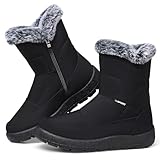
The SHIBEVER listing describes a women’s winter snow boot with a waterproof, fur-lined ankle bootie design, an anti-slip sole and a side zipper, intended for cold-weather outdoor walking in black, size 8 shown. Ankle height is its defining trait. It is easy to get into and out of, and it sidesteps calf-fit problems completely, which is a real advantage for women with wide or muscular calves or for plus-size wearers.
The side zipper deserves a closer look. A zipper makes the boot easy to put on, especially when you have a wide foot or a high instep, because the opening is larger than a pull-on boot. The trade-off is that a zipper is a potential entry point for water, so confirm on the product page that the zipper is covered by a gusset or storm flap. Waterproof claims on ankle boots apply to the lower part of the boot; snow deeper than the top of the boot will still get in.
Key specs
- Ankle height
- Waterproof and fur-lined per the listing
- Anti-slip sole
- Side zipper entry
- Women’s sizing, size 8 shown
Who it suits
These suit short, practical winter errands: walking to the car, shoveling a small walkway, standing at a bus stop. They are not designed for deep snow. For anyone who finds mid-calf boots too tight at the calf, an ankle boot with a zipper is the easiest workaround, because there is no shaft to size. Wear a thick winter sock with leggings and make sure the cuff of your pants falls over the boot top so that snow cannot slip in.
Compared with the second SHIBEVER listing in this roundup, this one is the primary option; the two share very similar listing wording, so differences in color, size range or availability are what to check. Compared with HOBIBEAR, SHIBEVER is easier to put on and avoids calf fit questions but offers less coverage.
Another point for ankle boots is sock height. A low sock leaves a gap of bare skin at the ankle between the boot top and your pant hem, which feels cold in wind. Choose a crew or knee-high sock, or wear pants long enough to cover the gap. Women who choose zippered ankle boots for comfort around wide calves still benefit from a close-fitting pant cuff so snow does not enter at the top.
Care between wears. Winter boots last several seasons when they are cleaned and dried after use. At season’s end, brush off salt, wipe the interior, remove the insoles and let everything dry completely. Store the pair in a cool, dry place away from direct heat, with loose paper in the shaft to hold the shape. Check seams, zippers and the outsole edge before the next winter, because small separations are easier to fix early than large ones.
Pros
- Ankle design avoids calf-width problems
- Side zipper makes it easy to get on and off
- Waterproof and fur-lined per the listing
- Anti-slip sole for walking on wet surfaces
Cons
- Ankle height offers limited protection in deep snow
- Zipper placement should be checked for a storm flap
- No insulation weight or temperature claim in the name
- Fur lining is slower to dry when damp
Treat these as a snow-day shoe, not a technical hiking boot. A sock that reaches above the boot line also keeps ankles warm.
4. NORTIV 8 Men’s Tundra Hiking Winter Boot – Best for Hiking, Hunting and Work
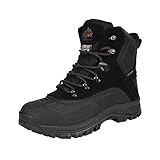
This NORTIV 8 listing is titled as a men’s waterproof hiking winter snow boot with insulated construction, aimed at hunting, skiing and work. That intended-use language points to a sturdier boot than the casual fur-lined models. As with the other NORTIV, the title does not give an insulation weight or a temperature claim, so check the product page for specifics.
The most important thing to understand for a boot like this is the difference between waterproof and water resistant. Water resistant footwear uses treated materials that shed light moisture and will eventually soak through under sustained exposure. Waterproof footwear adds a barrier, often a membrane or a sealed construction with a waterproof lower shell, so water does not pass through the material. Even then, the boot is only waterproof up to its collar; water that goes over the top is not blocked. The listing says waterproof, which is the claim you want for slush and wet snow.
Key specs
- Waterproof, insulated construction per the listing
- Hiking and work orientation
- Men’s sizing
- Insulation weight and temperature claim not stated in the name
Who it suits
People who spend long periods outdoors, whether walking a trail, working on a site or sitting in a blind. A hiking-oriented boot should have a firmer midsole and a more aggressive outsole than a fashion boot, though you should confirm the sole details on the product page. For larger or plus-size wearers, a hiking boot’s lace-up design allows you to open the shaft wide and tighten only where you need to, which gives more adjustability than a pull-on boot. Women with wide feet or calves who are comfortable with men’s sizing may find this one workable, but check the shaft circumference first.
Versus the first NORTIV 8, the Tundra is the more rugged option. Versus the OUTJET boots, the NORTIV offers a stronger hiking identity but fewer stated insulation details.
Hiking-style boots usually reward a short break-in period. Wear them around the house with the socks you plan to use, and walk a short distance before committing to a long day. Look for pressure points at the heel, the sides of the forefoot and the top of the instep, where the laces cross. Lacing technique helps: skip an eyelet over a sore spot, or use a heel-lock lacing pattern if your heel lifts. A properly laced boot supports the ankle without squeezing the circulation that keeps toes warm.
Socks and insoles. Boots are only half of the system. A moisture-wicking base sock of merino wool or a synthetic blend moves sweat away from the skin, while cotton soaks up moisture and loses its insulating value. A mid-weight sock gives warmth without crowding the boot; a very thick sock compresses the lining and restricts circulation. For long standing days, add an insulating insole and carry a dry spare pair of socks.
Pros
- Hiking and work positioning suggests sturdier construction
- Waterproof and insulated per the listing
- Lace-up fit allows adjustment for thick socks and wide feet
- Suitable for a range of cold-weather activities
Cons
- Insulation weight and temperature claim not given in the name
- Heavier than casual snow boots, typically
- Men’s sizing only
- Break-in time may be needed for hiking-style boots
For long hikes, bring a spare pair of dry socks. Wet socks, not cold air, are what usually make feet cold.
5. Chooka Women’s Waterproof Plush Chelsea Bootie – Best for Wet City Days
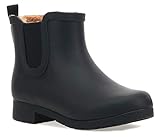
The Chooka listing is for a women’s waterproof plush Chelsea bootie in the Delridge style, black, size 10 shown. Chooka is known for rain footwear, and the listing sits in a rain-footwear category, which tells you how to use it: this is a waterproof boot for wet, chilly days, not a deep-snow or extreme-cold boot. The word plush points to a soft interior, but the listing name does not state an insulation weight or a temperature figure.
The Chelsea design is a pull-on ankle boot with elastic side panels. For many plus-size and wide-calf wearers, that is a feature: with no shaft to fit around the calf, the only dimensions that matter are foot length, width and ankle opening. The elastic gores give flexibility at the ankle, which can help with wide feet or swelling over a long day. If you prefer a boot that you can slip on without lacing or zipping, this is the easiest style on the list.
Key specs
- Waterproof per the listing
- Plush Chelsea ankle bootie
- Women’s sizing, black, size 10 shown
- Rain-footwear category
- Insulation weight and temperature claim not stated
Who it suits
Women who deal with slush, rain and cold but not heavy snow: office commutes, school drop-offs, errands. Ankle boots of this type also pair with skirts, dresses and cropped pants better than a mid-calf snow boot. If the temperature is well below freezing for long periods, pair them with a wool sock and keep exposure short, or move up to a boot with named insulation.
Compared with the SHIBEVER ankle boots, Chooka is the rain-oriented style with a pull-on Chelsea design, while SHIBEVER adds a zipper and a fur-lined, snow-oriented description. Compared with HOBIBEAR, Chooka offers less height and coverage but easier fit for wide calves.
Pull-on Chelsea boots reward a careful look at the ankle opening and the width of the elastic panels. If your ankle is thick or swells during the day, try the boots in the afternoon and check that the elastic is not digging in. For slush season, a waterproofing spray on the exterior, if the material allows it, helps the surface shed water, though the boot’s own waterproof construction remains the main defense. Keep a pair of warmer socks in your bag, since a plush interior does not replace real cold-weather insulation.
Sizing a Chelsea boot is mostly about the instep and heel. Because there are no laces to adjust, a boot that is slightly loose at the heel will rub, and one that is slightly tight at the instep will pinch. Try them with the socks you will wear and walk on a hard floor, then check that your heel stays down. If you are between sizes, the half size that keeps the heel in place usually wins.
Pros
- Waterproof Chelsea shape with no calf-fit concerns
- Pull-on design with elastic side panels for easy entry
- Plush interior for comfort
- Pairs easily with everyday outfits
Cons
- Positioned as rain footwear, not deep-snow footwear
- No insulation weight or temperature claim in the name
- Ankle height lets snow in if it is deeper than the cuff
- Elastic panels can stretch over time
Check traction on icy surfaces. Smooth rubber soles that are fine on wet pavement can be slippery on packed ice, so consider strap-on ice traction devices if your commute includes frozen walkways.
6. OUTJET Men’s Insulated Snow Boot with 200g Thinsulate – Best Overall for Cold Work and Winter Walks
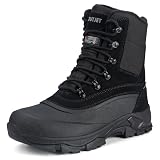
The OUTJET listing is the most specific on this page. It names waterproof construction, 200g 3M Thinsulate insulated construction, a -25°F cold-protection claim and a slip-resistant sole, and it positions the boot for outdoor work and winter hiking. Those four details let you compare it against other boots in a meaningful way.
The -25°F figure is a manufacturer claim. There is no single universal standard that every brand follows for consumer snow boots, so the same number can mean different things from different makers. It also depends on how much you move: insulation traps the heat your body produces, so a person walking briskly will feel warmer than someone standing still in the same boots. The gram figure, by contrast, is the weight of insulation per square meter of material, not a thickness or a temperature. 200g sits at the lighter end of the Thinsulate range used in footwear, which is commonly matched to active use in cool to cold conditions. Standing still for hours at the very bottom of that temperature claim is unlikely to feel comfortable in any 200g boot.
Key specs
| Feature | Detail |
|---|---|
| Insulation | 200g 3M Thinsulate |
| Cold claim | -25°F (manufacturer claim) |
| Waterproofing | Waterproof per the listing |
| Outsole | Slip resistant |
| Use | Outdoor work, winter hiking |
Who it suits
Anyone who is on the move in the cold: warehouse workers, dog walkers, hikers, commuters and snow shovelers. Active use is where 200g insulation works best. For ice fishing or stand hunting, where you sit still, look for heavier insulation or add a thick wool sock and a boot-sized insulating insole. Men who need a boot with a clearly stated insulation level should start here. For women with larger feet or wide calves, men’s sizing is an option, but verify the shaft circumference.
Versus the other OUTJET listing, this one emphasizes the cold claim and work use, while the other emphasizes a lighter feel and faux fur lining. Versus the NORTIV boots, OUTJET’s named insulation weight makes it easier to judge.
Because the insulation is described in grams, you can cross-check this boot against others from the same maker or category. If a competing boot lists 400g, expect it to feel warmer for standing but potentially too warm for brisk walking. If another lists no insulation weight at all, treat it as an unknown. Knowing what you are buying is half the value of a clearly specified boot, and it lets you adjust with socks and insoles rather than guessing.
For sizing, men’s boots with a named insulation level are best tried on with your heaviest planned sock, because 200g insulation lines the upper and footbed and takes up a little room. Lace snugly across the instep and more loosely around the toes so blood flow is not restricted. If you wear orthotics, check that the insole is removable so you can swap in your own without crowding the toes.
Pros
- Named insulation weight, which most listings omit
- Waterproof with a slip-resistant outsole
- Designed for work and winter hiking
- Clear cold-weather claim to compare against
Cons
- The -25°F figure is a manufacturer claim, not a universal rating
- 200g insulation is on the lighter side for sitting still in extreme cold
- Men’s sizing only
- Shaft circumference is not in the listing name
Pair the boot with a mid-weight merino or synthetic sock and size so your toes can move. Cramming a thick sock into a snug boot reduces warmth rather than adding it.
7. OUTJET Men’s Lightweight Waterproof Snow Boot – Best for Light, Comfortable Winter Walking

This second OUTJET listing describes a men’s waterproof winter snow boot, insulated and lightweight, with 200g 3M Thinsulate, warm faux fur lining, a slip-resistant sole and comfort for outdoor walking. It uses the same insulation weight as the first OUTJET but leans on lightness and a lining description rather than a cold-protection number.
Lightweight boots matter more than they sound. Every extra ounce on the foot is lifted thousands of times over a long walk, and heavy boots tire the legs and make feet sweat. Sweat is the hidden enemy of warm feet: a boot that traps perspiration eventually leaves the lining damp and cold. A light waterproof boot with moderate insulation is often more comfortable than a heavily insulated boot for moving around town.
Key specs
- Waterproof construction per the listing
- 200g 3M Thinsulate insulation
- Warm faux fur lining
- Slip-resistant sole
- Lightweight, aimed at outdoor walking
Who it suits
Men who walk a lot in the cold but do not need a heavy work boot: city commuters, parents on the playground sideline, and shoppers. It is also a reasonable travel boot because it is less bulky to pack. Because the listing does not state a temperature claim, plan its use for typical winter days rather than extreme cold, and layer socks accordingly.
Compared with the first OUTJET, this one gives up the stated cold figure but promises a lighter feel and a fur-lined interior. Compared with the NORTIV 8 Tundra, it is the more casual, lighter option.
For everyday use, a slightly lighter boot often wins over time. The extra comfort means you are more likely to wear them for the full day without swapping into other shoes. If you will also use these for travel, remember that bulky winter boots can take up a large share of a suitcase. Wearing them on the plane or packing socks and chargers inside them saves space. Keep the insoles dry between trips to avoid odors.
Matching boot to climate. A damp, near-freezing winter with frequent slush favors waterproof construction and moderate insulation, which suits a lightweight boot like this one. A dry, deeply cold climate favors heavier insulation and taller boots with a snug collar. A changeable climate with warm afternoons and cold mornings benefits from removable insoles, because you can adjust warmth by swapping socks rather than boots. For a week away somewhere colder, one versatile boot with stated 200g insulation plus wool socks usually beats a very heavy pair.
Traction on a lightweight boot deserves a second look. Lightweight soles are often softer and thinner, which grips well on wet pavement but wears faster on gravel and salt. Rinse the outsole after salty walks, check the tread depth at the start of each season and replace the pair once the lugs are visibly worn down, because worn tread is the most common cause of slips.
Pros
- Lightweight design reduces fatigue
- Waterproof with named 200g Thinsulate insulation
- Faux fur lining adds comfort and warmth
- Slip-resistant outsole for wet pavement
Cons
- No cold-protection figure in the listing name
- Lightweight boots usually offer less ankle support than hiking boots
- Faux fur can hold moisture if the boot gets soaked inside
- Men’s sizing only
If you wear orthotics, check that the insole is removable. A good insole swap can improve both comfort and warmth.
8. SHIBEVER Women’s Ankle Snow Boot, Second Listing – Best Alternate Option for Ankle-Boot Fans
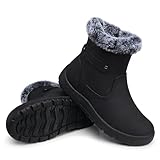
The second SHIBEVER listing uses nearly the same description as the first: a women’s winter snow boot, waterproof and fur-lined, with an ankle bootie shape, an all-day warmth claim, anti-slip sole and side zipper, black, size 8 shown. Because the wording is so close, we treat it as the same style offered under a separate listing, and the practical advice is to compare the two on color, size range, and availability.
That raises a useful buying tip: when several listings from one brand look alike, check customer questions and the size chart on each, because small differences in sizing or materials can exist. If one listing is out of your size, the other may carry it. The shared traits are what matter for your decision: ankle height, side zipper, fur lining and a grip-focused sole.
Key specs
- Ankle height with side zipper
- Waterproof and fur-lined per the listing
- Anti-slip sole
- Women’s sizing, size 8 shown
- Insulation weight and temperature claim not stated
Who it suits
Women who want an easy-on ankle boot for winter errands, who have wide calves, or who find shaft-style boots too snug. Plus-size wearers often prefer zippered ankle boots since they sidestep calf measurements entirely, leaving only foot length, width and instep height to check. For the instep, a zipper opening is a bonus: it allows a thicker sock and a roomier entry than pull-on boots allow.
Compared with the Chooka Chelsea, SHIBEVER is clearly winter-styled with fur lining, while Chooka leans on rain readiness. Compared with HOBIBEAR, you get less height but an easier fit around the calf.
If both SHIBEVER listings appeal to you, a sensible approach is to match size and color availability and read the size chart carefully on the one you pick. Many ankle boots in this style run snug at the instep when you add a thick sock. If your foot is on the wider side, a half size up often helps, but check that the heel does not slip. Keep the zipper clean and free of salt, which can make it stick over a winter.
What listing names leave out. Titles are written to be found by shoppers, so they pack in keywords. Separate specific claims, such as a named insulation weight, a closure type or a height, from generic ones such as warm, cozy or all-day, which have no measurable meaning. Six of the eight boots in this guide name no insulation weight, and none gives a shaft circumference in the title. Before buying any pair, look on the product page for shaft height and circumference, how the waterproofing is built, whether the insole is removable, outsole tread depth and the return policy.
Pros
- Ankle shape avoids calf-fit issues
- Side zipper simplifies getting the boot on and off
- Waterproof and fur-lined per the listing
- Anti-slip sole for wet and snowy sidewalks
Cons
- Limited protection from deep snow
- No stated insulation weight or temperature figure
- Near-duplicate of the first SHIBEVER listing, so differences are hard to see
- Fur lining dries slowly if damp
Use a boot dryer or stuff the boots loosely with dry newspaper overnight to pull out moisture, and never place them directly on a radiator, which can damage glue and linings.
How to Choose
Decision matrix: match your situation to a boot
| Your situation | Start with | Reason |
|---|---|---|
| Cold work, shoveling, winter hiking (men) | OUTJET Men’s Insulated Snow Boot | Named 200g Thinsulate and slip-resistant sole |
| Long hikes, hunting or ski days | NORTIV 8 Tundra | Hiking-oriented insulated build |
| City walking in the cold (men) | OUTJET Lightweight or NORTIV 8 Insulated | Lightweight and fur-lined |
| Women who want more coverage | HOBIBEAR Mid-Calf | Mid-calf height, faux fur lining |
| Wide or plus-size calves | SHIBEVER Ankle or Chooka Chelsea | No shaft to fit around the calf |
| Rain and slush more than deep snow | Chooka Chelsea | Waterproof Chelsea from a rain-footwear category |
| Easy on-and-off with a wide foot | SHIBEVER (either listing) | Side zipper entry |
Waterproof versus water resistant
Waterproof means water should not pass through the boot’s materials or seams under normal use. Water resistant means the surface sheds light moisture but will eventually soak through. Neither term is regulated for consumer footwear in a way that guarantees the same performance across brands, so rely on the construction details: a waterproof lower shell or membrane, sealed seams and a gusseted tongue. Keep in mind that waterproof stops at the collar. Water that pours over the top of a boot gets in, which is why shaft height matters in deep slush. Waterproof boots also breathe less than non-waterproof ones, so feet can sweat; moisture-wicking socks make a bigger difference than most people expect.
Insulation: grams, ratings and activity
Insulation weight in grams, as in 200g Thinsulate, describes the amount of material per square meter, not the temperature range. As a general guide, 200g suits active use in cool to cold weather, 400g suits moderate activity or mixed conditions in colder weather, and 800g or more is for standing still in the cold. Temperature figures printed on listings, including the -25°F claim in one OUTJET title, are manufacturer claims. There is no single shared standard behind them, and they assume a certain activity level and sock. Treat the figure as a rough ceiling for comfort, and expect to feel colder if you stand still, have poor circulation, or wear tight boots.
| Activity | Insulation direction | Notes |
|---|---|---|
| Brisk walking, shoveling, hiking | 200g class | Too much insulation causes sweat |
| Mixed walking and standing | Around 400g class | Choose a removable insole for flexibility |
| Sitting still outdoors | 800g class or higher | None of the boots here name this level |
Worked example: fit for a wide or plus-size calf
Imagine your calf measures 17 inches around at its widest point over your leggings. Add one inch of ease so the boot does not squeeze and restrict circulation, which gives a target of about 18 inches of shaft circumference at the calf line. Now look at the product page: if a mid-calf boot lists a 14-inch shaft circumference, it will not fit without stretch, even if the foot size is correct. A boot with a 17-inch shaft would only fit if the material stretches. In that case, an ankle boot such as the SHIBEVER or Chooka bypasses the problem. The same method works for tall boots: measure the calf, add ease, and compare. The numbers in this example are illustrative, so use your own measurements.
Foot size, width and socks
Try boots on with the socks you will wear, late in the day when feet are slightly larger. You should be able to wiggle your toes, and your heel should not lift when you walk. Do not go up multiple sizes to fit an extra-thick sock: a loose boot lets heat escape, rubs, and makes the foot work harder to stay warm. If your feet are wide, a lace-up men’s boot or a zippered ankle boot gives more room around the forefoot and instep. If you wear orthotics, confirm that the insole can be removed.
Plus-size and wide-fit guidance
Plus-size shoppers often meet three separate fit variables: calf circumference, foot width and ankle or instep volume. Treat them one at a time. For calf circumference, use the worked example above. For foot width, remember that men’s lasts are typically wider than women’s, which is why many wide-footed women choose men’s snow boots. For instep and ankle volume, zippers, elastic gores and lace-up closures are your friends because they adjust to your shape instead of forcing your shape to adjust to the boot. Avoid pull-on boots with rigid shafts if your ankle is wide or swells during the day.
It is also worth thinking about weight. Heavier boots strain the legs and hips over a long day, and cold, wet conditions already increase effort. Lightweight options such as the OUTJET Lightweight and HOBIBEAR are friendlier for long days on your feet. If you carry extra weight, a boot with a cushioned midsole and a stable, wide outsole feels more supportive on uneven ground, and a removable insole lets you swap in a supportive replacement.
Traction and sole
Slip-resistant describes a tread pattern and a rubber compound, not a guarantee on ice. Deep, widely spaced lugs shed snow, while softer rubber grips better on cold, wet surfaces. Packed ice requires either a very soft compound or a strap-on traction device. If your commute includes icy sidewalks, plan on adding traction to any of these boots.
Care and drying
Wipe off salt and road grime promptly, since salt can stain and stiffen materials. Dry boots slowly at room temperature, remove the insoles, and rotate between pairs if you can. Fur and faux fur linings hold moisture, and a damp lining feels colder than a dry one. A waterproofing spray or leather conditioner, if the material allows it, can renew water-repellent finishes on exteriors, though it will not fix a leaking seam.
Frequently Asked Questions
What is the difference between waterproof and water-resistant boots?
Waterproof boots use a barrier such as a membrane or a sealed lower shell so water does not pass through the material. Water-resistant boots shed light moisture but will soak through under sustained exposure. Either type can still let water in over the top of the collar.
Are the temperature ratings on winter boots reliable?
They are manufacturer claims, and there is no universal standard that every brand follows. They also assume you are moving around and wearing suitable socks. Use them as a rough guide, and choose heavier insulation if you will be standing still.
What does 200g Thinsulate mean?
It describes the weight of insulation per square meter of material, not a temperature or thickness. 200g is on the lighter end for footwear and works best when you are active. Standing still in extreme cold generally calls for more insulation.
How do I find boots that fit wide calves?
Measure the widest part of your calf in the clothing you plan to wear, add about an inch for ease, and compare it to the shaft circumference on the product page. If the listing does not provide the measurement, choose an ankle style such as a Chelsea or zippered ankle boot. Lace-up tall boots with wide openings can also work.
Can women wear men’s snow boots?
Yes, many do, especially for wider feet or calves. A women’s size is generally about one and a half sizes larger than the same men’s size, so a women’s 10 is roughly a men’s 8.5. Check the brand’s size chart, since conversions vary.
Should I size up for thick winter socks?
Go up half a size at most, and only if the boot feels snug with your usual sock. Too much extra room lets cold air pool around the toes and causes blisters. Your heel should stay put and your toes should have room to move.
Do fur-lined boots stay warm when wet?
A dry fur or faux fur lining traps air and feels warm. When the lining gets damp, it conducts heat away and takes a long time to dry. Keep the inside dry with moisture-wicking socks and dry the boots fully between wears.
How do I keep ice from making my boots slippery?
Choose a deep-lugged outsole and keep it clean of packed snow. On hard ice, add strap-on traction cleats, which grip far better than any rubber compound. Walk with short steps and keep your weight over your feet.
Which Boot Should You Buy
If you want one boot with the clearest stated specs, choose the OUTJET insulated model. If you want a lighter men’s boot for walking, the second OUTJET or the first NORTIV 8 fits. Hikers and hunters should start with the NORTIV 8 Tundra. Women who want more height should look at HOBIBEAR after measuring their calves, while those with wide or plus-size calves should look first at SHIBEVER or Chooka ankle styles. Whichever you pick, confirm the shaft measurement, try boots with your winter socks, treat temperature figures as claims, and keep the lining dry between wears. If you are still undecided between two pairs, choose the one with the more adjustable closure and the more clearly stated specs; those are the two traits that most reliably reduce disappointment. Buy from a seller with an easy return policy, try the boots indoors on a clean surface with your winter socks, and keep them unworn until you are sure, so that an exchange for a different size or width remains simple. Finally, plan for traction: a good pair of strap-on ice cleats turns any slip-resistant boot into a safer choice on frozen walkways, and a small tube of boot waterproofing keeps the exterior performing season after season.

0 Comments