What's inside
- Top 3 Picks
- Quick Comparison
- How We Chose
- 1. Sensi Smart Thermostat (ST55) – Best for DIY Installs with Alexa
- 2. Honeywell Home X2S – Best for Heat Pumps with Electric Backup
- 3. ecobee Smart Thermostat Essential – Best for Simple Heat Pump Systems
- 4. Sensi Lite Smart Thermostat (ST25) – Best for Value and Easy DIY
- 5. Alexa Smart Thermostat (C-Wire Model) – Best for Alexa and Ring Households
- 6. Google Nest Thermostat – Best for Simple Single-Stage Heat Pumps
- 7. Honeywell Home T5 – Best for Multi-Stage Heat Pumps
- 8. ecobee Smart Thermostat Enhanced – Best Overall for Heat Pump Homes
- Heat Pump Thermostat Basics: What Makes Them Different
- How to Choose a Smart Thermostat for a Heat Pump
- Installation and Electrical Safety
- Scheduling Strategy for Heat Pumps
- Troubleshooting Common Heat Pump Thermostat Problems
- Smart Features Worth Using on a Heat Pump
- Frequently Asked Questions
- Which Thermostat Should You Choose?
- Top 3 Picks
- Quick Comparison
- How We Chose
- 1. Sensi Smart Thermostat (ST55) – Best for DIY Installs with Alexa
- 2. Honeywell Home X2S – Best for Heat Pumps with Electric Backup
- 3. ecobee Smart Thermostat Essential – Best for Simple Heat Pump Systems
- 4. Sensi Lite Smart Thermostat (ST25) – Best for Value and Easy DIY
- 5. Alexa Smart Thermostat (C-Wire Model) – Best for Alexa and Ring Households
- 6. Google Nest Thermostat – Best for Simple Single-Stage Heat Pumps
- 7. Honeywell Home T5 – Best for Multi-Stage Heat Pumps
- 8. ecobee Smart Thermostat Enhanced – Best Overall for Heat Pump Homes
- Heat Pump Thermostat Basics: What Makes Them Different
- How to Choose a Smart Thermostat for a Heat Pump
- Installation and Electrical Safety
- Scheduling Strategy for Heat Pumps
- Troubleshooting Common Heat Pump Thermostat Problems
- Smart Features Worth Using on a Heat Pump
- Frequently Asked Questions
- Which Thermostat Should You Choose?
As an Amazon Associate I earn from qualifying purchases. This post may contain affiliate links at no extra cost to you.
The ecobee Smart Thermostat Enhanced is the best overall smart thermostat for most heat pump homes. ecobee states that it supports heat pumps with two heat stages, two cooling stages, and one auxiliary heat stage, it ships with a power extender kit for homes missing a common wire, and it works with Siri, Alexa, and Google Assistant. If your system is simpler, a single-stage heat pump with electric backup, the Sensi Lite and ecobee Essential cover the basics, while the Honeywell Home T5 is the one to read about if you run multiple compressor stages plus emergency heat. Heat pumps are fussier than furnaces and air conditioners: they need a reversing valve (O/B) wire, may need separate auxiliary and emergency heat terminals, and often punish thermostats that use aggressive schedule recovery. Check your wiring before you buy, because the best thermostat is the one that matches your equipment.
Top 3 Picks
Best overall: ecobee Smart Thermostat Enhanced. ecobee lists heat pump support up to two heat stages and two cooling stages plus one auxiliary stage, a power extender kit in the box for most homes without a common wire, and broad smart-home compatibility. That makes it the most complete answer for a modern heat pump with electric backup.
Best for value and DIY simplicity: Sensi Lite Smart Thermostat (ST25). A straightforward Wi-Fi thermostat with Alexa support and an efficiency certification, aimed at do-it-yourself installers. Sensi’s own guidance lists heat pump systems as supported, with a common wire required for heat pumps, so confirm your wiring first.
Best for multi-stage systems: Honeywell Home T5 Smart Wi-Fi Thermostat. Honeywell’s installation materials describe heat pump setups with two compressor stages and one auxiliary or emergency heat stage, plus a configurable reversing valve. Pick it when your equipment has more stages than a basic thermostat can handle, and verify details in Honeywell’s compatibility tool.
Quick Comparison
| Product | Best for | Key specs from the listing and manufacturer materials |
|---|---|---|
| Sensi Smart Thermostat (ST55) | DIY installs with Alexa | Wi-Fi, Alexa, efficiency-certified; manufacturer guidance says heat pumps need a common wire |
| Honeywell Home X2S | Heat pumps with electric backup | Wi-Fi, C-wire required; documented up to 2 heat and 1 cool on heat pumps; not for gas or oil backup |
| ecobee Smart Thermostat Essential | Simple heat pump systems | Wi-Fi, efficiency-certified; ecobee lists heat pump 2H/1C; power extender kit sold separately |
| Sensi Lite Smart Thermostat (ST25) | Value and easy DIY | Wi-Fi, Alexa, efficiency-certified, DIY install; common wire needed for heat pumps |
| Alexa Smart Thermostat (C-wire model) | Alexa and Ring households | Works with Alexa and Ring; common wire required; air-to-air and geothermal heat pumps, not dual fuel |
| Google Nest Thermostat | Simple single-stage heat pumps | Programmable Wi-Fi thermostat, charcoal finish; supports single-stage heat pump with auxiliary heat |
| Honeywell Home T5 | Multi-stage heat pumps | Wi-Fi, C-wire required; documented up to 3 heat and 2 cool on heat pump systems |
| ecobee Smart Thermostat Enhanced | Overall best | Works with Siri, Alexa, Google Assistant; 2H/2C plus one auxiliary stage; efficiency-certified |
How We Chose
We compared manufacturer specifications, installation guides, and compatibility charts for each thermostat, then filtered them through the demands that are specific to heat pumps. We looked for a clearly documented reversing valve setting (O/B), support for auxiliary and emergency heat, the number of compressor stages each model can handle, whether a common wire is needed, and how clearly the maker explains dual-fuel limits. We also weighed ease of DIY installation, smart-home integrations, efficiency certification, and display and app usability as described in the listings. We have not performed lab measurements on these thermostats, and we do not quote energy savings. Where a spec varies by hardware version, we say so and tell you to confirm the details in the manufacturer’s compatibility checker.
1. Sensi Smart Thermostat (ST55) – Best for DIY Installs with Alexa
As an Amazon Associate we earn from qualifying purchases at no extra cost to you.

The Sensi Smart Thermostat is a Wi-Fi model designed for do-it-yourself installation, with Alexa support and an efficiency certification noted in the listing. Sensi’s documentation lists heat pump systems, air source or geothermal, as supported, and the company’s guidance says heat pump setups need a common wire. In a heat pump home that is the single most important detail to confirm before you remove your old thermostat.
Who it suits: homeowners comfortable with low-voltage wiring who want a capable thermostat with app control and voice integration without a premium feature set. It is a sound choice for a single-zone, single-stage or simple heat pump, particularly if a familiar interface matters.
Key specs to know
- Wi-Fi connectivity with a mobile app
- Works with Alexa, per the listing
- efficiency-certified
- DIY installation; heat pump systems need a common wire, according to the manufacturer
- Heat pump compatibility with O/B reversing valve and auxiliary heat, subject to your wiring
The phrase DIY deserves a practical translation: you will need to turn off power at the breaker, photograph the old wiring, label each wire, and match them to the new terminals. Heat pumps usually add the O/B wire and often a separate auxiliary or emergency wire. If your photo shows wires you cannot identify, use the manufacturer’s wire picker or call a technician.
When a heat pump goes into cold weather, the thermostat decides when to call for backup heat. Look in the app for settings that govern how and when auxiliary heat is allowed, and keep them conservative at first, since electric resistance heat uses far more energy than the compressor.
Before buying, count your thermostat wires. A typical heat pump setup shows R (power), C (common), G (fan), Y or Y1 (compressor), and O/B (reversing valve), with an optional AUX or E wire for backup heat. If you can match every wire to a terminal on the new thermostat’s wiring diagram, you are in good shape. If one wire is unlabeled or you see unfamiliar colors, check the manufacturer’s online wire picker, which usually lets you enter your terminal letters and tells you whether the model is compatible. This five-minute check prevents the most common installation problem: discovering mid-job that a wire is missing.
Pros
- Straightforward DIY setup with a wire-picker guide
- Alexa support and an efficiency certification
- Documented heat pump support from the manufacturer
- Familiar, uncluttered interface
Cons
- A common wire is needed for heat pumps, so older homes may need a wiring change
- Fewer advanced sensing and scheduling features than the ecobee models
- Stage limits should be confirmed against your specific equipment
Versus the nearest alternative: The Sensi Lite is the closest relative, and the two look very similar on paper. The ST55 is the fuller-featured model of the pair, so it suits buyers who want the better-equipped option from the same family. If you only need a basic heat pump thermostat, the Lite is the leaner pick. Against the ecobee Essential, the Sensi offers a gentler learning curve but a smaller smart-home ecosystem.
2. Honeywell Home X2S – Best for Heat Pumps with Electric Backup

The Honeywell Home X2S is a Wi-Fi smart thermostat in white. Honeywell’s installation guide describes it as compatible with conventional systems up to two heat and two cool stages, and with heat pumps up to two heat and one cool, with a 24-volt common wire required. It also states that the X2S supports electric auxiliary heat only, so it should not be used when a heat pump is paired with a gas or oil furnace for backup.
Who it suits: owners of an all-electric heat pump with electric resistance backup who want a mainstream brand, a clean interface, and modern smart-home standards. Honeywell describes the thermostat as Matter-certified and compatible with the main voice platforms.
Key specs to know
- Wi-Fi smart thermostat in white
- C-wire required for power
- Heat pump support up to 2 heat and 1 cool stage, according to Honeywell’s guide
- Electric backup heat only; not for gas or oil backup with a heat pump
- Not intended for line-voltage electric baseboard heat
Wiring on a heat pump is different from a furnace and air conditioner. The guide specifies that you do not use the W terminal on heat pump installations. Auxiliary heat connects to the AUX or E terminals. If you land the wires incorrectly, the system can run the wrong mode or trigger backup heat unnecessarily, so take your time and double-check each terminal.
Because the X2S documentation is specific about backup heat, it is worth identifying what kind of backup your system has. Electric strip heaters inside the indoor air handler count as electric backup. A gas or oil furnace paired with an outdoor heat pump is a dual-fuel system and calls for a different thermostat logic, including outdoor-temperature lockouts for each heat source. If you are unsure which you have, look at the indoor unit’s data plate or ask whoever installed the equipment. Getting this answer right takes a minute and spares you from a thermostat that cannot control the furnace properly.
Pros
- Clearly documented heat pump stage limits
- Works with major voice assistants and Matter
- Established brand with extensive support documentation
- Good fit for all-electric heat pump homes
Cons
- Not suitable for dual-fuel (heat pump plus gas or oil furnace) systems
- Limited to one cooling stage on heat pumps
- Requires a common wire, with some adapter kits reported as incompatible, so verify before buying
Versus the nearest alternative: The Honeywell Home T5 is the sibling to compare. The T5’s materials describe more stages on heat pump systems, so if your equipment has two compressor stages, the T5 may be the better match, while the X2S emphasizes Matter and a newer feature set. Against the ecobee Essential, the X2S offers similar stage support, but the choice between them often comes down to app preference and smart-home ecosystem.
3. ecobee Smart Thermostat Essential – Best for Simple Heat Pump Systems

The ecobee Smart Thermostat Essential is a Wi-Fi, efficiency-certified model that sits below the Enhanced in ecobee’s lineup. ecobee lists heat pump support for up to two heat stages and one cooling stage, and notes that a power extender kit, sold separately, is available for homes without a common wire. In other words, it can handle the typical single-compressor heat pump with electric auxiliary backup, but it is not meant for elaborate multi-stage setups.
Who it suits: homeowners with a standard heat pump and air handler who want ecobee’s app and ecosystem without paying for every extra. It is a natural step up from a basic programmable thermostat when you want remote control, schedules, and energy reports.
Key specs to know
- Wi-Fi smart thermostat, efficiency-certified
- Heat pump support listed by ecobee as 2 heat and 1 cool
- Terminals include C, R, G/PEK, Y1, O/B, and W1
- Power extender kit available separately for homes without a common wire
- Accessory and remote sensor support differs from the Enhanced, so check the spec sheet
The terminal list is a quick way to judge fit. If your current thermostat has wires for Y1, O/B, G, R, and C, plus at most one auxiliary wire, the Essential will probably be happy. If you see Y2 and a separate emergency heat wire, you are moving into territory where the Enhanced or the Honeywell T5 is safer. Compatibility details vary by retailer chart, so rely on ecobee’s own checker.
The power extender kit deserves a note. Many older homes lack a common wire at the thermostat, and there are several fixes: run a new wire, repurpose an unused one, or use a kit that creates a common connection at the equipment. A kit installed at the air handler involves working with the control board, so shut off power first, label every wire, and follow the manufacturer’s diagram exactly. If that sounds unfamiliar, a technician can finish it in a short visit and confirm the heat pump settings at the same time.
Pros
- Familiar ecobee app and voice-assistant support
- Heat pump support documented by the manufacturer
- efficiency-certified
- Simple wiring for common single-compressor systems
Cons
- Power extender kit is sold separately if you lack a common wire
- One cooling stage on heat pumps
- Fewer features than the Enhanced, including accessory control
Versus the nearest alternative: The ecobee Enhanced is the obvious comparison. The Enhanced adds more stages, a bundled power extender kit, and extra smart features, while the Essential keeps the purchase simpler. If your wiring is straightforward and already includes a common wire, the Essential is a rational choice. If you are unsure about your wires or have a multi-stage system, step up to the Enhanced to avoid compatibility surprises.
4. Sensi Lite Smart Thermostat (ST25) – Best for Value and Easy DIY

The Sensi Lite is the stripped-down sibling in the Sensi family. The listing names Wi-Fi connectivity, Alexa support, DIY installation, and an efficiency certification. Sensi’s model comparison lists heat pump systems as supported and states that a common wire is needed for heat pumps, heat-only, and cool-only systems. Because it is deliberately simple, it is the model for homeowners who want remote control and scheduling without complexity.
Who it suits: owners of small homes, apartments with a dedicated system, rental properties, and anyone replacing a basic programmable thermostat. It also suits people who have limited patience for app settings and just want reliable control of a heat pump.
Key specs to know
- Wi-Fi with a mobile app and Alexa support
- efficiency-certified
- DIY installation
- Heat pump systems supported according to Sensi, with a common wire required
- Designed for straightforward single-zone systems
An easy-to-use thermostat has a particular advantage with heat pumps: fewer settings means fewer ways to accidentally trigger auxiliary heat. Many homeowners run a heat pump best by holding a steady setpoint and avoiding deep nighttime setbacks, which is easy to do on a simple interface. Keep schedules gentle, and if your thermostat allows it, limit changes to two or three degrees.
One more point for small homes: a thermostat is only as good as its location. Mount it on an interior wall, away from direct sunlight, supply registers, and kitchen heat, at roughly the height of a light switch. A thermostat in the wrong spot reads the wrong temperature and makes the heat pump run too long or too short. If your old thermostat sat in a draft or a sunny hallway, consider whether moving the wiring is practical during the swap. Even the simplest model benefits from a good location, and checking it is free.
Pros
- Simple, approachable interface
- Alexa support and an efficiency certification
- DIY-friendly installation
- Heat pump compatibility listed by the manufacturer
Cons
- A common wire is required for heat pumps
- Fewer advanced features than the ST55 or the ecobee models
- Stage and auxiliary heat details should be checked for your system
Versus the nearest alternative: The Sensi ST55 gives you a step up in features from the same brand, so choose it if you want more capability. The ecobee Essential is the more direct rival, trading a more elaborate app and ecosystem for a higher level of complexity. For a no-frills heat pump thermostat that a first-time installer can handle, the Lite is the leanest choice here. Whichever you pick, run a full heating and cooling cycle right after installation to confirm the outdoor unit responds correctly.
5. Alexa Smart Thermostat (C-Wire Model) – Best for Alexa and Ring Households

This model is a smart thermostat built around the Alexa ecosystem, and its listing states it works with Alexa and Ring and requires a common wire. The manufacturer’s help material describes compatibility with most 24-volt systems, including heat pumps that are air-to-air or geothermal, and notes that it does not work with dual-fuel setups where a heat pump is paired with a gas or oil furnace.
Who it suits: households already built around Alexa speakers, displays, and Ring devices who want a thermostat that fits that system without extra hubs. It also suits energy-conscious owners who like the idea of automatic schedules and basic energy reports in a familiar app.
Key specs to know
- Common wire required; an adapter kit may be sold separately
- Works with Alexa and Ring
- Supports many 24-volt systems, including air-to-air and geothermal heat pumps
- Not for dual-fuel systems or line-voltage baseboard heat
- Stage count is not spelled out in the listing, so confirm with the compatibility checker
With a heat pump, one practical setting is the O/B behavior. Reversing valves can be energized in cooling or in heating depending on the brand, and a thermostat has to be configured to match. If your system blows cool air in heating mode after installation, the cause is often the O/B setting rather than a faulty unit. Check the app’s installation settings and your equipment manual before calling for service.
If you do buy this model, plan the common wire before opening the box. Without it, the display stays blank, according to the manufacturer’s help material, and the thermostat cannot power on. Some homeowners find an unused wire in the bundle behind the old thermostat, and others use a separate adapter kit. Whatever approach you take, switch the breaker off at the air handler before touching any wiring. Low-voltage thermostat wiring is far safer than household wiring, but shorting a transformer can still blow a small fuse on the control board.
Pros
- Tight integration with Alexa and Ring
- Documented support for common heat pump types
- DIY installation with guided steps
Cons
- Common wire required
- Not suitable for dual-fuel systems
- Less appealing if you rely on Apple Home or Google Home
Versus the nearest alternative: The Google Nest Thermostat is the closest rival in the sense that each fits best inside its own ecosystem. If your home runs on Alexa, this one is the natural fit. If you prefer Google Home, Nest wins. Against the ecobee Enhanced, you give up the broader assistant support and stage coverage in exchange for tighter Alexa integration. Because the listing does not spell out a stage count, read the manufacturer’s compatibility page for your equipment before ordering.
6. Google Nest Thermostat – Best for Simple Single-Stage Heat Pumps

The Google Nest Thermostat in charcoal is a programmable Wi-Fi thermostat designed to be approachable. Google’s compatibility documentation for the Nest Thermostat family indicates support for a single-stage heat pump with auxiliary heat through its multipurpose O/B terminal, but it does not list support for two-stage heat pumps; that capability is shown under the Nest Learning Thermostat line instead. That distinction is the central fact for any heat pump owner considering this model.
Who it suits: owners of a single-stage heat pump and air handler, particularly in homes that already use Google Home. It is a good fit for households that value a clean, minimal interface and a thermostat that is easy for everyone, including guests, to understand.
Key specs to know
- Programmable Wi-Fi thermostat in a charcoal finish
- Supports single-stage heat pumps with auxiliary heat, according to Google’s compatibility table
- Does not list two-stage heat pump support
- Google says many systems work without a common wire, though some need a common wire or a power connector, so run the compatibility checker
- Integrates with Google Home
The common wire question is worth a second look. Google states that Nest thermostats are engineered to draw little power, which means many systems do not need a C wire, but heat pumps are among the equipment types where installers often add a common wire or a power connector. If your wiring is marginal, a thermostat that steals power from other wires can cause erratic behavior, such as the system cycling when it should not. When in doubt, ask a technician or use Google’s online checker.
A word on system modes. A heat pump thermostat generally offers heat, cool, auto changeover, and sometimes emergency heat. Emergency heat bypasses the compressor and relies on electric resistance elements, so it should be used when the outdoor unit is not working, not as a daily setting. Google also documents a Heat Pump Balance feature for systems with a heat pump and auxiliary heat, which lets you favor efficiency or comfort. Read how it works in the app before enabling it, and watch how often the backup elements turn on during the first cold week.
Pros
- Clean, easy-to-use interface and app
- Single-stage heat pump with auxiliary heat is supported
- Works well with Google Home and Assistant
- Often simple to install, subject to wiring
Cons
- No listed support for two-stage heat pumps
- May require a common wire or power connector depending on the system
- Fewer advanced configuration options than ecobee or Honeywell
Versus the nearest alternative: The ecobee Essential is the closest competitor for simple heat pump homes. The Essential documents two heat stages and one cool stage with a clear terminal list, while the Nest emphasizes simplicity and Google integration. If you need more stage coverage, the Enhanced or the Honeywell T5 is a safer match than this model.
7. Honeywell Home T5 – Best for Multi-Stage Heat Pumps
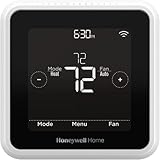
The Honeywell Home T5 is a Wi-Fi smart thermostat with a touchscreen and a reputation for broad HVAC compatibility. Honeywell’s installation guide for the T5 family describes heat pump configurations with up to two compressor stages and one auxiliary or emergency heat stage, a configurable reversing valve (O/B on cool or on heat), and an input for a heat pump fault signal. It also states that a 24-volt common wire is needed to power the display and Wi-Fi, with an adapter included in some retail kits.
Who it suits: owners of heat pumps with two-stage compressors or more complicated auxiliary arrangements, and technicians or experienced DIYers who want detailed setup options. It also suits people who prefer a physical touchscreen and a conventional layout.
Key specs to know
- Wi-Fi smart thermostat with a touchscreen
- Common wire required in most installations
- Heat pump setups documented up to two compressor stages plus one auxiliary or emergency stage
- Reversing valve configurable for O/B on cool or on heat
- Do not use the W terminal with heat pumps; use W2 or AUX instead
The instruction about the W terminal is one of the most common installer traps. On a furnace system W means heat. On a heat pump, heat comes from the compressor, and W2, AUX, or E is reserved for backup. Landing the old W wire on the wrong terminal can leave a system calling for resistance heat every time the thermostat wants warmth. Photograph your existing wiring, label each wire, and consult the installation guide before connecting anything.
Take the time to configure the system type correctly during setup. On heat pump installs, the thermostat will ask how many compressor stages you have, whether you have auxiliary heat, and which direction the reversing valve operates. Choosing the wrong answers can produce symptoms ranging from cooling when you ask for heat to backup elements running constantly. If your equipment manual lists the stage count and the valve energizing direction, keep it open during setup. If it does not, the outdoor unit’s nameplate or a technician can usually tell you in a few minutes.
Pros
- Documented support for multi-stage heat pump setups
- Flexible reversing valve configuration
- Established brand with extensive installation documentation
- Touchscreen interface
Cons
- Common wire required, and the adapter is only included in some kits
- Setup menus are more detailed, which can overwhelm first-time installers
- Smart-home integrations are less extensive than the newest X2S
Versus the nearest alternative: The Honeywell Home X2S is its sibling; the X2S documents one cool stage on heat pumps and emphasizes newer connectivity, while the T5 documents two cool stages and an additional heat stage. For a two-stage heat pump, the T5 is the better candidate. Compared with the ecobee Enhanced, the T5 is the more traditional, installer-style product, while the ecobee leans toward consumer apps and sensors.
8. ecobee Smart Thermostat Enhanced – Best Overall for Heat Pump Homes
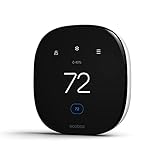
The ecobee Smart Thermostat Enhanced is our best overall pick for heat pump homes. The listing describes a programmable Wi-Fi thermostat that works with Siri, Alexa, and Google Assistant and is efficiency-certified. ecobee states that it supports heat pumps with two heat stages and two cooling stages plus one auxiliary heat stage, and that the included power extender kit allows installation in most homes without a common wire.
Who it suits: anyone with a standard or two-stage heat pump who wants strong app control, room-by-room comfort tools through optional sensors, and wide smart-home support. It is a good fit for families who want one thermostat that works with several ecosystems at once.
Key specs to know
- Programmable Wi-Fi thermostat, efficiency-certified
- Works with Siri, Alexa, and Google Assistant
- Heat pump support described as 2 heat, 2 cool, plus 1 auxiliary stage
- Power extender kit included for most homes without a common wire
- Remote sensors are sold separately and not part of the base thermostat
Heat pump owners benefit most from the thermostat’s control over when auxiliary heat is allowed. ecobee’s app provides settings that affect how aggressively backup heat is used and the outdoor temperature thresholds around it. Check these during setup instead of leaving defaults in place. A moderate schedule with small setbacks usually lets the compressor handle most of the load.
If your home has uneven temperatures, ecobee’s optional room sensors can help the thermostat average readings across rooms and favor the spaces you occupy. They are sold separately, so confirm compatibility with this model on the manufacturer’s page before buying. Sensors do not change what the heat pump can physically do, but they can reduce the common problem of a hallway thermostat that does not reflect how the bedrooms feel. Use them thoughtfully, since chasing small differences between rooms can lead to longer run times with little comfort gain.
Pros
- Broad heat pump stage coverage
- Includes the accessory needed for many homes without a common wire
- Works with all three major voice assistants
- Strong app with detailed energy reporting
Cons
- Not for dual-fuel systems unless the manufacturer’s checker confirms them
- Sensors are an extra purchase
- More settings to learn than a basic thermostat
Versus the nearest alternative: The Essential gives you the same brand at a simpler level, with fewer stages and the power extender kit sold separately. The Honeywell T5 is the alternative for equipment-focused buyers. For most homeowners, the Enhanced hits the best balance of compatibility, usability, and smart-home reach. If you are replacing an older programmable unit, set aside an hour for setup so you can walk through each heat pump option in the app instead of accepting the defaults.
Heat Pump Thermostat Basics: What Makes Them Different
A heat pump moves heat rather than making it. In cooling it works like an air conditioner, and in heating it reverses the flow with a reversing valve. The thermostat tells the valve which way to point using the O/B terminal. Some brands energize the valve in cooling (O), others in heating (B), so a thermostat must be set to match. Get it backwards and the system will cool when you ask for heat.
Most homes also have a backup source for the coldest days. Electric strip heaters in the air handler are the most common, and they connect to AUX or W2 terminals. A separate emergency heat setting runs those strips alone and is meant for outdoor-unit failures. Some houses use a gas or oil furnace as backup instead; this dual-fuel arrangement needs a thermostat that explicitly supports it, and several models here do not.
Finally, there is the question of stages. A single-stage compressor runs at one speed. A two-stage compressor has a low and a high setting. Variable-speed systems often use their own communicating controls and may not work with a standard smart thermostat at all, so check your equipment manual if you have a premium inverter-driven system. Matching the stage count to a thermostat’s documented support is the single most important compatibility step.
How to Choose a Smart Thermostat for a Heat Pump
Use the following sequence, and you should land on one or two models quickly.
1. Identify your equipment and backup heat
Read the nameplate on the outdoor unit and the air handler. Note whether the compressor is single-stage, two-stage, or variable-speed, and whether the backup is electric strips or a gas or oil furnace. Variable-speed or communicating systems often need the manufacturer’s own thermostat. Dual-fuel systems need a thermostat that explicitly supports them; of the products here, the Honeywell X2S and the Alexa-branded model state they do not.
2. Photograph and list your wires
With the breaker off, remove the old thermostat’s faceplate and photograph the wires. Write down the terminal letters. A heat pump typically shows R, C (maybe), G, Y1, O/B, and possibly Y2, AUX/W2, and E. The presence of Y2 usually means a two-stage compressor, and the presence of both AUX and E means separate auxiliary and emergency heat control. Compare this list to each model’s documented terminals.
3. Solve the common wire early
Most models here want a common wire. If you do not have one, plan a fix: use a spare wire in the bundle, install an adapter kit, or choose a model that includes a power extender. The ecobee Enhanced includes one, the Essential sells it separately, and other brands may offer adapters.
4. Pick your ecosystem
If you use Alexa, any model with Alexa support will do, and the Alexa-branded thermostat integrates most tightly with that ecosystem. Google Home households lean toward the Nest. Apple Home users should check each listing, since the ecobee Enhanced explicitly mentions Siri, while Honeywell describes Matter support for the X2S. Choose the thermostat that fits the system you already own.
5. Work through an efficiency example
Backup heat is the main efficiency risk with a heat pump, so it helps to see the numbers. One kilowatt-hour of electricity equals about 3,412 BTU of heat. An electric resistance strip converts that electricity to heat at a ratio of 1 to 1, so delivering 10 kWh of heat uses 10 kWh of electricity. A heat pump moves heat using a coefficient of performance (COP) that changes with outdoor temperature. As an illustration only, if a heat pump operated at a COP of 3 in mild weather, the same 10 kWh of heat would take about 3.3 kWh of electricity, roughly a third of the resistance figure. Real COPs vary by model and outdoor temperature and fall as it gets colder, so treat these values as examples and not as specifications for any system here. The practical takeaway is that every hour the thermostat lets the strips run in place of the compressor uses roughly two to three times the electricity for the same warmth under mild conditions. That is why settings that limit auxiliary heat matter so much.
Sanity-check the stage math
Here is a quick way to see whether a thermostat’s stage limit fits your equipment. Count your compressor stages (Y1 and Y2 terminals), then count backup stages (AUX, W2, or E). Add them together. A system with two compressor stages and one electric backup stage has 3 heat stages and 2 cool stages (the cool side counts only the compressor stages). Compare that to the documented limit: a model that lists 2 heat and 1 cool will not cover this system, while one that lists 3 heat and 2 cool will. If the totals match, you are in range. If they do not, move to a model with more stage support or let a technician advise.
6. Decide on features you will really use
Remote sensors, geofencing, energy reports, and learning schedules are nice but secondary. For a heat pump, prioritize accurate stage and auxiliary control first. Features like humidity readings and filter reminders are helpful but should not override a compatibility mismatch.
Decision matrix
| Your situation | Best pick from this list |
|---|---|
| Two-stage compressor or want maximum stage coverage in a consumer app | ecobee Smart Thermostat Enhanced |
| Two compressor stages and a traditional installer-style interface | Honeywell Home T5 |
| All-electric heat pump, electric strip backup, want Matter support | Honeywell Home X2S |
| Basic single-stage heat pump and first-time DIYer | Sensi Lite or Sensi ST55 |
| Single-stage heat pump in a Google Home household | Google Nest Thermostat |
| Alexa and Ring household with a common wire already in place | Alexa Smart Thermostat |
| Simple heat pump, want ecobee ecosystem without extras | ecobee Smart Thermostat Essential |
| Dual-fuel (gas or oil backup) | Confirm with the manufacturer’s checker first; several models here exclude it |
Installation and Electrical Safety
Thermostat wiring is low voltage, usually 24 volts AC, but the equipment it controls is connected to household power. Always turn off the breaker for the air handler and the outdoor unit before removing the old thermostat or touching any wires. Confirm the display on the old thermostat is dead, and remember that some systems have more than one power source.
Photograph the wiring before disconnecting it, label each wire with tape, and use the terminal letters, not wire colors, as your guide, since colors are not standardized. Do not let bare wire ends touch one another, because a short can blow the small fuse on the control board. Do not install a low-voltage thermostat on a line-voltage system such as electric baseboard heaters; those carry 120 or 240 volts and need a thermostat built for that purpose.
If your heat pump uses a power extender, adapter, or control board connection, follow the manufacturer’s diagram exactly. If anything looks scorched, corroded, or unfamiliar, stop and call a licensed HVAC technician. After installation, restore power, run a heating cycle and a cooling cycle, and confirm the outdoor fan and compressor respond as expected. If the system blows cold air in heating mode, recheck the O/B setting before assuming something is broken.
Scheduling Strategy for Heat Pumps
Heat pumps respond best to steady temperatures. Deep nighttime setbacks followed by a sharp morning recovery can push a thermostat to engage backup heat to catch up quickly. If your thermostat offers a recovery or comfort setting, choose the gradual option. As a rule of thumb, limit schedule changes to about two to three degrees Fahrenheit, and give the system a head start by starting the morning ramp earlier rather than demanding a fast rise.
Outdoor temperature thresholds also matter. Many thermostats let you set a temperature below which backup heat is allowed and above which only the compressor runs. Start with conservative values recommended by your installer or the equipment manual. Monitor comfort and adjust slowly, observing how often the strips turn on during the first cold week. Keep air filters clean and outdoor units clear of leaves and snow, since restricted airflow forces the system to work harder regardless of which thermostat you choose.
Troubleshooting Common Heat Pump Thermostat Problems
Even a correctly chosen thermostat can misbehave if it is configured poorly. Here are the symptoms homeowners report most often and where to look first.
The system cools when you ask for heat. This almost always points to the O/B reversing valve setting. Switch the thermostat’s valve option from O to B (or the reverse), restart the system, and observe. If the problem persists, check that the wire is on the right terminal.
Backup heat runs constantly. Look at the thermostat’s auxiliary heat settings and outdoor temperature thresholds, and check whether a deep schedule setback is forcing the strips on during recovery. If the strips run in mild weather, ask a technician to inspect the outdoor unit, since a refrigerant or airflow problem can mimic a thermostat issue.
The display reboots or the Wi-Fi drops. Weak power from a missing common wire is a leading suspect. A thermostat that borrows power from other wires can behave erratically, so confirm the common wire or adapter is connected securely.
The system short cycles. Rapid on-off cycling can come from poor thermostat placement, a dirty filter, an oversized system, or incorrect staging settings. Verify the stage configuration against your equipment and check that the thermostat is not near a vent or in direct sun.
The outdoor unit ices over in winter. Light frost is normal, since heat pumps run defrost cycles. If ice builds into a thick block or the unit does not defrost, switch off the system and call a technician rather than chipping at it.
Nothing responds after installation. Recheck that the breaker is on, that the R wire is seated, and that the thermostat is configured for the correct system type. If the control board fuse has blown, a technician can replace it and confirm the wiring.
Smart Features Worth Using on a Heat Pump
Once the basics work, a few features improve comfort without hurting efficiency. Geofencing can lower the setpoint modestly when everyone leaves, though keep the swing small to avoid triggering backup heat when you return. Energy reports help you notice when run times jump, which can be an early sign of a problem. Filter reminders matter more than they seem: a clogged filter strains the blower and reduces heat transfer, and heat pumps are sensitive to airflow.
Remote sensors, where available, can help balance a multi-story home by averaging temperatures, but they should support, not replace, a well-balanced duct system. Voice control is convenient, but set sensible limits so no one accidentally pushes the setpoint several degrees in one command. Finally, enable alerts for extreme indoor temperatures if your thermostat supports them, since they can warn you of a stalled system while you are away.
Frequently Asked Questions
Do I need a special thermostat for a heat pump?
Yes, a thermostat must support heat pump controls, including a reversing valve terminal (O/B) and, where applicable, auxiliary and emergency heat. Many modern smart thermostats do, but not all support the same number of stages. Check the manufacturer’s compatibility tool with your exact wiring.
Can I use a smart thermostat with a dual-fuel system?
Only if the manufacturer says so. The Honeywell X2S guide and the Alexa-branded thermostat’s help material both state they are not meant for heat pumps paired with a gas or oil furnace. Others may support it, so verify with the maker before buying.
What does O/B mean on a thermostat?
It is the terminal that controls the heat pump’s reversing valve, which switches between heating and cooling. Some equipment energizes it in cooling and some in heating, so the thermostat must be configured to match your system. A wrong setting can cause the unit to heat when you want cool.
Is a common wire always required?
Most models here require one, and manufacturers such as Sensi state that heat pumps need it. Some thermostats, including certain Nest models, may work without one on certain systems, but that is not guaranteed. An adapter or power extender is the usual fix when the wire is missing.
Why does my heat pump use backup heat so often?
Common causes include aggressive setbacks, low outdoor temperatures, a thermostat set to allow backup heat at mild temperatures, or a system problem. Check your thermostat’s auxiliary heat settings, use gentle schedules, and ask a technician to inspect the equipment if the strips run frequently in mild weather.
What is emergency heat?
Emergency heat is a mode that uses only the backup heating elements and shuts off the compressor. It is meant for when the outdoor unit is not working. Using it as a regular setting is inefficient and should be avoided unless a technician advises it.
Can I install a smart thermostat myself?
Many homeowners do, since the wiring is low voltage and manufacturers provide guides. Turn off power, photograph the wires, and follow the diagram. If your wiring is unusual or the system is multi-stage, hire a technician.
Will a smart thermostat save energy with a heat pump?
It can help if it keeps schedules gentle and limits backup heat, but savings depend on your home, climate, and settings. Treat any savings claim as a possibility and not a promise, and check your own utility data.
Which Thermostat Should You Choose?
For most heat pump homes, start with the ecobee Enhanced. If your equipment is simple and you want less complexity, the Sensi Lite or ecobee Essential fit. For two compressor stages and traditional installer controls, look at the Honeywell T5. Pick the Nest if you live in Google Home and run a single-stage system, and the Alexa-branded model if you live in Alexa and Ring. Always match your wiring and backup heat type to the documented specifications before you buy.

0 Comments