What's inside
- Top 3 Picks
- Quick Comparison
- How We Chose
- 1. WEIVIOQ Heated Glove Liners (Ski, Touchscreen) – Best for Skiing Under a Shell
- 2. yoostooper Electric Heated Gloves – Best for Cold-Weather Work Tasks
- 3. Heated Gloves Liners with 3 Heat Settings – Best for Layering and Outdoor Hobbies
- 4. AI Hand Warmers, 2 Pack – Best for Pocket Warmth Without Gloves
- 5. Rabbitroom Rechargeable Heated Gloves – Best for Wet Snow and Slush
- 6. WEIVIOQ Heated Glove Liners (Battery Version) – Best for Everyday Liner Use
- 7. MetroTesco Rechargeable Electric Heated Winter Gloves – Best Overall for Daily Use
- 8. Heated Gloves for Men Women, Rechargeable Waterproof Ski Gloves – Best for Winter Work and Skiing
- How to Choose Rechargeable Heated Gloves
- Battery Safety and Care for Heated Gloves
- Layering Strategy for Cold Hands
- Common Mistakes When Buying and Using Heated Gloves
- Heated Gloves Versus Other Ways to Keep Hands Warm
- Heated Glove Features Explained
- Frequently Asked Questions
- Which Pair Should You Pick?
- Top 3 Picks
- Quick Comparison
- How We Chose
- 1. WEIVIOQ Heated Glove Liners (Ski, Touchscreen) – Best for Skiing Under a Shell
- 2. yoostooper Electric Heated Gloves – Best for Cold-Weather Work Tasks
- 3. Heated Gloves Liners with 3 Heat Settings – Best for Layering and Outdoor Hobbies
- 4. AI Hand Warmers, 2 Pack – Best for Pocket Warmth Without Gloves
- 5. Rabbitroom Rechargeable Heated Gloves – Best for Wet Snow and Slush
- 6. WEIVIOQ Heated Glove Liners (Battery Version) – Best for Everyday Liner Use
- 7. MetroTesco Rechargeable Electric Heated Winter Gloves – Best Overall for Daily Use
- 8. Heated Gloves for Men Women, Rechargeable Waterproof Ski Gloves – Best for Winter Work and Skiing
- How to Choose Rechargeable Heated Gloves
- Battery Safety and Care for Heated Gloves
- Layering Strategy for Cold Hands
- Common Mistakes When Buying and Using Heated Gloves
- Heated Gloves Versus Other Ways to Keep Hands Warm
- Heated Glove Features Explained
- Frequently Asked Questions
- Which Pair Should You Pick?
As an Amazon Associate I earn from qualifying purchases. This post may contain affiliate links at no extra cost to you.
For most people shopping for rechargeable heated gloves, the MetroTesco Rechargeable Electric Heated Winter Gloves are the best overall pick. They pair a thin, touchscreen-friendly construction with a smart temperature and battery display, which takes the guesswork out of two things that matter most with battery-powered hand warmth: how hot the glove is running and how much runtime is left. If you want a lower-commitment option, the Heated Gloves Liners with three heat settings are a flexible choice because a thin liner slips inside gloves or mittens you already own. Skiers and snowboarders who face wet snow should look at the Rabbitroom waterproof model, while anyone who would rather skip gloves entirely can use the AI rechargeable hand warmers as a pocket heater. Every glove on this list uses a rechargeable battery, so the real decision comes down to fit, heat control, water resistance, and how you plan to wear them: alone, under a shell, or as a liner.
Top 3 Picks
Best overall: MetroTesco Rechargeable Electric Heated Winter Gloves. The listing highlights smart temperature and battery display, thin touchscreen fingertips, and electric heating in a gender-neutral cut. That combination suits commuters, dog walkers, and workers who need to see what the gloves are doing without opening an app or guessing from how their hands feel.
Best for flexibility and value: Heated Gloves Liners with 3 Heat Settings. A thin liner design with three selectable heat levels, a rechargeable battery, and touchscreen compatibility lets you layer warmth under your existing gloves. The listing names hunting, skiing, and cycling as target uses, which makes it one of the more versatile picks here.
Best for wet-weather sport: Rabbitroom Rechargeable Heated Gloves. The listing calls out waterproof construction, a touchscreen design, and a thin-liner format aimed at skiing and cycling. If your hands spend time in snow, slush, or drizzle, this is the pick to start with, although you should confirm the exact waterproof grade on the product page.
Quick Comparison
| Product | Best for | Key specs from the listing |
|---|---|---|
| WEIVIOQ Heated Glove Liners (ski, touchscreen) | Skiing under a shell glove | Liner format, touchscreen fingertips, rechargeable heating, men’s and women’s sizing |
| yoostooper Electric Heated Gloves | Cold-weather work tasks | Battery-powered, thin build, touchscreen, rechargeable, unisex |
| Heated Gloves Liners, 3 Heat Settings | Layering and outdoor hobbies | Three heat settings, thin work-glove style, touchscreen, hunting, skiing, and cycling use |
| AI Hand Warmers, 2 Pack | Pocket warmth without gloves | Rechargeable pair, long-run heat claim, smart chip temperature control, portable |
| Rabbitroom Rechargeable Heated Gloves | Wet snow and slush | Waterproof wording, touchscreen, thin liners, skiing and cycling use |
| WEIVIOQ Heated Glove Liners (battery version) | Everyday liner use | Rechargeable battery gloves, liner style, men’s and women’s sizing |
| MetroTesco Rechargeable Electric Heated Winter Gloves | Overall daily use | Smart temperature and battery display, thin touchscreen build, electric heating |
| Heated Gloves for Men Women, Waterproof Ski Gloves | Winter work and skiing | Waterproof wording, touchscreen, rechargeable electric heating |
How We Chose
We built this list by reading product listing details, comparing the features each manufacturer states, and cross-checking category norms for heated apparel. We looked first at whether a glove is rechargeable, since that is the focus of the topic. We then weighed heat control (fixed versus selectable levels), thickness and dexterity, touchscreen fingertips, water resistance wording, battery placement, and whether the product works alone or as a liner. We also considered who each design suits: workers, skiers, cyclists, hunters, or commuters. We have not run lab measurements on any of these gloves, and we do not quote runtime or temperature figures that we cannot trace to the listing. Where a specification is unclear, we say so and tell you to confirm it on the product page before buying.
1. WEIVIOQ Heated Glove Liners (Ski, Touchscreen) – Best for Skiing Under a Shell
As an Amazon Associate we earn from qualifying purchases at no extra cost to you.

The first WEIVIOQ entry is named as heated glove liners for men and women, with ski use and touchscreen fingertips called out. A liner is a thin glove designed to sit inside another glove, so you get heat close to the skin while the outer layer handles wind, snow, and abrasion. That is a smart architecture for resort skiing, because ski shells are made to shed snow and block wind, and a thin heated layer adds warmth without making you buy a new pair of bulky gloves.
Who it suits: skiers and snowboarders who already own a good waterproof shell or mitten, and who find their fingers go cold on lift rides. It also suits anyone who wants to move one heated layer between different outer gloves through the season.
Key specs to know
- Format: thin heated liner, intended to be worn under another glove
- Touchscreen-compatible fingertips, according to the listing name
- Rechargeable battery power
- Sized for both men and women; check the size chart carefully, because a liner must fit snugly inside your shell
The size question deserves attention. A liner that is too thick or too long makes the outer glove tight, which squeezes insulation flat and can make hands colder. Compare your hand measurement to the size chart, and consider whether you wear a snug or roomy shell.
A practical way to judge a ski liner is to picture a full day on the mountain. Your hands warm up in the lodge, cool on the chairlift, and sweat slightly on the run. A heated liner helps most during the lift ride, when wind chill peaks and your arms are mostly still. Many skiers switch the heat on at the top of a lift line and off on the way down, which stretches a battery across several hours. Keep the battery pack away from hard falls, tuck cables so they do not tug at the fingertips, and let the liner dry fully between days. Drying matters because damp fabric chills you quickly and can wear on wiring over a season.
Pros
- Liner design keeps the heating element close to your skin
- Works with gloves or mittens you already own
- Touchscreen fingertips let you check a phone without exposing bare hands
- Rechargeable, so no disposable cells to buy
Cons
- Not a standalone waterproof glove, so it relies on the outer layer for weather protection
- Battery capacity and heat levels are not spelled out in the short listing name, so confirm them on the product page
- Adding a liner changes how the outer glove fits
Versus the nearest alternative: The second WEIVIOQ liner in this list is very similar in concept, with the main difference being the stated emphasis on ski use and touchscreen here. If you primarily need warmth under a ski shell, this version is the more clearly targeted of the two. If you want a general-purpose liner for walking and commuting, the other WEIVIOQ model reads as the broader choice. Compared with Rabbitroom, this pick gives up the waterproof outer shell in exchange for a lower-profile, layerable build.
2. yoostooper Electric Heated Gloves – Best for Cold-Weather Work Tasks
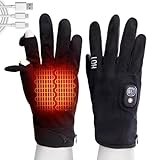
The yoostooper gloves are listed as battery-powered, rechargeable, thin, and touchscreen-compatible, with a focus on people working in cold winter weather. The wording points to a slim glove that leaves room for finger movement. That matters if you are handling tools, loading a truck, using a phone, or doing outdoor chores where you cannot afford to lose dexterity.
Who it suits: tradespeople, yard workers, delivery drivers, and anyone who needs warm hands but also needs to grip small objects. A thin build also makes it easier to wear under a looser work glove during very cold snaps.
Key specs to know
- Electric heating powered by a rechargeable battery
- Thin construction for better finger feel
- Touchscreen fingertips
- Unisex men’s and women’s sizing
Thin heated gloves trade bulk for convenience. They are not insulated like a thick ski mitten, so they rely on active heat rather than stored warmth. In practice that means they suit situations where you are moving, working, and can plug in a battery overnight. For a long day outside in very harsh cold, think about adding a windproof shell on top.
Thin heated gloves are easiest to appreciate on a cold morning job. Think of unloading a delivery, scraping a windshield, or checking fence lines before sunrise. Fingers lose warmth quickly when they are still and exposed to wind, and an active heating element gives them a head start. Because the build is slim, it is worth checking whether the knuckles and palm feel snug but not tight, since circulation matters as much as the heating element. If your work involves sharp tools, abrasive surfaces, or chemicals, wear a purpose-made protective glove over these, because a thin heated glove is not designed to replace safety equipment.
Pros
- Thin profile helps with grip and fine motor tasks
- Rechargeable battery avoids disposable cells
- Touchscreen fingertips reduce how often you remove a glove
- Suits both men and women
Cons
- The listing does not name a waterproof grade, so it is not the pick for wet snow
- A thin glove has limited passive insulation if the battery runs out
- Heat settings and runtime should be confirmed on the product page
Versus the nearest alternative: The Heated Gloves Liners with three heat settings are the closest comparison, since both are thin and aimed at work and outdoor activity. The liner model leans toward being layered under another glove and explicitly lists three heat settings, while the yoostooper is positioned as a work glove you can wear by itself. If you want a self-contained glove for jobs outdoors, yoostooper makes sense. If you want adjustable heat and layering options, the liner is more flexible.
3. Heated Gloves Liners with 3 Heat Settings – Best for Layering and Outdoor Hobbies

This listing describes rechargeable, thin heated work gloves in a liner style, with three heat settings and touchscreen fingertips, aimed at hunting, skiing, and cycling. Three heat settings are the headline feature. A typical setup lets you pick low, medium, or high, so you can run the gloves gently while walking to a stand and turn them up when you sit still in the cold.
Who it suits: hunters who sit for long periods, cyclists who need warmth without bulk, and skiers who want layered heat. It is also a good fit for anyone who is not sure how much heat they need, because adjustable levels let you find a comfortable setting and conserve battery on milder days.
Key specs to know
- Three selectable heat settings
- Rechargeable battery power
- Thin, liner-style build for layering
- Touchscreen fingertips
- Designed for men and women
Battery management is the practical benefit of multiple heat levels. Running on high drains a battery faster than running on low, so having a lower setting stretches runtime on a long day. Manufacturers typically state runtime for each level on the product page, and the numbers differ by model, so read those figures before assuming one glove will last a full day.
Think about how you would use three heat settings in a real day. A hunter walking in might choose the lowest level to avoid sweating, then step up one level when settling into a blind. A cyclist might start on medium for the first cold miles and drop to low once the body warms up. A skier could keep the gloves on the top setting during a windy chairlift and turn them down on the descent. Because the settings are clearly numbered, you can learn your own pattern quickly. As with any liner, a snug outer glove helps hold the warmth in, while a glove that is too tight can compress the liner and reduce comfort.
Pros
- Adjustable heat suits changing weather and activity levels
- Thin liner works inside existing gloves
- Rechargeable and touchscreen compatible
- Covers hunting, skiing, and cycling use cases in the listing
Cons
- Liners need an outer layer for wind and wet protection
- Exact runtime per setting needs confirming on the product page
- Thin material may feel less durable than heavy work gloves
Versus the nearest alternative: Against the MetroTesco gloves, this liner gives you three clear heat levels but lacks the temperature and battery display that MetroTesco highlights. If you value seeing the exact state of the glove, MetroTesco leads. If you want a simple low-medium-high choice that tucks inside other gloves, this is a good, flexible option and a natural best-value pick on the list.
4. AI Hand Warmers, 2 Pack – Best for Pocket Warmth Without Gloves

This is the one product on the list that is not a glove. It is a rechargeable two-pack of electric hand warmers, advertised with a long heat duration and “AI smart chips” that manage temperature. The format is a hard-shell pocket heater you hold or tuck into a pocket or glove, and the pair means one for each hand.
Who it suits: people who dislike wearing gloves indoors or while driving, spectators at cold outdoor events, dog walkers who want a warm pocket stop, and anyone who wants to add heat to an existing mitten or glove. Because they are portable and rechargeable, they can also serve as a back-up heat source when you are not sure how cold the day will turn.
Key specs to know
- Pack of two rechargeable electric hand warmers
- Smart chip temperature management, according to the listing
- Long-run heat claim in the product name; confirm real runtime on the product page
- Pocket-sized and portable
Hand warmers heat the palm, not the fingertips, and you must hold them for the warmth to transfer. Many people tuck one into each mitten or glove, which works well in roomy outer layers. Always follow the manufacturer’s instructions on surface contact, and never place a warmer against skin for extended periods or leave it under bedding while charging.
Hand warmers are often most useful as a companion to other gear rather than a replacement. A palm warmer inside a mitten gives your fingers a shared pocket of heat, which can be more efficient than heating each finger separately. They are also handy in a parked car, at an outdoor game, or while waiting at a bus stop, because you can pull one out for a minute and tuck it away. Charge them on a hard, non-flammable surface using the cable specified by the manufacturer, and do not leave them charging overnight or unattended. Stop using any unit that swells, smells unusual, or runs unusually hot.
Pros
- No need to wear anything on your hands
- Two units in one pack
- Rechargeable and portable
- Can be moved from pocket to glove as needed
Cons
- You have to hold or position them, so they do not free up your hands
- Heat targets the palm rather than the whole hand
- Not suited to activities that need full grip or touchscreen use
Versus the nearest alternative: The closest comparison is a thin liner glove such as the three-setting model. Gloves keep your hands covered and free; these warmers cannot do that. They win on portability and simplicity, and they can complement a glove by adding palm heat inside a larger mitten.
5. Rabbitroom Rechargeable Heated Gloves – Best for Wet Snow and Slush

Rabbitroom’s gloves are described as rechargeable and heated, with waterproof wording, touchscreen fingertips, and a thin-liner format for skiing and cycling. Water is the enemy of any insulated glove. Wet fabric conducts heat away from your skin far faster than dry fabric, so a heated glove that stays dry has a real advantage over one that soaks through in slush or drizzle.
Who it suits: downhill skiers, snowshoers, winter cyclists, and people who shovel or play in wet snow. It is also a sensible option for anyone who has been caught out with soaked gloves before and wants an extra margin.
Key specs to know
- Rechargeable electric heating
- Waterproof wording in the listing; confirm what that means (water-resistant shell versus a membrane) on the product page
- Touchscreen fingertips
- Thin-liner style, with skiing and cycling named as target uses
The word waterproof deserves a careful read. A true waterproof glove typically uses a membrane or a sealed construction, while a water-resistant one sheds light moisture but eventually wets through. Because the listing mixes the terms “waterproof” and “liner,” look at the product page images and description to see which layers are involved before relying on it in heavy rain or deep powder.
Wet-weather performance depends on more than the shell. Seams, cuffs, and the fingertips are where water usually sneaks in, and a glove that is waterproof on paper can still leak if snow rides up the wrist. Tuck the cuff under a jacket sleeve in light snow and over it in deep powder, and consider a quick wipe after a session to remove surface moisture. Never charge or switch on a wet battery or glove; let everything dry in a room-temperature spot away from direct heaters. That habit protects the electronics and keeps the lining from developing odors during a long season.
Pros
- Waterproof positioning suits snow and slush
- Rechargeable, touchscreen-compatible, and thin enough for movement
- Skiing and cycling use cases are named directly
- Works for both men and women
Cons
- Waterproof claims vary, so verify the construction details
- Thin build may still need a windproof outer layer in extreme cold
- Battery details are not in the short listing name
Versus the nearest alternative: The closest comparison is the final entry on this list, a waterproof ski glove with electric heating. Both lean on water resistance, so the choice often comes down to fit, finger length, and which size chart matches your hands. Against the WEIVIOQ ski liner, Rabbitroom trades layerability for a more self-contained, weather-ready glove. If you will wear one glove on its own in wet conditions, Rabbitroom is the stronger candidate. If you already own a premium shell, a plain liner may be enough.
6. WEIVIOQ Heated Glove Liners (Battery Version) – Best for Everyday Liner Use

The second WEIVIOQ listing is for heated glove liners for men and women with rechargeable battery gloves. It leaves out the ski and touchscreen emphasis of its sibling, which reads as a more general-purpose liner. That broader positioning makes it a good pick for walking, commuting, errands, and mixed outdoor use, where a single thin layer of heat is more important than any one sport.
Who it suits: city commuters, people who stand at bus stops or train platforms, parents on sideline duty, and anyone who needs a gentle boost in cold weather without wearing bulky mittens. It also works as a spare liner if you already own the other WEIVIOQ model.
Key specs to know
- Heated liner format, intended to go under another glove
- Rechargeable battery power
- Men’s and women’s sizing
- The short listing name does not list touchscreen or waterproof features, so confirm both on the product page if you need them
Because the listing is brief, the practical advice is to verify the details that matter to you. Check the number of heat settings, the battery location (back of the hand or cuff), the stated runtime on low and high, and the charging method. A battery pack on the back of the hand is easy to reach but can be bulky under a tight shell, while a cuff-mounted pack is less obtrusive but may be harder to adjust.
For an everyday liner, comfort and consistency matter more than peak performance. Wear it to the bus stop, around the neighborhood, or on a short walk and notice whether the fingertips warm evenly or whether the battery area presses on your wrist. A liner worn all day should not create hot spots, and a good fit minimizes bunching inside the outer glove. If you plan to use it for driving, make sure the thin fabric does not reduce your grip on the steering wheel. Try the fit at home before the first cold commute so you can swap sizes while the return window is still open.
Pros
- Simple, general-purpose liner design
- Rechargeable, with no disposable cells
- Pairs with gloves or mittens you already own
- Same brand as another liner on the list, so sizing guidance carries over
Cons
- Fewer features are named in the listing than for other gloves
- Touchscreen and waterproof capability are not confirmed by the name alone
- Needs an outer layer in wind or wet weather
Versus the nearest alternative: The ski-targeted WEIVIOQ liner is the obvious comparison and the closer match if you want touchscreen fingertips and winter-sport use. This model is the more neutral pick for everyday wear. Against the MetroTesco gloves, it lacks the display and the stand-alone positioning, so it makes the most sense when you want a layerable, no-frills heated base.
7. MetroTesco Rechargeable Electric Heated Winter Gloves – Best Overall for Daily Use

MetroTesco takes our top overall spot because its listing stacks up the features that matter day to day. It advertises rechargeable electric heating, a smart temperature and battery display, and a thin, touchscreen-friendly build for men and women. Seeing the temperature setting and battery state at a glance is more useful than it sounds: it saves you from guessing whether a cold finger is a battery problem, a settings problem, or just a fit problem.
Who it suits: commuters, drivers, dog walkers, and anyone who wants a single pair of gloves that works in most winter situations. The thin construction also makes it attractive for light outdoor work, photography, and running errands, where you need warm hands but also need to use a phone.
Key specs to know
- Smart temperature and battery display, according to the listing
- Rechargeable electric heating
- Thin build with touchscreen fingertips
- Designed for men and women
| Question | What to check on the product page |
|---|---|
| How are heat levels changed? | Button location and number of levels |
| Where is the battery? | Cuff, back of hand, or pocket |
| Is it water resistant? | Shell material and any waterproof claim |
| How is it charged? | Cable type and charging time |
The display is the feature that changes daily behavior. Instead of switching levels by feel, you can glance at the screen, confirm the heat level, and check whether the battery has enough left for the walk home. That makes it easier to plan around charging, and it prevents the unpleasant surprise of cold fingers in the middle of a commute. It also helps you learn which setting you actually need on different days. Keep the display clean and dry, avoid pressing hard on the buttons with gloved fingers from another layer, and follow the charging instructions in the manual to protect the battery.
Pros
- Display makes heat and battery status easy to read
- Thin build supports dexterity and phone use
- Rechargeable and suited to everyday wear
- Works as a standalone glove or under a shell
Cons
- Thin material has limited passive insulation in extreme cold
- Waterproofing is not highlighted in the listing name
- Display adds one more electronic feature that must work reliably
Versus the nearest alternative: Compared with the three-setting liner, MetroTesco is more of a complete glove and adds a status display, while the liner is more flexible for layering. Against Rabbitroom, MetroTesco trades waterproof positioning for the display and an everyday focus. Choose MetroTesco if you want visibility and convenience, and Rabbitroom if you need weather protection first. Before buying, check how the listing describes sizing, because a thin glove that runs small can pinch the fingers and cancel out the benefit of the heating element.
8. Heated Gloves for Men Women, Rechargeable Waterproof Ski Gloves – Best for Winter Work and Skiing

The final listing is for rechargeable heated ski gloves with waterproof wording, touchscreen fingertips, and electric heating aimed at winter outdoor work and skiing. It reads as a straightforward, all-purpose cold-weather glove: heated, weather-resistant, and usable with a phone. That combination fits people who spend long stretches outdoors in unpredictable conditions, from resort skiing to snow removal.
Who it suits: skiers, snowboarders, outdoor workers, and anyone who wants a single weather-ready heated glove rather than a liner-plus-shell system. It is also a reasonable choice for gift-giving to someone who spends winter weekends outside.
Key specs to know
- Rechargeable electric heating
- Waterproof wording; verify the details on the product page
- Touchscreen fingertips
- Sized for men and women
- Skiing and winter work are the named uses
Ski gloves have to balance warmth, grip, and bulk. Many heated ski gloves are thicker than liners, with extra insulation around the back of the hand and a reinforced palm. If you ski with poles, check how the palm padding feels and whether the cuff fits over or under your jacket sleeve. A cuff that sits under the sleeve cuffs seals out snow in most resort conditions, while an over-the-cuff design is better for deep powder.
For winter work, such as shoveling, clearing a roof edge, or hauling firewood, the useful question is how the glove handles both heat and abrasion. Palms and fingertips wear first, so look closely at the reinforced areas in the product images. If you work around saws, hot surfaces, or sharp edges, a heated glove is not a substitute for task-specific protective gloves. For skiing, check that the wrist closure keeps snow out and that the battery pack does not rub against a jacket cuff. Practice charging the gloves the night before an outing so they are ready when you are.
Pros
- Combines heat, weather resistance, and touchscreen use in one glove
- Suitable for both skiing and winter work
- Rechargeable, with no disposable cells
- Single-glove solution means fewer layers to manage
Cons
- Thicker than liners, so less flexible for layering
- Battery and heat-setting details are not in the short listing name
- Waterproof capability should be verified before heavy wet use
Versus the nearest alternative: Rabbitroom is the closest match, with both leaning on waterproof wording and sport use. Pick between them on fit, finger length, and the specifics of each size chart. Compared with the WEIVIOQ ski liner, this glove asks you to commit to one outer glove, while the liner works with whatever shell you already like. If you prefer fewer pieces of gear, choose this glove. If you prefer modular layers, choose the liner.
How to Choose Rechargeable Heated Gloves
Choosing a heated glove comes down to six decisions: format, fit, heat control, battery, weather protection, and how you will use your hands. Work through them in order and the list of eight shrinks quickly.
Step 1: Decide on the format
Heated gloves fall into three broad formats. A thin liner sits inside another glove and is the most flexible option. A stand-alone thin glove, like several here, works for light outdoor tasks and commuting. A full insulated ski or work glove adds a waterproof shell and more passive insulation. If you already own good outer gloves, a liner is the efficient choice. If you do not, a stand-alone waterproof glove saves you from buying two layers. Pocket hand warmers are a fourth route, ideal as a supplement rather than a primary solution.
Step 2: Get the fit right
Fit affects warmth more than most shoppers expect. Measure the circumference of your dominant hand around the knuckles, excluding the thumb, in inches, and compare it with the size chart. A typical adult hand measures roughly 7 to 10 inches around the palm, though your measurement may fall outside that range. A glove that is too tight restricts circulation and feels colder, while one that is too loose leaves gaps between the fabric and your skin that waste the heat. For liners, size so they sit smoothly inside your outer glove with no bunching at the fingertips.
Step 3: Match heat control to your day
Three selectable heat levels let you balance comfort against battery life. A simple rule of thumb is to use the lowest level that keeps your fingers comfortable, because every step up draws more power. A display, like MetroTesco’s, helps you manage this without guessing. If you tend to forget gear settings, a model with a clear indicator is the safer bet.
Step 4: Think about battery life with a worked example
Manufacturers state runtime for each heat level on the product page, and the figures vary a lot. Suppose a glove lists roughly 2 hours on high, 4 hours on medium, and 6 hours on low (hypothetical figures for illustration, not specs for any glove here). If your outing is a 5-hour ski day, you might run high for 1 hour and medium for 2 hours, then leave the gloves off the rest of the time. On high, 1 hour uses 1 / 2 = 50 percent of the battery. On medium, 2 hours uses 2 / 4 = 50 percent. Together that is 100 percent, so the battery would be empty by the end of the day with no reserve. Switching the medium block to low (2 hours at 1 / 6 per hour, about 33 percent) would leave roughly 17 percent in reserve. That shows why a spare battery or a lower setting is worth planning for on longer days. Always use the actual figures from the product page.
Step 5: Weigh weather protection
Dry, cold commuting needs little more than a thin windproof layer. Wet snow, slush, and rain demand genuine waterproofing or a shell over the top. Skiers and snowboarders should favor waterproof or shell-covered options, while cyclists often prefer thin, wind-resistant gloves that preserve brake and shifter feel.
Step 6: Check dexterity and touchscreen use
If you handle tools, fasteners, or a phone often, prioritize thin materials and touchscreen fingertips. If you mainly stand around in the cold, such as at a sports field or on a platform, thicker insulation matters more than finger feel.
Step 7: Consider the charging setup
Look at how each glove charges before you buy. Some use a battery you remove and charge separately, which lets you swap in a spare, while others charge through a port on the glove itself. Removable batteries are convenient for long days and for charging several items from one adapter. A built-in port is simpler but ties up the glove while it charges. Count how many devices you will charge each night, including a phone and any other rechargeable gear, and make sure you have enough outlets or ports. Charging time also matters: a glove that needs several hours to refill is fine overnight but awkward if you need a quick top-up between outings. Confirm the cable type on the product page so you do not end up searching for a proprietary cord on a cold morning.
Decision matrix
| Your situation | Best pick from this list |
|---|---|
| Daily commuter who wants a glance at battery and heat | MetroTesco Rechargeable Electric Heated Winter Gloves |
| Skier with a good shell already | WEIVIOQ Heated Glove Liners (ski, touchscreen) |
| Skier or snowboarder who wants one waterproof glove | Rabbitroom Rechargeable Heated Gloves or the waterproof ski gloves |
| Hunter or cyclist who wants adjustable heat | Heated Gloves Liners with 3 Heat Settings |
| Worker who needs finger feel in the cold | yoostooper Electric Heated Gloves |
| Person who dislikes gloves or wants a supplement | AI Hand Warmers, 2 Pack |
| Generalist who wants a simple liner | WEIVIOQ Heated Glove Liners (battery version) |
Battery Safety and Care for Heated Gloves
Every glove in this list stores energy in a lithium-based rechargeable battery, so safe handling matters. Use only the charger and cable recommended by the manufacturer, and charge on a hard, non-flammable surface where you can see it. Do not charge a battery that is wet, damaged, or swollen, and stop using any glove that smells odd, runs unusually hot, or has frayed wiring. Never wash a glove with the battery installed unless the manufacturer explicitly says it is safe, and let washed items air dry fully before reconnecting power.
Storage matters too. Keep batteries in a cool, dry place when not in use, away from direct heat and from metal objects that could short the terminals. A battery stored at a partial charge often fares better than one left empty for months, but follow the specific instructions in your manual. If you plan to travel by air, check the airline’s rules for lithium batteries in carry-on bags.
A word on comfort and safety for your hands: heated gloves warm skin directly, so people who have reduced sensation in their hands or circulation concerns should ask a clinician before using them, since they may not notice if an item is getting too warm. Take the gloves off if you feel burning, redness, or discomfort. Children should only use heated products under adult supervision and according to the manufacturer’s age guidance.
Layering Strategy for Cold Hands
Heated gloves work best as part of a system. Start with a moisture-wicking base if your hands sweat, add the heated layer close to the skin, and finish with a windproof, water-resistant outer glove or mitten. Mittens keep fingers together and are warmer than gloves of the same insulation, so pairing a heated liner with a mitten shell is one of the most effective cold-weather combinations. Make sure each layer has room to trap air, since compressing insulation reduces warmth. Keep your core and wrists warm too, because cold blood returning from the torso and arms can undo what the gloves do. Finally, bring a spare dry liner on long days, and avoid wearing damp gloves between sessions.
Common Mistakes When Buying and Using Heated Gloves
The most frequent mistake is buying the wrong format for the job. A thin liner will not keep wet snow out, and a bulky waterproof glove may be overkill for a short commute. Decide where you will wear the gloves first, then pick the format that fits that setting.
The second mistake is ignoring size. Because heated gloves contain wiring and a battery, they cannot stretch the way a plain knit glove can. If the fingers feel tight at the store or on the first try-on, exchange them while you still can. Circulation is the base of warmth, and no heating element makes up for a glove that squeezes.
The third mistake is forgetting to charge. Heated gloves only help when the battery has power, so build a routine: charge the night before, check the level in the morning, and carry a charged spare if the listing offers one. A display, like the one on the MetroTesco model, makes this easier.
The fourth mistake is running everything on the highest setting. High heat drains the battery quickly and can make hands sweat, which then makes them colder when you stop moving. Start low, step up only as needed, and use the highest setting for short bursts such as a windy lift ride.
The fifth mistake is skipping care. Sweat and moisture inside a glove build up salt and odors, and wet wiring ages faster than dry wiring. Let gloves dry fully after each use, keep them away from direct heaters, and store them in a dry place. Check the cuff, fingertips, and cable routing at the start of each season for wear or damage, and retire any glove that looks compromised.
Finally, do not expect a heated glove to compensate for poor layering elsewhere. If your core is cold, your hands will be too. Wear a hat, keep your neck covered, and dress your torso well so that warm blood can reach your fingers.
Heated Gloves Versus Other Ways to Keep Hands Warm
Heated gloves are not the only answer to cold fingers, and it helps to know where they fit. Insulated mittens are the traditional choice: they keep fingers together to share warmth and need no charging, but they reduce dexterity. Chemical, single-use hand warmers are simple and widely available, though they create waste and offer little control over temperature. Rechargeable pocket warmers, like the pair on this list, sit between the two, reusable and adjustable but limited to the palm.
Heated gloves add something none of these do: steady, controllable warmth right at the fingers, with the freedom to use your hands. They shine in conditions where you are mostly still, such as lift rides, deer stands, sideline duty, and long waits, because your body is not generating much heat of its own. They matter less during vigorous activity such as running or cross-country skiing, where the body produces plenty of warmth and thin, breathable gloves are usually enough.
Many people combine approaches. A thin heated liner under a windproof mitten, with a rechargeable pocket warmer for breaks, covers nearly every scenario. If you are building a kit gradually, start with the format that matches your most frequent cold-weather activity, then add pieces as your needs become clear.
Heated Glove Features Explained
Heating elements. Most heated gloves use thin carbon fiber or fine wire elements stitched into the fabric. Placement matters: elements that cover the back of the hand and fingers warm the areas that lose heat fastest, while elements limited to the fingertips leave the rest of the hand to passive insulation. Product pages usually show a diagram of the heating zones, and it is worth checking whether the thumb is included.
Battery capacity. Capacity is usually measured in milliamp-hours, and a larger number generally means a longer runtime at the same heat level. Capacity also adds weight and bulk, so a larger battery in a thin glove can feel awkward on the wrist. Compare stated runtimes at the heat level you expect to use, not just the highest figure on the page.
Charging. Look for the type of charging cable, the stated charging time, and whether the battery can be removed. A removable battery lets you carry a spare and charge it while wearing the gloves with a second pack, while integrated batteries are simpler but make the gloves unusable until they are charged.
Touchscreen fingertips. Conductive fingertips let you use a phone without exposing your skin. They usually cover the thumb and index finger, and sometimes the middle finger. Thinner gloves tend to work better on screens than thick ones, and the conductive material can wear down over a season.
Water resistance. A waterproof or water-resistant shell protects both your hands and the electronics from moisture. Even so, electronic components are sensitive, so avoid submerging gloves and follow the manufacturer’s drying instructions. If a listing says waterproof, look for details about the construction, such as a membrane or sealed seams, and do not assume the battery pack is waterproof unless the page says so.
Controls. A simple button on the cuff or back of the hand cycles through heat levels. Check whether you can find and press it while wearing the outer glove, since a button hidden under a tight sleeve is frustrating in the cold.
Frequently Asked Questions
How long do rechargeable heated gloves usually last on a charge?
Runtime varies by model and heat setting. Manufacturers state different hours for low, medium, and high, and real-world results depend on temperature, wind, and battery age. Check the figures on the product page and plan to use lower settings for longer outings.
Can I wash heated gloves?
Many heated gloves can be hand washed gently after removing the battery, but this depends on the model. Follow the care label and manual, avoid wringing or machine drying, and let the gloves air dry fully before reconnecting the battery.
Are heated glove liners better than heated gloves?
Neither is better in every case. Liners add heat under gloves you already own and suit layering, while stand-alone heated gloves can be simpler if you want a single piece of gear. Skiers with a good shell often favor liners, and commuters often favor stand-alone gloves.
Do heated gloves work with touchscreens?
Several gloves on this list specifically mention touchscreen fingertips. Sensitivity varies, so a thin conductive fingertip patch generally works better than a thick one. If touchscreen use is important, confirm that the fingertips you need, usually the thumb and index finger, are covered.
Are heated gloves safe to wear?
When used as directed, they are designed for everyday outdoor use. Follow charging and care instructions, stop using damaged items, and ask a clinician before wearing heated products if you have reduced hand sensation or circulation concerns.
What size should I buy?
Measure your hand around the knuckles and compare it to the manufacturer’s size chart. If you are between sizes, consider how you will wear them: size up for liners worn over a thin base layer, and size to fit snugly for stand-alone gloves.
Can I wear heated gloves in the rain?
Only if the manufacturer says the gloves are waterproof or water resistant, and even then, follow the care instructions. Light snow is usually fine for gloves designed for it, but sustained rain, submersion, or a soaked battery compartment can damage electronics. Dry everything fully before charging or turning the gloves on again.
Do hand warmers replace heated gloves?
Not completely. Hand warmers heat the palm and need to be held or tucked into a glove. They are a good supplement, but gloves keep your hands covered and mobile, which matters when you are working, skiing, or riding.
Which Pair Should You Pick?
If you want one dependable daily pair, go with the MetroTesco gloves for their display and thin touchscreen build. If you already own a good ski shell, choose the WEIVIOQ ski liner or the three-setting liner for layered warmth. For wet snow and slush, start with Rabbitroom or the waterproof ski gloves. If you do physical work in the cold, the yoostooper gloves offer finger feel, and if you simply want an extra source of heat, the AI hand warmers slide into any pocket. Confirm sizing, battery details, and waterproof claims on each product page before you decide.

0 Comments