What's inside
As an Amazon Associate I earn from qualifying purchases. This post may contain affiliate links at no extra cost to you.
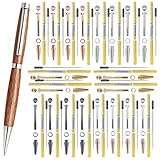
The best budget pen turning kit for a first project is usually a Slimline-style starter set with a 7 mm mandrel, matching bushings, five to ten pen kits, and a small selection of straight-grained blanks—but the lowest sticker price is not always the lowest real cost.
As an Amazon Associate we earn from qualifying purchases at no extra cost to you.


Quick picks by beginner situation
| Situation | Best kit format | What to look for | Likely total starting cost |
|---|---|---|---|
| Making one or two pens | Single Slimline or Sierra-style kit plus mandrel and bushings | One complete hardware kit, 7 mm mandrel, two blanks | $45–$85 |
| Making several gifts | Five- or ten-pen starter bundle | Reusable mandrel, bushings, 5–10 hardware sets, 10–20 blanks | $75–$150 |
| You already own a lathe | Pen hardware assortment with mandrel and bushings | Correct tube diameter and a compatible drive system | $30–$90 |
| You own no turning equipment | Complete pen-turning package | Mini lathe, turning tools, mandrel, drill, glue, finishing supplies | $250–$600+ |
| Limited workshop space | Compact mandrel system and one small kit style | Short bed-compatible lathe, small tool set, dust collection plan | $250–$450 before materials |
What a budget pen turning kit should include
Budget kits vary widely. Some are only pen hardware and wooden blanks; others include the equipment needed to mount and turn those parts. Before comparing prices, separate the contents into five categories.
- Mandrel: A traditional 7 mm mandrel holds multiple pen blanks between a threaded nut and a live-center support. A mandrel saver uses the tailstock to grip the mandrel shaft and can reduce pressure on the threaded end.
- Bushings: These are sizing guides for the specific pen model. Slimline bushings cannot automatically be used for a Sierra, cigar, or rollerball kit. The number and diameter of bushings matter more than the word “universal” on the package.
- Blanks: Wood, acrylic, stabilized wood, and resin blanks are sold in different sizes. A common two-piece Slimline blank is approximately 3/4 inch square and 2 1/4 inches long, though dimensions vary by kit.
- Pen hardware: Check whether the package includes tubes, nib, clip, center band, transmission, refill, and end cap. A tube and a blank are not a complete pen.
- Consumables and tools: You may still need a 7 mm drill bit, pen mill or barrel trimmer, cyanoacrylate or epoxy glue, sandpaper, finish, a pen press, and a way to cut blanks to length.
Head-to-head: the affordable kit formats
Slimline starter kits
Slimline kits are usually the least expensive entry point. The design uses two narrow blanks, a simple center band, and a twist mechanism. A typical kit uses 7 mm tubes and a 7 mm mandrel, making the ecosystem easy to find through suppliers such as Penn State Industries, Woodcraft, and Rockler.
The advantages are low hardware cost, widely available replacement parts, and forgiving dimensions. The downside is that thin barrels expose sanding errors quickly, and inexpensive transmissions may wear sooner than the visible metal components. Choose this format if you want to learn drilling, gluing, turning, sanding, and assembly without committing to a larger investment.
Sierra-style kits
Sierra-style kits generally use a single blank and a larger barrel than a Slimline. They often feel more substantial in the hand and hide minor shaping inconsistencies better. They also typically require their own tube size, drill bit, and bushing set.
The one-piece blank simplifies alignment, but the hardware usually costs more. A kit that appears only $5–$10 more expensive can require a separate bushing set or larger drill bit. This is a good choice for someone who expects to make several pens and wants a more substantial result than a basic Slimline.
Pen-making bundles with blanks and hardware
Multi-pen bundles can be the best value when they include a reusable mandrel, matching bushings, five or ten complete hardware sets, and enough blanks for each pen. Penn State Industries and other woodworking suppliers commonly sell kits in this general format, while Woodcraft and Rockler offer individual pen kits and accessories that can be combined into a similar package.
Inspect the hardware count carefully. “Ten-piece kit” may mean ten pen mechanisms, ten tubes, or ten total components rather than ten complete pens. The listing should identify the number of complete pen kits and whether refills are included.
Tool-and-lathe packages
A complete pen-turning package is only budget-friendly if you do not already own a lathe and basic turning tools. Small benchtop lathes often have a 10–12 inch swing and a 16–24 inch distance between centers, which is more than enough for pens. However, the package may omit a drill press, pen press, sharpening equipment, or dust collection.
For a first pen, a lathe package is less efficient than buying a complete pen kit if you can borrow or share a lathe. The machine is the major expense, not the hardware.
Real-cost calculation for a first pen
Here is a representative calculation using general market ranges rather than a single advertised bundle:
- Five Slimline hardware sets with tubes and refills: $20–$40
- Matching 7 mm mandrel: $15–$30
- Slimline bushing set: $8–$15
- Five wood blanks: $10–$25
- 7 mm drill bit: $8–$15
- Pen mill or barrel trimmer: $15–$30
- Glue, sandpaper, and finish: $10–$25
The likely total is $86–$180, but several items are reusable. If the mandrel, bushings, drill bit, and trimmer cost $55 initially and the consumables and hardware cost $35 for five pens, the first five pens cost about $90 total, or $18 each. The next five may cost only $7–$13 each if the tools remain serviceable.
A single-pen kit can therefore be economical for learning, but a five-pen package often has the lower cost per completed pen.
What you will probably need to buy separately
The most commonly omitted item is a pen press. You can assemble some pens with a drill press or a carefully controlled vise, but uneven pressure can crack acrylic, split wood, or push a transmission too far into the barrel. A small hand-operated pen press commonly costs about $40–$90 and is useful across many pen styles.
You may also need a way to cut blanks squarely. A bandsaw, table saw, or fine-tooth handsaw can work, provided the cut is accurate. The tube ends must be trimmed flush after gluing; a pen mill, barrel trimmer, or sanding jig is essential for this step.
For glue, medium-viscosity cyanoacrylate is fast and convenient, while two-part epoxy gives more working time. Whichever you choose, remove dust from the tube and drilled hole before assembly. A loose tube is a common cause of rattling or eventual failure.
Durability and ownership realities
The first parts to wear are usually sanding materials, pen refills, drill bits, and inexpensive transmissions—not the mandrel itself. Keep bushings clean because dried finish changes their diameter and leads to undersized or oversized barrels. Lightly sand or polish bushings only when necessary; removing material changes the reference size.
Traditional mandrels can bend if the tailstock is tightened aggressively. Bring the live center up until it supports the assembly, then add only enough pressure to prevent slipping. Excess pressure can bow the shaft and produce a barrel that is tapered even when the lathe setup looks correct.
Replace dull drill bits rather than forcing them through a blank. Heat can soften acrylic, burn wood, or enlarge the hole. Drill in stages or withdraw the bit frequently to clear chips. When turning, use sharp tools and take light cuts near the final diameter; removing too much material cannot be corrected without replacing the blank.
Buying checklist before you order
- Confirm the exact pen model, tube length, tube diameter, and bushing specification.
- Count complete hardware sets rather than individual components.
- Check whether the mandrel is 7 mm or another size and whether it fits your lathe’s Morse taper or chuck system.
- Verify that blanks are long and wide enough for the included tubes, with room for squaring the ends.
- Budget for a drill bit, glue, barrel trimmer, finish, and a safe assembly method.
- Prefer replacement parts that are easy to find from established woodworking suppliers.
Bottom line
For most beginners, a five-pen Slimline bundle with a 7 mm mandrel, dedicated bushings, ten correctly sized blanks, and complete hardware is the best budget pen turning kit. Choose a single kit only when you are testing the hobby or already own the mandrel and tools. Move to a Sierra-style kit when you value a thicker, more substantial pen and are prepared to pay for its separate bushings and drill size. The cheapest successful purchase is the one that includes compatible parts and reveals the extra tools before you start, not after the first blank has been glued.
0 Comments