What's inside
- How Each Machine Actually Works
- Wood vs Metal Lathe: Head-to-Head Specifications
- Workholding: Centers and Glue Blocks vs. Chucks and Collets
- Cutting Tools: Gouges vs. Tool Bits
- Decision Matrix: Which Lathe Fits Your Situation
- Can You Turn Metal on a Wood Lathe (or Vice Versa)?
- Ownership Realities: What Wears First
- FAQ
- The Bottom Line
- How Each Machine Actually Works
- Wood vs Metal Lathe: Head-to-Head Specifications
- Workholding: Centers and Glue Blocks vs. Chucks and Collets
- Cutting Tools: Gouges vs. Tool Bits
- Decision Matrix: Which Lathe Fits Your Situation
- Can You Turn Metal on a Wood Lathe (or Vice Versa)?
- Ownership Realities: What Wears First
- FAQ
- The Bottom Line
As an Amazon Associate I earn from qualifying purchases. This post may contain affiliate links at no extra cost to you.
Choosing between a wood vs metal lathe comes down to one fact: they are not interchangeable versions of the same machine. A wood lathe cuts soft, fibrous material with freehand tools at high spindle speeds and light rigidity; a metal lathe clamps hard stock rigidly and feeds a fixed cutting tool along precisely measured axes. If your goal is bowls, spindles, and furniture parts, buy a wood lathe. If you need to turn, thread, or bore steel, brass, or aluminum to tight tolerances, buy a metal lathe — and expect to pay significantly more for the iron that makes that precision possible.
As an Amazon Associate we earn from qualifying purchases at no extra cost to you.

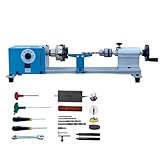
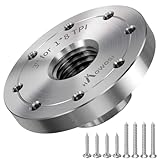

How Each Machine Actually Works
The wood vs metal lathe difference starts with the cutting method, because everything else follows from it.
On a wood lathe, the workpiece spins between a drive center and a tailstock (or on a faceplate/chuck), and you press a handheld chisel or gouge against a tool rest. You control the cut by feel — the bevel angle, pressure, and sweep of the tool are all in your hands. The machine only has to spin the wood fast and hold it securely.
On a metal lathe, the cutting tool sits in a tool post bolted to a carriage. Handwheels drive the carriage along the bed (longitudinal feed) and across it (cross feed), with dial graduations typically reading to 0.001″ or 0.02 mm. The machine does the precision work; you mostly set depths and manage feeds. A lead screw also lets you cut accurate screw threads — something a wood lathe simply cannot do.
Wood vs Metal Lathe: Head-to-Head Specifications
The table below compares typical machines you’d find in a home workshop — a 12″ midi wood lathe against a 7×14 mini metal lathe and a 10×22 bench metal lathe.
| Specification | Wood Lathe (12″ midi) | Mini Metal Lathe (7×14) | Bench Metal Lathe (10×22) |
|---|---|---|---|
| Swing over bed | 12–12.5″ | 7″ | 10″ |
| Distance between centers | 16–20″ | 14″ | 20–22″ |
| Spindle speeds | 250–4,000 RPM (variable) | 100–2,500 RPM | 70–2,000 RPM (geared) |
| Motor | 3/4–1 HP DC | ~3/4 HP DC | 1–1.5 HP |
| Machine weight | 75–120 lbs | 90–110 lbs | 350–600 lbs |
| Spindle mounting | Morse taper + threaded spindle (e.g., 1″×8 TPI) | MT3 spindle bore, 3-jaw chuck | MT5/D1 camlock, 3- & 4-jaw chucks |
| Cutting control | Freehand tools on a rest | Carriage feeds, 0.001″ dials | Carriage + power feed + lead screw |
| Typical street price (2026) | $300–$700 | $700–$1,200 | $2,000–$4,500 |
Two numbers matter most in the metal vs wood lathe comparison: weight and speed range. Weight equals rigidity — cutting steel generates forces that would chatter a light machine to pieces, which is why a 10″ metal lathe outweighs a 12″ wood lathe four or five to one. And the speed ranges barely overlap: wood wants 500–3,500 RPM for clean shearing cuts, while steel wants slow surface speeds (often under 400 RPM on larger diameters) to avoid burning the tool edge.
Workholding: Centers and Glue Blocks vs. Chucks and Collets
Wood lathes use spindle drives, live centers, faceplates, and four-jaw scroll chucks with jaw sets sized in inches — a Nova or Teknatool chuck might grip a tenon from 1.5″ to 3″. Holding to ±1/32″ is usually plenty.
Metal lathes use hardened three-jaw self-centering chucks, four-jaw independent chucks, collets, and steady rests. A decent three-jaw chuck holds within 0.003–0.005″ runout, and a four-jaw dialed in with an indicator gets under 0.001″. That hundredfold difference in required accuracy is why metal lathe workholding alone can cost more than an entire wood lathe.
Cutting Tools: Gouges vs. Tool Bits
Wood turning tools are long-handled gouges, scrapers, and parting tools in high-speed steel — a starter set runs $60–$200. You sharpen them freehand on a bench grinder or slow-speed wet wheel, often mid-project. They cut by shearing at the edge and dull gradually, predictably.
Metal lathe tooling means indexable carbide inserts, brazed carbide bits, or ground HSS tool bits held in a quick-change tool post. Inserts are consumables — a ten-pack of CCMT inserts might cost $15–$40, and each insert gives you three cutting edges before the trash bin. Add measuring tools (a decent micrometer and calipers, $80–$200), a dial indicator, cutting fluid, and you begin to see the real ownership cost.
Decision Matrix: Which Lathe Fits Your Situation
| Your situation | Recommended choice | Why |
|---|---|---|
| Bowls, pens, table legs, kitchen utensils | Wood lathe (midi or full-size) | High RPMs and freehand tool control are built for exactly this |
| Bushings, shafts, thread repair, model-engine parts | Metal lathe (7×14 mini or larger) | Requires feed dials, threading capability, and metal-capable workholding |
| Tight space, apartment or shared garage | Mini lathe of either type | Both benchtop formats fit a 3–4 ft workbench |
| Budget under $800 all-in | Wood lathe | A metal lathe at this price leaves nothing for the tooling it needs |
| Occasional aluminum or brass parts for projects | Metal lathe — not a wood lathe “with care” | Wood lathes lack the rigidity and workholding for safe metal cutting |
| Knob making, small round parts in soft wood | Either works; wood lathe is faster and cheaper | Metal lathes can turn wood but set up slowly for it |
Can You Turn Metal on a Wood Lathe (or Vice Versa)?
Occasionally, with limits. A metal lathe turns wood perfectly well — machinists make wooden handles and knobs on them routinely — but setup is slower and the high end of its speed range may leave small-diameter wood cutting poorly.
The reverse is the dangerous direction. A wood lathe’s freehand tool rest gives you no mechanical feed control, so you can’t take the light, measured passes metal requires; the tool grabs, the work tears out of light-duty centers, and the spindle bearings weren’t built for sustained cutting loads. Delrin, brass pins, and the occasional aluminum ferrule get turned on wood lathes at low speeds, but treat that as the ceiling, not the norm.
Ownership Realities: What Wears First
- Wood lathes: Drive belts and tailstock ram threads wear first. Keep the bed and banjo waxed — green wood’s moisture rusts cast iron fast. Budget replacement belts around $15–$30.
- Metal lathes: Half-nuts, lead screw, and carriage gibs take the wear. They need regular oiling at every fitting and periodic gib adjustment; neglect shows up as backlash and chatter within a year of heavy use.
- Consumables: Wood lathes eat sandpaper and gouge sharpening time. Metal lathes eat carbide inserts, cutting fluid, and center drills — figure $10–$40/month under regular hobby use.
- Common beginner mistakes: On wood lathes, catching a gouge by lifting the handle too early. On metal lathes, crashes from forgetting the half-nuts are engaged, and taking cuts too heavy for a mini lathe’s rigidity (keep roughing passes under ~0.010–0.015″ on a 7×14).
FAQ
Is a wood lathe or metal lathe better for a beginner?
A wood lathe has a friendlier learning curve — you can turn a serviceable spindle in an afternoon. A metal lathe demands measurement discipline and setup knowledge, but nothing about it is beyond a careful beginner who reads the dials and takes light cuts.
Can a metal lathe thread wood?
The lead screw can cut threads in dense hardwood, but dedicated wood threading kits on a wood lathe are easier for the coarse pitches wooden threads need.
What size lathe should I buy first?
Buy for your largest realistic project: a 12″ wood lathe covers most bowl and spindle work; for metal, a 7×14 mini handles bushings and model parts, but step up to a 10×22 or larger if you’ll ever need to swing stock over 3–4″ in diameter.
The Bottom Line
The wood vs metal lathe question resolves itself the moment you name your material and tolerance. Soft material and sculptural shapes: wood lathe, $400–$800 all-in. Hard material and measured precision: metal lathe, $1,500–$4,000 once you include the tooling it can’t work without. The mistake isn’t picking the “wrong” lathe — it’s buying a wood lathe hoping it will machine steel, or a metal lathe hoping it will feel like a wood lathe. It won’t.
0 Comments