What's inside
- Quick picks by workshop situation
- What makes a lathe bench stable?
- Work-surface height: comfort versus control
- Head-to-head: steel stand, hardwood bench, or mobile base?
- Features worth paying for—and those that are less important
- Fit the bench to the lathe, not just the room
- Setup steps that prevent vibration
- Durability and ownership realities
- Final buying recommendation
- Quick picks by workshop situation
- What makes a lathe bench stable?
- Work-surface height: comfort versus control
- Head-to-head: steel stand, hardwood bench, or mobile base?
- Features worth paying for—and those that are less important
- Fit the bench to the lathe, not just the room
- Setup steps that prevent vibration
- Durability and ownership realities
- Final buying recommendation
As an Amazon Associate I earn from qualifying purchases. This post may contain affiliate links at no extra cost to you.
The best lathe bench for most woodturners is a rigid steel or hardwood base with a 30–34 inch work height, at least 250 lb of usable capacity, adjustable feet, and storage that does not weaken the structure; choose a compact stand for a small lathe and a broad, anchored bench for full-size work.
As an Amazon Associate we earn from qualifying purchases at no extra cost to you.


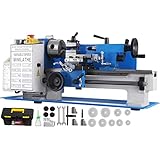
Quick picks by workshop situation
| Workshop situation | Best bench type | Useful target specifications | Why it fits |
|---|---|---|---|
| Occasional turning on a mini lathe | Compact steel stand or reinforced workbench | 24–36 in. wide, 18–24 in. deep, 150–250 lb capacity | Affordable, movable, and sufficient for small bowls, pens, and spindle work |
| Regular hobby use with a midi lathe | Dedicated steel lathe stand with shelf | 36–48 in. wide, 22–28 in. deep, 250–400 lb capacity | Balances rigidity, storage, and a comfortable working height |
| Large bowls or frequent production work | Heavy welded stand or anchored hardwood bench | 48–72 in. wide, 28–36 in. deep, 500 lb or more capacity | Greater mass and footprint reduce movement and vibration |
| Shared garage or limited floor space | Locking mobile bench with leveling feet | Four casters, two or more locks, 200–350 lb capacity | Can move away from a vehicle, but can still be stabilized before turning |
What makes a lathe bench stable?
A lathe bench is not simply a table that happens to be wide enough. The motor and rotating workpiece create changing forces, especially when a blank is out of balance. A light bench may be strong enough not to collapse but still shake across the floor or amplify chatter.
Look for three forms of stability:
- Mass: A heavier stand generally resists movement better than a thin, lightweight frame. A lower shelf filled with sandbags, paving slabs, or stored stock can add useful mass.
- Footprint: The bench should be at least as deep as the lathe bed and preferably 3–6 inches deeper. A narrow base makes the machine easier to tip or rock.
- Connection: Through-bolts or properly sized machine bolts are preferable to relying on wood screws into end grain. If the bench is mobile, lock the wheels and lower leveling feet before switching on the lathe.
For a full-size lathe, anchoring the bench to the floor or wall is often more effective than adding a thin top. For a mini lathe, a 1-1/2 to 2 inch hardwood or laminated plywood top can provide enough rigidity if the supporting frame is well braced.
Work-surface height: comfort versus control
Most turners should begin with a spindle-center height near elbow height, then adjust for body proportions and the type of work. A practical starting point is 30–34 inches from the floor to the lathe bed for many standing users. Taller turners may prefer 34–38 inches, while seated or mixed-use setups may need less.
Measure rather than copying a standard dimension. Stand naturally with your upper arms relaxed and your elbows bent roughly 90 degrees. The lathe center should usually sit around elbow height or slightly below it. A bench that is too high encourages raised shoulders and poor tool control; one that is too low promotes bending and makes long turning sessions tiring.
Remember that the bench height is not the same as the spindle height. Add the lathe’s feet, mounting plate, or vibration pads to the bench dimension. For example, if your preferred spindle height is 36 inches and the lathe places its center 8 inches above its mounting surface, a 28-inch bench is the starting point—not a 36-inch bench.
Head-to-head: steel stand, hardwood bench, or mobile base?
Welded steel stand
A steel stand is usually the best choice for a midi or full-size lathe. Square-tube legs, diagonal bracing, adjustable feet, and a lower shelf provide a strong foundation without taking up excessive space. Factory stands designed for specific lathes can simplify mounting, while universal stands offer more flexibility.
The main weakness is resonance. Thin sheet metal panels may transmit vibration or rattle when tools and accessories are stored inside. Add a dense shelf, rubber isolation pads, and a solidly attached top where appropriate. Typical general-market prices range from about $150–$450 for a compact or midi-lathe stand and $400–$1,000 or more for a heavy-duty full-size solution.
Hardwood or laminated plywood bench
A custom wood bench is attractive when you need unusual dimensions, integrated drawers, or a bench that matches other shop furniture. A 1-1/2 inch or thicker top, four substantial legs, stretchers near the floor, and diagonal or back bracing work well. Hardwood is not automatically more stable than steel; poor joinery and insufficient bracing can make a wooden bench shake.
Wood also requires attention to moisture and fasteners. Seasonal movement can loosen a mounting arrangement, so use elongated holes where needed and recheck bolts after the first few sessions. A custom bench may cost roughly $100–$500 in materials, depending on whether you already have suitable timber.
Mobile bench or tool cart
Mobility is useful in a shared garage, but casters are a compromise. Small swivel wheels can make the lathe feel unstable, and even locking casters may allow slight rocking. Choose large, load-rated casters, lockable wheels, and separate leveling feet that carry the load during use.
A good arrangement is to roll the bench into position, lock the casters, lower the leveling feet until the wheels are lightly unloaded, and then check for rocking before starting the motor. If you frequently turn large or unbalanced blanks, a fixed bench is the safer stability choice.
Features worth paying for—and those that are less important
- Adjustable leveling feet: More valuable than decorative panels because an uneven floor can make a rigid bench rock.
- Lower shelf: Useful for adding mass and keeping chucks, faceplates, and abrasives within reach.
- Closed cabinets: Helpful for dust protection, but leave room for motor ventilation and avoid storing flammable finishing materials beside heat-producing equipment.
- Perforated mounting plates: Convenient for different lathes, but verify that the slots do not place bolts too close to the edge of the lathe feet.
- Rubber pads: They can reduce high-frequency vibration, but soft pads may make a tall bench less stable. Use firm, load-rated material rather than thick foam.
- Drawer storage: Convenient for calipers and chuck keys, but shallow drawers are usually better than a large heavy cabinet that raises the center of gravity.
Fit the bench to the lathe, not just the room
Before buying, record the lathe’s overall length, bed width, mounting-hole spacing, motor location, tailstock travel, and the space needed to remove a chuck or reverse the headstock. Leave at least 24 inches of working clearance at the front and enough room at the tailstock end to handle long stock. A bench that fits between two walls may still be unusable if you cannot swing a tool handle comfortably.
Check the capacity calculation as well. If a lathe weighs 150 lb, stored accessories add 50 lb, and you expect a 100 lb out-of-balance blank during setup, the minimum static load is already 300 lb. A sensible target is at least 1.5 times that figure, or 450 lb, to provide margin for dynamic forces and uneven loading. Manufacturer capacity figures are not always directly comparable, so favor a broader, heavier bench when the numbers are unclear.
Setup steps that prevent vibration
- Level the bench. Adjust each foot on the actual shop floor rather than leveling it on a smooth showroom surface.
- Place the lathe centrally. Keep the machine’s center of gravity over the strongest part of the frame, not over an unsupported shelf or drawer cavity.
- Use suitable fasteners. Install the size and grade specified by the lathe maker, with washers large enough to spread the load.
- Check pulley and belt access. The stand should not force the motor against a wall or make speed changes awkward.
- Run an unloaded check. Start at low speed and watch for rocking, rattling shelves, loose bolts, or movement of the feet.
- Recheck after the first few sessions. Vibration can settle timber, compress pads, and loosen hardware even when the original installation was sound.
Durability and ownership realities
The parts most likely to cause trouble are not usually the main legs. Casters wear, leveling-foot threads collect dust, shelf fasteners loosen, and thin cabinet doors begin to rattle. On a wooden bench, end-grain joints and undersized stretchers are common failure points. On a steel bench, inspect welds, powder-coat damage, and any areas where wet shavings can sit against bare metal.
Keep the bench clear of long shavings, vacuum around feet and casters, and wipe metal surfaces if the shop is damp. Do not use a lathe bench as a general lumber rack if the stored material blocks ventilation or makes the load top-heavy. A stable shelf is useful; an overloaded shelf above spindle height is not.
Final buying recommendation
For a mini lathe used occasionally, choose a compact reinforced bench with a solid top and a 150–250 lb capacity. For regular midi-lathe work, a dedicated steel stand around 36–48 inches wide with adjustable feet and a dense lower shelf is the strongest all-round choice. For a full-size lathe or large bowl turning, prioritize mass, depth, anchoring, and a capacity of at least 500 lb over drawers or mobility.
If you are searching for a “bench with lathe,” remember that the bench is part of the machine’s working system: its height, mass, and connection to the floor directly affect control. If you meant “bench with lathe OSRS,” that is a different search entirely—the phrase relates to Old School RuneScape gameplay rather than a real woodworking bench, so woodworking specifications will not answer that game question.
0 Comments