What's inside
As an Amazon Associate I earn from qualifying purchases. This post may contain affiliate links at no extra cost to you.
Finding the best board games for families means balancing rule complexity against the attention spans and skill levels of players who can be years apart in age. A game that bores a seven-year-old or frustrates a ten-year-old is a game that ends up in a closet. The real question is not which game earns the highest aggregate rating but which one gets pulled off the shelf more than once a month.
What separates a worthwhile purchase from a shelf ornament is the gap between how the first play feels and how the twentieth play feels. A game with deep strategy but fiddly setup fails that test. One that is too simple also fails, because older siblings lose interest within two rounds. The eight products below were compared on published specifications, listed prices, and aggregated owner feedback to identify titles that thread that needle.
As an Amazon Associate we earn from qualifying purchases at no extra cost to you.




Our Top Picks
 Spin Master Games Hedbanz Picture Guessing Game forOne Size10.55 x 10.55 x 2.05 inches1.23 PoundsCheck on Amazon
 Hasbro Gaming Trouble Board Game for Kids Ages2.0 H x 11.0 L x 11.0 W1.61 x 10.5 x 10.5 inches0.85 poundsCheck on Amazon

Quick Picks
| Product | Best For | Price |
|---|---|---|
| Sorry! | Youngest players (6+) | $8.98 |
| Hedbanz | Active and physical play | $16.99 |
| Herd Mentality | Laugh-out-loud family nights | $24.99 |
| Do You Really Know Your Family? | Multi-generational bonding | $19.82 |
| Yahtzee | Fast dice-roll strategy | $8.88 |
| Trouble | Ages 5 and up | $9.84 |
| Tic Tac Toe | Absolute beginners | $5.97 |
| SEQUENCE | Older kids and strategy fans | $19.97 |
How We Picked
We filtered candidates on four criteria that owner feedback consistently identifies as deal-breakers: age flexibility, rules clarity, component durability, and session length. A game must be teachable in under two minutes, survive weekly play without cardboard disintegration, and finish before attention fades. Price was a final differentiator among games that cleared those thresholds, not a standalone quality signal.
The 8 Best Board Games For Families in 2026
Sorry!
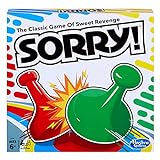
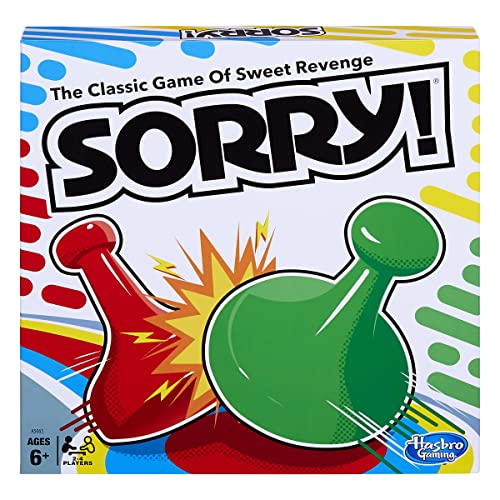
Sorry! gives each player four pawns to race around a classic track using cards that move pieces and occasionally send opponents home. It suits households with kids starting around six who need a game that does not punish a younger sibling for being younger. Owner feedback highlights the emotional range of a single card draw and notes that rules are teachable in under two minutes.
- Pro: The four-pawn system creates enough decisions to keep older players engaged without adding complexity.
- Pro: Card-driven movement removes the math burden that slows younger children down.
- Con: Random draws mean a player can lose despite good decisions, which frustrates sensitive kids.
Skip it if your family dislikes games where luck overrides strategy almost entirely.
Hedbanz
Hedbanz puts a picture card on each player’s head and challenges them to guess what they are by asking yes-or-no questions. It suits families who want movement and noise rather than quiet strategy. Owner reviews note that the headband timer keeps turns short so impatient children stay engaged, and the format levels the playing field between a six-year-old and an adult.
- Pro: The physical headband component makes it feel like a party game rather than a traditional board game.
- Pro: Yes-or-no questions build vocabulary and logical thinking in younger players.
- Con: Requires at least three players, so it does not work as a two-person game.
Skip it if you regularly play as a pair.
Herd Mentality
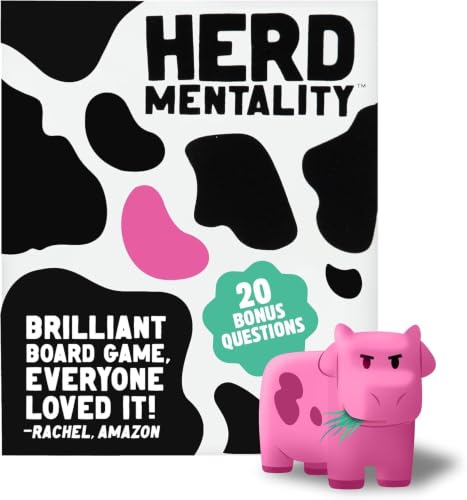
Herd Mentality asks players to guess the most popular answer to a lighthearted question, scoring points for matching the group consensus. Designed for ages ten and up, it works best when four or more family members answer silly prompts honestly. Owner feedback consistently praises the laughter it generates and the low barrier to entry, since no special knowledge is needed.
- Pro: No reading required during play, so mixed-literacy households can all participate.
- Pro: Question variety keeps replay value high without expanding the box with extra components.
- Con: The age-ten floor means younger children may not grasp the social deduction angle.
Skip it if your youngest player is under ten and you want everyone involved simultaneously.
Do You Really Know Your Family?
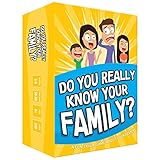
This game prompts players to predict how their family members would answer personal questions, then compares guesses to actual responses. It targets households with kids, teens, and adults who want a structured conversation tool disguised as a game. Owner reviews highlight the surprise moments when a parent learns their teenager answered differently than expected. Everyone answers the same prompt each round.
- Pro: Reveals and builds empathy between family members who rarely discuss preferences openly.
- Pro: Simple scoring means no one is eliminated, keeping every player active until the end.
- Con: Some prompts can feel intrusive if the family dynamic is strained.
Skip it if your household prefers action-based games over conversation-based ones.
Yahtzee
Yahtzee is a roll-and-score dice game where players fill thirteen category slots across thirteen rounds, choosing which dice to keep and reroll. Published specs mark it for ages eight and up with two or more players, making it one of the most flexible titles here. Owner feedback notes the strategic depth hidden in a simple format: a well-placed zero can change the entire outcome.
- Pro: Two-player play is fully functional, unlike most family games that require three or more.
- Pro: The scoring sheet adds a math-practice element parents appreciate for younger players.
- Con: A bad roll streak can leave a player feeling locked out with no recovery option.
Skip it if your family gets frustrated by games that offer no catch-up mechanic.
Trouble
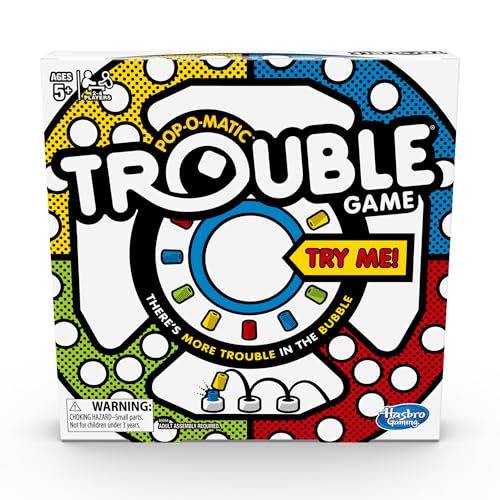
Trouble is a roll-and-move race for ages five and up with two to four players, built around a pop-o-matic bubble die. Owner feedback frequently mentions the tactile satisfaction of the bubble for younger children and the straightforward goal of getting four pieces home. The game is short enough that a tired five-year-old can finish without a meltdown.
- Pro: The pop-o-matic die eliminates lost or rolled-across-the-floor pieces entirely.
- Pro: Rules are teachable in under a minute, removing setup friction for reluctant players.
- Con: Pure luck with no strategic layer means parents and older siblings disengage quickly.
Skip it if you need a game that holds adult attention beyond three or four rounds.
Tic Tac Toe
Tic Tac Toe is the classical three-in-a-row grid game and the entry point for toddlers or children just learning to take turns. At $5.97, it carries the lowest risk of any title here. Owner reviews confirm the appeal is narrow but reliable: a young child experiences a genuine win-lose cycle in under two minutes, building confidence for longer games.
- Pro: Lowest price point makes it an easy addition to any gift set.
- Pro: Teaches turn-taking and goal recognition without any reading.
- Con: Once a player memorizes optimal strategy, every game ends in a draw.
Skip it for children older than seven unless you want a quick palate-cleanser between longer games.
SEQUENCE
SEQUENCE combines card play with a chip-placement board: players match a hand card to a board space and stack a chip, racing to form a line of five. At $19.97, it delivers a strategic depth that keeps adults genuinely challenged. Owner feedback praises the push-your-luck tension of deciding whether to play a high-value card now or save it, and the folding board keeps storage manageable.
- Pro: Planning several moves ahead keeps older players and parents invested.
- Pro: Folding board and plastic chips reduce the storage and durability concerns common to larger games.
- Con: The age-ten recommendation means children under eight will struggle to track which cards match which spaces.
Skip it if your youngest regular player is below ten.
Buying Guide
Age Span and Rules Clarity
The published age range is a starting point, not a guarantee. A better indicator is whether the rules fit on one page and whether every mechanic can be demonstrated in a single round without verbal explanation. In this roundup, Trouble and Tic Tac Toe meet that bar most easily. SEQUENCE and Herd Mentality require players to hold two or three rules in mind simultaneously, which is where younger children start to disengage.
Session Length and Turn Fatigue
A game that takes more than thirty minutes for its first play will likely collect dust. The titles here split into quick racers like Sorry!, Trouble, and Yahtzee that finish inside fifteen minutes, and longer engagement games like SEQUENCE and Herd Mentality that run twenty to thirty minutes once everyone knows the rules. If your household plays after dinner when energy is low, lean toward the shorter group.
Component Durability and Cost Per Play
Paper components such as cards and score sheets degrade first under weekly use. At under ten dollars, expect a replacement cycle within a year or two, though the low price makes that painless. At the twenty-dollar tier, SEQUENCE and Herd Mentality use thicker boards or plastic chips that last meaningfully longer. Judge value by cost-per-play: a nine-dollar game played weekly for two years delivers more entertainment per dollar than a twenty-dollar game played three times.
Our Verdict
The top pick for most families is SEQUENCE. It is the only game here that keeps every age group engaged simultaneously without dumbing itself down, and the folding board plus plastic chips justify the price through long component life. For a budget pick, Sorry! at $8.98 delivers the widest emotional range per dollar and works with players as young as six. If your household frequently plays as a pair, Yahtzee wins outright at $8.88 because it is the only title here that functions at full strategic depth with two players.
FAQ
How many players do these games require?
Most titles here support three or more players. Yahtzee and Tic Tac Toe work with two, and Trouble covers two to four. Hedbanz and Herd Mentality need at least three to function as intended.
What is the best game for a five-year-old?
Trouble is the only title here with a published age floor of five, thanks to its single-mechanic pop-o-matic roll. Tic Tac Toe also works at five if the child recognizes three-in-a-row patterns.
Which of these games have the highest replay value?
SEQUENCE and Herd Mentality lead because their core mechanics generate different decisions and social dynamics each round. Yahtzee follows closely, since the thirteen-category scoring grid produces new strategic puzzles every time.
Are these prices reliable year-round?
The figures reflect current listings as of this 2026 roundup, but board game prices shift with seasonal sales and stock availability. Expect small variation; none of these titles commands a premium that would change the recommendations here.




0 Comments