As an Amazon Associate I earn from qualifying purchases. This post may contain affiliate links at no extra cost to you.
Tools rarely die of old age. They die because dust packed into the motor vents, because a battery cooked in a truck all summer, or because a bearing was left dry. Almost all of it is preventable in a few minutes a month.
Tools almost never fail without warning, though. The drill that suddenly quit had been running hot for weeks. The battery that died mid-cut had been charging warm and giving short runtimes for a month. The signals were there and nobody was looking, because when maintenance works nothing happens, so it never feels urgent.
The routine is smaller than most people assume: a thirty-second habit after dusty work, plus one pass over the whole kit about once a month. Everything below is either part of that pass, or a decision about what to buy so the pass stays short enough that you keep doing it.
The misconception: maintenance means taking tools apart
Ask most people what power tool maintenance involves and they picture a split housing, brushes being swapped, bearings repacked. That image is why the job gets skipped — it sounds like a Saturday. It is also mostly obsolete: bearings in modern tools are sealed, brushless motors have no brushes to change, and the electronics are not user-serviceable by design.
What you can still control is a short list: heat, dirt, moisture, and abrasion. It is closer to keeping a car’s air filter clean than to rebuilding the engine, and it accounts for most of the gap between a tool that lasts a few years and the same tool lasting a decade or more.
Weekly: blow out the vents
Dust in motor vents is the leading cause of premature tool death. It insulates the motor, the tool runs hotter, and heat destroys windings and electronics. Compressed air through the vents after any dusty session takes thirty seconds.
Wear eye protection — you are firing sawdust and metal fines into the air.
Technique beats pressure. Pull the battery or unplug first, then aim the air so dust travels back out the way it came instead of deeper into the housing. Moderate pressure is plenty; blasting a motor at full shop pressure can spin the cooling fan far faster than it was built to turn. Caked, resin-bound dust needs a stiff brush first. Never solvent into a vent.
Some tools earn this weekly and some barely need it. Random orbit sanders, routers in MDF, grinders and mitre saws are the worst offenders, because they make fine dust right at the intake. Cordless tools that breathe through the battery foot come next, since the pack sits in a bed of dust. A drill used on indoor trim can go months.
Monthly: the ten-minute pass
Put everything on the bench at once. Doing it as a single sitting is the trick — a routine you perform tool by tool, whenever you happen to notice, is a routine you will have abandoned by March.
- ✔ Wipe housings and check for cracks, especially around the battery mount
- ✔ Check the cord on corded tools for nicks near the strain relief
- ✔ Clean battery terminals with a dry cloth — never lubricate them
- ✔ Check chucks and collets for debris and run-out
- ✔ Test the brake on grinders and saws
- ✔ Check guards move freely and return properly
Two of those deserve a note. The strain relief is the moulded collar where the cord leaves the tool, and it is where cords fail, because that is where flexing concentrates; a nick there means replace the cord, not tape it. Guards are the one item where you are testing a spring rather than looking for dirt, and a guard that returns slowly or hangs up is the failure that precedes an injury.
Compressed air and cleaning supplies
A blow gun on a small compressor, or canned air if you have no compressor. This one habit extends tool life more than anything else.
Choosing an air source, cheapest to best
Canned air. Fine if you own three tools and work indoors. It empties fast, chills whatever it hits, and has the worst cost per blast of anything here once you use it regularly. A stopgap, not a system.
A small portable compressor and a blow gun. The value pick for most home shops, and the point where cleaning becomes a habit instead of a decision. Judge it on noise before anything else, because a loud one gets used less. It also inflates tyres and drives a brad nailer, which is how it earns its floor space.
Shop air with a moisture trap. If you already own a compressor, the upgrade that matters is the water separator ahead of the gun, not the gun. Compressed air carries condensate, and blowing water into a motor undoes the whole exercise. A long, thin nozzle reaches vents a wide one cannot.
Who should skip all of it: if you work in a spare room with a vacuum permanently hooked to your sander, a soft brush and a crevice tool recover most of what air would. Air buys speed, and speed only matters when dust is constant.
Batteries: the expensive consumable
Batteries are where neglect costs the most money. Heat is the enemy — a pack left on a dashboard in summer ages dramatically faster than one stored indoors. Storage charge matters too: for long periods, around half charge is kinder than full or empty.
Add up what you have spent per platform and the packs usually out-total the tools, which is why these habits are worth more than any accessory you could buy.
- ✔ Store indoors, ideally at room temperature
- ✔ Around 40–60% charge for long-term storage
- ✔ Let hot packs cool before charging
- ✔ Rotate packs so all get used, rather than favouring one
- ✔ Replace packs that visibly swell — immediately and safely
Match capacity to the tool, not to the biggest number. Compact packs keep drills and impact drivers balanced and are the ones you actually reach for; high-capacity packs belong on saws, grinders and outdoor gear, where runtime matters more than weight. Two of each beats four of one size.
Buy the charger you will leave on the bench. One that cools a hot pack before it starts, rather than pushing current in straight away, does more for pack life than any habit you can adopt. Rapid charging is a convenience with a cost.
Avoid unbranded replacement packs. This is the most common false economy in the category. Cheap third-party packs are where cell quality, protection circuitry and thermal cutoffs get stripped out to hit a price, and the failure mode is a fire in your garage.
Blades and bits: sharp is safe
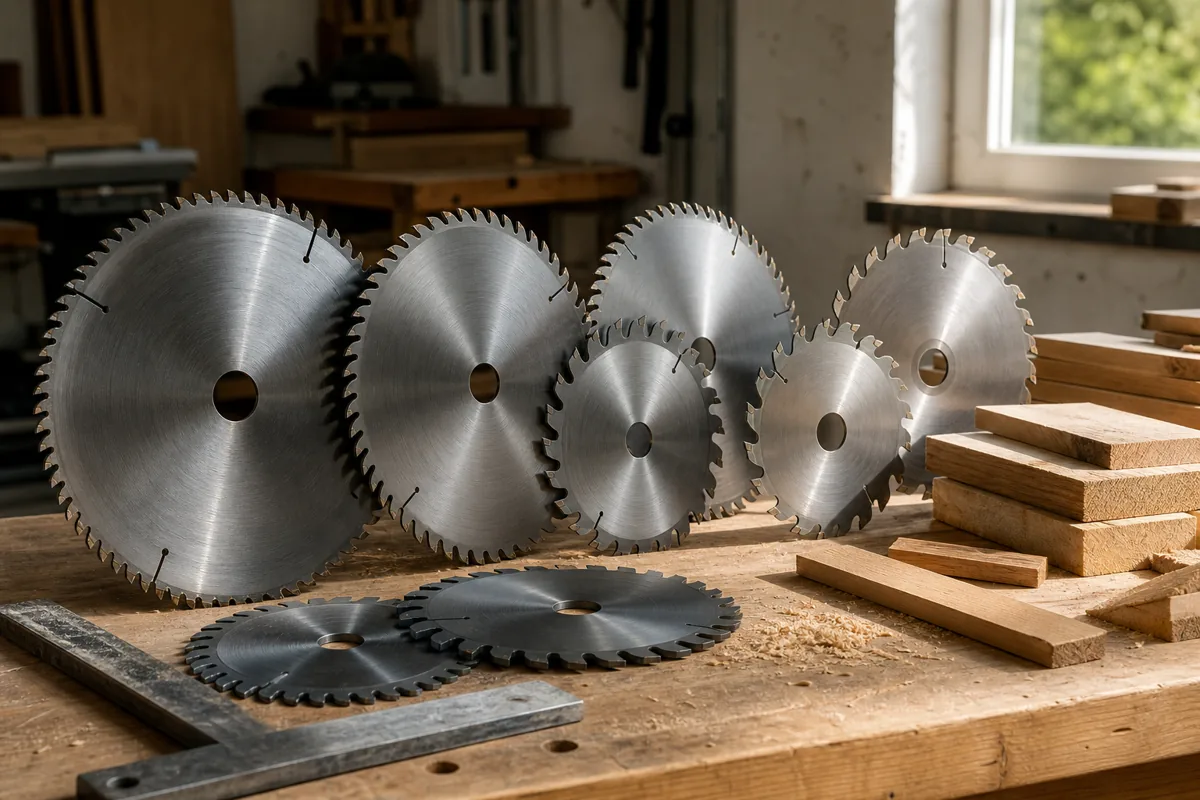
A dull blade needs more force, and more force is what causes kickback and slips. Dull bits burn wood and overheat motors. Cleaning pitch off saw blades with a dedicated cleaner restores a surprising amount of performance — many “dull” blades are simply dirty.
Learn to tell dirty from dull before spending anything. Dirty is brown varnish on the plate and gum between the teeth, and the burning gets worse as the cut goes on. Dull is a rounded or chipped carbide tip you can see with a loupe, and the cut is bad from the first inch — squealing, extra feed pressure, wandering.
Then choose clean, sharpen, or replace. Clean first, always. Sharpening pays on thick-kerf blades and good dado sets that still have carbide body left to grind, and rarely pays on the thinnest promotional blades, where the service costs roughly what a new blade does. Router bits get cleaned and then replaced; a chipped edge is not a home repair. Skip the oven-cleaner trick that circulates online, because caustic cleaners attack the brazing and the carbide binder.
Blade cleaner and sharpening supplies
Resin build-up mimics dullness. A soak and a brush often restores a blade you were about to replace.
Storage
Dry, out of direct temperature swings, ideally in cases or on a cleat wall rather than in a pile. Condensation causes rust on unprotected steel — a real issue in unheated garages during seasonal changes. A dehumidifier or a few rust-inhibiting products in drawers solves it cheaply.
Rust in an unheated space is less a humidity problem than a temperature one: cold steel plus a warm, damp day puts water on the surface, which is why spring and autumn do the damage. In order of cost, the fixes are: never put tools away damp or sap-covered, wax the cast-iron tops, use inhibitor products inside closed drawers and cases where the volume is small, and add a dehumidifier only if the space is genuinely sealed, since it cannot beat an open garage door.
Rust prevention for shops
Vapour-phase inhibitor products in drawers and cases. Cheap insurance for cast-iron tops and hand tools.
What not to do
- ✘ Never oil battery terminals or motor commutators
- ✘ Never pressure-wash a power tool
- ✘ Never store tools damp in a sealed case
- ✘ Never keep using a tool with a damaged cord or cracked housing
- ✘ Never ignore a burning smell — stop and investigate
The burning smell deserves emphasis, because it is the warning people talk themselves out of. A sharp ozone or hot-varnish smell means insulation is cooking, and a motor that has been there once gets there faster next time. Stop, let it cool, clear the vents, and ask whether you were forcing a dull cutter — blocked airflow and overload are usually the same story.
How much of this applies to you
The occasional user
A few projects a year, tools kept indoors. Forget the calendar and work by event: clear the vents after any sanding, and set storage charge before a long shelf period. Storage is your enemy, not wear.
The every-weekend woodworker
The monthly pass is written for you. Cleaning blades on a schedule pays best, because you are the one most likely to bin a blade that only needed a soak.
Tools that live in a vehicle
Heat first, vibration second. Bring packs indoors overnight, keep them out of the cab in summer, and expect guards and fasteners to loosen faster than they would in a shop.
FAQ
Do brushless tools need any maintenance? Less, but they still need vents cleared — heat is still the enemy.
How do I know when a battery is done? Sharply reduced runtime, rapid heating, or any visible swelling. Swelling means dispose of it properly, now.
How do I dispose of dead lithium packs? Never in household waste. Most US hardware retailers and battery recycling programmes take them free.
Does anything actually need oil? Air tools do — a few drops in the inlet before use, per the manual. Electric tools generally do not: bearings are sealed, and contacts and commutators must stay dry. Oil what carries air, not what carries current.
See maintenance supplies →

0 Comments