

Our Top Picks

What's inside
As an Amazon Associate I earn from qualifying purchases. This post may contain affiliate links at no extra cost to you.
A full size wood lathe changes what a weekend in the shop can produce, but only when its capacity matches the work you actually plan to turn. Swing decides the widest bowl you can mount, distance between centers decides the longest spindle, and motor power decides whether a heavy, uneven blank keeps turning smoothly or stalls halfway through a cut. Buying too small means outgrowing the machine within a year, while buying a massive industrial lathe means wrestling a machine that dominates a small garage.
This guide is written for weekend woodworkers who want one capable floor lathe for bowls, table legs, and larger spindle work, and for home-shop owners weighing a first full size machine against a benchtop midi. Each lathe below was picked from the names and specifications shown on its Amazon page, with swing, bed length, motor, and speed range checked against the listing.
Quick Picks
As an Amazon Associate we earn from qualifying purchases
| Product | Best for | Key spec from title |
|---|---|---|
| JET JWL-1640EVS 16 x 40 | Weekend bowls and long spindles | 16-inch swing, 40 inches between centers |
| Powermatic 3520C 20 x 35 | Large bowls and heavy blanks | 20-inch swing, 2 HP motor |
| JET JWL-1440VS 14 x 40 | Long spindles in a smaller shop | 14.5-inch swing, 40 inches between centers |
How to Choose
Swing over bed sets your bowl limit
Swing is the diameter of the widest piece that clears the bed, and it is the first number to check when bowls are on your project list. A 14-inch swing handles bowls up to about 13 inches once you allow for an uneven blank, while a 20-inch swing opens up platters and wide salad bowls that a smaller machine simply cannot mount. Weekend turners who mostly make pens and small bowls waste money on a 24-inch swing, but anyone who dreams of a single large serving bowl needs the extra clearance from day one. For a weekend turner, measuring your three largest planned bowls before ordering keeps the swing decision grounded in real projects rather than guesswork.
Distance between centers sets your spindle limit
Between-centers length decides whether table legs, bed posts, and stair balusters fit on the machine, and it cannot be faked with a chuck or a faceplate. A 40-inch bed covers most furniture spindles, while a 35-inch bed still handles chair legs and shorter table legs with room to spare. Check the longest piece you plan to turn, add a few inches for the centers and the tool rest, and let that number rule out machines with short beds before you compare anything else. A tape measure and your project list are better guides than any catalog headline when the bed length decision comes up.
Motor power and low-speed torque matter more than top speed
A heavy, out-of-balance bowl blank needs torque at low speed, not a high maximum RPM, so look at the motor rating and the bottom of the speed range together. A 1.5 or 2 HP motor with a low end near 40 RPM can rough a wet blank without stalling, while a weaker motor forces light cuts and long sessions. Electronic variable speed helps here because you can slow the work without stopping to move a belt, which keeps momentum on a weekend project with limited shop time. Test the low end of the range on a scrap blank first, because a lathe that feels smooth at 400 RPM can still chatter at 60 RPM if the belt is worn.
Weight, footprint, and power supply decide whether it fits your shop
A full size lathe weighs several hundred pounds and needs a flat, solid floor plus clearance in front for your body and behind for the tailstock. Measure the machine footprint, add at least two feet of working room on the operator side, and confirm the voltage: many larger lathes need a 220V circuit, while 115V models plug into a standard shop outlet. A machine that cannot be delivered through your garage door or wired in your shop is the wrong machine, no matter how good its specifications look. Sketch the shop layout on paper before ordering, marking the door swing, the dust collector hose, and the path for long stock.
The 3 Best Options
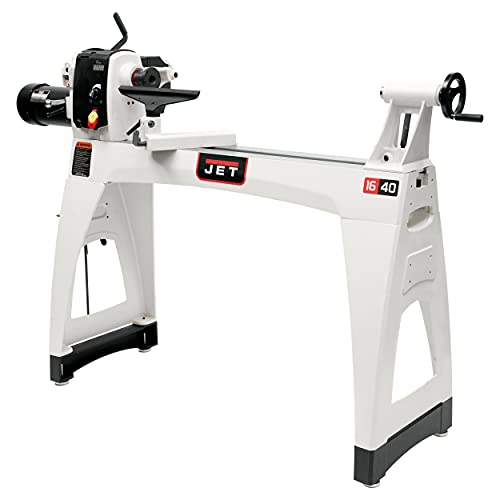
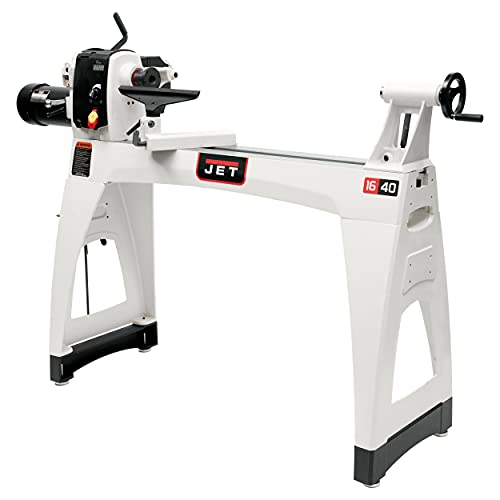
JET JWL-1640EVS 16 x 40 EVS Wood Lathe
The JET JWL-1640EVS suits a weekend turner who wants genuine full size capacity without stepping up to a 220V industrial machine. Its 16-inch swing covers large bowls, its 40-inch bed covers table legs, and its electronic variable speed runs from a very low 40 RPM up to 3200 RPM, so roughing a heavy blank and finishing a delicate spindle both feel controlled. The sliding headstock adds flexibility for outboard work, and the cast iron build keeps vibration down on long sessions.
Specs
- 16-inch swing over bed; 40 inches between centers
- 1.5 HP motor; 115V single phase
- Electronic variable speed from 40 to 3200 RPM
- Digital readout; sliding headstock; 36 indexing positions
- Forward and reverse rotation; cast iron and steel construction
- 377 pounds; 5-year warranty
- Includes legs, riser blocks, tool rest, tool shelf, and wrench
Best for: Weekend turners who want one floor lathe for bowls, spindles, and furniture parts.
Watch out for: Confirm you have a 20-amp 115V circuit and help to move a 377-pound machine into place.
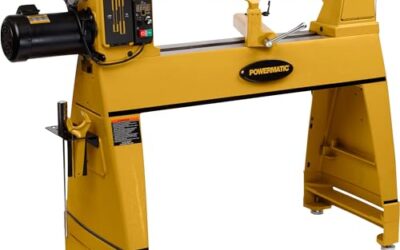
Powermatic 3520C 20 x 35 Wood Lathe

The Powermatic 3520C suits a weekend woodworker who turns large bowls and wants a machine that will never be the limiting factor. Its 20-inch swing and 2 HP motor handle wide, heavy blanks with ease, and its digital indexing readout and RPM display make it simple to repeat a speed setting from one session to the next. The sliding headstock and magnetic control box keep the controls where you need them, and the heavy cast iron bed damps vibration on rough, unbalanced stock.
Specs
- 20-inch swing over bed; 35 inches between centers
- 2 HP motor; 220V single phase
- Electronic variable speed from 15 to 3200 RPM
- Digital indexing readout and RPM display
- Sliding headstock; magnetic-backed movable control box
- Cast iron construction; 726 pounds; 5-year warranty
- Includes riser blocks, 14-inch tool support, centers, and faceplate
Best for: Turners focused on large bowls, platters, and heavy blanks in a dedicated shop.
Watch out for: It needs a 220V circuit on a 20-amp breaker, plus a clear path for a 726-pound delivery.
JET JWL-1440VS 14 x 40 Wood Lathe
The JET JWL-1440VS suits a weekend turner whose projects are long rather than wide: table legs, bed posts, and porch spindles that need a 40-inch bed but not a 20-inch swing. Its 1 HP motor and electronic variable speed from 400 to 3000 RPM cover most spindle work comfortably, and at 220 pounds it is far easier to place in a small garage than a floor-standing lathe of the same length. The long bed is the point here, and it delivers that length without demanding a bigger shop.
Specs
- 14.5-inch swing over bed; 40 inches between centers
- 1 HP motor; 115V/230V single phase
- Electronic variable speed from 400 to 3000 RPM
- Cast iron construction; MT2 spindle and tailstock tapers
- 220 pounds; 5-year warranty
- Includes tool rest, faceplate, spur center, live center, and knockout rod
Best for: Long spindle work such as table legs and bed posts in a smaller home shop.
Watch out for: Its 400 RPM low end is high for roughing large, uneven bowl blanks, so keep bowls modest.
Which One Fits Your Situation
Weekend bowls are your main project
Choose the Powermatic 3520C, because its 20-inch swing and 2 HP motor give the most room for wide bowls, and its low 15 RPM floor keeps heavy blanks under control. The JET 1640EVS is the fallback when a 220V circuit is not available. Its digital readout also helps you repeat a speed that worked on the previous bowl, which saves time across a weekend of turning.
Long furniture spindles come first
Choose the JET JWL-1440VS, because its 40-inch bed handles table legs and bed posts while its smaller footprint and 115V supply fit a garage shop. Step up to the 1640EVS when bowls share equal billing with spindles. The 1440VS leaves budget and floor space for a chuck and a set of turning tools, which a longer or heavier machine might not.
One lathe must cover bowls and spindles
Choose the JET JWL-1640EVS, because its 16-inch swing, 40-inch bed, and 40 RPM low end cover both jobs on a standard household circuit. It is the most balanced of the three for mixed weekend work. The 40 RPM low end is the detail that makes this choice work, because it lets you round a wet blank without rushing the cut.
A dedicated shop with room for a heavy machine
Choose the Powermatic 3520C, because its mass and power reward a permanent setup, and its digital readout and sliding headstock make repeat work faster. Confirm the 220V supply before ordering. A permanent setup also lets you add a dust hood and a sharpening station nearby, which turns the lathe corner into a complete turning area.
Common Mistakes
- Buying for the biggest bowl you might turn one day instead of the work you turn most weekends.
- Ignoring the voltage requirement and discovering after delivery that the shop has no 220V circuit.
- Forgetting floor space for the operator, the tailstock, and a safe path around the machine.
- Choosing by top speed alone instead of checking low-speed torque for roughing heavy blanks.
- Skipping a chuck and faceplate budget, then finding the lathe cannot hold bowl work out of the box.
Frequently Asked Questions
What size wood lathe is best for weekend projects?
A 14 to 16-inch swing with 35 to 40 inches between centers covers most weekend work, from bowls to table legs. Smaller machines limit bowl diameter, while larger ones demand more floor space, more power, and more help to install. If you turn pens and small bowls, a midi lathe is the better buy, and a full size machine only earns its keep when bowls and spindles are work.
Do I need 220V for a full size wood lathe?
Not always. Several full size lathes run on 115V, including the JET 1640EVS and 1440VS, while larger 2 and 3 HP models such as the Powermatic 3520C need 220V. Check the listing and your panel before ordering. A qualified electrician can usually add a 220V circuit, but the cost belongs in the purchase budget rather than coming as a surprise after delivery.
How much floor space does a full size lathe need?
Allow the machine footprint plus about two feet in front for your stance and tool movement, and room at each end for the tailstock and long spindles. A 16 x 40 lathe needs a clear run of eight feet along the wall. Leave extra room at the tailstock end for long spindles, and keep the area clear of offcuts so you can step back safely while a blank spins.
Is variable speed worth it on a full size lathe?
Yes, because it lets you slow down for rough, unbalanced blanks and speed up for finishing without stopping to move a belt. A low minimum speed matters more than a high maximum speed for most weekend turning. Electronic variable speed is the most convenient version, because it changes speed with a dial instead of a belt move, which keeps a weekend session flowing.
Related guides
More from Amazon
Programs that pair well with the guide above. Offers and eligibility are set by Amazon and may change.
A free business account with business pricing and bulk-buying tools for work, shop or home office.
Create a business accountFree shipping on eligible items, Prime Video and more. Eligible new members can start with a free trial.
Start a Prime free trialAudiobooks and podcasts to listen to on the go. Eligible new members can start with a free trial.
Try Audible freeAd-free music streaming. Eligible new subscribers can start with a free trial.
Try Music Unlimited freeAs an Amazon Associate we earn from qualifying purchases.
Write Your Review
No reviews yet. Be the first to share your experience!