RP Woodworks

  • Home
  • Reviews
  • Projects
  • Tools
  • Woodworking Techniques
  • About

Wood Finishing

Staining, sealing, oiling and clear-coating wood: product choice, application and fixes for common finish problems.

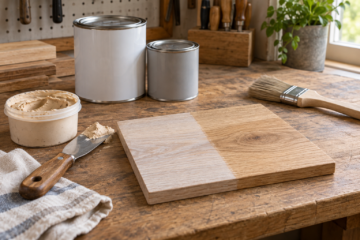
AI-generated editorial illustration of wood fillers and finishing prep
Grain Filling & Sealing

How to Match Wood Filler Color to a Finished Surface

Why Color Matching Is Difficult Wood filler rarely matches a finished surface straight from the tub. The reason is simple: filler is usually a solid, opaque material, while stained wood gets its color from a combination of wood species, grain, stain, and clear finish. A repair that looks close on Read more

By , 2 weeksSeptember 25, 2026 ago
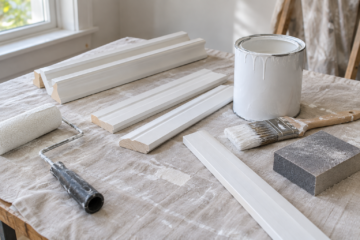
AI-generated editorial illustration of wood paint
Painting & Priming

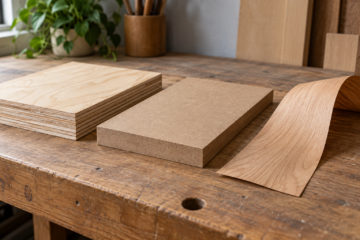
How to Seal MDF Before Applying Primer

MDF has a smooth face but thirsty, porous edges. If you apply primer directly to unsealed MDF, the faces may look fine while the edges turn fuzzy, swollen, or uneven. Paint can also dry with different sheen and texture from one area to another. Sealing MDF before priming is mainly Read more

By , 2 weeksSeptember 25, 2026 ago
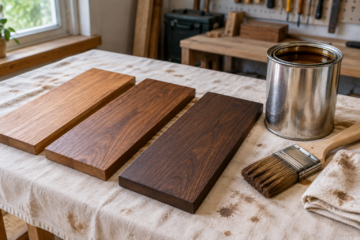
AI-generated editorial illustration of wood stain
Staining & Dyes

How to Keep Wood Filler from Showing Through Stain

Wood filler often shows through stain because it does not absorb color the same way as surrounding wood. Most fillers contain fine mineral particles, glue, or resin that seal the surface. The result can be a pale patch, a dark outline, or a glossy spot after staining. The best fix Read more

By , 2 weeksSeptember 25, 2026 ago
AI-generated editorial illustration of wood paint
Painting & Priming

How to Prepare Wood Filler for a Seamless Paint Finish

A seamless paint finish starts before the paint goes on. Wood filler must be mixed to the right consistency, pressed firmly into the defect, and sanded without leaving a soft or visible patch. Poor preparation commonly shows up as sink marks, flashing, pinholes, or a different sheen around every filled Read more

By , 2 weeksSeptember 25, 2026 ago
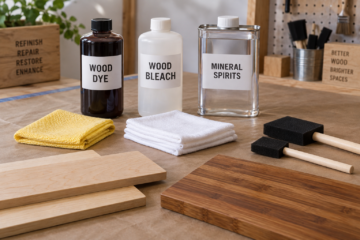
Editorial illustration of folded yellow and white wiping cloths, sample boards and separate refinishing supplies.
Finish Problems & Fixes

How to Use a Tack Cloth Without Leaving Residue on Wood

A tack cloth is useful for removing the last bits of dust before staining, painting, or spraying wood. It is also easy to misuse. Press too hard, use one that is dried out or overly resinous, or wipe across a contaminated surface, and you can leave a sticky film that Read more

By , 2 weeksSeptember 25, 2026 ago
AI-generated editorial illustration of wood paint
Painting & Priming

How to Prepare MDF Edges for a Smooth Paint Finish

MDF edges are more absorbent and softer than the faces. If you paint them without sealing first, the edge drinks primer, raises fuzzy fibers, and often looks rougher after every coat. The fix is not simply more paint. A smooth result comes from hardening and filling the edge before applying Read more

By , 2 weeksSeptember 25, 2026 ago
AI-generated editorial illustration: brush applying a clear wood finish to a board beside an unfinished offcut.
Finish Problems & Fixes

How to Prevent Dust Contamination During Wood Finishing

Dust contamination shows up as roughness, specks, dull spots, and tiny craters in an otherwise good finish. The problem is rarely just “dust in the room.” Most contamination comes from sanding residue left on the project, dust falling from clothing or shelves, or airborne particles stirred up by a vacuum, Read more

By , 2 weeksSeptember 25, 2026 ago
AI-generated editorial illustration: five wooden board samples showing different grain textures and colors.
Finish Problems & Fixes

How to Prevent End Grain from Absorbing Too Much Finish

End grain absorbs finish faster than the face grain because its open, exposed fibers act like a bundle of tiny straws. The result can be a dark stripe, a glossy patch, a muddy stain line, or a noticeably different color on cut ends. This is especially common on end-grain cutting Read more

By , 2 weeksSeptember 25, 2026 ago
AI-generated editorial illustration of wood paint
Staining & Dyes

How to Seal End Grain Before Painting or Staining

End grain absorbs finish far faster than the long-grain faces of a board. The exposed fibers act like a bundle of tiny straws, pulling in stain, paint, and even water-based primer. If you finish it without preparation, the end usually looks darker, rougher, and less even than the rest of Read more

By , 2 weeksSeptember 25, 2026 ago
AI-generated editorial illustration: five wooden board samples showing different grain textures and colors.
Clear Coats & Topcoats

How to Flatten a Warped Wood Panel Before Finishing

Identify the Warp Before You Try to Flatten It Do not start by wetting or clamping a warped wood panel at random. First determine whether it has a cup, bow, twist, or a combination of defects. Lay the panel on a known-flat surface and check it with a straightedge in Read more

By , 2 weeksSeptember 25, 2026 ago

Posts pagination

Previous 1 … 11 12 13 … 63 Next
Recent Posts
  • Best Woodworking Clamps: Which Types to Buy and How Many You Need
  • Best Pocket Hole Jigs in 2026: Kreg, Massca and Milescraft Compared
  • Best Dovetail Jigs: Fixed, Multi-Template and Variable-Spacing Options Explained
  • Best Compact Wood Routers: Corded vs Cordless Picks for Edge Work and Trimming
  • How to Repair a Wood Split Caused by a Screw (Even in Thin Teak)
Recent Comments
No comments to show.
Archives
  • October 2026
  • September 2026
Categories
  • Clear Coats & Topcoats
  • Finish Problems & Fixes
  • Gift Guides
  • Grain Filling & Sealing
  • Guides
  • Oils & Waxes
  • Painting & Priming
  • Sanding & Surface Prep
  • Shop Setup & Safety
  • Staining & Dyes
  • Tool Troubleshooting
  • Tools
  • Wood Finishing
  • Wood Species & Lumber
  • Woodworking Techniques
Hestia | Developed by ThemeIsle