RP Woodworks

  • Home
  • Reviews
  • Projects
  • Tools
  • Woodworking Techniques
  • About

Sanding & Surface Prep

Sanding schedules, abrasives, grit choice and surface prep that decide how good a finish can look.

AI-generated editorial illustration of sandpaper
Sanding & Surface Prep

How to Sand Wood Filler So It Disappears Under Paint

Why filler shows through paint Wood filler can look smooth before painting and still leave a visible patch afterward. The usual causes are a raised edge, a shallow dip, sanding scratches, or filler that absorbs primer differently from the surrounding wood. Paint hides color differences better than stain, but it Read more

By , 2 weeksSeptember 25, 2026 ago
AI-generated editorial illustration of scrapers rasps files
Sanding & Surface Prep

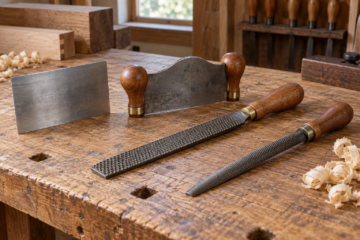
How to Use a Cabinet Scraper for Final Wood Surface Preparation

A cabinet scraper is a thin steel plate with a small hooked edge, or burr, that cuts wood fibers instead of abrading them like sandpaper. Used well, it can leave a clean, smooth surface with little dust and less risk of sanding through a veneer. Used badly, it leaves chatter, Read more

By , 2 weeksSeptember 25, 2026 ago
AI-generated editorial illustration of wood stain
Sanding & Surface Prep

How to Prepare New Wood for an Exterior Solid-Color Stain

Why preparation matters New wood can look ready to stain and still be a poor surface for a solid-color finish. Sawmill glaze, dust, mill stamps, and moisture can keep stain from bonding evenly. The result may be lap marks, peeling, or patches that wear through early—especially on horizontal trim, railings, Read more

By , 2 weeksSeptember 24, 2026 ago
AI-generated editorial illustration of sandpaper
Sanding & Surface Prep

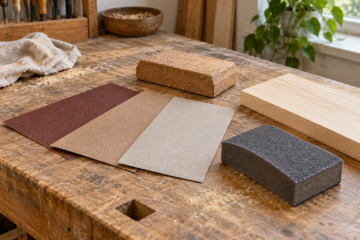
How to Sand Old Varnish Before Recoating a Wood Table

Old varnish does not always need to come off before a new coat. If it is firmly attached and the table has no deep scratches or peeling, the usual job is to dull the surface and give the new finish something to grip. The goal is an even, clean, matte Read more

By , 2 weeksSeptember 24, 2026 ago
AI-generated editorial illustration: brush applying a clear wood finish to a board beside an unfinished offcut.
Sanding & Surface Prep

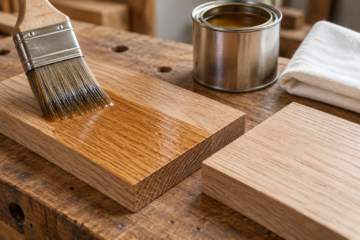
How to Apply Shellac as a Sanding Sealer on Wood

What shellac does as a sanding sealer Shellac is a fast-drying resin dissolved in alcohol. As a sanding sealer, it binds loose wood fibers and helps prevent stain or finish from soaking unevenly into the surface. It is especially useful on softwoods, end grain, and woods that tend to blotch. Read more

By , 2 weeksSeptember 24, 2026 ago
AI-generated editorial illustration of sandpaper
Sanding & Surface Prep

How to Sand Between Coats of Oil-Based Varnish

Sanding between coats of oil-based varnish removes dust nibs and brush marks, then gives the next coat a fine scratch pattern to grip. The goal is a smooth, evenly dull surface—not to cut through the varnish or sand the wood again. Let the coat dry enough to sand cleanly, use Read more

By , 2 weeksSeptember 24, 2026 ago
AI-generated editorial illustration: brush applying a clear wood finish to a board beside an unfinished offcut.
Sanding & Surface Prep

How to Prepare Bare Wood for Spray Lacquer

Why preparation matters Spray lacquer dries quickly, which makes it convenient—and unforgiving. It can highlight scratches, glue smears, dents, and uneven sanding rather than hide them. A little dust left on the surface may become a bump in the finish. The goal is to get the wood clean, evenly sanded, Read more

By , 2 weeksSeptember 24, 2026 ago
AI-generated editorial illustration of sandpaper
Sanding & Surface Prep

How to Sand Wood Before Applying Hardwax Oil

Hardwax oil is thin enough to show sanding scratches, swirl marks, glue residue, and uneven patches. Good preparation is mostly about sanding evenly and stopping at a grit that leaves enough tooth for the oil to wet the wood. For most furniture and interior trim, that means finishing at 120 Read more

By , 2 weeksSeptember 24, 2026 ago
AI-generated editorial illustration: brush applying a clear wood finish to a board beside an unfinished offcut.
Sanding & Surface Prep

How to Use a Sanding Sealer Before Lacquer

What sanding sealer does Sanding sealer is a first coat formulated to make bare wood easier to sand before a clear finish. Many versions contain zinc stearate, a lubricant that helps sandpaper glide and keeps it from clogging. Others are simply a compatible, fast-drying sealer without that sanding aid. The Read more

By , 2 weeksSeptember 24, 2026 ago
AI-generated editorial illustration of sandpaper
Sanding & Surface Prep

How to Sand Curved Wood Profiles Without Flattening Their Shape

Sanding a curved wood profile is less about removing material quickly and more about removing it evenly. A flat sanding block can cut through a roundover, cove, bead, or carved edge and leave a faceted or flattened shape. The safest method is to match the sanding tool to the profile, Read more

By , 2 weeksSeptember 24, 2026 ago

Posts pagination

Previous 1 … 10 11 12 Next
Recent Posts
  • Best Woodworking Clamps: Which Types to Buy and How Many You Need
  • Best Pocket Hole Jigs in 2026: Kreg, Massca and Milescraft Compared
  • Best Dovetail Jigs: Fixed, Multi-Template and Variable-Spacing Options Explained
  • Best Compact Wood Routers: Corded vs Cordless Picks for Edge Work and Trimming
  • How to Repair a Wood Split Caused by a Screw (Even in Thin Teak)
Recent Comments
No comments to show.
Archives
  • October 2026
  • September 2026
Categories
  • Clear Coats & Topcoats
  • Finish Problems & Fixes
  • Gift Guides
  • Grain Filling & Sealing
  • Guides
  • Oils & Waxes
  • Painting & Priming
  • Sanding & Surface Prep
  • Shop Setup & Safety
  • Staining & Dyes
  • Tool Troubleshooting
  • Tools
  • Wood Finishing
  • Wood Species & Lumber
  • Woodworking Techniques
Hestia | Developed by ThemeIsle