What's inside
- Business Laptops Buying Guide: How to Match Specs to Your Actual Workload
- Quick comparison: the five business laptop classes worth considering
- Best overall for most buyers: the mainstream 14-inch workhorse
- Best for travel: ultralight flagships
- Best budget: fleet-class laptops
- How to choose: a decision matrix
- The numbers that actually matter
- Security features worth paying for — and the ones that aren’t
- Frequently Asked Questions
- Business Laptops Buying Guide: How to Match Specs to Your Actual Workload
- Quick comparison: the five business laptop classes worth considering
- Best overall for most buyers: the mainstream 14-inch workhorse
- Best for travel: ultralight flagships
- Best budget: fleet-class laptops
- How to choose: a decision matrix
- The numbers that actually matter
- Security features worth paying for — and the ones that aren’t
- Frequently Asked Questions
As an Amazon Associate I earn from qualifying purchases. This post may contain affiliate links at no extra cost to you.
Our Top Picks
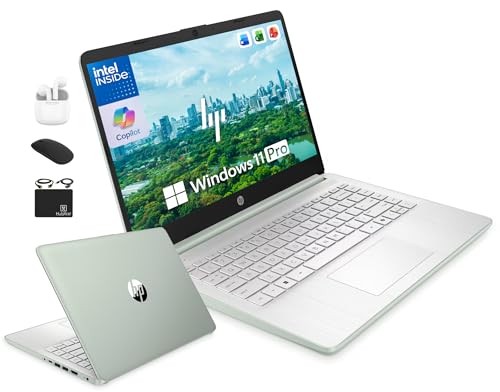 HP 14" Laptop Computer for 2026 Student Business4GB RAM + 628GB Storage12.76 x 8.86 x 0.71 inches3.24 poundsCheck on Amazon
 Dell Latitude 5420 14" FHD Business Laptop Computeri5-1145G7-16-256-SV-Win1112.76 x 8.35 x 0.76 inches3 poundsCheck on Amazon
Business Laptops Buying Guide: How to Match Specs to Your Actual Workload
The short answer: most business buyers should target a 13.3–14 inch laptop weighing under 1.4 kg with an Intel Core Ultra 5 or AMD Ryzen 5-class processor, 16 GB of RAM, a 512 GB SSD, and a battery rated at 55 Wh or more — which lands in the $900–$1,400 range and covers writing, spreadsheets, video calls, and browser-heavy multitasking. Spend more only if you need a discrete GPU, a color-accurate display, or MIL-STD ruggedization; spend less only if the machine stays docked at a desk most of the time.
What follows is a decision framework rather than a list of marketing claims: the specs that actually change daily experience, the numbers behind them, and which configuration class fits which job.
As an Amazon Associate we earn from qualifying purchases at no extra cost to you.



Quick comparison: the five business laptop classes worth considering
| Class | Best for | Typical specs | Weight / size | Battery (rated) | Price range |
|---|---|---|---|---|---|
| Ultralight flagship | Frequent flyers, hot-desk workers | Core Ultra 7 / Ryzen 7, 16–32 GB, 512 GB–1 TB | 1.1–1.3 kg, 13–14 in | 55–65 Wh, 12–16 h video | $1,300–$2,000 |
| Mainstream workhorse | General office and hybrid work | Core Ultra 5 / Ryzen 5, 16 GB, 512 GB | 1.3–1.6 kg, 14 in | 54–60 Wh, 10–13 h | $900–$1,400 |
| Budget fleet laptop | Volume deployment, task workers | Core i5 / Ryzen 5 (prior gen), 8–16 GB, 256–512 GB | 1.6–1.9 kg, 14–15.6 in | 42–50 Wh, 7–9 h | $550–$850 |
| Mobile workstation | CAD, video editing, data science | Core Ultra 9 / Ryzen 9, 32–64 GB, 1–2 TB, discrete GPU | 1.8–2.4 kg, 15–16 in | 80–99 Wh, 6–9 h | $1,800–$3,500 |
| Ruggedized field unit | Industrial, field service, warehouse | Core i5/i7, 16–32 GB, hot-swap batteries, sealed ports | 1.9–3.0 kg, 14 in | Dual 40–50 Wh cells | $1,500–$3,000 |
Best overall for most buyers: the mainstream 14-inch workhorse
Models in this class — exemplified by the Lenovo ThinkPad T-series, Dell Latitude 5000-series, and HP EliteBook 800-series — hit the best balance of price, repairability, and real-world stamina. The trade-off is display quality: base panels are usually 250–300 nit, 45% NTSC IPS, which is dim outdoors and washes out on photo work.
Who it suits: anyone whose day is email, documents, video conferencing, and 20–40 browser tabs. Main trade-off: these machines are tools, not showpieces — expect functional, not premium, build feel at the entry price point.
Best for travel: ultralight flagships
ThinkPad X1 Carbon, Dell XPS 13, HP Elite Dragonfly, and LG gram 14 sit in this bracket. Per manufacturer spec sheets, they commonly ship at 1.1–1.3 kg with 57 Wh cells and claim 12–16 hours of local video playback — a figure you should discount by 40–50% for real mixed use with Wi-Fi and a browser.
Who it suits: people who carry a laptop four or more days a week. Main trade-off: nearly everything is soldered — RAM and sometimes the SSD — so buy the memory you’ll want at year three, not year one.
Best budget: fleet-class laptops
The $550–$850 tier delivers genuinely usable machines if you accept three compromises: 8 GB base RAM, a 250-nit display, and a 42–50 Wh battery. Buying 16 GB and a 300-nit panel as an option usually adds $80–$150 and is the single best upgrade available in this class.
Who it suits: task workers, students, and desks that never leave the office. Main trade-off: chassis plastics, not electronics, are what fail first — hinges and palm rest wear show up around year two to three per most fleet telemetry reporting.
How to choose: a decision matrix
| Your situation | Recommended configuration | Why |
|---|---|---|
| Laptop travels daily, mostly email/docs | 13–14 in, ≤1.3 kg, 16 GB, 512 GB | Weight savings compound; RAM covers five years of OS growth |
| Docked 80%+ of the time | 15.6 in budget or mainstream class | Buy screen area and ports instead of grams |
| Runs CAD or edits 4K video | Mobile workstation with discrete GPU, 32 GB+ | Integrated graphics throttle sustained loads hard |
| Works outdoors or in a warehouse | Ruggedized unit, MIL-STD-810H tested, 1000-nit display | Standard panels are unreadable above ~400 nits ambient |
| Managing 10+ units | Business line with vPro/AMD PRO and 3-year onsite warranty | Remote manageability and unibody parts availability cut downtime |
The numbers that actually matter
Battery life: read watt-hours, not marketing hours
Divide watt-hours by average system draw to estimate real runtime. A 57 Wh battery drawing 9 W in light productivity work yields roughly 6.3 hours — not the 14 hours on the box, which is measured at idle-ish video playback. A rough planning formula: Wh ÷ 8 for heavy browser use, Wh ÷ 5.5 for video calls, Wh ÷ 14 for offline document work. A 65 Wh machine therefore gives you about 8 hours of browser work and 4.6 hours of continuous video calls. If you’re on calls all day, you need either 80 Wh+ or a USB-C power bank rated 65 W output.
Memory: 16 GB is the 2026 floor
Operating systems plus a modern browser plus a video client routinely consume 9–12 GB. An 8 GB machine will swap to SSD, and while that’s tolerable, it halves responsiveness during screen sharing. If the RAM is soldered, going 8 GB → 16 GB at purchase costs far less than replacing the laptop in year two.
Storage: 512 GB, and check whether it’s replaceable
A 256 GB drive is workable only if you use cloud storage and never sync large local volumes. Many business models use a standard M.2 2280 slot, so a 1 TB upgrade later may cost less than the factory option — but only if the chassis allows access, which many thin models no longer do.
Durability: where these machines actually fail
In order of frequency: hinges, DC/USB-C charging ports, palm rest coating wear, keyboard keycaps, then batteries losing capacity. Hinge failure is the dominant out-of-warranty repair because the display cable routes through it and stress fractures the lid anchors. Practical prevention: never lift the machine by the screen, open the lid from the center, and coil the charger cable loosely rather than wrapping it tight around the brick.
Security features worth paying for — and the ones that aren’t
Worth it for any business machine: a discrete TPM 2.0 chip, a physical camera shutter, fingerprint or IR face login, and firmware-level BIOS protection with a supervisor password. For fleets, Intel vPro or AMD PRO manageability plus a three-year onsite warranty typically pays for itself the first time a motherboard fails.
Not worth paying for on most individual purchases: bundled endpoint security suites you already license elsewhere, and premium “privacy screens” that cut brightness by roughly 40% — buy a removable filter instead.
Frequently Asked Questions
Is 16 GB of RAM enough for business use in 2026?
Yes, for the overwhelming majority of office workloads. Sixteen gigabytes comfortably handles 30–50 browser tabs, a video call, and office applications simultaneously. Step up to 32 GB only if you run virtual machines, large statistical datasets, or professional photo and video editing.
How long should a business laptop last?
Plan on four to five years of productive service for a mainstream business model, and six to seven for a mobile workstation or ruggedized unit with an extended warranty. The limiting factor is usually the battery, which typically falls to 70–80% of original capacity after roughly 600–800 full charge cycles.
Do I need a discrete GPU in a business laptop?
Only if your work involves 3D modeling, GPU-accelerated rendering, local AI model inference, or video editing with effects. For document, spreadsheet, and conferencing work, integrated graphics are more than sufficient and give you significantly better battery life and a cooler chassis.
Should I buy a consumer laptop instead to save money?
Consumer models often match business specs on paper for less money, but they typically lack manageability, spare parts availability, and next-business-day onsite service. For a personal machine used lightly, that trade-off is reasonable; for anyone whose income depends on uptime, business-class support usually justifies the premium.
What display specs matter most?
Brightness and resolution, in that order. Aim for at least 300 nits for indoor office use and 400–1000 nits for outdoor or industrial settings. A 1920×1200 or 1920×1080 panel is fine at 14 inches; higher resolutions help most on 15-inch and larger screens, where they also cost battery life.
How much should I budget per laptop?
For individual knowledge work, $900–$1,400 buys the sweet spot of performance, portability, and support. Fleet purchases of 10 or more units often land 15–25% below list through volume agreements, so it’s worth asking before assuming a per-unit price.

0 Comments