What's inside
As an Amazon Associate I earn from qualifying purchases. This post may contain affiliate links at no extra cost to you.
The best anti snore chin straps reviews point to the Philips Respironics Deluxe Chin Strap for straightforward adjustability, the Knightsbridge Dual Band for stronger jaw support, and a soft neoprene-style adjustable strap for shoppers who prioritize comfort and easy washing over maximum restraint.
A chin strap is most useful when snoring is associated with the mouth falling open during sleep, particularly for people using a nasal CPAP mask. It is not a universal snoring solution, and it should not be used to force the jaw closed if nasal breathing is difficult. The right choice depends on how much support you need, whether you sleep on your side, and whether the strap must work with headgear.
As an Amazon Associate we earn from qualifying purchases at no extra cost to you.
![Anti Snore Chin Strap [Upgraded], Vosaro Snoring Solution Effective Anti Snore Device, Adjustable and Breathable Stop Snoring Head Band for Men Women, Black](https://m.media-amazon.com/images/I/41egwMHTF1L._SL160_.jpg)


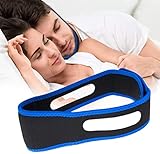
Quick comparison: the leading chin-strap types
| Option | Construction and support | Typical weight | Adjustment | Best fit | Typical market range |
|---|---|---|---|---|---|
| Philips Respironics Deluxe Chin Strap | Soft fabric with overhead and under-chin sections | About 35–55 g | Hook-and-loop adjustment at multiple points | CPAP users wanting a conventional design | $15–$30 |
| Knightsbridge Dual Band | Two-band design with broad lower-jaw support | About 45–70 g | Separate top and lower-band adjustments | People who need more upward jaw support | $25–$45 |
| Single-band neoprene chin strap | Stretch neoprene or polyester, usually with a chin cup | About 25–45 g | One or two hook-and-loop tabs | Budget buyers and occasional use | $8–$20 |
| Wide elastic sleep chin support | Breathable elastic fabric with wide jaw panel | About 30–60 g | Rear or crown adjustment | Side sleepers seeking fewer pressure points | $15–$35 |
Weights and prices vary by size, seller, and revision, so use these figures for comparison rather than as exact specifications. Most chin straps are not rigid braces: they provide gentle positional support and should remain comfortable enough to wear without creating pressure or restricting normal movement.
Best picks by sleeping situation
Best for CPAP compatibility: Philips Respironics Deluxe Chin Strap
The Philips Respironics Deluxe design is a sensible starting point for nasal or nasal-pillow CPAP users because its layout is familiar and relatively low-profile. The upper strap typically passes over the head while the lower section supports the chin, leaving the mouth and nose unobstructed. Its multiple adjustment points make it easier to keep the strap from sliding backward during the night.
Its main limitation is that the hook-and-loop sections can sit close to mask straps, tubing, or hair. Fit it underneath or alongside the CPAP headgear according to the mask manufacturer’s instructions, and check that the chin strap does not pull the mask upward or loosen its seal. A chin strap is not a substitute for a properly fitted full-face mask when mouth breathing remains a problem.
Best for stronger jaw support: Knightsbridge Dual Band
The Knightsbridge Dual Band uses separate upper and lower bands, giving the wearer more control over where support is applied. The broad lower section can feel more stable than a narrow single band, especially for people whose jaw moves forward or downward while sleeping. Independent adjustment also helps side sleepers position the lower band under the jaw rather than directly across the throat.
This design is usually bulkier than a minimalist strap. It may require more trial and error, and the extra fabric can feel warm in a hot bedroom. Choose it when stability matters more than the smallest possible footprint.
Best budget choice: a single-band neoprene chin strap
A basic neoprene or polyester strap costs less and is easy to replace. Look for a padded chin cup at least 2.5–3.5 inches wide, smooth binding around the edges, and two adjustment points rather than one. Very narrow straps can concentrate pressure beneath the jaw and are more likely to roll during side sleeping.
Budget models vary widely in stitching and fabric quality. They are appropriate for occasional use or as a low-cost way to determine whether chin support is comfortable for you. If the strap stretches noticeably after several weeks, constantly rides toward the throat, or leaves red pressure marks, replacing it is preferable to tightening it further.
What to evaluate before buying
Adjustability
At least two adjustment zones are useful: one to control the overall circumference and another to position the chin support. A strap that only adjusts at the back may fit the head but still place the lower band too high or too low. Hook-and-loop closures are convenient, although they can catch hair and gradually lose grip when lint accumulates.
Measure around the head according to the manufacturer’s diagram, usually across the forehead and around the widest part of the back of the head. Do not assume hat size is interchangeable with chin-strap sizing. If you fall between sizes, a design with separate upper and lower adjustments is generally easier to fine-tune.
Fabric and comfort
Neoprene provides stretch and cushioning but can feel warm. Polyester or nylon mesh is cooler and dries faster, though it may offer less padding. Look for flat seams, a soft inner face, and a chin panel that distributes pressure. Avoid exposed rough hook material near the cheeks, ears, or neck.
Comfort depends on tension as much as fabric. The strap should remain in place without digging into the jaw. If you need to tighten it enough to cause soreness, the design or size is probably wrong.
Fit across sleeping positions
- Back sleepers: A conventional single-band model may be sufficient, provided it does not slide toward the throat.
- Side sleepers: Prefer a wide, flexible jaw panel and low-profile side closures. Avoid bulky buckles directly over the ears.
- Combination sleepers: Choose two-point adjustment and a fabric that can flex without twisting.
- Stomach sleepers: Chin straps can press into the pillow and shift more easily. A slim elastic design may be less intrusive, but fit should be assessed carefully.
Washability and ownership
Chin straps absorb sweat, skin oils, and hair products. A removable or machine-washable fabric cover is a meaningful advantage. For most designs, hand washing or a delicate cold cycle followed by air drying is safer than hot washing or a tumble dryer, which can shrink elastic and weaken hook-and-loop backing.
A practical cleaning schedule is once or twice per week with regular use, more often in hot conditions. Allow the strap to dry completely before wearing it again. Keep a second strap if you use one nightly: while one dries, the other remains available. Elastic usually wears before the fabric does, followed by flattened padding, stretched hook-and-loop tabs, and frayed edge binding.
A simple fit and setup method
- Start with clean, dry skin. Moisturizer and sweat can make the strap slide.
- Place the chin panel beneath the front of the jaw. It should support the jaw without sitting across the throat.
- Route the upper band over the crown or behind the head as designed. Keep it clear of mask cushions and tubing.
- Adjust in small increments. Tighten only until the strap stays positioned when you open your mouth slightly.
- Test your usual sleeping position. Turn from side to side and check for rolling, ear pressure, or contact with the CPAP mask.
- Recheck after several minutes. Fabric can relax as it warms, so make one final minor adjustment rather than starting tight.
For CPAP users, check the mask seal after fitting the chin strap. If the strap lifts the mask, pushes the cushion sideways, or makes leaks worse, the combination is not working as adjusted. A respiratory therapist or sleep clinician can help determine whether a different mask style is more appropriate.
Decision matrix
| Your priority | Choose | Why | Trade-off |
|---|---|---|---|
| Lowest purchase cost | Single-band neoprene model | Simple construction and inexpensive replacement | Less precise positioning and potentially warmer fabric |
| Frequent nightly use | Multi-point adjustable fabric strap | Better fit control and easier pressure distribution | More components to clean and adjust |
| Side sleeping | Wide elastic or dual-band design | Less tendency to roll and fewer concentrated pressure points | May feel bulkier |
| Nasal CPAP | Low-profile conventional chin strap | Leaves the nose and mask cushion unobstructed | Must be checked for mask interference |
| Heat sensitivity | Breathable mesh or lightweight elastic | Less trapped warmth and faster drying | Usually less padded than neoprene |
Common mistakes to avoid
Do not use a chin strap as a substitute for evaluation of persistent, loud snoring, pauses in breathing, choking sensations, or severe daytime sleepiness. These symptoms warrant discussion with a qualified healthcare professional. Do not tightly bind the jaw, cover the mouth with tape, or use a strap if nasal congestion makes comfortable nasal breathing difficult.
Also avoid buying solely by the word “universal.” Head shape, hair, beard length, mask style, and sleeping position all affect fit. The best anti snore chin straps reviews ultimately favor the model that stays correctly positioned with light tension, remains washable, and works with your existing sleep equipment—not necessarily the tightest or most heavily padded option.
0 Comments