Our Top Picks
 Howard Products Butcher Block Conditioner and Food Grade7.9"L x 1.8"W1.85 x 3 x 7.9 inches0.6 poundsCheck on Amazon


What's inside
As an Amazon Associate I earn from qualifying purchases. This post may contain affiliate links at no extra cost to you.
The best wood finish for a cutting board is the one you will actually reapply: for most kitchens, that means food-grade mineral oil, followed by a beeswax-based conditioner to slow moisture loss. Among the six listings here, the Howard Products butcher block conditioner with food-grade mineral oil is our top overall pick because it combines both steps in one bottle. Cutting boards need a finish that is safe around food, does not turn rancid and can be refreshed easily as the wood dries out. Mineral oil and wax stay soft and are renewed by hand, while the Watco butcher block finish is a different type of product that cures to a harder film.
Quick List
- Howard Food Grade Mineral Oil, 12 oz – best for a plain, widely used first oiling
- Kate Naturals Mineral Oil, 8 oz – best for a small board or a gift-sized bottle
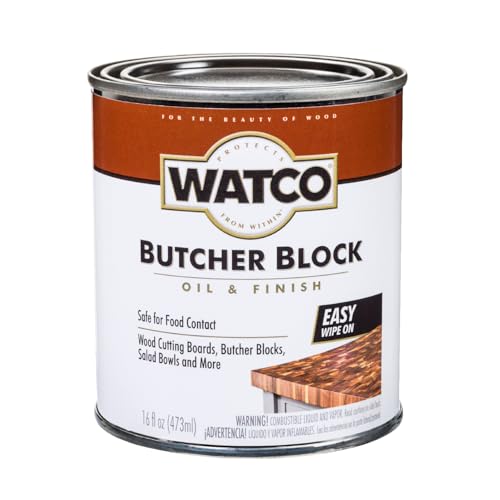
- Watco Butcher Block Clear Oil and Finish, pint – best for a longer-lasting cured finish on butcher block
- Howard Butcher Block Conditioner with Mineral Oil, 12 fl oz – best overall for oil-plus-wax maintenance
- Thirteen Chefs Mineral Oil, 8 oz – best for a general conditioner that also treats knife and grinder lubrication
- Beeswax Paste Wood Finish, 6.25 oz – best as a sealing top layer over oiled boards
Which One Is Right for You?
| If you… | Choose |
|---|---|
| want oil and wax in a single product for regular upkeep | Howard Butcher Block Conditioner |
| just need simple food-grade mineral oil for a new board | Howard Food Grade Mineral Oil, 12 oz |
| have one small board or want a gift-size bottle | Kate Naturals Mineral Oil, 8 oz |
| want a cured, wipe-on finish for a butcher block countertop or heavy-use board | Watco Butcher Block Clear Oil and Finish |
| also oil kitchen tools or grinders and want one bottle for both | Thirteen Chefs Mineral Oil |
| already oil your board and want a water-resisting top layer | Beeswax Paste Wood Finish |
If you remember one rule, make it this: oil first, wax second, repeat. Mineral oil soaks in and keeps the wood from drying and cracking, and wax sits on the surface to slow water. A cured finish like the Watco product behaves differently, and you must wait for it to cure fully before using the board with food.
All 6 Picks in Detail
1. Howard Products Food Grade Mineral Oil, 12 oz – Best for a Plain, Widely Used First Oiling
As an Amazon Associate we earn from qualifying purchases at no extra cost to you.
This is straight food-grade mineral oil in a 12-ounce bottle, marketed for wood cutting boards. Mineral oil is colorless, odorless, and does not go rancid like cooking oils, which is why it became the default board treatment. It soaks into the wood fibers, fills pores and slows drying, though it does not form a film, so you reapply it on a schedule. For a new board, this is the simplest way to start.
The 12-ounce size handles several boards and several coats. Because the listing names a single ingredient class, you can pair it with a separate wax later.
- Product: food-grade mineral oil
- Size: 12 oz
- Marketed for wood cutting boards
- Applied by wiping or brushing, then buffing
- Wax content: none stated
To get the most from a bottle this size, start with a clean, fully dry board, because oiling damp wood traps moisture in the grain. Flood the top, bottom, sides and edges, let the oil soak for a few hours or overnight, and wipe off what remains on the surface so it does not pool. Repeat until the wood stops absorbing. End-grain boards drink the most, since the open fibers act like tiny straws, while face-grain boards of dense maple take less.
Pros
- Simple and widely used
- Does not turn rancid like cooking oils
Cons
- Needs regular reapplication
- No surface protection from wax
Compared with the Howard conditioner, it is the plain-oil option, with no wax layer to slow moisture.
2. Kate Naturals Mineral Oil, 8 oz – Best for a Small Board or a Gift-Sized Bottle

Kate Naturals sells an 8-ounce bottle of food-safe mineral oil that the listing describes as odorless and meant to protect wooden cutting boards and butcher block. It is a smaller option for someone with a single board or a few wooden utensils, and it works as a stocking-stuffer when paired with a new board. The formula is simple, so apply it the same way as any mineral oil.
If you plan to oil a large butcher block countertop, this size will run out quickly. For an end-grain board, plan on a few coats during the first session so the wood can absorb as much as it will accept.
- Product: food-safe mineral oil
- Size: 8 oz
- Described as odorless
- Marketed for cutting boards and butcher block
- Wax content: none stated
An 8-ounce bottle is enough for roughly a handful of light coats on a standard board, so it is better thought of as a maintenance bottle than a restoration bottle. If the board is very dry or has never been treated, you may use most of it in the first session. Keep the cap tight, store it away from heat, and wipe the bottle neck so it does not leave a sticky film on the shelf.
Pros
- Convenient small size
- Odorless per the listing
Cons
- Small bottle for big surfaces
- Needs regular reapplication
It differs from the Thirteen Chefs bottle mainly in how it is marketed, as both are 8 oz mineral oils.
3. Watco Butcher Block Clear Oil and Finish, Pint – Best for a Longer-Lasting Cured Finish

Watco’s butcher block product is not mineral oil. According to the maker’s directions, it is a tung oil and alkyd based wipe-on finish that cures into a thin film and is considered food safe once fully cured. The recommended steps are to sand bare wood through #150 to #220, wipe on with a clean cloth, let it penetrate for 15 to 20 minutes, wipe off the excess, and wait before recoating. Rust-Oleum’s support information says to allow about 72 hours of cure before normal use and to hand wash, not dishwash.
That longer cure time is the trade-off for a harder, longer-lasting surface than mineral oil gives. It suits butcher block countertops and boards that you do not want to oil monthly. Follow all label directions, and note that the product is not suited to being applied over other finishes.
- Product: wipe-on oil and varnish blend (tung oil and alkyd, per maker)
- Size: one pint
- Food safe once fully cured, per maker (about 72 hours)
- Applied with a cloth, excess wiped after 15 to 20 minutes
- Not suitable for dishwashers
If you choose this finish, treat it more like a furniture varnish than a board oil. Wipe on a thin coat, remove the excess so no puddles are left to cure tacky, and keep the board out of use for the full cure period the maker states. Sanding lightly between coats, as the directions describe, gives a smoother result. For a board that you want to keep oiling in the traditional way, this is the wrong product, since a cured film does not accept fresh oil the same way.
Pros
- Cures to a more durable film than mineral oil
- Less frequent maintenance
Cons
- Requires a full cure before food contact
- Oily rags are a fire hazard
Unlike the mineral oils, this is a curing finish, and its closest alternative on the list is the Howard conditioner, which stays renewable by hand.
4. Howard Butcher Block Conditioner with Food Grade Mineral Oil, 12 fl oz – Best Overall for Oil-Plus-Wax Maintenance

This Howard product is sold as a butcher block conditioner and food-grade mineral oil in one 12-fluid-ounce bottle, for wood cutting boards. A conditioner like this usually blends oil with a wax to leave a slightly more protective surface than oil alone. The listing does not spell out the wax content, so check the label if you have preferences or allergies.
For most home cooks, this is the easiest routine: wipe it on, let it soak, buff off the excess, and repeat when the board looks dry or water stops beading. It makes the board look richer and feel smoother, which is part of the appeal.
- Product: butcher block conditioner with food-grade mineral oil
- Size: 12 fl oz
- Marketed for wood cutting boards
- Application: wipe on, rest, buff off
- Wax type and content: confirm on listing
Application is quick: apply a small amount, rub it along the grain, give it time to soak in, and buff off any excess so the board does not feel greasy. Many sources suggest weekly oiling for a new board’s first month and then monthly, and a conditioner with wax can stretch the gap between sessions. Water that stops beading on the surface is a handy visual cue that it is time to reapply.
Pros
- Oil and wax benefits in one product
- Easy routine for regular maintenance
Cons
- Ingredient details are not in the listing name
- Still needs periodic reapplication
The nearest alternative is the plain Howard mineral oil, which skips the wax layer but keeps the formula minimal.
5. Thirteen Chefs Mineral Oil, 8 oz – Best for General Conditioning and Tool Lubrication

Thirteen Chefs markets this 8-ounce food-grade mineral oil as a conditioner for cutting boards, countertops and butcher block, and as a lubricant for knives or meat grinders according to the listing. The multiple uses make it handy if your kitchen also has wooden spoons, a grinder or a mandoline that benefits from a light food-safe oil.
The oil behaves like other mineral oils: it soaks into wood and keeps it from drying, but it will not seal the surface. Pair it with a wax if you want more resistance to water rings.
- Product: food-grade mineral oil
- Size: 8 oz
- Marketed for boards, countertops, butcher block
- Also marketed as a lubricant for knives or grinders
- Wax content: none stated
Mineral oil is a good match for the wooden items that live near the board, such as spoons, salad bowls and rolling pins. Apply a thin coat with a lint-free cloth, let it soak in, and wipe away the excess. If you use it on a grinder or similar tool, follow the tool maker’s guidance and wipe off the surplus, and keep a separate bottle for kitchen use only so it never mixes with workshop oils.
Pros
- Useful for boards and kitchen tools
- Small, easy-to-store size
Cons
- Small size for large surfaces
- No added surface protection
Versus Kate Naturals, it is essentially the same type of product with a broader list of uses on the label.
6. Beeswax Paste Wood Finish, 6.25 oz – Best as a Sealing Top Layer

This is a beeswax paste sold as a cutting board sealer, in a 6.25-ounce tin, made in the USA according to the listing. Beeswax does not soak in the way mineral oil does. Instead, it sits on the surface and in the top pores to repel water and give a soft sheen. It is usually applied after oiling, rubbed in with a cloth and buffed.
Because the listing does not name additional ingredients, check the label for any oils or additives, especially if someone in your household has allergies. Used as a top coat over oil, it extends the time between full oilings.
- Product: beeswax paste finish
- Size: 6.25 oz
- Marketed as a cutting board sealer
- Origin: made in the USA, per listing
- Other ingredients: confirm on listing
For application, warm the tin slightly in your hands, rub a thin layer into the board with a soft cloth in small circles, let it sit for a few minutes, then buff along the grain. Thin layers look better than thick ones, which can feel tacky. Because wax can build up, strip it occasionally with a light sanding and reapply oil first if the surface starts to look cloudy.
Pros
- Adds water resistance and a soft sheen
- Works well as a top layer over oil
Cons
- Not a complete finish on its own for dry wood
- Ingredient details not in the name
Used with either mineral oil, it makes a two-step routine similar to the Howard conditioner, but with separate products.
Specs Compared
| Product | Type | Size | Cure / behavior | Wax or resin |
|---|---|---|---|---|
| Howard Food Grade Mineral Oil | Mineral oil | 12 oz | Non-curing, reapply | None stated |
| Kate Naturals Mineral Oil | Mineral oil | 8 oz | Non-curing, reapply | None stated |
| Watco Butcher Block Clear Oil and Finish | Wipe-on curing oil finish | Pint | Cures; about 72 hours before food use, per maker | Tung oil and alkyd, per maker |
| Howard Butcher Block Conditioner | Conditioner with mineral oil | 12 fl oz | Non-curing, reapply | Confirm on listing |
| Thirteen Chefs Mineral Oil | Mineral oil | 8 oz | Non-curing, reapply | None stated |
| Beeswax Paste Wood Finish | Beeswax paste | 6.25 oz | Surface wax, reapply | Beeswax; other ingredients: confirm on listing |
How We Chose These
We started from the six listings supplied for this topic and read each product name and description fields for product type, size and intended use. For the Watco product we checked the maker’s published directions and technical information on cure time and food contact, and we compared the oil and wax products against published cutting-board care guides from board makers and woodworking suppliers. We favored products that are clearly food-grade or food-safe once cured, and we note where the listing is silent on ingredients. This is a research-based shortlist and does not describe how any finish performs over time on a real board.
What to Look For
Food Safety and What Goes on the Board
Boards touch food, so the finish must be food-grade or food safe once cured. Food-grade mineral oil, beeswax and cured wipe-on finishes labeled for food contact fit that description. Avoid cooking oils such as olive or vegetable oil, which can turn rancid and smell, and be careful with nut oils if anyone in your home has nut allergies. Raw linseed oil and products with metallic driers are not intended for food contact. When in doubt, read the label and follow the maker’s directions.
Penetrating Oil Versus Cured Film
Mineral oil and conditioners stay soft and are renewed by wiping on more. Cured finishes such as Watco’s harden in the wood and surface, and take days to fully cure. A penetrating oil is easier to repair because scratches and cuts can be re-oiled, while a film finish can wear or chip and needs sanding to renew. For a board that you chop on daily, most people prefer the simple oil-and-wax routine; for a butcher block countertop that sees less knife work, a cured finish can be a good fit.
How Often to Reapply
A common routine in care guides is to apply three or four coats over the first day or two, oil weekly for the first month, then roughly monthly, and again whenever the board looks pale or water stops beading; plain mineral oil tends to need renewing sooner than an oil-and-wax blend. A rule of thumb is to wipe on oil until the wood stops absorbing it, let it sit for several hours or overnight, and then wipe off the excess. A worked example: a new 12 by 18 inch maple board might take two or three light coats on day one, a monthly touch-up for the first three months, and then seasonal oiling, adjusted to how often you wash it.
Putting a Routine Together
Most households do well with a two-product routine. First, soak the board with food-grade mineral oil until the wood stops absorbing it, wipe off the excess, and let it rest. Second, rub a thin layer of beeswax or a wax-based conditioner over the surface and buff it. For upkeep, add a light coat of oil whenever the board looks dry, and refresh the wax every couple of months. A conditioner that already blends oil and wax collapses those two steps into one, which is why it suits people who want the shortest routine. If you prefer a hard-wearing finish on a countertop-sized butcher block, a cured product is the alternative, but plan the downtime for curing before the surface goes back into use.
Safety with Oily Rags and Cleaning
Rags soaked in curing oil finishes can heat up as the oil oxidizes and, in some conditions, catch fire on their own. After using Watco or any drying oil, lay rags flat to dry outdoors or submerge them in water in a sealed metal container before disposal, following the label. Mineral oil does not cure, so it does not heat up the same way, but keep it away from open flame and heat. Wash boards by hand with mild soap, dry them upright, and never soak them or run them through a dishwasher.
Questions
Is mineral oil safe to use on a cutting board?
Food-grade mineral oil is the traditional choice and is widely used on wooden boards. Buy a product labeled food grade, and follow the label directions.
Can I use olive oil or vegetable oil instead?
It is better not to. Common cooking oils can go rancid over time and leave a sour smell in the wood, while mineral oil and wax do not spoil the same way.
How is Watco different from mineral oil?
Watco is a curing finish that hardens in and on the wood, and the maker says it is food safe once cured, which takes about 72 hours. Mineral oil never cures and needs to be renewed regularly.
Do I need beeswax if I already use mineral oil?
Not strictly. Wax adds water resistance and a smoother feel on top of the oil, so many people use both, but plain oil alone is a workable routine.
How often should I oil my board?
Often at first, such as several coats in the first day or two, then roughly monthly, and then whenever the board looks dry. Heavily washed boards need oil more frequently.
Can I oil a board that has already been finished with something else?
If the earlier finish is a film, oil will not penetrate through it well. Sand back to bare wood, remove dust, and start with a food-safe finish.
Update History
- October 20, 2026 – Initial publication; product set drawn from current catalog listings.
- Check the product page for current specifications and availability before buying.
Sources
- Rust-Oleum and Watco published directions and technical data for the Butcher Block Oil and Finish
- Cutting-board care guides from board makers and woodworking suppliers covering oiling routines and which oils to avoid
- Retailer listing titles and specification fields for all six products

0 Comments